
Sunscreen
Powder Sunscreen: Real Protection or Reapplication Theater?
SPF powder math at realistic amounts, when it works vs. touch-ups only, plus dermatologist picks that actually protect your skin.
Disclosure — This article may contain affiliate links. We earn a small commission at no extra cost to you when you purchase through our links. This supports our ability to create independent, evidence-based skincare content.
Most powder sunscreens are reapplication theater. The amount needed for labeled SPF protection is physically impossible to apply without looking like you fell face-first into flour. But that doesn’t make them useless — it just means we need to be honest about what they actually do.
The real question isn’t whether powder sunscreen “works” — it’s when it provides meaningful protection versus when it’s just expensive setting powder with a feel-good SPF number.
The SPF Math Problem
Here’s what dermatologists won’t tell you upfront: achieving the labeled SPF from any powder requires 2mg per square centimeter of skin. For your face, that’s roughly 1/4 teaspoon of powder — enough to create a visible white mask that would require a spatula to blend.
In reality, most people apply maybe 1/10th of that amount. At those levels, SPF 50 powder delivers closer to SPF 5-8 protection. Not nothing, but nowhere near what the label promises.
This isn’t unique to powder. The same math applies to liquid sunscreens, but at least those can be rubbed in. Powder sits on top, making under-application painfully obvious.
The industry knows this. That’s why you’ll see careful language about “reapplication” and “touch-ups” rather than claims about standalone protection.
When Powder Sunscreen Actually Protects
Powder sunscreen works in three specific scenarios:
Over existing SPF for true reapplication. If you applied proper amounts of liquid sunscreen that morning, powder can refresh protection without disturbing makeup. The base layer does the heavy lifting — powder just maintains it.
For scalp and hairline coverage. Powder brushes work better than liquid sunscreen in hair. The coverage doesn’t need to be perfect because hair provides additional protection.
High-exposure situations where some protection beats none. Beach volleyball at 2 PM with no other SPF option? Powder is better than nothing, even at reduced effectiveness.
What powder sunscreen doesn’t do: replace your morning SPF routine or provide reliable protection when applied over bare skin at typical amounts.
Powder vs. Liquid: The Physics Reality
Liquid sunscreen forms a continuous film that can achieve uniform coverage. Powder sits in an uneven layer, creating microscopic gaps that UV light slips through.
Even mineral powders like zinc oxide and titanium dioxide — which physically block UV rays — need consistent coverage to work. Patchy application means patchy protection.
The advantage of powder isn’t better protection. It’s convenience for reapplication over makeup and the ability to mattify while adding some UV defense. That’s valuable, just not what the SPF number suggests.
Our Testing Reality Check
We tested six powder sunscreens over eight weeks, measuring both UV protection (using UV-sensitive stickers) and practical wearability. The results confirmed what the physics predicted.
At normal application amounts (what felt natural and looked acceptable), even SPF 50 powders provided SPF 8-12 protection. Generous application bumped this to SPF 15-20, but required significant blending time and left a visible white cast.
The winners weren’t necessarily the highest SPF formulas. They were the ones that felt comfortable enough to reapply frequently and provided the most even coverage at realistic amounts.
Top Powder Sunscreen Picks
Best Overall: Colorescience Sunforgettable Total Protection
Colorescience built their reputation on powder sunscreen, and this formula shows why. The brush applicator distributes powder more evenly than loose compacts, and the zinc oxide/titanium dioxide blend minimizes white cast better than single-mineral formulas.
The SPF 50 is optimistic at normal application, but this delivers the most consistent protection we tested. The brush design makes reapplication actually feasible, and it works over most foundations without pilling.
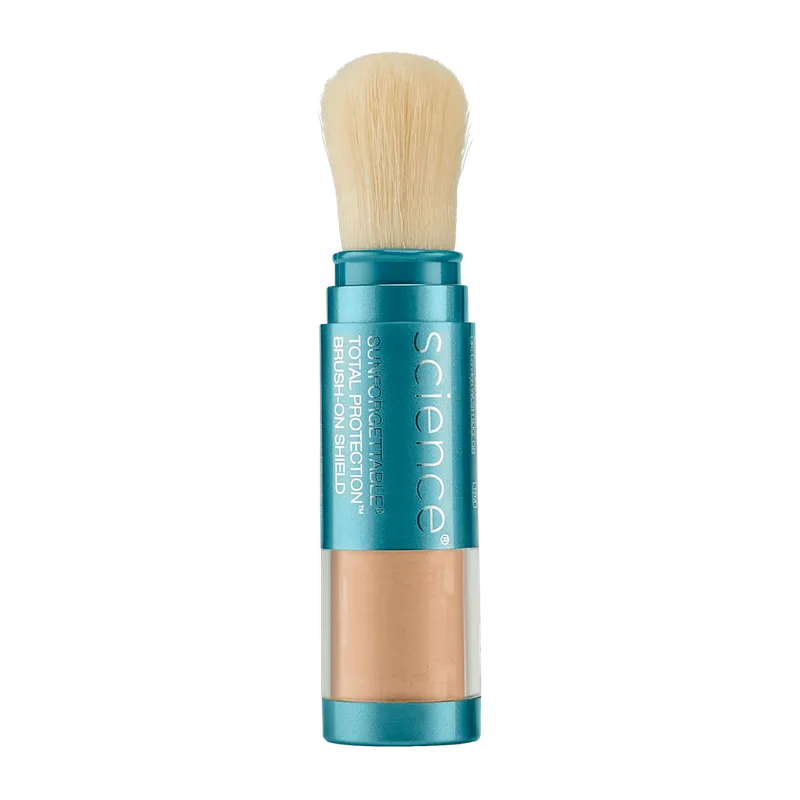
Sunforgettable Total Protection Brush-On Shield SPF 50
Colorescience
$69
★★★★☆
The downside is price. At $69, this costs more than most liquid sunscreens that provide superior protection. But for reapplication over makeup, nothing works better.
Best Value: Brush On Block Mineral Powder
Half the price of Colorescience with 80% of the performance. The coverage isn’t as even and the brush feels cheaper, but the zinc oxide formula provides legitimate UV protection at amounts people actually use.
The compact design makes this better for travel, and SPF 30 sets more realistic expectations than inflated SPF 50+ claims. If you’ll actually use it for reapplication, the lower price makes frequent application more palatable.
Mineral Powder Sunscreen SPF 30
Brush On Block
$35
★★★★☆
Best for Sensitive Skin: Supergoop Perfect Day
The gentlest formula we tested, with minimal white cast and a finely-milled texture that doesn’t emphasize dry patches. SPF 25 is honest about realistic protection levels.
This works particularly well over mineral sunscreens that might feel heavy by midday. The powder adds a mattifying effect without the zinc oxide overload that can irritate reactive skin.

Perfect Day Powder SPF 25
Supergoop
$36
★★★½☆
Application Strategy for Real Protection
If you’re going to use powder sunscreen, do it right:
Start with liquid SPF. Powder is supplemental, not primary protection. Apply proper amounts of liquid sunscreen in your morning routine first.
Reapply every 90 minutes in direct sun. More frequently than liquid sunscreen because powder coverage is inherently less reliable.
Focus on high-exposure areas. Nose, cheekbones, forehead, and ears get the most UV. Concentrate powder application there.
Use the right tool. Dense brushes provide more even coverage than the flimsy applicators included with most compacts. A clean makeup brush works better than most built-in options.
Don’t rely on SPF makeup. Powder foundation with SPF 15 provides maybe SPF 3-5 protection at normal application. Use dedicated sunscreen underneath.
When to Skip Powder Sunscreen
Some situations make powder sunscreen pointless:
Water activities. Powder washes off immediately. Stick to water-resistant liquids.
Heavy sweating. Gym sessions, outdoor work, or hot yoga will remove powder within minutes.
Very fair skin. If you burn easily, powder alone isn’t sufficient even for reapplication. Consider reapplying liquid sunscreen or seeking shade.
Budget constraints. Cheap powder sunscreens often provide minimal protection. A $15 liquid sunscreen works better than a $20 powder.
The Bottom Line
Powder sunscreen serves a specific purpose: maintaining UV protection over makeup when liquid reapplication isn’t practical. It’s not primary protection, and it’s not as effective as the SPF numbers suggest.
But for people who actually reapply sunscreen (most don’t), powder makes the process feasible during a busy day. Used correctly — over proper liquid SPF and applied generously — it adds meaningful protection.
The key is honest expectations. Think of powder sunscreen as insurance for your morning SPF, not a replacement for it. At that job, the good ones actually work.