
Anti-Aging
Medik8 Crystal Retinal Review — The Retinaldehyde Standard
Honest review of Medik8 Crystal Retinal retinaldehyde serum. How it compares to The Ordinary Retinal and tretinoin across all 5 strengths.
Disclosure — This article may contain affiliate links. We earn a small commission at no extra cost to you when you purchase through our links. This supports our ability to create independent, evidence-based skincare content.
Quick Verdict
Rating: 4.3/5
Medik8 Crystal Retinal is what retinaldehyde should be — stable, effective, and way less dramatic than tretinoin. It’s pricey for what you get, but if you want to skip the prescription route without settling for weak drugstore options, this hits the sweet spot.
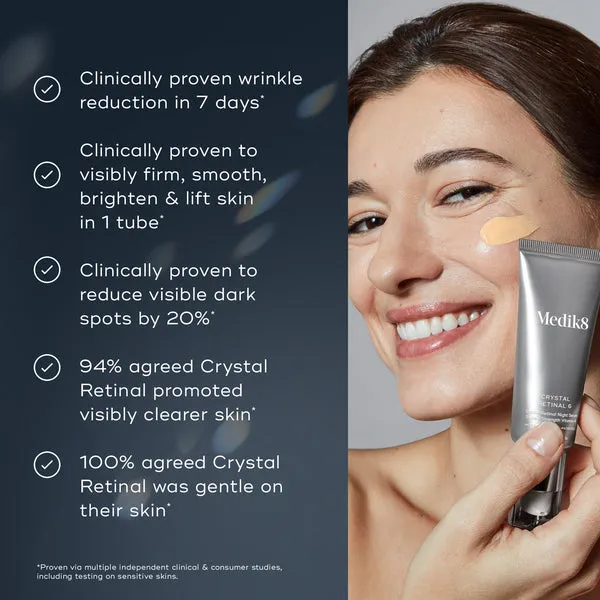
Crystal Retinal 6
Medik8
$69
★★★★☆
What we liked
- + Stable retinaldehyde formula
- + Multiple strength options
- + Less irritating than tretinoin
- + Elegant texture
Worth noting
- - Expensive for the category
- - Slower results than prescription
- - Can still cause purging
A premium retinaldehyde that delivers on stability and gentleness, but the price point puts it in luxury territory.
What Is Crystal Retinal?
Crystal Retinal is Medik8’s retinaldehyde serum, and they’ve built their whole anti-aging reputation around it. Retinaldehyde sits between regular retinol and prescription tretinoin in terms of strength — it’s one conversion step closer to retinoic acid than retinol, which means faster results with (theoretically) less irritation.
The line comes in five strengths: Crystal Retinal 1, 3, 6, 10, and 20. Most people start with the 3 or 6, depending on their retinoid experience. The numbers represent the percentage of encapsulated retinaldehyde, so Crystal Retinal 20 is seriously strong stuff.
Here’s what makes it different from regular retinol: retinaldehyde only needs one enzymatic conversion to become active retinoic acid in your skin. Retinol needs two conversions. That extra step matters — you get more of the good stuff actually working instead of getting lost in translation.
Texture and Application
This feels like a proper serum. Not too thick, not too thin, with a slight slip that makes it easy to spread. It absorbs cleanly without that sticky film some retinoids leave behind. No weird smell, no color — it’s refreshingly boring in the best way.
You use it at night after cleansing but before moisturizer. Start with every third night for the first two weeks, then every other night, then nightly if your skin can handle it. The usual retinoid drill.
One thing to note: this comes in those single-use capsules for some strengths, which is both genius and annoying. Genius because retinaldehyde is notoriously unstable and the capsules protect it from light and air. Annoying because you can’t really control your dose — you get what you get in each capsule.
Performance: The 8-Week Test
Week 1-2: Started with Crystal Retinal 6 every third night. Minimal irritation, which was surprising. A tiny bit of dryness around my eyes, but nothing dramatic. No purging yet.
Week 3-4: Bumped up to every other night. This is when things got interesting. Definitely some purging — nothing crazy, but my usual suspects (chin, jawline) got a bit cranky. Skin texture started improving though. Those little bumps on my forehead were smoothing out.
Week 5-6: Moved to nightly use. Skin was handling it like a champ. The purging calmed down, and I started seeing real changes. Fine lines around my eyes looked softer. That rough patch on my cheek from an old breakout was finally fading.
Week 8: This is where retinaldehyde shines. Skin looked brighter, felt smoother, and my stubborn melasma spots were definitely lighter. Not gone, but improved enough that I noticed without looking for it.
How It Compares to the Competition
vs. The Ordinary Granactive Retinoid 2%
Not even close. The Ordinary’s “retinoid” is actually a retinyl retinoate complex — a much gentler derivative that barely registers as active. It’s $9 versus Medik8’s $69, but you get what you pay for. The Ordinary is fine for absolute beginners who are scared of any irritation, but if you want actual results, save up for something stronger.
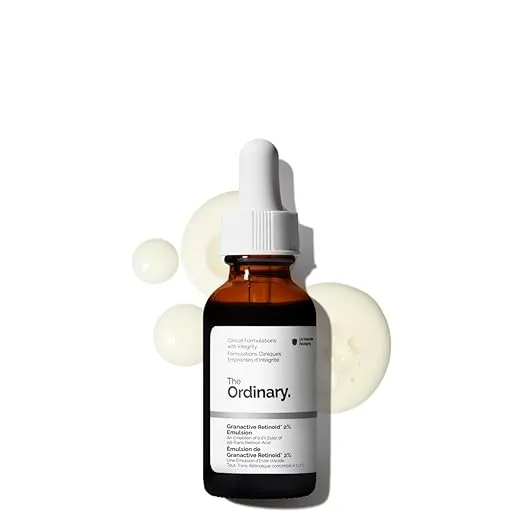
Granactive Retinoid 2% Emulsion
The Ordinary
$9
★★★½☆
What we liked
- + Extremely affordable
- + Good for beginners
- + Minimal irritation
Worth noting
- - Weaker results
- - Basic packaging
- - Less research backing
Great starter option but don't expect the same performance as true retinaldehyde.
vs. Prescription Tretinoin
Tretinoin is still the gold standard. It works faster and has decades of research behind it. But it’s also way more irritating, requires a dermatologist visit, and can be a nightmare to adjust to. Crystal Retinal gives you maybe 70% of tretinoin’s results with 30% of the drama. For most people, that’s a fair trade.
If you’ve tried tretinoin and couldn’t handle it, or if you want anti-aging benefits without the prescription hassle, Crystal Retinal is your middle ground.
vs. Plant-Based Alternatives
If you’re looking for something completely different, Kerala Botanics’ Ayurvedic Vitamin C Face Oil takes a totally different approach. Instead of retinaldehyde, it uses bakuchiol — a plant compound that acts like retinol but without the irritation. It’s not apples-to-apples, but it’s worth considering if you want to avoid traditional retinoids entirely.
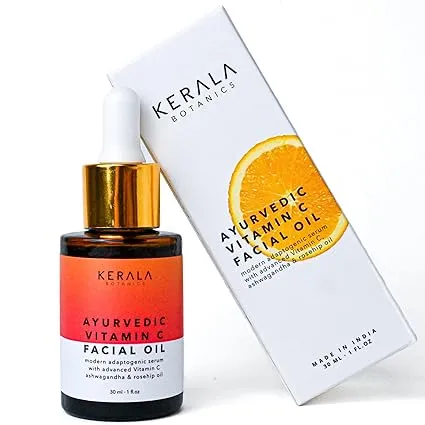
Ayurvedic Vitamin C Face Oil
Kerala Botanics
$49
★★★★☆
What we liked
- + Contains bakuchiol (retinol alternative)
- + Oil format is unique
- + Combines vitamin C and retinol alternative
- + Ayurvedic formulation
Worth noting
- - Different approach than retinaldehyde
- - Oil texture not for everyone
- - Less clinical research
If you prefer plant-based alternatives to traditional retinoids, this bakuchiol-vitamin C combo offers a gentler path.
Which Strength Should You Choose?
Crystal Retinal 1 or 3: Total beginners or sensitive skin types. If you’ve never used any retinoid, start here.
Crystal Retinal 6: The sweet spot for most people. Strong enough to see real results, gentle enough to build tolerance.
Crystal Retinal 10: If you’ve used retinol successfully for months and want to step up.
Crystal Retinal 20: Only if you’ve mastered lower strengths and have tough skin. This is approaching prescription-level intensity.
Don’t jump straight to the highest strength. Retinaldehyde might be gentler than tretinoin, but it can still wreck your skin if you’re overzealous.
Who Should Buy This
Crystal Retinal makes sense if you:
- Want retinoid results without prescription hassles
- Have tried tretinoin and couldn’t tolerate it
- Don’t mind spending more for stability and elegance
- Are serious about anti-aging but want a predictable experience
Skip it if you:
- Are happy with basic retinol products
- Want the cheapest possible option
- Prefer natural/plant-based ingredients
- Are looking for spot treatment rather than overall anti-aging
The Value Question
Here’s where Crystal Retinal gets tricky. At $69 for a month’s supply, it’s expensive. You’re paying for the stable retinaldehyde formulation, the research behind it, and the fancy packaging. But you can get prescription tretinoin for less, and our best retinol serums roundup includes several options under $30 that work well too.
The question is whether the middle-ground approach is worth the premium. For most people who want reliable results without prescription-strength drama, it probably is.
How to Use It in Your Routine
Crystal Retinal goes in your complete evening skincare routine after cleansing but before moisturizer. Here’s the order that actually matters:
- Cleanser
- Any water-based serums (like hyaluronic acid)
- Crystal Retinal
- Moisturizer
- Face oil if you use one
Don’t use it the same night as other actives like glycolic acid or salicylic acid. Your skin doesn’t need that level of chaos.
And obviously, sunscreen is non-negotiable the next morning. Retinoids make your skin more photosensitive, so proper sun protection isn’t optional.
The Bottom Line
Crystal Retinal is a solid choice if you want proven anti-aging ingredients without the prescription route. It’s more expensive than drugstore options but more reliable than cheap alternatives. The multiple strength options let you work up gradually, and the stable formula means you’re actually getting what you pay for.
Is it revolutionary? No. Is it a well-executed retinaldehyde that does what it promises? Absolutely. Sometimes that’s enough.
For more context on how retinaldehyde fits into the bigger picture, check out our complete comparison of retinol vs retinaldehyde vs tretinoin. And if you’re building an anti-aging routine from scratch, start with the basics of layering skincare products before adding any actives.
Final Rating
| Category | Rating | Notes |
|---|---|---|
| Effectiveness | 4.5/5 | Delivers visible results within 8 weeks |
| Gentleness | 4.0/5 | Much easier than tretinoin, some purging expected |
| Value | 3.5/5 | Expensive but you get what you pay for |
| Packaging | 4.5/5 | Stable capsules protect the formula |
| Overall | 4.3/5 | Premium retinaldehyde that justifies most of its price tag |
Bottom line: If you want retinoid results without prescription drama and don’t mind paying for quality, Crystal Retinal 6 is your starting point. Just don’t expect miracles overnight — good skin takes time, whether you’re spending $9 or $69.