
Body Care
Best Foot Creams for Cracked Heels
The best foot creams for cracked heels, ranked by urea strength, exfoliating power, and price, plus the overnight sock method and when to see a doctor.
Disclosure — This article may contain affiliate links. We earn a small commission at no extra cost to you when you purchase through our links. This supports our ability to create independent, evidence-based skincare content.
Cracked heels are not a moisturizer problem. They’re a moisture-retention problem plus a thickness problem, and most creams only address the first half.
Heel skin is the thickest on your body, with almost no oil glands. It dries out, hardens, loses flexibility, and then splits under your body weight. Fixing it takes three jobs done together: add water, soften the dead layer, and seal it all in. The best foot creams for cracked heels do at least two of those. The best routines do all three.
Here’s how we ranked them, which ingredients matter, and when to stop shopping and call a doctor.
What We Looked For in a Foot Cream
We judged each product on formulation, not packaging claims. Five criteria mattered most:
- Keratolytic ingredient and strength. Urea, salicylic acid, or lactic acid, at a percentage that’s actually disclosed.
- Humectant and occlusive support. Glycerin, petrolatum, and similar ingredients keep what the active loosens from drying back out.
- Tolerability on damaged skin. Heels with fissures behave differently than heels that are merely rough.
- Texture. A cream you hate applying is a cream you stop using by day four.
- Price per use. Foot creams get used generously, so cost adds up.
We didn’t let brand relationships touch the rankings. Affiliate links exist on this page, and the order would be the same without them.
Urea Percentages, Decoded
Urea is the workhorse here. It’s a natural component of skin’s own moisturizing factor, and its effect changes with concentration. (Our urea explainer covers the full mechanism.)
- Under 10%: mostly a humectant. It pulls water into the skin but does little to the thick layer on top.
- 10%: hydrates and starts to soften. This is the sweet spot for mild to moderate dryness.
- 20 to 25%: meaningfully keratolytic. It breaks down the bonds between dead skin cells, so thick heel calluses thin out over a couple of weeks.
- 30 to 40%: strong enough to dissolve very hard skin. These are typically used on small areas, and they irritate easily.
The trade-off is sting. Higher-percentage urea on open cracks burns. If you can see a split, start lower or skip the active until it closes.
Salicylic Acid: Useful, With Limits
Salicylic acid (a beta hydroxy acid, covered in our BHA guide) is oil-soluble and exfoliates by dissolving the glue between dead cells. On feet, it works for flaky, scaly, rough skin.
Two cautions. First, it’s less hydrating than urea, so it needs to be paired with a moisturizer. Second, it’s not for broken skin, and anyone with an aspirin allergy should check with a pharmacist first. People with diabetes or poor circulation should skip it unless a clinician says otherwise.
For a broader look at the exfoliant category, see our best body exfoliants.
The Occlusive-Plus-Socks Method
This is the part that does the heavy lifting. A great cream used badly loses to an okay cream used well.
- Soak or shower first. Hydrated skin takes up product better. Five to ten minutes is plenty.
- Smooth gently. Use a pumice stone or foot file on damp skin, a few light passes only. Aggressive filing makes calluses grow back thicker.
- Pat dry, then apply your active cream. Go on thick, especially over the heel edge where splits start.
- Seal with petrolatum. A thin layer of petroleum jelly over the cream cuts water loss. Our petrolatum guide explains why it’s still the benchmark occlusive.
- Put on cotton socks. They hold everything in place and keep your sheets clean.
- Do it nightly for two weeks. Then drop to a few times a week for maintenance.
If you’ve tried slugging on your face, this is the same logic applied to a much tougher surface.
#1 Best Overall: Eucerin Advanced Repair Foot Creme
Ten percent urea is the right default for most people, and this is the easiest formula to use consistently. It spreads without dragging, absorbs in a couple of minutes, and doesn’t leave the slick film that makes you slide across hardwood.
It won’t flatten a thick, years-old callus. But for ordinary cracked heels, nightly use with socks tends to produce visible softening within about a week. The sting on open cracks is mild but real.
Verdict: if you’re buying one foot cream, buy this one.

Advanced Repair Foot Creme
Eucerin
$11
★★★★½
What we liked
- + 10% urea hydrates and gently softens thick skin
- + Rich but not greasy
- + Widely available and inexpensive
Worth noting
- - Can sting on open fissures
- - Not strong enough for very thick, stubborn calluses
The best starting point for most cracked heels: effective urea strength, a pleasant texture, and a price that makes daily use easy.
#2 Best for Severe Calluses: Flexitol Heel Balm
At 25% urea, this is a different tool. It’s a keratolytic, meaning it actively dissolves dead skin rather than just moisturizing it. The balm is dense, a little waxy, and needs a minute to sink in.
Use it on the heel only, and expect some stinging if the skin isn’t fully intact. Don’t start here if your feet are merely dry. Start here if you’ve been using 10% urea for a month and the hard ridge on your heel hasn’t moved.
Verdict: strong, effective, and overkill for mild cases.
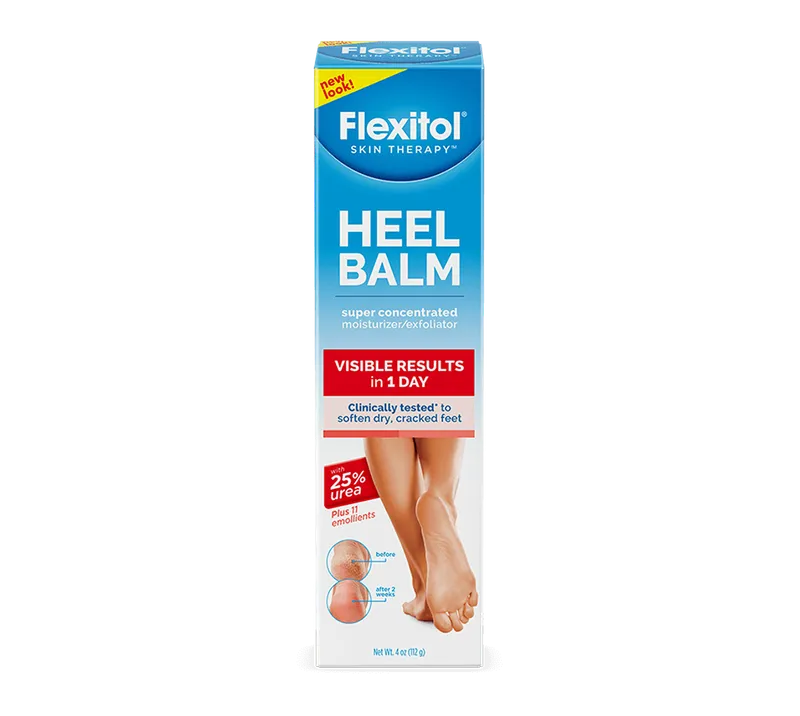
Heel Balm
Flexitol
$13
★★★★½
What we liked
- + 25% urea for thick, hardened skin
- + Fast, visible softening
- + Dense enough to work as a standalone treatment
Worth noting
- - Stings on broken skin
- - Too strong for daily use on thin or sensitive feet
The strongest over-the-counter urea option here, and the right pick when 10% has stopped doing much.
#3 Best Value Salicylic Acid Option: CeraVe SA Smoothing Cream
This isn’t a foot cream by label. It’s a body cream for rough, bumpy skin that combines salicylic acid with ceramides and humectants. On heels, it handles flaking and rough texture well and costs less per ounce than most foot-specific products.
The limit is richness. Deep cracks need something heavier, so layer petrolatum on top. And again: intact skin only. Our best body lotions for dry skin list covers other options if this one doesn’t suit you.
Verdict: a smart pick for scaly, rough heels, and a modest one for deep splits.
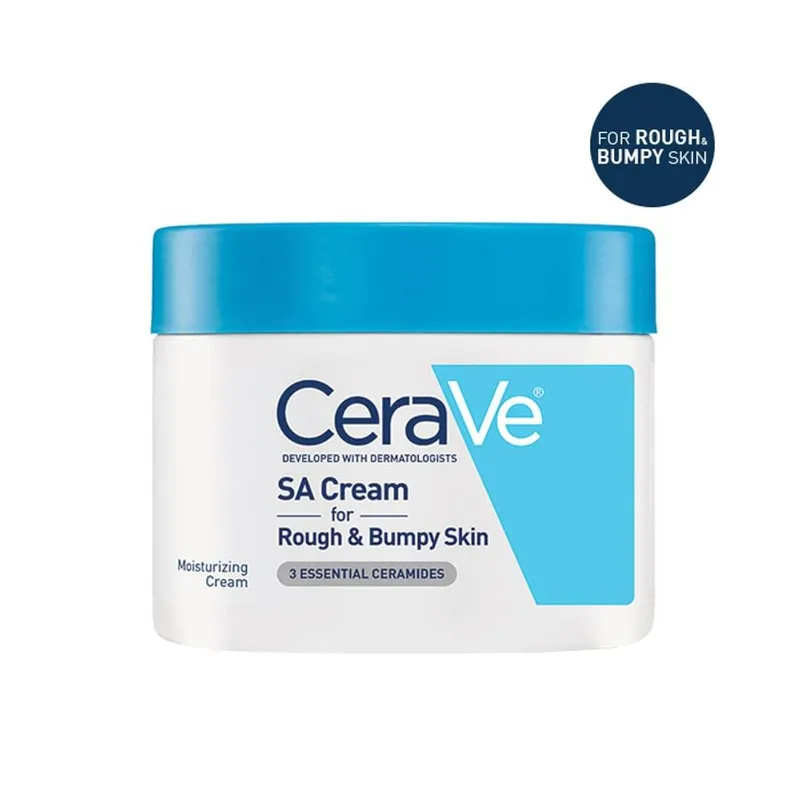
SA Smoothing Cream for Rough & Bumpy Skin
CeraVe
$17
★★★★☆
What we liked
- + Salicylic acid plus ceramides in one formula
- + Fragrance-free
- + Doubles as a body product
Worth noting
- - Not marketed for feet specifically
- - Less rich than dedicated foot creams
A reasonable salicylic acid option for rough, flaky heels, as long as the skin is intact.
#4 Best for Sore, Split Skin: O’Keeffe’s Healthy Feet Foot Cream
Not every pick needs an acid. When the heel is already cracked and tender, a urea cream can feel like rubbing lemon juice on a paper cut. This one relies on humectants and a thick base instead, so it’s far easier to tolerate.
It exfoliates very little, which means it’s slower on calluses. Think of it as the repair phase. Use it while fissures close, then move to urea.
Verdict: the one to reach for when other creams sting.

Healthy Feet Foot Cream
O'Keeffe's
$10
★★★★☆
What we liked
- + Humectant-driven, with no urea to sting
- + Thick, long-lasting feel
- + Good for skin that's cracked and irritated
Worth noting
- - Little exfoliating action
- - Slower on thick calluses
A gentler pick for sore, fissured heels that can't tolerate urea or acids yet.
#5 Best Budget Pick: Vaseline Original Petroleum Jelly
Petrolatum doesn’t treat calluses. It stops water from leaving your skin, which is half the battle. Layered over any of the creams above, it turns a decent routine into a good one.
It’s also fine on its own for maintenance once your heels are smooth. The downside is obvious: it’s greasy, and without socks it ends up on everything you own.
Verdict: five dollars, and the best-value step in this whole list.
Original Petroleum Jelly
Vaseline
$5
★★★★☆
What we liked
- + Best occlusive per dollar
- + Seals in whatever you layer under it
- + Works for fissure protection
Worth noting
- - Greasy, so socks are mandatory
- - Doesn't exfoliate or hydrate on its own
The cheapest thing that works, best used as the top layer over a urea cream.
Quick Comparison
| Rank | Product | Key active | Price | Best for |
|---|---|---|---|---|
| 1 | Eucerin Advanced Repair Foot Creme | 10% urea | $11 | Most cracked heels |
| 2 | Flexitol Heel Balm | 25% urea | $13 | Thick, hard calluses |
| 3 | CeraVe SA Smoothing Cream | Salicylic acid | $17 | Rough, flaky skin |
| 4 | O’Keeffe’s Healthy Feet | Humectants | $10 | Sore or split skin |
| 5 | Vaseline Petroleum Jelly | Petrolatum | $5 | Sealing and maintenance |
When a Crack Needs a Doctor
Most cracked heels are cosmetic and mechanical. Some aren’t. See a doctor or podiatrist if you notice any of the following:
- Bleeding or deep fissures that don’t improve after two to three weeks of consistent treatment.
- Signs of infection: warmth, spreading redness, swelling, pus, or a fever.
- Diabetes or poor circulation. Cracks can become ulcers quickly in these cases. Don’t self-treat with exfoliating acids, and get a clinician to look at any split early.
- Pain that makes walking difficult.
- Scaling that looks like a moccasin pattern. That can be a fungal infection (tinea pedis), which no moisturizer will fix.
- Thick, scaly skin on both soles since childhood or with a family history. Some inherited conditions and inflammatory skin diseases, like eczema or psoriasis, need prescription treatment.
A good rule: if you’ve done the soak, cream, petrolatum, and socks routine nightly for two weeks and the crack looks the same or worse, the problem isn’t your product.
Putting It All Together
Start with 10% urea and petrolatum at night, with socks. Move to 25% urea only if the callus doesn’t budge after three or four weeks. Use a salicylic acid cream for flaky, rough skin, but not on open cracks. And if the skin is already split and sore, calm it first with a gentler formula.
The chemistry here isn’t complicated. The consistency is the hard part.
Methodology and Bottom Line
We evaluated these products by comparing ingredient lists, disclosed active concentrations, and texture, and weighing that against what clinical literature supports for each active. We didn’t run lab measurements of moisture or callus thickness. Prices reflect typical retail listings and shift often.
Our bottom-line recommendation: buy the Eucerin cream, add a tub of petroleum jelly, and wear socks to bed. That combination handles the majority of cracked heels for about $16. Reach for Flexitol if the callus is stubborn, and call a doctor if the crack isn’t behaving like an ordinary crack.