
Ingredients
Petrolatum and Occlusives: The Cheapest Thing That Works
Petrolatum reduces water loss by up to 99%. We break down the TEWL science, the mineral oil fear, and why occlusives aren't moisturizers.
Disclosure — This article may contain affiliate links. We earn a small commission at no extra cost to you when you purchase through our links. This supports our ability to create independent, evidence-based skincare content.
Here’s a sentence that should annoy every $200 moisturizer on the market: the single most effective ingredient for stopping water loss from your skin costs about six dollars a jar, has been around since 1870, and derms have been recommending it since before “barrier repair” was a marketing phrase.
That ingredient is petrolatum. You know it as Vaseline. And despite decades of clean-beauty side-eye, it is still — by the actual numbers — the gold standard for one very specific job. Not moisturizing. Occluding. Those are not the same thing, and mixing them up is where most of the confusion (and most of the hate) comes from.
Occlusive, Humectant, Emollient: Know the Difference Before You Judge the Jar
Skincare ingredients that hydrate generally fall into three buckets, and people use “moisturizer” to describe all three like they’re interchangeable. They’re not.
Humectants pull water in — think glycerin or hyaluronic acid, grabbing moisture from the air or deeper skin layers. We’ve gone deep on why glycerin is criminally underrated if you want the full rundown.
Emollients smooth and soften by filling in the gaps between skin cells — squalane and most fatty esters live here.
Occlusives sit on top and form a physical seal. They don’t add water. They don’t soften anything. Their entire job is to stop water already in your skin from evaporating into the air. That’s it. That’s the whole mechanism.
Petrolatum is the most effective occlusive we have. Not “one of the more effective.” The most. Clinical measurements put it at the top of the list, ahead of lanolin, mineral oil, dimethicone, and plant waxes. If your skin is a leaky bucket, petrolatum is the lid. It’s not refilling the bucket. That’s a different ingredient’s job, which is exactly why slathering petrolatum on bone-dry skin with nothing underneath it sometimes doesn’t fix the problem — more on that in a second.
The TEWL Numbers That Actually Convinced Dermatology
TEWL stands for transepidermal water loss, and it’s the measurement scientists use to quantify how much moisture is evaporating through your skin in a given time. Lower TEWL generally means a healthier, better-functioning barrier.
Petrolatum’s reputation isn’t vibes-based. In classic barrier studies, a thin layer of petrolatum applied to skin reduces TEWL by somewhere around 98%. Not 98 degrees of marketing fluff — 98% less water escaping compared to untreated skin. Most “advanced barrier” moisturizers you’ll find at Sephora, when tested the same way, land somewhere in the 30-60% range. Ceramide-based creams, often considered the current gold standard for barrier repair, typically perform very well too, but they’re working through a different and slower mechanism — rebuilding the lipid matrix rather than just capping it off. We cover that distinction in our ceramides guide if you want the deeper dive.
This is why petrolatum shows up in burn units, post-procedure skin care, and pediatric dermatology recommendations. It’s not nostalgia. It’s math.
The catch: because it works purely by sealing, it works best on skin that already has moisture to seal in. Apply it to skin with nothing underneath — no water, no humectant, no serum — and you’re sealing in dryness, not fixing it. This is the single most common complaint we hear about Vaseline “not working,” and it’s almost always a layering problem, not a product problem. If you haven’t read our slugging guide, start there — it walks through exactly how to layer an occlusive so it actually helps instead of just sitting there looking greasy.
The Purity Question: Is Your Jar of Vaseline Actually Clean?
This is a fair question and it deserves a real answer instead of a shrug.
Petrolatum is a byproduct of petroleum refining, which sounds alarming until you remember it describes where the raw material came from, not what ends up on your face. Raw petroleum distillates do contain contaminants called polycyclic aromatic hydrocarbons, or PAHs, some of which are genuinely concerning. This is a real issue — in unrefined mineral oil.
But cosmetic-grade petrolatum isn’t unrefined. In the U.S. and EU, petrolatum used in skincare has to meet USP (United States Pharmacopeia) or equivalent purity standards, which require multiple rounds of purification specifically to strip out those PAHs down to levels considered safe. Vaseline brand petroleum jelly has been triple-purified and USP-grade since, frankly, before most of us were born. The European Commission’s Scientific Committee on Consumer Safety has reviewed this repeatedly and keeps landing on the same conclusion: refined, cosmetic-grade petrolatum is not a contamination risk.
Where this gets murkier is with unbranded, ultra-cheap “petroleum jelly” sold outside of regulated markets, where purification standards and documentation can be inconsistent. If you’re buying a reputable brand — Vaseline, Aquaphor, CeraVe, Eucerin — you’re getting pharmaceutical-grade material. If you’re buying a no-name tub from a marketplace listing with zero manufacturer info, that’s a different conversation, and honestly one we’ve written about in the context of spotting counterfeit skincare on Amazon.
The Mineral Oil Fear, Debunked (Mostly)
Mineral oil and petrolatum get lumped together in the same clean-beauty panic, and it’s worth separating two different claims people make.
Claim one: it clogs pores. This one’s been tested directly and doesn’t hold up for cosmetic-grade mineral oil or petrolatum — both consistently test as non-comedogenic in actual studies, despite their heavy, greasy texture tricking people into assuming otherwise. Texture and pore-clogging potential are not the same thing, something we unpack fully in our comedogenic ratings piece. If you’ve broken out after using Vaseline, it’s more likely the occlusion trapping existing bacteria, sweat, or product underneath it — not the petrolatum itself causing new clogs.
Claim two: it’s carcinogenic. This fear traces back to unrefined mineral oil and industrial-grade petroleum products, which genuinely can carry PAH contamination at concerning levels. It does not apply to the cosmetic, pharmaceutical-grade petrolatum sitting in your bathroom cabinet, which has had those compounds purified out and is regulated specifically because of this history. Conflating the two is a bit like being scared of table salt because sodium chloride sounds like a chemical weapon.
Is cosmetic petrolatum “natural”? No, not in the Instagram sense. Is it safe, well-studied, and more effective than almost anything marketed as an alternative? The evidence says yes.
Why an Occlusive Alone Isn’t a Full Routine
Because petrolatum doesn’t add any water or nutrients, using it as your only skincare step is a bit like buying a great raincoat and never carrying an umbrella. It’ll protect what’s there — it won’t add anything new.
This matters most if you’re dealing with actual dehydration versus dryness, which is its own can of worms. Dehydrated skin needs humectants first. Dry skin — meaning a barrier that’s genuinely lipid-deficient — needs emollients and ceramides layered underneath the occlusive, not instead of it. If your barrier is actively compromised from over-exfoliating or an eczema flare, pair petrolatum with real barrier repair ingredients rather than treating it as a standalone fix.
Original Petroleum Jelly
Vaseline
$6
★★★★½
Six dollars, USP-grade, does exactly one job and does it better than anything else on this list. Keep a jar. Use it on chapped lips, cracked knuckles, and as the final seal in a slugging routine. Don’t expect it to hydrate on its own, because that was never its job.
Healing Ointment
Aquaphor
$14
★★★★½
Aquaphor is petrolatum with a supporting cast — panthenol, glycerin, lanolin — so it’s technically doing a little more than straight Vaseline. We’ve got a full breakdown of panthenol’s role if you want to know what that addition actually brings to the table. It’s thicker, a touch more medicinal-smelling, and a solid pick for post-procedure skin or seriously cracked patches.
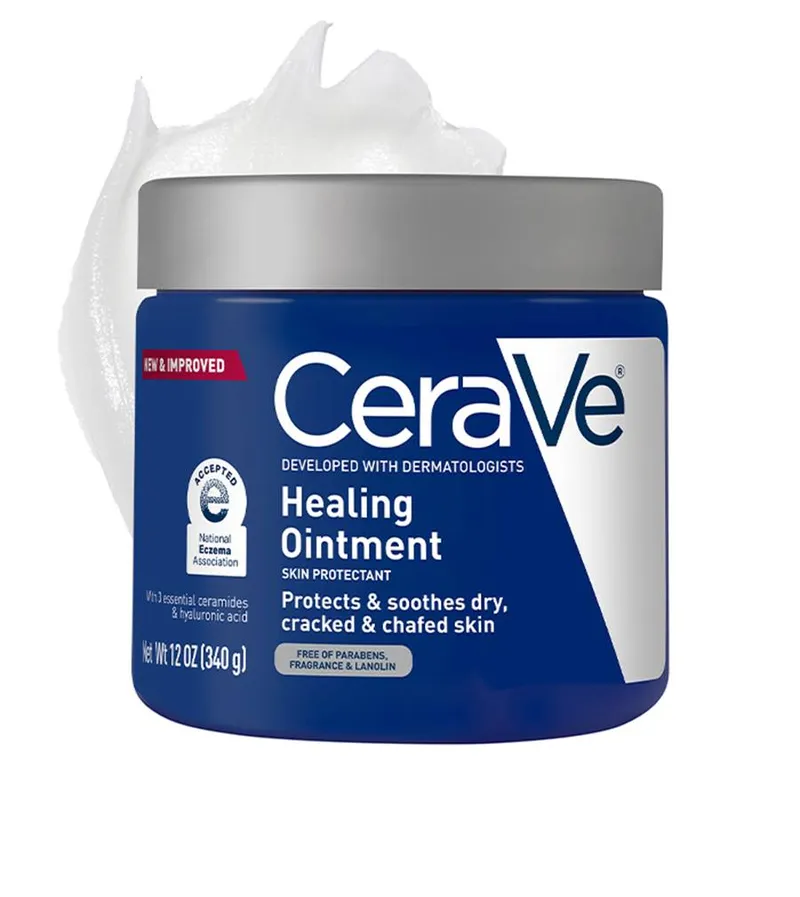
Healing Ointment
CeraVe
$13
★★★★½
This one’s the smartest formula of the three for slugging specifically, because CeraVe adds ceramides into the petrolatum base. You get the near-99% occlusion and some actual lipid replenishment in the same jar. If you’re going to pick one tub to keep by the sink, this is probably it.
If the Jar Texture Just Isn’t for You
Not everyone wants a petroleum-based finish on their face, and that’s a completely reasonable preference, not a scientific failing on your part. Facial oils work through a related but distinct mechanism — they’re emollient-occlusive hybrids, less airtight than petrolatum but far more pleasant to wear under makeup and less likely to feel like you slept in a candle.
Kerala Botanics’ Ayurvedic Vitamin C Face Oil is worth a look here. It leans on an advanced, longer-lasting form of vitamin C plus bakuchiol, and because it’s formulated as an oil rather than a serum, it brings some mild occlusive benefit along with brightening and retinol-adjacent effects. It won’t touch petrolatum’s TEWL numbers in a lab, and the vitamin C stability claims haven’t been tested with the same rigor as something like SkinCeuticals CE Ferulic. It’s also genuinely not for everyone — if you’re oily or acne-prone, an oil format is already working against you before the ingredients get a chance. But for dry or normal skin types who want brightening, a retinol alternative, and a lighter-weight finish than straight jelly, in one bottle, it’s a reasonable trade.

Ayurvedic Vitamin C Face Oil
Kerala Botanics
$49
★★★★☆
Putting It All Together
Petrolatum isn’t exciting. It doesn’t have a serum-style ritual or a satisfying ingredient story. It’s just a cheap, decades-old, heavily studied substance that seals water in better than nearly anything else we’ve invented since. The purity fears are real for unrefined industrial mineral oil and basically irrelevant for the USP-grade stuff sitting in a regulated jar on a drugstore shelf. The pore-clogging myth doesn’t hold up under testing. And the only real mistake people make with it is treating an occlusive like a full moisturizer, sealing in nothing, and wondering why their skin still feels tight underneath.
Use it as the last step, not the only step. Pair it with a humectant and an emollient if your skin actually needs rehydrating. And if you want the greasy-jar experience without the greasy-jar texture, a good face oil can get you most of the way there — just don’t expect it to beat the chemistry of the cheapest thing in your bathroom cabinet.