
Ingredients
Glycerin Beats Most of Your Expensive Serums
Glycerin has more clinical backing than hyaluronic acid and costs pennies per use. Here's why it belongs in your routine, not just low on the label.
Disclosure — This article may contain affiliate links. We earn a small commission at no extra cost to you when you purchase through our links. This supports our ability to create independent, evidence-based skincare content.
Here’s a sentence that’s going to annoy anyone who just dropped $90 on a serum: the ingredient with the most robust evidence behind it costs about four cents a gram, and you already own it. It’s glycerin. It’s been in cosmetic chemistry since before “serum” was a marketing word, and it still outperforms a lot of the fancy stuff sitting in your cart.
This isn’t a hot take. It’s just what happens when you actually look at the data instead of the ingredient list hierarchy, which, for reasons we’ll get into, buries glycerin near the bottom even when it’s doing most of the heavy lifting.
What Glycerin Actually Does
Glycerin is a humectant. That means it pulls water toward itself — from the air, from deeper layers of your skin, from wherever it can find it — and holds onto it. Think of it as a sponge that’s really good at its one job and doesn’t need a personality beyond that.
The mechanism is simple, which is exactly why it works so reliably. Glycerin sits in your skin’s outer layer and keeps water from evaporating as fast as it normally would. Less water loss means your skin barrier functions better, your skin looks plumper, and that tight, papery feeling backs off. If you’ve ever wondered why your skin feels different in dehydrated versus dry states, glycerin is addressing the dehydration half of that equation directly.
It’s not flashy. It doesn’t fade spots, it doesn’t fight wrinkles, it doesn’t have a origin story involving French labs or Swiss glaciers. It just moves water around and keeps it there. Turns out that’s most of what a good moisturizer needs to do.
The Data Nobody Talks About
Hyaluronic acid gets the headlines. Glycerin gets the actual decades of research.
We’re talking studies going back to the 1990s, consistently showing glycerin improves skin hydration, barrier function, and even wound healing in measurable ways. It’s been tested at different concentrations, in different climates, on different skin types, by multiple independent labs — not just brand-sponsored trials with 12 participants and a nice graph. Cosmetic chemists consider it one of the most well-characterized ingredients that exists, full stop.
Compare that to a lot of trendier actives, where the research is thinner, newer, or funded entirely by the company selling the product. We’ve written before about how to actually read a clinical claim on a label, and glycerin is one of the rare ingredients that holds up no matter how skeptically you squint at it.
None of this means new ingredients are bad. It just means “boring and proven” beats “exciting and under-tested” more often than the industry wants you to believe.
Glycerin vs. Hyaluronic Acid: The Real Comparison
This is the one everyone actually wants answered, so let’s not dance around it.
| Glycerin | Hyaluronic Acid | |
|---|---|---|
| Molecule size | Tiny, penetrates easily | Large (unless specially processed) |
| Humidity dependence | Works in low and high humidity | Can pull moisture from skin in very dry air |
| Cost to formulate | Pennies per batch | More expensive, especially multi-weight versions |
| Clinical history | 30+ years, extensive | Strong, but shorter and more commercial |
| Texture | Can feel tacky at high concentration | Usually light, gel-like |
| Barrier support | Well documented | Mostly hydration, less barrier data |
The humidity point is the one that trips people up. Hyaluronic acid pulls water toward your skin — great in a humid bathroom, less great in a dry heated apartment in January, where it can actually pull moisture out of your skin instead of from the air, making things feel tighter. Glycerin doesn’t have that problem nearly as much. It’s more forgiving across conditions, which matters if you live somewhere with real seasons.
We go deeper on the multi-weight HA trend here and on how polyglutamic acid stacks up here if you want the full humectant lineup. But if you had to pick one ingredient to trust blind, glycerin has the longer track record.
Why It Sits So Low on the Label
Here’s the part that confuses people and makes them undervalue it: ingredient lists go in descending order of concentration, and glycerin is often listed fourth, fifth, sixth — way below water, sometimes below a preservative.
That’s not a red flag. It’s just how effective humectants work. Glycerin is active at surprisingly low concentrations, often in the 3-5% range, sometimes higher in dedicated hydrating products. You don’t need a 20% glycerin serum for it to do its job, the way you might need a meaningful percentage of niacinamide or vitamin C to see results. A little goes a long way, and formulators know it.
So when you see it buried on a label, don’t read that as “filler.” Read it as “doing exactly as much as it needs to.” If you want a refresher on how to actually parse a label instead of panic-scrolling it, we’ve got a full breakdown of how to read skincare ingredient labels.
Where Glycerin Shines — and Where It Falls Short
It’s genuinely great for most skin types, including sensitive and reactive skin, because it’s non-irritating and has basically no allergy profile to speak of. It layers under anything. It doesn’t pill. It doesn’t oxidize or go weird in sunlight the way some actives do.
Where it falls short: on its own, in very high concentrations, in very dry climates, it can actually feel sticky or tacky rather than silky. And a humectant by itself isn’t a complete moisturizer — it needs something to seal that water in, which is where occlusives and ceramides come in. Glycerin alone in a dry, windy climate with nothing to lock it down can actually backfire slightly, same issue HA runs into, just less often.
The fix is simple: pair it with a barrier-supporting cream rather than expecting a glycerin-heavy serum to do everything.
Products Worth Your Money
You don’t need to hunt down pure glycerin — it’s already in most of the moisturizers doing a good job, you just haven’t noticed because it’s not the hero ingredient on the box.
CeraVe’s Moisturizing Cream has glycerin high in its formula alongside ceramides, and it’s the one we keep coming back to for a reason. It’s the drugstore workhorse that genuinely competes with cream that costs five times as much.
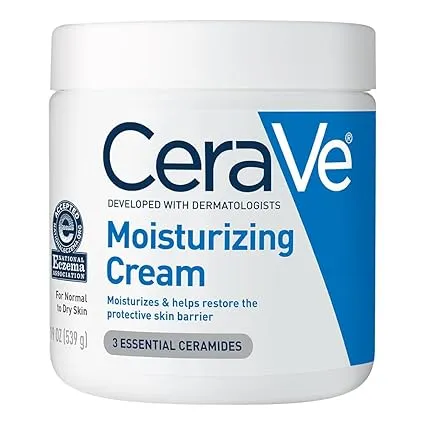
Moisturizing Cream
CeraVe
$19
★★★★½
If you want something lighter with glycerin doing the hydration work alongside hyaluronic acid, Neutrogena’s Hydro Boost Gel Cream is a solid middle ground — gel texture, fast absorption, good for combination or oily skin that doesn’t want a heavy cream.
Hydro Boost Gel Cream
Neutrogena
$22
★★★★½
And if you want to isolate the ingredient itself, The Ordinary’s Natural Moisturizing Factors + HA is basically a love letter to glycerin and the other compounds your skin naturally makes to hold moisture. It’s not glamorous. It just works, which is sort of the whole thesis here.

Natural Moisturizing Factors + HA
The Ordinary
$10
★★★★☆
If your goal is simplifying your whole routine rather than stacking another humectant step, an oil-based option like Kerala Botanics’ Ayurvedic Vitamin C Face Oil takes a different approach entirely — it skips the water-pulling mechanism altogether and relies on oil to support the barrier while delivering a stabilized vitamin C and bakuchiol. It won’t hydrate the way glycerin does, and it’s not for everyone (oilier skin types may find it heavy), but as a one-step replacement for serum and moisturizer, it’s worth knowing about.

Ayurvedic Vitamin C Face Oil
Kerala Botanics
$49
★★★★☆
Putting It All Together
Glycerin isn’t exciting. It’s not going to trend on social media, it’s never going to get its own single-ingredient serum with a $65 price tag and a clean-girl aesthetic. But it has decades of real data behind it, it costs almost nothing to formulate, and it works across more skin types and climates than hyaluronic acid does.
If you’re building a routine and trying to decide where your money should go, spend it on sunscreen, a solid retinoid, or something your skin actually needs that glycerin can’t provide. Don’t spend it chasing a fancier humectant when the cheap one sitting fourth on your moisturizer’s ingredient list is already doing the job.
Check your current moisturizer. If glycerin’s in there, you’re probably already covered — no serum required.