
Ingredients
Snow Mushroom vs Hyaluronic Acid: Is Tremella the Better Humectant?
Snow mushroom is being called the new hyaluronic acid. We check the actual evidence behind Tremella fuciformis before you swap your serum.
Disclosure — This article may contain affiliate links. We earn a small commission at no extra cost to you when you purchase through our links. This supports our ability to create independent, evidence-based skincare content.
Snow mushroom has been called the vegan hyaluronic acid, the K-beauty humectant of the future, and the ingredient that makes HA obsolete. That last claim comes, almost exclusively, from one small study. The rest of the evidence is preclinical — meaning it was done in a lab dish or on mouse skin, not on actual human faces.
That pattern should be familiar. We went through something similar with polyglutamic acid a few years ago. The ingredient was real, the mechanism was plausible, and the marketing got way ahead of the data. Snow mushroom is in roughly the same position right now.
Here’s what we actually know.
What Is Snow Mushroom (Tremella Fuciformis)?
Tremella fuciformis is an edible fungus used in traditional Chinese medicine for centuries — primarily in soups and tonics, not skincare. It has a high polysaccharide content, and polysaccharides are, in general, good humectants. They attract and hold water molecules.
The skincare pitch is this: Tremella polysaccharides have particles smaller than high-molecular-weight hyaluronic acid, which means they may penetrate the skin surface more readily. Smaller particles, deeper hydration. That’s the theory.
It’s not a crazy theory. But a plausible mechanism is not the same as a proven result.
What Does Hyaluronic Acid Actually Do?
Before comparing the two, it’s worth being precise about what HA actually is. Hyaluronic acid (technically sodium hyaluronate in most formulas) is a glycosaminoglycan — a long sugar-based chain that occurs naturally in your skin and connective tissue. It can hold roughly 1,000 times its weight in water, which is why it became the gold standard humectant.
The catch is molecular weight. High-molecular-weight HA (above 1,000 kDa) sits on the surface of the skin and forms a film. It hydrates well and gives you that immediate plump feeling, but it doesn’t penetrate. Low-molecular-weight HA (below 50 kDa) does penetrate — it gets into the epidermis. Some studies suggest it also has anti-inflammatory effects at that level. Formulas using multiple molecular weights are trying to work on both levels simultaneously. Our best hyaluronic acid serums roundup goes into this in detail if you want product recommendations built on that distinction.
The hydration evidence for HA is, genuinely, very good. Dozens of peer-reviewed human trials. It’s one of the better-studied topical ingredients we have.
What Does the Snow Mushroom Evidence Actually Say?
Here’s the honest inventory.
The one human study: A 2021 paper compared a topical Tremella polysaccharide extract to a 0.02% hyaluronic acid solution. The Tremella formula outperformed on skin hydration at 8 hours. The study involved 20 people. The HA concentration used — 0.02% — is at the low end of what most commercial formulas use. Many HA serums run between 0.1% and 2%. Comparing Tremella to 0.02% HA and declaring it the winner is a bit like running a race against someone who started 50 meters back.
The preclinical data: Several in vitro studies show Tremella polysaccharides have antioxidant activity and can support collagen synthesis in cell cultures. These are real findings. They’re also very far from “this will reduce your fine lines.”
The particle size claim: There is some evidence that Tremella polysaccharides have a smaller average particle size than high-molecular-weight HA, which theoretically supports better skin penetration. But smaller isn’t automatically better — and the penetration data in humans is thin.
Bottom line: the mechanism is interesting, the single human trial is promising, and the rest of the data is preclinical. This is not a bad ingredient. It’s an under-studied one.
Snow Mushroom vs Hyaluronic Acid: A Direct Comparison
| Factor | Snow Mushroom (Tremella) | Hyaluronic Acid |
|---|---|---|
| Human clinical trials | 1 (small, 20 subjects) | Dozens |
| Mechanism understood | Partially | Well-established |
| Particle size | Varies; potentially smaller | Multiple molecular weights available |
| Antioxidant activity | Yes (preclinical) | No |
| Availability in formulas | Growing | Ubiquitous |
| Price at ingredient level | Higher | Low |
The antioxidant angle is the only place Tremella genuinely pulls ahead in a meaningful way right now. If a formula combines it with a vitamin C or other antioxidant, that’s probably doing the heavy lifting. See our antioxidant skincare guide for context on how those work.
Should You Actually Switch?
Probably not swap entirely. Use both if you want, or use whichever is in formulas you already like.
The case for sticking with hyaluronic acid: the evidence is stronger, the formulas are more refined (especially multi-molecular-weight options), and it’s available at every price point. You don’t need to abandon something that works.
The case for trying snow mushroom: it’s a legitimate humectant, it may add mild antioxidant benefit, and if you’re interested in K-beauty or traditional ingredients, it’s a reasonable addition to a formula. It’s not going to hurt your skin.
The case against replacing your HA serum based on current data: one 20-person study comparing Tremella to low-concentration HA is not enough to justify “hyaluronic acid is obsolete.” The marketing has genuinely outrun the evidence here.
If you’re building a routine around skin barrier repair or dealing with dehydrated skin, a well-formulated HA product remains the more reliable bet. Snow mushroom can coexist alongside it.
Products Worth Considering
The cleanest way to encounter Tremella right now is in Korean essence formulas and hybrid serums. A handful are using it well — usually alongside HA rather than instead of it.
For straightforward hyaluronic acid hydration, Hada Labo’s Gokujyun Premium Lotion is still hard to beat. It uses five forms of hyaluronic acid at different molecular weights, is fragrance-free, and costs about $18. The evidence behind the formulation approach is solid. This is what Hada Labo actually did with their premium hyaluronic acid lotion — layers of HA that work at different skin depths.
Hada Labo Gokujyun Premium Hyaluronic Lotion
Hada Labo
$18
★★★★½
For a K-beauty HA option with a track record, the COSRX Hyaluronic Acid Hydra Power Essence layers well under moisturizers and sits at a price that makes daily use a non-issue.
COSRX Hyaluronic Acid Hydra Power Essence
COSRX
$22
★★★★½
If you want to try a face oil that takes a different approach to skin hydration entirely — combining an advanced, oil-soluble vitamin C with bakuchiol as a retinol alternative, rather than relying on a water-based humectant — the Kerala Botanics Ayurvedic Vitamin C Face Oil is worth mentioning. It’s not a snow mushroom product, and it’s not trying to be a humectant in the traditional sense. But for people who find water-based serums just sit on top of their skin, an oil-based treatment that layers nourishment differently is a legitimate option. The trade-off: oil formats don’t suit everyone, and the vitamin C here has less clinical backing than, say, L-ascorbic acid in a well-formulated serum. Not a direct competitor to either ingredient discussed here — more of a format alternative.
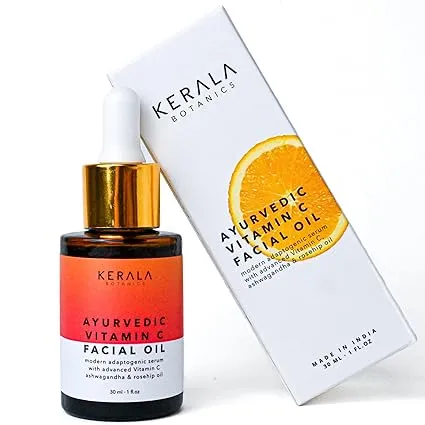
Ayurvedic Vitamin C Face Oil
Kerala Botanics
$49
★★★★☆
The Beauty of Joseon Glow Serum isn’t a snow mushroom product either, but it shows what a sensible K-beauty brand does with traditional ingredients — rice extract and propolis, both with meaningful evidence behind them. Worth knowing as a benchmark for how “traditional ingredient in modern formula” should actually work.
Glow Serum: Propolis + Niacinamide
Beauty of Joseon
$15
★★★★½
The “Vegan Hyaluronic Acid” Label Is a Marketing Frame
This is worth unpacking briefly. Hyaluronic acid used in cosmetics has been produced via microbial fermentation (not from animal sources) for well over a decade. The “vegan HA” problem largely doesn’t exist anymore. Calling Tremella “vegan HA” implies that HA is some kind of animal-derived concern in 2026 — it mostly isn’t. The framing is designed to make the switch sound more urgent than it is.
This is the same kind of thing we’ve seen with other familiar-ingredient backlash cycles. An established ingredient gets reframed as problematic so a newer one has something to compete against.
How to Actually Read Tremella Claims
When you see a snow mushroom product that claims superior hydration, ask three questions:
What’s the comparison? If the claim is based on the 2021 study, they’re comparing to 0.02% HA. Ask whether the products you’d actually be replacing use that concentration.
Is it in a meaningful amount? Tremella extract can appear anywhere from 0.1% to 10%+ in a formula. A product that lists it near the bottom of the ingredient list is giving you a marketing ingredient, not an active one. Learning to read skincare ingredient labels properly matters here.
Is there additional HA in the formula? Many smart formulations use both. That’s not a con — it actually suggests the brand knows the snow mushroom evidence isn’t strong enough to go it alone.
Putting It All Together
Snow mushroom is a real humectant with a plausible mechanism and some promising early data. It’s not a scam ingredient. But “promising early data” is not the same as “better than the thing with 30 years of clinical backing.”
The current evidence supports adding Tremella to your ingredient vocabulary — not deleting hyaluronic acid from your routine. The pattern here mirrors what we saw with polyglutamic acid: genuinely interesting ingredient, thin human evidence, marketing that ran several laps ahead of the science. If the research matures over the next few years and more human trials emerge, that calculus might change.
For now: if you’re dehydrated and looking for a reliable fix, HA with multiple molecular weights is the safer bet. If you’re curious about snow mushroom, a formula that uses it alongside HA is a reasonable way to try it without betting your barrier on a single small study.
The mushroom has potential. It just hasn’t earned the crown yet.