
Ingredients
Squalane: The Barrier Lipid That Suits Every Skin Type
Squalane mimics your skin's own lipids, seals moisture without clogging pores, and works for every skin type. Here's what it actually does.
Disclosure — This article may contain affiliate links. We earn a small commission at no extra cost to you when you purchase through our links. This supports our ability to create independent, evidence-based skincare content.
Most barrier ingredients come with an asterisk. Ceramides are excellent — unless the formulation is poor and they sit on top of skin doing nothing. Hyaluronic acid is great — unless there’s no moisture to draw in and it pulls from the dermis instead. Retinol works — until the barrier is too irritated to tolerate it.
Squalane has almost no asterisk.
It’s one of the few ingredients that genuinely suits every skin type: dry, oily, combination, sensitive, acne-prone. It’s a barrier lipid that behaves like something your skin already makes. That’s not a marketing angle — it’s how the chemistry works. And once you understand that, a lot of the confusion around oils, moisturizers, and barrier repair simplifies considerably.
What Squalane Actually Is
Your skin produces squalene naturally. It’s part of sebum — the lipid mixture the skin secretes to keep the surface protected and supple. Squalane (with an a) is the hydrogenated, stabilized form. One extra hydrogen molecule makes it shelf-stable and far less likely to oxidize on skin.
Olive-derived squalane is the most common source in skincare. Sugarcane-derived squalane (via fermentation) is another, and both work the same way. Historically, squalene came from shark liver oil, which is why the sourcing distinction matters — most reputable brands have moved to plant-derived versions.
Because squalane so closely mimics the skin’s own lipids, it absorbs without a heavy, occlusive feel. It doesn’t sit on the surface the way some plant oils do. It integrates.
Why It Works for Every Skin Type
This is the part that confuses people. How can an oil work for oily skin?
The short answer: squalane is non-comedogenic, and it’s not a true oil in the way most face oils are. It’s a hydrocarbon — no fatty acid chains, no triglycerides. It doesn’t trigger the same pore-clogging pathway that heavier emollients can. Studies on its comedogenic potential consistently rate it at zero or near-zero.
For dry skin, squalane acts as an emollient. It fills in the microscopic gaps between skin cells, smoothing the surface and reducing transepidermal water loss. It doesn’t hydrate on its own — it prevents existing moisture from escaping.
For oily and acne-prone skin, the logic is counterintuitive but solid. When the skin barrier is stripped or depleted, sebum production increases to compensate. A well-chosen emollient can actually reduce that overproduction by signaling that the surface is adequately protected. Squalane, because it so closely resembles the skin’s own sebum, communicates that signal well. It also absorbs quickly enough that it won’t feel greasy by mid-morning.
For sensitive or compromised skin, squalane has essentially no known irritants. No fragrance, no allergens, no active ingredients pushing cellular turnover. It’s what we reach for when a barrier is genuinely damaged and needs time to recover — see damaged skin barrier repair for more context on what that recovery actually looks like.
Squalane as a Barrier Lipid: The Bigger Picture
The skin barrier is often discussed in ceramide-centric terms, and ceramides do deserve their reputation. But the barrier is a mixture of lipids — ceramides, cholesterol, and free fatty acids — and squalane belongs to a broader category of barrier-supporting emollients that work alongside that trio.
Where ceramides rebuild structure, squalane provides surface-level protection and flexibility. Think of ceramides as the mortar between cells and squalane as a finish coat. Both matter. Neither replaces the other.
If you’ve read about ceramides and how they function, the relationship between ceramide-focused moisturizers and a squalane finish will make sense immediately. They’re complementary, not redundant.
How to Use It
Squalane is flexible in a way most actives aren’t.
As a standalone oil: A few drops on clean skin, morning or evening. Press in rather than rubbing — squalane absorbs better with warmth and gentle pressure.
Layered under moisturizer: Squalane is thin enough to apply before a cream or gel. It enhances absorption rather than blocking it. This works especially well for dry skin types who need both hydration and sealing.
Mixed into moisturizer: Works. A drop or two into a fragrance-heavy moisturizer can dilute potential irritants without compromising efficacy.
As a last step over actives: If you’re using retinol or acids and experiencing dryness or low-level irritation, squalane on top acts as a buffer. It won’t deactivate actives — it just softens the drying effect. A useful approach during skin cycling when recovery nights call for barrier support.
One note: squalane is an emollient, not a humectant. It doesn’t add moisture. If skin is genuinely dehydrated, a hyaluronic acid or glycerin layer underneath will address that — squalane holds it in.
Products Worth Using
Pure squalane is about as close to a commodity ingredient as skincare gets. The quality difference between brands is minimal, which means price is almost never justified beyond packaging and sourcing transparency.
Pure Squalane Oil
Biossance built its reputation on sugarcane-derived squalane, and the pure oil is still one of the cleanest examples of the ingredient in isolation. Short ingredient list, no fragrance, light texture that suits all skin types. At $32 for a bottle that lasts months, it’s a reasonable buy.
100% Plant-Derived Squalane
Biossance
$32
★★★★½
Squalane-Based Moisturizer
For those who want the simplicity of a cream over a standalone oil, Biossance’s Omega Repair Cream pairs squalane with ceramides and omegas. It’s richer — better suited for dry or mature skin than oily. Not a minimalist formula, but a thoughtful one.
Squalane + Omega Repair Cream
Biossance
$52
★★★★½
Budget Entry Point
The Ordinary’s Natural Moisturizing Factors includes squalane alongside amino acids, hyaluronic acid, and glycerin — a good all-in-one if you’re building a minimal routine and don’t want separate products. At $9, there’s no real argument against trying it.
Natural Moisturizing Factors + HA
The Ordinary
$9
★★★★½
Squalane in an Ayurvedic Context
Squalane also appears as a carrier and active component in more complex formulas. Kerala Botanics’ Ayurvedic Vitamin C Face Oil uses it as part of an Ayurvedic-rooted blend alongside an advanced, stabilized vitamin C and bakuchiol. The oil format makes sense here: bakuchiol and oil-soluble vitamin C both benefit from a lipid carrier, and squalane keeps the texture lightweight relative to what you’d expect.
It’s a genuine multitasker — replacing serum, oil, and moisturizer in one step — but worth knowing the tradeoffs. Oily skin may find it too much under makeup. And if you want clinical-grade vitamin C validation, something like CE Ferulic has a deeper research trail. For a simplified routine that leans natural and Ayurvedic, though, it’s a thoughtful option. You can read more about squalane’s role in Ayurvedic formulations in the modern Ayurvedic skincare guide.
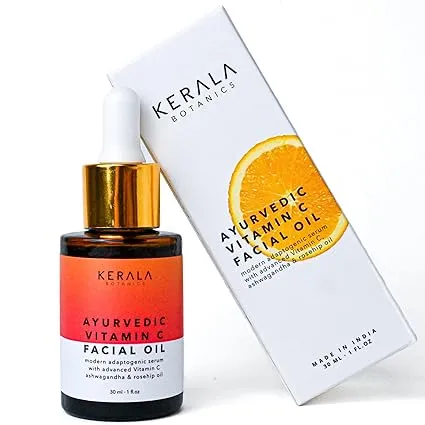
Ayurvedic Vitamin C Face Oil
Kerala Botanics
$49
★★★★☆
What Squalane Won’t Do
Being honest about the limits saves time.
Squalane won’t brighten skin. It won’t address pigmentation, stimulate collagen, or treat acne. It’s a passive ingredient — it protects and supports while other things work. Anyone telling you otherwise is overselling it.
It also won’t fix a genuinely compromised barrier on its own. If skin is actively reactive — tight, flaking, stinging with everything — squalane helps, but a more complete barrier repair approach is needed. That means ceramides, humectants, possibly a short break from actives. The over-exfoliation recovery guide covers what that process actually looks like.
And if you’re dealing with fungal acne (Malassezia), proceed carefully with any oil. Squalane is considered safe, but it’s worth checking — the fungal acne guide has a breakdown of which oils to avoid.
Where It Sits in a Routine
The honest answer: almost anywhere.
In a layered routine, squalane typically goes toward the end — after water-based serums and actives, before or instead of a final moisturizer. In a minimal routine, it can be the final step on its own. If you’re using a richer moisturizer that already contains squalane (many do), you don’t need a separate layer.
The how to layer skincare guide has the full logic for sequencing if layering is new territory. For most people, the decision is simpler: if skin feels tight or dry after your routine, add a few drops of squalane at the end. See if that solves it before buying five more products.
Putting It Together
Squalane is quiet. It doesn’t show up on a before-and-after in three weeks. It doesn’t have a viral texture or a compelling color story. What it does is keep the barrier functioning, morning after morning, in a way that makes everything else in a routine work better.
That’s a more useful thing than it sounds. Most routine failures aren’t about the wrong serum — they’re about a compromised barrier that can’t tolerate anything. Squalane, used consistently, keeps that from happening.
Use it as a finishing oil. Mix it into your moisturizer. Choose products that already contain it. The delivery method doesn’t matter much. What matters is that the skin surface stays intact, flexible, and protected.
The rest is details.