
Body Care
Crepey Skin on Arms and Legs: What Actually Firms It
Crepey skin on arms and legs responds to retinoids, urea, and AHAs — but body skin is slow. Here's what works and how long to actually wait.
Disclosure — This article may contain affiliate links. We earn a small commission at no extra cost to you when you purchase through our links. This supports our ability to create independent, evidence-based skincare content.
A few years ago I grabbed my own arm to check a watch tan and caught a glimpse of the skin on my inner forearm in harsh bathroom lighting. It looked like crumpled tissue paper. Not old, exactly. Just… deflated. That was the moment I started taking body care seriously.
Crepey skin is one of those things that shows up gradually and then all at once. The causes are real — sun damage, collagen loss, chronic dehydration — and so are the fixes. But body skin is a different beast from face skin, and a lot of people make the mistake of treating it like a scaled-up version of their face routine. It’s not. It responds slower, it has different structural needs, and the ingredients that matter most aren’t always the glamorous ones.
Here’s what actually works, why it takes longer than you want it to, and how to build a routine that’s actually sustainable.
What’s Happening When Skin Gets Crepey
Crepey texture is essentially a structural problem. Skin gets its bounce from collagen and elastin fibers in the dermis. After your late twenties, collagen production slows — roughly 1% per year, which sounds small until you do the math on a decade. Elastin, once damaged, basically doesn’t regenerate at all. So when those fibers thin out, skin loses its ability to snap back. It sits loose on the surface, and that fine wrinkling happens.
Two things accelerate this faster than anything else.
The first is UV exposure. Photoaging breaks down existing collagen and suppresses new synthesis. The skin on your forearms and the backs of your hands takes decades of incidental sun exposure — driving, walking, the ten minutes where you didn’t think sunscreen was necessary. That cumulative damage adds up quietly. By the time crepey texture appears, you’re looking at years of UV-induced degradation.
The second is chronic dehydration. Body skin has fewer sebaceous glands than facial skin, which means it produces less of its own oil and dries out faster. When the skin surface is perpetually dehydrated, the texture looks more pronounced — fine lines and crepiness are dramatically exaggerated on dry skin. This is the part that’s actually easier to address, and fast.
The combination of structural collagen loss plus surface dehydration is what you’re dealing with. The fix requires working on both.
Why Body Skin Responds Slower
This is the part nobody wants to hear, but it matters.
Facial skin turns over faster than body skin. The epidermis on your face is generally thinner and more vascular — it gets more blood flow, absorbs actives more readily, and responds to ingredients more quickly. Body skin, especially on the arms and legs, has a thicker stratum corneum (the outermost layer). That’s a longer physical barrier for ingredients to penetrate.
What this means practically: the timeline for visible improvement on your arms and legs is roughly double what you’d expect on your face. If a retinoid takes three months to show meaningful results on facial skin, give it six on your body. Not because it isn’t working, but because the mechanism is slower.
This is also why body care habits need to be genuinely consistent. Sporadic application of even the best ingredients won’t cut it. You need daily (or near-daily) use over a long runway.
The Ingredients That Actually Do Something
Urea: Start Here
If I had to pick one ingredient for crepey body skin, it’s urea. It doesn’t get the press it deserves because it’s unglamorous and cheap. Urea is a naturally occurring compound in healthy skin that keeps the stratum corneum hydrated and flexible. At concentrations of 10–20%, it’s also mildly keratolytic, meaning it softens and exfoliates dead skin cells that are making texture look worse.
The result: skin that’s visibly plumper and smoother within days, not months. It won’t rebuild collagen, but it addresses the dehydration component of crepey texture faster than almost anything else.
Look for 10% urea for daily use, 20–25% if texture is severe (though at that concentration, apply to specific rough patches rather than all over).
The Eucerin Roughness Relief Lotion sits at 10% urea in a no-fuss formula. Fragrance-free, affordable, and it actually absorbs without leaving a film. Apply it right out of the shower when skin is still slightly damp — damp skin absorbs humectants better, and urea needs moisture to work.
Eucerin Roughness Relief Lotion with 10% Urea
Eucerin
$15
★★★★½
AHAs: Exfoliate the Surface Texture
Alpha hydroxy acids — glycolic and lactic, mostly — work by loosening the bonds between dead skin cells, accelerating turnover, and over time, stimulating some collagen production in the dermis. For body skin, AHAs are doing double duty: improving surface texture immediately and supporting structural repair over time.
Lactic acid is the one I’d reach for on large body areas. It’s gentler than glycolic, it also functions as a humectant, and it’s less likely to cause irritation on the larger surface area you’re covering. If you want more on that distinction, the lactic acid guide is worth reading.
AmLactin is the classic recommendation for a reason. It’s 12% lactic acid in a lotion base, it’s widely available, and it’s proven. You’ll notice smoother texture within two weeks. Use it every other day to start — daily on large body areas can tip into irritation if your skin isn’t used to it.
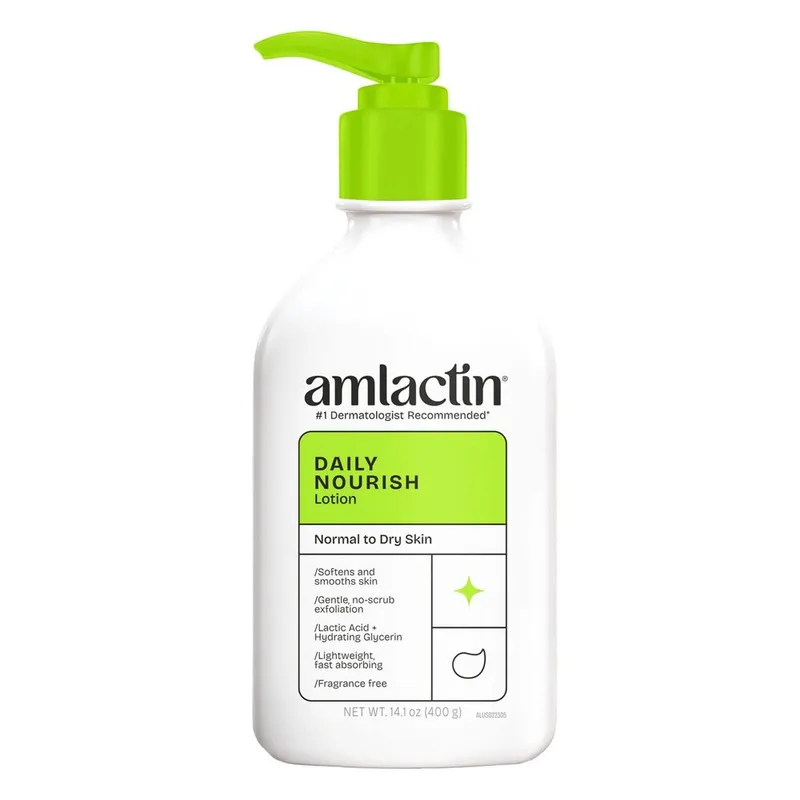
AmLactin Daily Moisturizing Body Lotion
AmLactin
$18
★★★★☆
CeraVe SA Lotion uses salicylic acid instead of an AHA, paired with ceramides and niacinamide. Salicylic acid is technically a BHA, so it works differently — more surface-smoothing, less penetrating — but the ceramide support makes this one genuinely restorative for compromised skin. If your skin is also bumpy (hello, keratosis pilaris), this is the better pick. We have a full KP treatment guide if that’s a concern.
CeraVe SA Lotion for Rough & Bumpy Skin
CeraVe
$17
★★★★½
Body Retinoids: The Structural Fix
This is where you address the collagen problem directly. Retinoids stimulate fibroblast activity, increase collagen synthesis, and improve skin cell turnover. On the face, we talk about this constantly. On the body, it’s barely discussed — probably because body retinoid products are less common and the category is newer.
The mechanism works the same way on arm and leg skin as it does on facial skin. It’s just slower, as covered above. Plan for a 4–6 month commitment before you evaluate results. Irritation (dryness, peeling, redness) is common in the first few weeks. Start two or three nights a week, apply to dry skin, and follow with a thick moisturizer.
The RoC Retinol Correxion Body Serum is one of the few body-specific retinol products that actually has retinol at a meaningful concentration. It’s not prescription-strength, but it’s enough to make a real difference over time and it’s significantly less expensive than prescription tretinoin alternatives. Apply to arms and thighs two to three nights a week, then follow with your urea or AHA moisturizer the next morning (not the same night, to avoid irritation stacking).
RoC Retinol Correxion Body Serum
RoC
$25
★★★★☆
If you want to understand the retinoid hierarchy — retinol vs. retinaldehyde vs. tretinoin — and what the actual potency differences mean, the retinoid comparison guide covers it properly.
Vitamin C and Antioxidants: The Photoaging Piece
If sun damage is part of your crepey skin story (and for most people over 35, it is), antioxidants belong in your routine. Topical vitamin C helps neutralize free radicals, supports collagen synthesis, and addresses the uneven pigmentation that often accompanies photoaged skin. It’s not going to rebuild what’s already lost, but it supports new collagen production and slows further breakdown.
For body use, a face serum is impractical — you’d go through a bottle a week. The more realistic angle is an oil or cream that delivers antioxidants across a larger surface. The Kerala Botanics Ayurvedic Vitamin C Face Oil is worth mentioning here, not because it’s designed for bodies, but because the format — a face oil that functions as serum, moisturizer, and treatment — is genuinely practical for spot-treating the backs of hands, forearms, and décolletage where photoaging shows up most. It uses a stabilized vitamin C form that stays active in the skin significantly longer than standard L-ascorbic acid serums, which matters for the slow-absorbing skin on body areas. It also contains bakuchiol, a plant-based retinol alternative that’s useful if you want a gentler option on particularly reactive skin.
Real caveats: the oil format isn’t ideal for oily skin or if you’re applying under clothing immediately. And it’s a face product being used off-label on the body — there’s no clinical data specifically for body use. But for the forearms and hands? A few drops goes a long way.
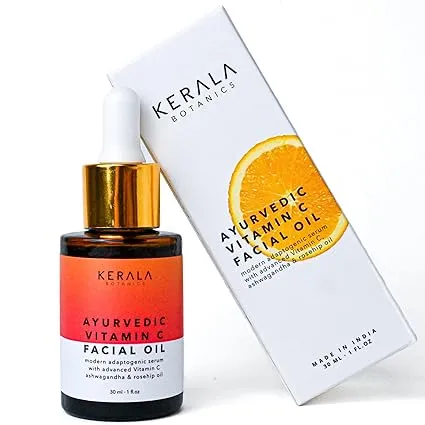
Ayurvedic Vitamin C Face Oil
Kerala Botanics
$49
★★★★☆
What Won’t Work (Or Won’t Work Alone)
Body butter. Coconut oil. Collagen creams. These are all perfectly fine moisturizers — some are excellent — but they don’t penetrate the dermis, which is where the actual structural changes need to happen. They address surface dehydration and nothing else. You’ll feel better but you won’t see meaningful textural improvement over time.
Dry brushing. This exfoliates the surface mechanically, which can temporarily improve texture and circulation. Fine as an addition, useless as a strategy.
Drinking more water. Also not a substitute for topical actives. Hydration helps, but the relationship between systemic hydration and skin appearance is genuinely overstated. Topical humectants (urea, lactic acid, hyaluronic acid) are more directly effective.
The Sunscreen Piece
You cannot firm crepey skin on your arms while continuing to skip sunscreen on your arms. UV damage is cumulative, ongoing, and directly antagonistic to everything your retinoid is trying to build. Every day you go without protection undoes some of the collagen work you’re putting in at night.
This doesn’t need to be complicated. A broad-spectrum SPF 30 applied to exposed arms and hands in the morning is enough. If you want something light that you’ll actually use, the Korean sunscreen category has excellent options — the best Korean sunscreens roundup is a good place to start. For everything else, how much sunscreen to apply covers the amounts that actually matter.
A Realistic Routine
Here’s how to stack these ingredients without overwhelming your skin or your schedule.
Morning: Shower, pat dry, apply urea lotion (10%) or AmLactin while skin is still slightly damp. Let it absorb. Sunscreen on exposed areas before going outside.
Evening (3x per week): Retinol body serum on completely dry skin. Wait ten minutes. Follow with a moisturizer — the urea lotion works here too.
Evening (other nights): Just the moisturizer. No actives. Your skin needs recovery time, especially in the first couple of months.
If you want to use both AHA and retinoid on your body, alternate nights rather than stacking them. The skin cycling approach — retinoid nights, exfoliant nights, recovery nights — translates well to body care.
Realistic Timelines
Two weeks: Surface texture noticeably smoother from urea and AHA. Skin feels more hydrated and plump.
Six to eight weeks: Early improvement in overall skin quality from retinoid. Still subtle.
Three months: Real textural improvement visible in natural lighting. Not firmed back to where it was at 25, but meaningfully better.
Six months and beyond: This is where the retinoid work shows up most clearly. Collagen synthesis is slow. The improvement is real, but you have to stay consistent long enough to see it.
The skincare timelines guide has this laid out well for different categories of actives if you want the full picture.
Putting It All Together
Crepey skin on the arms and legs is a two-part problem: structural collagen loss from photoaging and time, plus surface dehydration that makes everything look worse. The good news is both parts are addressable. The less good news is that body skin is slow, so you need the right ingredients, consistent daily use, and patience measured in months rather than weeks.
Start with urea. Add an AHA. Introduce a retinoid if you’re committed to the longer game. Protect with sunscreen daily. That’s it — no elaborate twelve-step body routine required.
The products that work here are mostly unglamorous. They’re the ones that stay on your bathroom shelf and get used every single day. That consistency is the whole strategy.