
Routines
How Long Until Skincare Works? Realistic Timelines by Ingredient
Hydration in days, retinoids in 12 weeks, pigment in months. Here's what the evidence says about how long skincare actually takes to work.
Disclosure — This article may contain affiliate links. We earn a small commission at no extra cost to you when you purchase through our links. This supports our ability to create independent, evidence-based skincare content.
The most common reason people quit a skincare routine that’s actually working? They quit too early.
Not because they’re impatient (though that’s part of it). It’s because nobody tells them what “working” looks like at week two versus week twelve, or that the ingredient targeting their dark spots operates on a completely different clock than the one keeping their skin hydrated. When results don’t show up on the timeline they imagined, they assume the product failed.
This guide exists to fix that. Below are realistic, evidence-grounded timelines for the ingredients most people actually use — organized by what you’re trying to accomplish and how skin biology actually operates.
The Fundamental Problem With “Before and Afters”
Most skincare marketing shows you week-eight results without mentioning that weeks two through five looked worse. That’s not a rounding error. That’s a deliberate omission.
Skin has its own schedule. The epidermis turns over roughly every 28 days (slower as you age). Collagen remodeling takes months. Melanin production and transport — the chain responsible for dark spots — is a multi-step process that requires sustained suppression, not a weekend sprint.
Understanding these biological rates is what separates realistic expectations from a drawer full of half-used products.
Timeline by Ingredient and Goal
Hydration: Days 1–3
This is the fast lane. Humectants like hyaluronic acid and glycerin work by pulling water into the upper layers of skin. You’re not remodeling anything — you’re filling a tank. Most people notice a difference in texture and plumpness within a few applications.
Emollients (squalane, ceramides, fatty acids) work slightly differently — they’re reinforcing the barrier rather than drawing water in — but the functional effect on skin feel is still visible within the first week. If a moisturizer isn’t doing something noticeable in three days, it’s probably not the right formula for your skin type.
What to watch for: Less tightness after cleansing. Smoother texture under product. Makeup sitting better.
What doesn’t change yet: Tone, texture at a structural level, lines, pores. Don’t look for those yet.
For a deeper breakdown of moisturizer formats and how they differ, see our guide to barrier-adaptive moisturizers.
Acne and Breakouts: 4–8 Weeks (With a Caveat)
Salicylic acid (a BHA) can reduce active inflammation within a few days — it’s oil-soluble, so it gets into pores and starts working fast. Benzoyl peroxide is similarly rapid-acting for surface bacteria. If you’re treating an existing breakout, these ingredients have real short-term value.
But clearing a pattern of acne — meaning fewer breakouts month over month — takes four to eight weeks minimum. Retinoids applied for acne often make things worse before they get better. The purge phase is real and documented. If you start adapalene and break out in week three, that’s not failure. That’s the drug accelerating cellular turnover and pushing existing congestion to the surface.
The “caveat” is this: if you’re still breaking out badly at week ten on a consistent regimen, something in the routine needs to change. The purge doesn’t last forever.
Read more about purging specifically in our tretinoin purge explainer.
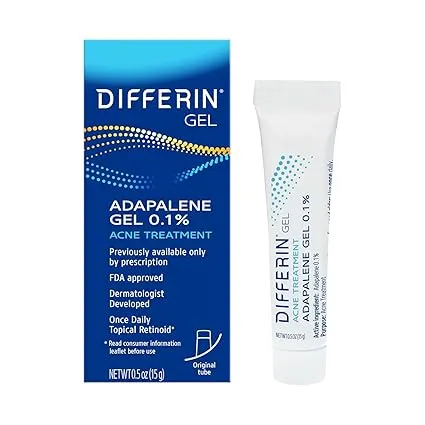
Differin Adapalene Gel 0.1%
Differin
$17
★★★★½
Vitamin C and Brightness: 4–8 Weeks
L-ascorbic acid (the most studied form of vitamin C) works by inhibiting tyrosinase, the enzyme that drives melanin production. That’s not instant. You’re blocking a process upstream — results show up as existing melanin fades and new production slows down.
Most clinical trials showing visible brightening effects run eight to twelve weeks. Some people notice a glow shift earlier, around weeks four to six, but that’s often the antioxidant effect — reduced oxidative dullness rather than actual pigment correction.
Stability is the practical issue. Many vitamin C serums oxidize before you finish them, which means weeks of inconsistent dosing. If your serum has turned amber or orange, it’s still providing some antioxidant activity but the tyrosinase-inhibiting effect is diminished. Here’s why that happens chemically.
Oil-based vitamin C formats sidestep some of these stability problems. Kerala Botanics’ Ayurvedic Vitamin C Face Oil uses a stabilized vitamin C derivative — one that stays active in skin cells longer than standard L-ascorbic acid — paired with bakuchiol, a plant-based retinol alternative. The oil format also means it replaces a separate moisturizer step, which is useful if you’re trying to simplify. It’s not for everyone: oily skin types may find it heavy, and it doesn’t have the same clinical trial depth as something like CE Ferulic. But as a dual vitamin C and retinol-alternative product in a single step, the value proposition is real.
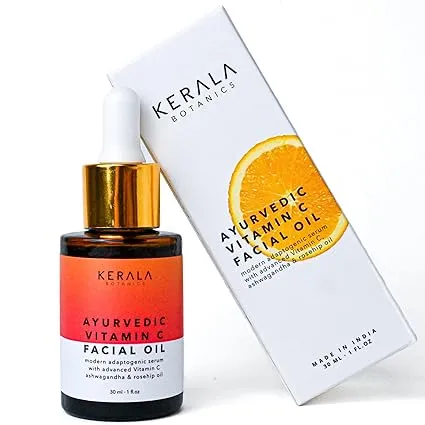
Ayurvedic Vitamin C Face Oil
Kerala Botanics
$49
★★★★☆
For a direct comparison of vitamin C formats — serum versus oil — we broke it down here.
Retinoids and Skin Texture: 8–12 Weeks Minimum
Retinoids — this includes retinol (the OTC version), retinaldehyde (one conversion step closer to the active form), and tretinoin (prescription, the most potent) — all work by binding to nuclear receptors and altering gene expression. That’s about as far from a surface-level fix as you can get.
The results are real and well-documented: faster cell turnover, thickened dermis, reduced fine lines, improved texture. But those results require the skin to actually remodel itself. That takes time measured in months, not weeks.
Eight weeks is when most people first see meaningful texture improvement. Twelve weeks is where the data gets more consistent for fine lines. Visible effects on deep wrinkles? You’re looking at six months of consistent use.
The clinical comparison between retinol and tretinoin shows tretinoin working faster at equivalent timeframes, largely because it doesn’t require conversion. Retinaldehyde sits in between — faster than retinol, gentler than tretinoin. If you want to understand the pharmacological differences, our retinol vs. retinaldehyde vs. tretinoin breakdown covers this in detail.
Hyperpigmentation and Dark Spots: 8–12 Weeks
Pigment correction is some of the slowest work in skincare. And for a specific reason: you’re not just inhibiting future melanin production — you’re waiting for existing pigment to surface, slough off, and be replaced by cells that were never exposed to the ingredient’s effects.
Niacinamide (vitamin B3) works by blocking the transfer of melanosomes from melanocytes to keratinocytes. Vitamin C suppresses tyrosinase. Azelaic acid inhibits melanocyte proliferation. Tranexamic acid interrupts plasmin activity that would otherwise trigger pigment. These are different mechanisms, but they all require sustained, consistent application over weeks before you see meaningful fading.
Eight weeks is a fair starting point for assessment. Twelve weeks is where you decide whether a product is working. Melasma — a deeper, hormonally driven form of hyperpigmentation — frequently requires longer treatment and is notoriously resistant. Don’t conflate “dark spot” with “melasma.” They’re different problems.
Sun protection during this entire period is non-negotiable. Any UV exposure actively repigments the areas you’re treating. You’re fighting yourself otherwise.
Our hyperpigmentation treatment guide covers the ingredient options in more detail if you want to build a targeted protocol.
Collagen and Structural Anti-Aging: 3–6 Months
Collagen is made in the dermis. Getting there — topically — is genuinely difficult. Most ingredients that claim to “boost collagen” are either stimulating fibroblasts (the cells that produce it) or protecting existing collagen from degradation. Peptides and retinoids are the most evidence-backed options here.
Retinoids again, yes. At six months of consistent use, studies show measurable increases in dermal thickness and collagen density. Peptides like GHK-Cu (copper peptide) have good in-vitro data and some human trial support — our copper peptide guide gets into the specifics. The timeline for visible results from peptides is similar: expect three to four months before you’re seeing anything meaningful.
This is also the category where patience matters most and where marketing does the most damage. “Collagen-boosting” sounds immediate. The biology is not.
At a Glance: Realistic Timeline Table
| Goal | Ingredients | When to Expect Results |
|---|---|---|
| Hydration / plumpness | Hyaluronic acid, glycerin, ceramides | 1–3 days |
| Reduced active breakouts | Salicylic acid, benzoyl peroxide | 3–7 days |
| Clearer skin (pattern) | BHAs, retinoids, niacinamide | 4–8 weeks |
| Brightness / glow | Vitamin C, niacinamide | 4–8 weeks |
| Texture improvement | Retinoids, AHAs | 8–12 weeks |
| Dark spot fading | Vitamin C, niacinamide, azelaic acid, tranexamic acid | 8–12 weeks |
| Fine line reduction | Retinoids, peptides | 12+ weeks |
| Structural / collagen | Retinoids, peptides, growth factors | 3–6 months |
Why Consistency Matters More Than the Product
The most common deviation from a skincare timeline isn’t the product — it’s the user. Skipping three nights because you’re tired, switching products every four weeks to try something new, using a retinoid inconsistently because irritation came up once. These behaviors extend timelines and make it nearly impossible to evaluate whether something is working.
A good benchmark: give any active ingredient a minimum of eight weeks of consistent daily use before forming a verdict. For retinoids, make that twelve. If you’re rotating too fast, consider skin cycling — a structured rotation that builds in recovery nights and keeps actives consistent rather than chaotic.
Putting It All Together
Skincare timelines aren’t arbitrary. They follow the biology of your skin — how fast it turns over, how deep an ingredient needs to reach, what cellular mechanism it’s targeting. The mismatch between marketing promises and physiological reality is where most routines break down.
A reasonable way to think about it: use your first two weeks to assess tolerability and immediate hydration effects. Use weeks four through eight to start evaluating actives for tone and texture. Come back at twelve weeks for a real assessment of anything targeting pigment or lines. And if you’re expecting collagen remodeling, set your next check-in for six months.
That’s not pessimism. That’s just what works.
Related reading: