
Routines
Barrier-Adaptive Moisturizers: What Comes After Slugging
Slugging repairs. Barrier-adaptive moisturizers rebuild. Here's what the 2026 research says about the smarter step after occlusion.
Disclosure — This article may contain affiliate links. We earn a small commission at no extra cost to you when you purchase through our links. This supports our ability to create independent, evidence-based skincare content.
Slugging had a moment. It probably still does in your bathroom cabinet — a thin layer of Vaseline or Aquaphor over everything, skin waking up soft and plump. It works. Nobody’s arguing with the occlusion data.
But slugging is a repair tool, not a maintenance strategy. It seals. It doesn’t rebuild. And 2026 research out of the International Journal of Cosmetic Science has started drawing a clearer line between occlusion (trapping what’s there) and adaptation (actively teaching the barrier to function on its own). The products designed for that second phase are what we’re calling barrier-adaptive moisturizers — and they’re different enough from traditional creams that they’re worth understanding separately.
This isn’t about abandoning what works. It’s about knowing what to reach for next.
What Slugging Actually Does (and Doesn’t Do)
A quick reset before we go further. Slugging works by creating an occlusive seal over the skin — petrolatum is the gold standard, but silicone-based products and certain plant butters do something similar. That seal slows transepidermal water loss (TEWL) dramatically. Skin stays hydrated. Inflammation calms. Sensitivity drops.
What it doesn’t do: replace missing ceramides. Rebuild lipid structure. Restore microbiome balance. Improve the barrier’s own signaling pathways.
Think of it like wrapping a broken arm. The cast protects while healing happens underneath — but the cast doesn’t knit the bone. Slugging buys time. Barrier-adaptive formulas are what does the actual reconstruction.
If you’ve been slugging regularly and your skin still reacts to products it shouldn’t, still feels reactive post-cleanse, still flares at the first sign of weather change — that’s a signal that passive occlusion isn’t enough. The barrier needs active support.
For a deeper look at what a compromised barrier actually looks like, our damaged skin barrier repair guide covers the diagnostic signs clearly.
What “Barrier-Adaptive” Actually Means
The term is newer and worth unpacking. A barrier-adaptive moisturizer is one formulated to do more than moisturize — it contains ingredients that interact with the barrier’s own repair processes rather than just sitting on top of them.
Three mechanisms define this category:
- Lipid replacement: Delivering ceramides, cholesterol, and fatty acids in the right ratio to integrate into the stratum corneum. The ratio matters — research consistently points to roughly 3:1:1 ceramide-to-cholesterol-to-fatty-acid as most effective for structural repair.
- Signaling support: Ingredients like beta-glucan, ectoin, and certain peptides that don’t just hydrate but activate the skin’s own barrier-maintenance pathways.
- Microbiome awareness: Formulas that avoid disrupting the skin’s bacterial balance — no harsh preservatives, fragrance-free, pH-appropriate — so they don’t undo what they’re trying to build.
Standard moisturizers focus on the first one, sometimes. Barrier-adaptive formulas do all three.
The 2026 Research Shift
The research driving this category change is less about a single breakthrough and more about accumulating evidence in one direction. A few things landed close together.
Studies published in early 2026 reinforced what dermatologists had been observing clinically: patients who used only occlusive-first protocols showed faster initial improvement but slower long-term barrier normalization compared to patients who transitioned to lipid-repleting formulas within two to four weeks. The skin, left under occlusion for too long, appeared to down-regulate its own ceramide synthesis. It had less reason to produce what was being provided externally.
The practical implication: use slugging to calm and stabilize, then shift to something that asks the barrier to participate in its own repair.
This pairs with what we already know about ceramide depletion — covered in more detail in ceramides explained — and with emerging data on how the skin microbiome responds to extended occlusion. The bacterial environment under a petrolatum seal is different from open-air skin, and not always in a beneficial way for long-term barrier health.
None of this makes slugging bad. It means slugging has a phase, and that phase ends.
What to Look For in a Barrier-Adaptive Formula
Ceramide Delivery That Actually Absorbs
Not all ceramides are formulated equally. The molecule itself is lipid-soluble and doesn’t disperse well in water-based formulas without the right carrier system. Look for products that combine ceramides with cholesterol and free fatty acids (like linoleic or stearic acid) — that triple combination is how they’re naturally structured in the stratum corneum, and it’s how they integrate most efficiently.
CeraVe’s Moisturizing Cream has done this reliably for years, which is part of why dermatologists keep recommending it. The MVE delivery system releases ceramides gradually throughout the day rather than all at once. It’s not glamorous. It works.
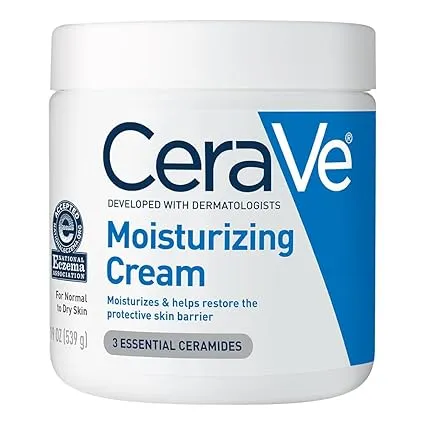
Moisturizing Cream
CeraVe
$19
★★★★½
Anti-Inflammatory Support
A compromised barrier is almost always an inflamed barrier. Products in this category tend to include calming ingredients — centella asiatica, panthenol, bisabolol, or madecassoside — not as marketing additions but because inflammation actively blocks barrier repair. You can’t rebuild something that’s actively on fire.
Dr.Jart+‘s Cicapair Cica Recovery Cream is the most visible example of this done well. Centella at meaningful concentrations, the right supporting cast, and a texture that sits comfortably under SPF without pilling. It’s been around long enough that we have actual longitudinal data on how people’s skin responds to it. For more on why centella does what it does, the centella asiatica guide is worth reading.
Cica Recovery Cream
Dr.Jart+
$44
★★★★½
Signaling Ingredients
This is where barrier-adaptive formulas separate themselves most clearly from traditional moisturizers. Beta-glucan, ectoin, and certain peptide combinations don’t just hydrate — they interact with receptors in the keratinocytes and fibroblasts that regulate barrier function. They’re asking the skin to do something, not just providing a material for it to use.
Beta-glucan in particular has strong evidence behind it — beta-glucan complete guide covers this in detail — and it’s increasingly appearing in barrier-focused formulas at concentrations that actually move the needle. Ectoin, originally studied for its protective effects in extremophile bacteria, has real data on TEWL reduction and barrier resilience. See: ectoin skincare guide.
Skinfix’s Barrier Serum combines several of these signaling ingredients well. Ectoin, niacinamide, and a ceramide complex in a lightweight serum format — useful for people who want to layer a barrier-adaptive treatment under a traditional moisturizer rather than replace it.
Barrier Serum
Skinfix
$58
★★★★☆
The Transition Protocol: From Slugging to Adaptive
The shift doesn’t have to be abrupt. Here’s a practical approach that aligns with what the current evidence suggests.
Weeks 1–2 (Active Repair Phase): Continue slugging if the barrier is still compromised — visible redness, sensitivity to water, reactive to most products. Keep the routine minimal: a gentle cleanser, a hydrating layer, occlusion on top. No actives. No vitamin C, retinol, or exfoliants.
Weeks 3–4 (Transition Phase): Drop the slug most nights. Replace it with a barrier-adaptive moisturizer as your final step. Keep one slugging night per week if the weather is cold or dry. Introduce one gentle active — a low-percentage niacinamide or a centella-heavy essence — and watch how the skin responds over several days before adding anything else.
Week 5+ (Maintenance Phase): The barrier should be stable enough to tolerate a more normal routine. This is when you can reintroduce vitamin C, retinol, or exfoliation — slowly, not all at once. The skin cycling explained framework maps out a sensible reintroduction schedule if the structure is helpful.
One note on actives: if you’re reintroducing vitamin C and want something that doubles as a barrier-supporting treatment, an oil-based vitamin C formula sits differently in the routine than a water-based serum. Kerala Botanics’ Ayurvedic Vitamin C Face Oil combines a stabilized, oil-soluble vitamin C with bakuchiol — relevant here because bakuchiol has barrier-supportive properties alongside its retinol-like activity, and the oil format adds a light occlusive layer without being as heavy as petrolatum. It won’t replace a dedicated ceramide cream but it gives barrier-compromised skin something to work with while reintroducing an active.
Worth noting: the oil format works beautifully for dry to normal skin but may feel too rich for oily types, and it has less clinical depth behind it than something like CE Ferulic. The trade-off for some people is worth it. For others, a traditional water-based vitamin C serum makes more sense to layer under a barrier cream.
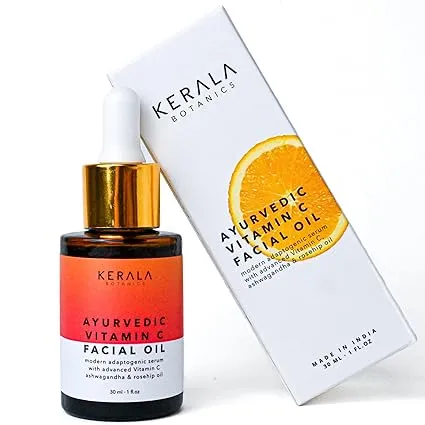
Ayurvedic Vitamin C Face Oil
Kerala Botanics
$49
★★★★☆
The Products That Aren’t Worth It Here
A quick note on what to avoid during barrier repair and the early adaptive phase.
Highly fragranced moisturizers. Even natural fragrance — essential oils, citrus extracts — can disrupt barrier lipid synthesis. The research on this is consistent. Skip them until the barrier is stable.
Anything with a low pH in a standalone formula. The stratum corneum maintains a slightly acidic pH (around 4.5–5.5) and barrier enzymes depend on it. Using low-pH toners or vitamin C serums formulated below pH 3 during active repair can interfere with the ceramide synthesis pathways you’re trying to support. Wait until the transition phase to reintroduce them, and do it slowly.
Occlusives stacked on top of each other. Petrolatum on top of a silicone-heavy moisturizer on top of a plant butter… it’s too much. One occlusive, applied correctly over a hydrating base, does more than three layered occlusives. More isn’t better here.
The over-exfoliation signs and recovery article covers a lot of overlap territory if you’re in active repair mode — worth reading alongside this one.
La Roche-Posay Cicaplast Baume B5+: The Bridge Product
If there’s one product that sits cleanly at the intersection of occlusive and barrier-adaptive, it’s Cicaplast Baume B5+. Panthenol at a meaningful percentage, madecassoside, zinc, niacinamide. It’s heavier than a standard moisturizer but lighter than a true occlusive. It can function as a standalone on mildly compromised skin or as a final layer during the transition phase.
The texture is dense enough to create a light seal while the actives inside support repair rather than just block water loss. It’s the product we’ve seen work most reliably in the slugging-to-adaptive transition because it doesn’t force a hard choice between the two approaches.

Cicaplast Baume B5+ Ultra Repairing Balm
La Roche-Posay
$22
★★★★½
Putting It All Together
Slugging is a starting point. It calms, seals, and buys the barrier time to stop being in crisis. But skin doesn’t strengthen under indefinite occlusion — it needs ingredients that support its own lipid production and signaling, not just a lid on top.
Barrier-adaptive moisturizers close that gap. The ones worth using combine ceramides in a bioavailable ratio, anti-inflammatory actives that let repair actually happen, and formulations that don’t destabilize the microbiome in the process.
The transition doesn’t need to be complicated. Two weeks of occlusive-first repair, two weeks of introducing barrier-adaptive formulas, then a slow, methodical reintroduction of actives. Skin that can handle a vitamin C or retinol without flinching is skin whose barrier is doing its job.
That’s the goal — not permanent protection, but a barrier that doesn’t need it.