
Routines
Skin Cycling 2.0: Active Rotation for Sensitive Skin
The original skin cycling schedule wasn't built for reactive skin. Here's a barrier-first update with rotation schedules that actually work.
Disclosure — This article may contain affiliate links. We earn a small commission at no extra cost to you when you purchase through our links. This supports our ability to create independent, evidence-based skincare content.
Skin cycling went mainstream because it made sense: use actives strategically, give your barrier time to breathe, stop doing everything every night. The original 4-night framework — exfoliation, retinol, recovery, recovery — was a real improvement for most people.
But “most people” wasn’t reactive skin. And the standard schedule, applied without adjustment, is exactly the kind of thing that tips a sensitive barrier into a full breakdown.
This is an update to that framework. Same underlying logic — actives on rotation, not stacked — but rebuilt from the barrier up, with schedules that actually account for how reactive skin behaves.
Why the Original Schedule Doesn’t Translate
The 4-night cycle assumes a reasonably intact barrier. It assumes that one night of exfoliation followed by one night of retinol is a workload your skin can handle. For most skin types, that’s true.
Reactive skin doesn’t work that way. Exfoliation already stresses a compromised barrier. Drop retinol in the very next night and you’re not giving anything time to stabilize — you’re stacking two inflammatory events back to back. The recovery nights that follow aren’t enough to undo that.
The result is the familiar pattern: brief improvement, then a flare. Redness, tightness, breakouts, or that papery feeling that takes a week to calm down. People blame the products when the schedule is actually the problem.
The fix isn’t abandoning actives. It’s spacing them correctly and choosing versions your skin can tolerate.
The Barrier-First Principle
Before rebuilding the schedule, there’s a prerequisite. If your barrier is actively compromised right now — damaged and reactive with visible dryness, sensitivity, or flushing — no cycling schedule will help. You need to repair first.
That means a week or two of nothing: gentle cleanser, barrier moisturizer, SPF. No actives. Once your skin stops reacting to basic products, you’re ready to reintroduce carefully.
The other principle: in skin cycling for sensitive skin, recovery nights are the active nights. They’re not passive filler between the real work. A ceramide-rich moisturizer applied consistently is doing something. Treat those nights with the same intention.
For a deeper look at what barrier repair actually requires, this guide covers the mechanisms and products worth knowing.
The 6-Night Sensitive Cycle
The adjustment is simple. More recovery, not less actives.
Night 1: Gentle exfoliation Night 2: Recovery Night 3: Recovery Night 4: Retinol alternative (or low-dose retinol) Night 5: Recovery Night 6: Recovery
Then repeat. That’s one exfoliation event and one retinol event per week, each with two full nights of recovery before the next active appears. For most reactive skin types, this is the minimum spacing that works without accumulating irritation.
If you’re still flaring on this schedule, move to a 7-night version with three recovery nights after each active. Some skin needs that much time, and that’s fine — the goal isn’t to cycle faster.
Exfoliation Night: Think Smaller
The standard skin cycling recommendation leans toward glycolic or a similar high-potency AHA. For reactive skin, that’s often too much. Two options work better:
Mandelic acid is a larger-molecule AHA that penetrates more slowly, which translates to less irritation. It’s genuinely the gentlest AHA available — and it has good brightening and pore-refining effects without the sting. We’ve written a full breakdown on why mandelic is the right starting point for sensitive and deeper skin tones.
PHAs (polyhydroxy acids) are even gentler. Gluconolactone sits on the surface rather than penetrating deeply, making it a reasonable choice for skin that reacts to everything. Less dramatic results, but consistent use adds up. More on PHAs here.
Start with whichever sounds right, apply only to dry skin, and rinse-off formulas are easier to control than leave-ons.
Mandelic Acid 5% Skin Prep Water
NIOD
$25
★★★★☆
The Retinol Night: Lower and Slower
The retinol night in a sensitive skin cycle needs to be reconsidered entirely. Standard retinol at a typical dose — even 0.1% — can be too much when the barrier is reactive.
Three approaches, in order of gentleness:
Bakuchiol is the most forgiving starting point. It works on similar pathways to retinol without the irritation profile, which makes it a sensible option while the barrier is still stabilizing. It’s not a perfect substitute, but for reactive skin in the early stages of a routine, it fills the role without the risk. We compared it directly to retinol here if you want the full breakdown.
Retinaldehyde (retinal) at low concentrations is a middle path — more effective than bakuchiol, less disruptive than prescription-strength retinoids. A well-formulated 0.025% or 0.05% retinal is worth trying once the barrier has stabilized.
Low-dose retinol (0.025–0.05%) with a squalane or ceramide base is fine for many reactive skin types once tolerance is established. Buffer it: apply moisturizer first, then retinol on top. This slows absorption and significantly reduces irritation.
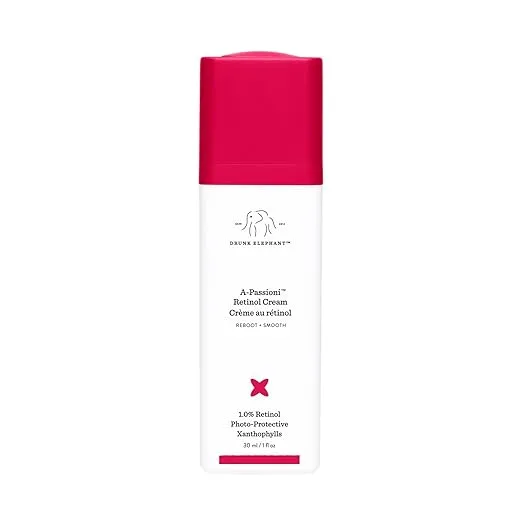
A-Passioni Retinol Cream
Drunk Elephant
$74
★★★★☆
Recovery Nights: Build Something
Recovery nights in this cycle aren’t about doing nothing — they’re about actively maintaining what the actives are working toward. The barrier needs lipids to stay intact. That means ceramides, fatty acids, and squalane in some combination.
A short recovery night stack:
- Hydrating toner or essence (hyaluronic acid, beta-glucan, or fermented extracts)
- Barrier moisturizer with ceramides or squalane
- Optional occlusive layer if the skin feels tight
That’s it. No peptide serums, no niacinamide layered over everything — those are fine ingredients, but the point of recovery nights is consolidation, not complexity.

Cicaplast Baume B5+
La Roche-Posay
$20
★★★★½
Where Vitamin C Fits
Vitamin C isn’t part of the traditional skin cycling framework because it’s a morning ingredient — applied under SPF, where it adds antioxidant protection against UV-triggered oxidative stress. That placement doesn’t change with skin cycling.
But for reactive skin, the standard L-ascorbic acid serum (water-based, pH around 3.5) is often a problem. That low pH is what makes it effective, and it’s also what causes stinging, flushing, and barrier disruption in sensitive types.
Two alternatives are worth knowing:
Gentler derivative forms — like ascorbyl glucoside or sodium ascorbyl phosphate — work at a higher pH and absorb without the sting. Less potent than L-ascorbic acid, but more tolerable and actually usable. More on vitamin C derivatives and sensitivity.
Oil-soluble vitamin C is a different format altogether. The Kerala Botanics Ayurvedic Vitamin C Face Oil uses an advanced stabilized form of vitamin C that stays in skin cells significantly longer than standard L-ascorbic acid serums, combined with bakuchiol. Because it’s oil-based, it layers differently — it won’t sting, it functions as a moisturizer too, and it sidesteps the formulation pH issues entirely. For reactive skin that wants vitamin C and a retinol alternative without adding multiple steps, it’s a format worth considering.
The honest caveats: it’s not the right choice for oily or acne-prone skin, and it can feel heavy under makeup for some. The clinical data isn’t as deep as what exists for L-ascorbic acid. But as a multitasker for a simplified sensitive routine, it fills an interesting gap.

Ayurvedic Vitamin C Face Oil
Kerala Botanics
$49
★★★★☆
If you’re sorting through the broader vitamin C format question, this comparison of serum versus oil formats covers the practical differences.
What to Drop (At Least for Now)
Skin cycling for reactive types works partly through subtraction. Things that commonly derail a sensitive cycle:
Daily exfoliation of any kind. Even gentle toners with mild acids every day add up. Pick your one exfoliation night and keep it there.
Fragrance. Not a moral judgment — but reactive skin responds to fragrance components as sensitizers more often than other skin types. On recovery nights especially, fragrance-free is easier.
Multiple actives in one step. If your exfoliation-night product already contains niacinamide, vitamin C derivatives, AND mandelic acid, you’re stacking before you’ve started. Choose one active per night, full stop.
Aggressive exfoliation in the AM on active nights. Using a mild exfoliating toner in the morning and retinol at night is still a stacked day, even if it’s separated by hours.
Signs the Schedule Is Working (and When to Slow Down)
A working sensitive skin cycle looks like this over 4–6 weeks: fewer flares, gradual improvement in texture and evenness, no progressive dryness or tightness. The skin starts to feel more predictable.
Signs to slow down or add a recovery night:
- Persistent tightness that doesn’t resolve before the next active night
- Breakouts appearing 2–3 days after actives consistently
- Redness that isn’t gone within 24 hours of an active application
These aren’t reasons to stop — they’re signals to stretch the recovery window. Add one more recovery night to the cycle and reassess after two more rotations.
If you’re seeing signs of over-exfoliation specifically — shiny, waxy-looking skin, products stinging that never did before — stop exfoliation entirely for two weeks before restarting.
Putting It All Together
The 6-night framework:
- Night 1: Gentle mandelic or PHA exfoliant
- Nights 2–3: Recovery (ceramides, barrier moisturizer)
- Night 4: Bakuchiol, low-dose retinal, or buffered retinol
- Nights 5–6: Recovery (same as above)
Vitamin C stays in the morning, under SPF. Always.
Start here and don’t add anything for four weeks. If the skin is stable and improving, you can consider adding a targeted treatment — niacinamide for tone, or a peptide — but only on a recovery night, never on an active night.
The original skin cycling framework was useful because it introduced the idea that more nights isn’t more. This version takes that principle further. Reactive skin needs more space between the work, not less. Give it that space, and the actives you do use will actually have a chance to do something.
For broader context on building an evening routine around this cycle, this complete evening routine guide is a good reference point.