
Routines
Rosacea-Friendly Routine: Triggers and What Calms It
Rosacea-friendly skincare explained: common triggers, calming ingredients like centella and azelaic acid, and a gentle routine that works.
Disclosure — This article may contain affiliate links. We earn a small commission at no extra cost to you when you purchase through our links. This supports our ability to create independent, evidence-based skincare content.
Most people with rosacea spend years treating it like acne. Different products, same problem.
The two conditions can look similar — redness, visible bumps, reactive skin — but the underlying biology is different enough that an acne routine can actively make rosacea worse. Salicylic acid, benzoyl peroxide, high-dose retinol, even enthusiastic exfoliation: all things that regularly end in a flare. The skin isn’t breaking out. It’s inflamed. And you can’t exfoliate your way out of inflammation.
This guide covers what rosacea actually is, which triggers are worth paying attention to, and how to build a routine around calming the skin rather than stripping or shocking it.
What’s Actually Happening in Rosacea Skin
Rosacea is a chronic inflammatory condition. The pathophysiology isn’t completely understood — anyone who tells you otherwise is simplifying — but we know a few things with reasonable confidence.
The immune system in rosacea-prone skin is persistently dysregulated. Toll-like receptor 2 (TLR2) activity is elevated, which means the skin’s innate immune system is running hotter than it should. Small stimuli that a non-rosacea person’s skin would shrug off get interpreted as threats. The vascular response follows: blood vessels dilate, stay dilated, and over time the dilation becomes structural. That’s the persistent redness that doesn’t fade.
There are four recognized subtypes — erythematotelangiectatic (flushing and visible vessels), papulopustular (bumps that look like acne), phymatous (skin thickening, usually around the nose), and ocular (affecting the eyes). Most people have more than one subtype. Most guides ignore this and give everyone the same advice. Worth knowing what you’re working with before you start.
The other piece: rosacea skin almost always has a compromised barrier. The mix of inflammation and reactive sensitivity tends to deplete ceramides and disrupt the lipid matrix that keeps irritants out. A lot of the routine work here is about addressing that, not just chasing symptoms.
Common Triggers — and How to Actually Track Them
Trigger avoidance is half the battle, and the list is long enough to be useless if you try to manage everything at once.
The most commonly reported triggers across studies:
- Sun exposure — UV activates inflammatory pathways and is probably the most consistent cross-patient trigger
- Heat — hot environments, hot showers, saunas, vigorous exercise
- Alcohol — particularly red wine and spirits; the histamine and vasodilatory effects are well-documented
- Spicy food — capsaicin binds TRPV1 receptors and triggers flushing
- Emotional stress — the stress-skin connection runs through cortisol and neuropeptides
- Wind and cold — environmental extremes in general
- Skincare products with fragrance, alcohol, or strong acids — this one’s within your control
The practical problem: these triggers layer. A glass of red wine on a hot day after a stressful week will hit differently than any one of those factors alone. Keeping a simple trigger diary — nothing fancy, just a notes app — for four to six weeks gives you actual signal instead of guesswork.
The other thing worth doing: audit your current routine for hidden irritants. Fragrance is the obvious one, but how you read ingredient labels matters. Denatured alcohol (alcohol denat.) in the first half of a toner’s ingredient list is a red flag. So are essential oils marketed as “natural” calming agents — rose, eucalyptus, peppermint all have documented irritant potential in reactive skin.
Building the Routine: What Rosacea Skin Actually Needs
The goal is simple: reduce inflammation, support the barrier, protect from UV. That’s it. This is not a routine for pursuing brightening, exfoliation, or anti-aging actives — at least not until the skin is consistently calm.
Cleanser: Low-pH, No Foam
Most foaming cleansers use surfactants that strip the barrier. For rosacea skin, a creamy or micellar cleanser that rinses clean without squeaky tightness is the target.
La Roche-Posay’s Toleriane Hydrating Gentle Cleanser is a solid option. It’s fragrance-free, uses a mild surfactant blend, and is specifically formulated for reactive skin. It also doesn’t cost much, which matters when you’re rebuilding a routine from scratch.

La Roche-Posay Toleriane Hydrating Gentle Cleanser
La Roche-Posay
$16
★★★★½
Water temperature matters too. Hot water is a vasodilator. Lukewarm — and it will feel underwhelming at first — is the right call.
Calming Actives: The Ingredients With Real Evidence
This is where the ingredient science gets interesting, so let’s be specific.
Centella asiatica (and its derivatives: asiaticoside, madecassoside, asiatic acid) has a reasonable body of evidence behind it for wound healing and anti-inflammatory effects. The mechanism involves collagen synthesis promotion and suppression of inflammatory cytokines. We have a full breakdown of centella asiatica and how it works — the short version is that it’s one of the better-supported calming ingredients available without a prescription. Look for it high on the ingredient list, not as a token inclusion.
Licorice root (specifically glabridin, the active component) works through two mechanisms relevant to rosacea: it inhibits COX-2, which is involved in the inflammatory cascade, and it has demonstrated vasoconstrictive properties in some studies. We’ve covered licorice root in more depth — it’s typically discussed for hyperpigmentation, but its anti-inflammatory profile makes it worth considering for rosacea too.
Azelaic acid is underrated for rosacea management and is actually approved by the FDA for rosacea treatment in its prescription-strength form (15% gel). At OTC concentrations (10%), it still reduces papulopustular breakouts, calms redness, and inhibits KLK5 — a kallikrein enzyme that’s overactive in rosacea-prone skin. It’s one of the few actives that works on multiple rosacea symptoms simultaneously without meaningfully disrupting the barrier.
The Ordinary’s 10% azelaic acid suspension is the accessible entry point. The texture is thick and can pill under makeup, but the efficacy is real.
The Ordinary Azelaic Acid Suspension 10%
The Ordinary
$12
★★★★☆
Niacinamide (vitamin B3) is worth mentioning here. At concentrations of 2–5%, it reduces transepidermal water loss and has documented anti-inflammatory properties. It’s not as targeted as azelaic acid for rosacea specifically, but it’s well-tolerated and well-understood.
Vetiver is less familiar in Western skincare but appears in Ayurvedic formulations for skin calming. The evidence base is thinner than for the ingredients above — we’re not aware of strong clinical trial data specific to rosacea — but it has known antioxidant properties and a long tradition of use for skin inflammation. Worth knowing about, but we wouldn’t anchor a routine around it.
Moisturizer: Barrier First, Nothing Else
The moisturizer’s job here is to hold water in and keep irritants out. Ceramides, fatty acids, and cholesterol — the three lipid classes that make up the skin’s lipid matrix — are the functional ingredients you’re looking for. Everything else is secondary.
Avène’s Cicalfate+ Restorative Protective Cream contains sucralfate (a barrier-support compound), copper sulfate, and zinc sulfate alongside Avène’s thermal spring water, which has a long research record for reducing inflammatory responses in sensitive skin. It’s fragrance-free, simple in formulation, and works. Good for a PM moisturizer when the skin is actively reactive.

Avène Cicalfate+ Restorative Protective Cream
Avène
$28
★★★★½
For those who prefer an oil-based layer — and some rosacea skin does well with occlusives — the Kerala Botanics Ayurvedic Vitamin C Face Oil is a less obvious but genuinely interesting option. It uses a stabilized oil-soluble vitamin C derivative (rather than L-ascorbic acid) that the brand reports stays active in skin cells significantly longer than standard serum formats. It also contains bakuchiol, which functions as a gentle alternative to retinol without the inflammatory potential that makes traditional retinoids off-limits for many rosacea sufferers. The Ayurvedic formulation draws from a tradition of plant-based anti-inflammatory ingredients.
The caveats are real: oil format won’t work for everyone, especially in warmer months or for those who find heavier textures prone to causing breakouts. And the clinical evidence behind the specific vitamin C derivative used here is thinner than for azelaic acid or niacinamide in a rosacea context. But for someone wanting a simplified, fragrance-free, retinol-alternative routine in one step, it’s a coherent choice.
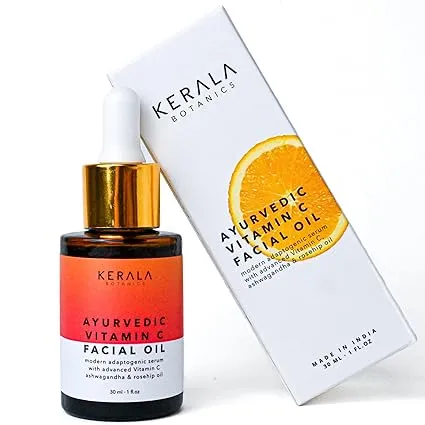
Ayurvedic Vitamin C Face Oil
Kerala Botanics
$49
★★★★☆
COSRX’s Centella Blemish Cream is a solid option for daytime: lightweight, centella-forward, sits well under sunscreen without pilling. It’s not glamorous but it works.

COSRX Centella Blemish Cream
COSRX
$18
★★★★☆
Sunscreen: Non-Negotiable, and Formulation Matters
UV is the single most consistent rosacea trigger. Skipping sunscreen in a rosacea routine is not really an option.
Mineral sunscreens (zinc oxide and titanium dioxide) are generally better tolerated by reactive skin than chemical filters. They sit on top of the skin rather than absorbing through it, and they don’t cause the same photochemical reactions that some chemical filters do. The tradeoff has historically been a white cast — but formulations have improved significantly.
EltaMD UV Clear is the most-recommended sunscreen in dermatology practices for rosacea-prone and sensitive skin, and the recommendation is earned. It contains 9.9% zinc oxide, niacinamide, and lactic acid at a low enough concentration to not irritate. It sits well under makeup, doesn’t leave a significant white cast on lighter to medium skin tones, and is fragrance-free.
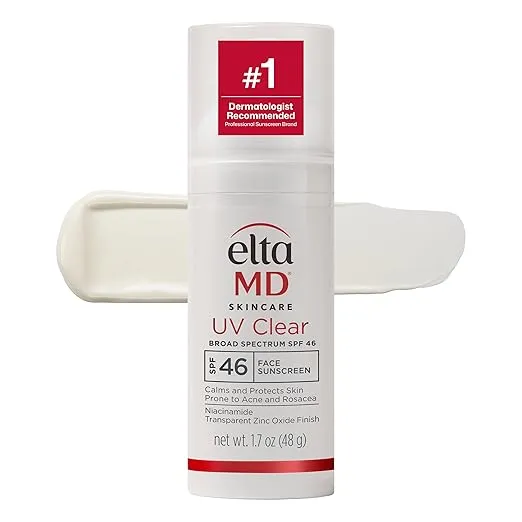
EltaMD UV Clear Broad-Spectrum SPF 46
EltaMD
$41
★★★★½
If you’re reapplying over makeup, the mechanics of that are worth thinking through — there’s a practical approach to it here.
What to Avoid — Specifically
Rosacea routines fail most often not because of what’s missing but because of what’s included.
Fragrance — both synthetic and natural — is the most common hidden irritant. There’s no therapeutic reason for fragrance in a product used on rosacea skin.
High-dose vitamin C (L-ascorbic acid) in acidic serums (pH 2.5–3.5) can cause stinging and flushing in reactive skin, even if the antioxidant effect would theoretically be beneficial. If you want vitamin C, look at more stable, less acidic formats — or consider lower-irritation vitamin C derivatives.
Glycolic and salicylic acid — aggressive enough to reliably disrupt the barrier and trigger flares in most rosacea presentations. PHAs (poly-hydroxy acids like gluconolactone) are a gentler option if exfoliation is necessary — there’s a guide to that.
Retinol at standard OTC concentrations (0.5–1%) causes the retinization period — peeling, dryness, irritation — that rosacea skin handles poorly. If anti-aging is a goal, bakuchiol is the pragmatic alternative. We’ve compared bakuchiol vs. retinol in depth — the short answer is it’s not as potent, but it won’t set your skin on fire.
Physical exfoliants — scrubs, brushes, anything mechanically abrasive. The friction alone is enough to dilate capillaries and cause flushing. Skip them entirely.
The Routine, Pulled Together
Morning
- Lukewarm rinse or gentle cream cleanser
- Centella or niacinamide moisturizer (let it absorb fully)
- SPF 46+ mineral sunscreen — every day, including winter
Evening
- Gentle cleanser
- Azelaic acid 10% (start two or three nights a week; build up slowly)
- Barrier-repair moisturizer or, if you want a simplified step, a calming face oil like the Kerala Botanics formula
That’s five products total. Resist the urge to add more. The biggest mistake in rosacea skincare is layering treatments until the routine itself becomes the trigger.
A Note on Prescription Options
If your rosacea is papulopustular — bumps, not just diffuse redness — or if the above approach hasn’t moved the needle after eight to twelve weeks, a prescription is worth pursuing. Metronidazole gel, ivermectin cream (Soolantra), and azelaic acid at 15% are the primary topical options and are meaningfully more effective than OTC alternatives for moderate-to-severe presentations.
This guide is about what you can do from the drugstore shelf. But it’s not a replacement for a dermatologist’s assessment.
Putting It All Together
Rosacea management isn’t about finding the one product that fixes it. It’s about consistently reducing the inflammatory load on your skin: fewer triggers, a stronger barrier, and targeted actives that calm rather than aggravate.
The routine above is deliberately minimal. A gentle cleanser, an anti-inflammatory moisturizer, azelaic acid a few nights a week, and mineral SPF every morning. That’s the framework. From there, you have room to add things cautiously — centella serums, bakuchiol-based oils, low-dose niacinamide — watching how your skin responds before moving on.
Slow and boring works for rosacea. Exciting and experimental usually doesn’t.
If you want to go deeper on barrier repair specifically, or understand how to layer products without overwhelming reactive skin, the complete morning routine guide covers the sequencing logic in detail.