
Ingredients
Licorice Root (Glabridin): Brightening Without Bleaching
Glabridin from licorice root fades dark spots by blocking tyrosinase — without harsh bleaching. Here's how it actually works.
Disclosure — This article may contain affiliate links. We earn a small commission at no extra cost to you when you purchase through our links. This supports our ability to create independent, evidence-based skincare content.
Every few years, a brightening ingredient gets its moment in the spotlight and then quietly disappears — either because it didn’t work, turned out to be irritating, or the one that came after it was shinier. Licorice root has had absolutely none of those problems. It’s been in cosmetics for decades, it shows up in everything from Korean essences to Ayurvedic formulas to drugstore serums, and dermatologists still recommend it. That’s a long track record for anything in this industry.
The reason it sticks around: it actually fades dark spots. Not by stripping or bleaching, but by interrupting the process that creates excess pigment in the first place. If you’ve been trying to tackle hyperpigmentation without the irritation that comes with high-dose vitamin C or prescription-strength actives, licorice root is worth understanding properly.
So let’s get into it.
What Glabridin Actually Is (and Why It’s Not Just “Licorice Extract”)
Licorice root — Glycyrrhiza glabra — is the plant. Glabridin is the specific compound extracted from it that does most of the work in skincare. They’re not interchangeable on an ingredient label, and the distinction matters.
You’ll see products list both “licorice root extract” and “glabridin” — sometimes even in the same formula. The extract is a broader mix of compounds, including glycyrrhizin (anti-inflammatory) and liquiritin (also linked to brightening). Glabridin is the most concentrated, most studied, and most potent of the group. When brands are being specific about efficacy, they’ll call it out by name.
Think of it like this: lavender essential oil and linalool (the compound in lavender responsible for calming effects) aren’t the same thing. One is the full plant extract; the other is the isolated active. Glabridin is to licorice root what linalool is to lavender.
For our purposes, I’ll use both terms throughout — but when a product specifically highlights glabridin, it’s worth noting.
The Tyrosinase Story: How Glabridin Fades Spots
Here’s where it gets interesting. Dark spots — whether from sun damage, post-inflammatory hyperpigmentation, or melasma — aren’t random. They’re the result of your skin overproducing melanin, which is triggered and controlled by an enzyme called tyrosinase.
Tyrosinase is like the factory foreman of your pigment production line. When it’s running smoothly, your skin produces a normal, even amount of melanin. When it gets overactivated — by UV exposure, inflammation, hormonal shifts — it goes into overdrive, and dark spots follow.
Glabridin inhibits tyrosinase. Specifically, it blocks the enzyme from doing its job, which slows down melanin production at the source. Studies have shown it can inhibit tyrosinase activity by up to 50% in some concentrations, which is genuinely significant. For context, kojic acid (another popular tyrosinase inhibitor) works similarly but tends to be more irritating. Glabridin does the same job with considerably less drama.
This is why “brightening without bleaching” is an accurate way to describe it. It doesn’t remove the melanin already in your skin — that fades over time through natural cell turnover. It just tells your skin to stop making so much new pigment. The result is gradual, but it’s real. And because it’s not stripping anything, skin stays intact.
If you’re dealing with PIH or melasma, the hyperpigmentation treatment guide covers the full picture of how different actives approach this problem from different angles.
The Other Half: Anti-Inflammatory Action
This part often gets skipped in ingredient breakdowns, and it shouldn’t.
Inflammation is one of the primary triggers for hyperpigmentation — especially post-inflammatory hyperpigmentation (PIH), which shows up as dark marks after acne, eczema flares, or any other skin trauma. The redness comes first, then the dark spot. The dark spot is essentially a scar left by inflammation.
Licorice root extract — specifically glycyrrhizin and its derivative glycyrrhetinic acid — has real anti-inflammatory properties. It soothes irritated skin, helps reduce redness, and calms the inflammatory signals that would otherwise kick off the pigment overproduction cycle. So it’s working on two fronts simultaneously: blocking the enzyme that makes melanin AND reducing the trigger that activates the enzyme in the first place.
This makes it especially useful for sensitive skin types who can’t tolerate more aggressive actives. If high-concentration vitamin C serums have ever stung or turned your skin red, licorice root is worth trying instead. It rarely causes irritation, doesn’t sensitize to the sun (more on that in a moment), and plays nicely with most other ingredients.
Licorice Root vs. Other Brightening Ingredients
There are a lot of tyrosinase inhibitors out there. Here’s how glabridin stacks up against the most common ones.
Niacinamide
Niacinamide doesn’t actually inhibit tyrosinase — it works differently, blocking the transfer of melanin from melanocytes (where it’s made) to skin cells (where it shows up as visible pigment). Complementary, not competing. You can use both. They stack well, which is why you see them together in a lot of brightening formulas. Niacinamide has its own deep dive here if you want the full breakdown.
Kojic Acid
Also a tyrosinase inhibitor. Works similarly to glabridin, but it’s more likely to irritate — especially around the eyes or in higher concentrations. Some people also develop contact sensitization to kojic acid over time. Glabridin doesn’t have that reputation.
Tranexamic Acid
Tranexamic acid approaches pigmentation from a different angle — it interrupts the signaling pathway that triggers melanocytes to produce pigment in the first place, rather than blocking the enzyme itself. It’s particularly effective for melasma. Tranexamic acid for melasma covers this more specifically if that’s your concern. The two ingredients can complement each other well in a layered brightening routine.
Vitamin C
Vitamin C also inhibits tyrosinase while delivering antioxidant protection. It’s generally stronger on paper, but considerably more finicky — it oxidizes, it can sting, and some forms are less stable than others. Licorice root is steadier and gentler, though the absolute ceiling of brightening effect may be lower. The vitamin C serum vs. oil guide is useful if you’re deciding between formats.
The short version: glabridin isn’t the strongest brightening ingredient available, but it might be the most consistently tolerable one.
Does It Work Faster in Combination?
Yes, and this is where smart formulation comes in. Licorice root stacked with other tyrosinase inhibitors or melanin-transfer blockers tends to outperform either ingredient alone. Good formulas understand this.
The Good Molecules Discoloration Correcting Serum, for example, pairs licorice root with tranexamic acid, niacinamide, and kojic acid. It hits four different points in the pigmentation pathway simultaneously, and for $12, it over-delivers.
Good Molecules Discoloration Correcting Serum
Good Molecules
$12
★★★★☆
If you want something with a bit more clinical heft, the Naturium Tranexamic Topical Acid 5% is a solid mid-range option that also features licorice root extract in the formula — the tranexamic acid carries the heavy lifting while licorice root provides the soothing backup.
Naturium Tranexamic Topical Acid 5%
Naturium
$23
★★★★½
And if you’re more of a serum minimalist but still want brightening addressed, The Inkey List Tranexamic Acid Serum layers beautifully over a moisturizer containing licorice root without overwhelming your routine.
The Inkey List Tranexamic Acid Serum
The Inkey List
$15
★★★★☆
Licorice Root in Ayurvedic Formulations
Licorice root (yashtimadhu in Ayurvedic tradition) has been used medicinally in South Asia for thousands of years — primarily for its soothing and healing properties. Its use for skin brightening in that context predates any dermatology paper on tyrosinase by a wide margin.
This is one of those areas where traditional plant medicine and modern cosmetic science have arrived at the same place from different directions. The Ayurvedic understanding of licorice as a complexion-evening herb and the clinical understanding of glabridin as a tyrosinase inhibitor are describing the same effect. It just took a few thousand years for the mechanism to get a name.
The Kerala Botanics Ayurvedic Vitamin C Face Oil incorporates botanical ingredients from this tradition, including a highly stable form of vitamin C alongside bakuchiol — a plant-based retinol alternative also rooted in Ayurvedic practice. It’s a face oil, so it’s genuinely not for everyone (oily skin types will want to patch test; it can feel heavy under foundation for some), and it’s a different category than a dedicated brightening serum. But if you’re drawn to Ayurvedic formulation philosophy and want a simplified oil-based routine that handles brightening, antioxidant protection, and overnight renewal in one step, it’s worth looking at.
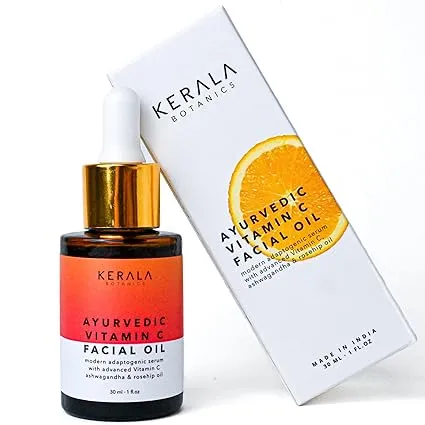
Ayurvedic Vitamin C Face Oil
Kerala Botanics
$49
★★★★☆
For more context on how Ayurvedic ingredients translate to modern skincare, the modern Ayurvedic skincare guide is a good starting point. And if you’re curious how another classic Ayurvedic ingredient — amla — approaches brightening from the vitamin C angle, the amla guide covers that territory well.
How to Use Licorice Root (Practically Speaking)
A few things to know before you start.
Where it sits in your routine: Licorice root works in almost any format — serums, toners, essences, moisturizers, and face oils. As a general rule, apply water-based serums with licorice root after cleansing and before moisturizer. Oil-based formulas go last in your PM routine. The how to layer skincare guide covers the full order if you need a refresher.
Does it make you sun-sensitive? No. This is a meaningful difference from vitamin C, retinol, and most exfoliating acids. Licorice root is not photosensitizing. You can use it morning or night, though with any brightening routine, daily SPF is non-negotiable — you’re trying to fade pigment, and UV exposure is the number one thing that creates more of it.
How long until you see results? Realistically, six to eight weeks of consistent use before you notice visible change. Tyrosinase inhibition is not an overnight process. You’re slowing production and waiting for cell turnover to reveal the newer, more even skin underneath. Patience is the move here.
Concentrations to look for: Glabridin in skincare tends to appear at low concentrations (0.1% to 2% in finished products) because it’s expensive to produce at higher levels. You won’t always see the percentage listed. The presence of “glabridin” or “licorice root extract” near the top of an ingredient list is a reasonable proxy for a meaningful dose.
A Note on What It Won’t Do
Licorice root is not hydroquinone. It’s not tretinoin. If you have deep, long-standing melasma or severely uneven tone, it’ll help — but it probably won’t be the only thing you need. Severe hyperpigmentation often requires a multi-pronged approach: a tyrosinase inhibitor, a melanin transfer blocker, a retinoid for cell turnover, and rigorous sun protection. The melasma treatment guide lays out what that full protocol looks like.
For mild to moderate dark spots, post-acne marks, or general uneven tone? Licorice root is legitimately effective on its own, especially with consistent use.
Putting It All Together
Licorice root — and glabridin specifically — earns its reputation. It slows melanin production by blocking tyrosinase, calms the inflammation that triggers hyperpigmentation in the first place, and does all of this without irritating skin or increasing sun sensitivity. For the majority of people dealing with uneven tone, it’s one of the most dependable brightening ingredients available.
It’s not the fastest. It’s not the most intense. But it’s steady, it’s gentle, and it works — which is more than you can say for a lot of things in this industry.
If you’re building a brightening routine from scratch: start with a formula that combines licorice root with niacinamide or tranexamic acid, layer SPF every single morning, and give it eight weeks. That’s the whole plan.