
Ingredients
Gotu Kola Beyond Cica: The Ayurvedic Roots of the K-Beauty Hero
Cica gets all the K-beauty credit, but gotu kola has an Ayurvedic story worth knowing. Here's what the ingredient actually does and why it works.
Disclosure — This article may contain affiliate links. We earn a small commission at no extra cost to you when you purchase through our links. This supports our ability to create independent, evidence-based skincare content.
Every few years, K-beauty hands us an ingredient and we collectively lose our minds over it. Snail mucin. Propolis. And then — cica. That little green jar with the tiger on it. The “cica” craze felt like it came out of nowhere, and for a lot of skincare consumers, it basically did.
Here’s what the packaging doesn’t tell you: the plant behind cica — Centella asiatica, also called gotu kola — has been used in Ayurvedic medicine for at least 3,000 years. Long before Korean beauty brands figured out its barrier-calming potential, Ayurvedic practitioners in Kerala and Sri Lanka were using it to heal wounds, soothe inflammation, and support cognitive health. The K-beauty world didn’t discover gotu kola. It just rebranded it.
That’s not a criticism — the clinical research that came with the K-beauty boom has actually been genuinely useful. But understanding where this plant came from changes how you use it. And once you see gotu kola through its Ayurvedic lineage, you start to understand why it works the way it does, and how to get more out of it.
What Is Gotu Kola, Actually?
Centella asiatica is a small, fan-leafed plant that grows across tropical and subtropical Asia — India, Sri Lanka, Indonesia, parts of Africa. In Ayurveda, it goes by two names: mandukparni (which translates, charmingly, to “frog leaf”) and brahmi, though that name is sometimes applied to a different plant (Bacopa monnieri) depending on the region, which causes a lot of confusion even among herbalists.
In the Ayurvedic system, gotu kola is classified as a medhya rasayana — a tonic for the mind and nervous system. It was eaten as a leafy green in Sri Lanka (still is), used in poultices for skin conditions, and taken orally to support memory and calm the nervous system. Ayurvedic texts describe it as cooling and bitter, with an affinity for pitta-related imbalances — heat, inflammation, redness.
Sound familiar? That’s exactly what we’re using it for in modern skincare.
The skin-relevant compounds in gotu kola are a family of molecules called triterpenoids — specifically asiaticoside, madecassoside, asiatic acid, and madecassic acid. These are the active constituents that K-beauty formulas standardize to. But Ayurvedic preparations used the whole plant, and some researchers think that approach may capture synergistic compounds we’re still mapping out.
How Gotu Kola Actually Works on Skin
Collagen Synthesis
This is the big one. Asiaticoside and asiatic acid have been shown in multiple studies to stimulate fibroblast activity — fibroblasts are the cells responsible for producing collagen. More collagen means firmer, bouncier skin over time. That’s not marketing; there’s good mechanistic research behind it.
The Ayurvedic use for wound healing maps directly onto this. When you apply gotu kola to a healing wound, you’re stimulating the same collagen-production process that helps skin knit itself back together. Practitioners didn’t have the vocabulary for fibroblasts, but they’d observed the outcome for centuries.
Anti-Inflammatory Action
Madecassoside, in particular, is a potent anti-inflammatory. It inhibits certain pathways that lead to redness, swelling, and irritation. If you’ve ever used a cica balm on a sunburn or a reactive skin day and felt immediate relief, that’s largely madecassoside doing its job.
For anyone with a damaged skin barrier, this matters. Barrier disruption triggers inflammation, which further damages the barrier — it’s a cycle, and gotu kola interrupts it at multiple points.
Barrier Support
The triterpenoids also appear to support ceramide production, which is one of the key components of a healthy skin barrier. This is a newer area of research, and the evidence is still building, but it’s consistent with the clinical observation that cica products help sensitized skin feel calmer and less reactive over time. If you want to go deep on ceramides specifically, the ceramide guide is worth reading.
Antioxidant Activity
Gotu kola has antioxidant properties, though it’s not the most potent antioxidant in your routine — that’s usually going to be vitamin C or something like bakuchiol paired with other actives. Think of the antioxidant benefit as a bonus, not the main reason you’re reaching for it.
The Ayurvedic Angle K-Beauty Missed
K-beauty took the triterpenoids and ran. Understandable — they’re the most clinically well-documented part of the plant. But Ayurvedic formulations approached gotu kola differently. A few things worth knowing:
Whole plant vs. isolated extract. Traditional preparations used whole-leaf extracts, sometimes fermented or processed with other herbs. The plant contains flavonoids, tannins, and volatile oils that don’t make it into standardized triterpenoid extracts. Whether they add meaningful benefit for skin is still being studied, but it’s a fair question to hold.
Synergistic formulation. Ayurveda rarely used a single herb in isolation. Gotu kola was typically paired with other botanicals — sometimes sesame or coconut oil as a carrier, sometimes with herbs like turmeric or amla. The logic was that herbs work better together, and modern synergy research is starting to validate some of those combinations. Amla, for instance, is a legitimate antioxidant powerhouse in its own right.
The pitta connection. Ayurveda’s framing of gotu kola as a cooling, pitta-calming herb gives you a useful shorthand for who benefits most: people with reactive, hot, red, easily irritated skin. If your skin runs oily, sensitive, and inflamed — classic pitta territory — this is one of the better ingredients in your corner. If you’re reading about Ayurvedic skincare more broadly, the dosha lens is actually a decent triage tool, even if you don’t buy the full system.
Gotu Kola vs. Cica: Are They the Same?
Sort of. “Cica” is a marketing term derived from the Latin name Centella asiatica. In theory, every cica product contains gotu kola. In practice, the quality and concentration vary enormously.
Some products list Centella asiatica extract high on the ingredient list and standardize to specific triterpenoid content. Others include it near the bottom in cosmetic fairy-dust quantities — technically present, practically useless. The marketing looks identical.
What to look for:
- Centella asiatica leaf extract or Centella asiatica extract in the top third of the ingredient list
- Products that call out specific actives: asiaticoside, madecassoside, or total triterpenoid percentage
- Whole-plant formulations for a more traditional approach — these won’t list individual triterpenoids but will use full-spectrum extract
Who Should Be Using Gotu Kola?
Short answer: most people. It’s one of the few actives that’s genuinely well-tolerated across skin types because it’s not doing anything aggressive.
You’ll get the most out of it if:
- Your skin is reactive or sensitized
- You’re dealing with redness, eczema, or rosacea flares
- You’re on a retinoid and need barrier support (gotu kola and tretinoin actually work really well together)
- You’re trying to fade post-acne marks — the collagen-stimulating effects help with hyperpigmentation over time, though it’s slow
- You want something you can use every day without worrying about sensitivity
It’s not the move if:
- You’re expecting fast, dramatic results — this is a slow-burn ingredient
- You have oily, congestion-prone skin and you’re choosing a heavy balm format (it’s the vehicle, not the ingredient, that’s the issue)
Products Worth Using
A few honest picks across formats — because gotu kola comes in everything from toners to balms to oils, and the right format matters.
For a Simple, High-Concentration Option
COSRX’s centella toner is a solid starting point if you want to see what gotu kola actually does for your skin without spending a lot. It’s not glamorous, but it’s effective — mostly centella water, a few supporting ingredients, nothing to irritate you. A good daily layer for reactive skin.

Centella Asiatica 100 Toner
COSRX
$22
★★★★½
For an Oil-Based Approach with Ayurvedic Roots
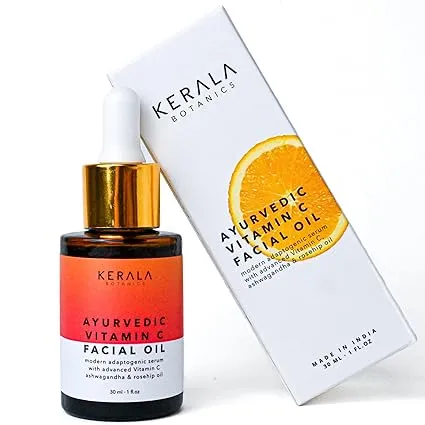
If you want gotu kola in a format that actually aligns with the Ayurvedic tradition — oil-based, multi-herb, using the plant’s natural environment — this is where things get interesting. Kerala Botanics’ Ayurvedic Vitamin C Face Oil doesn’t lead with gotu kola on the label, but it operates in the same lineage: a botanical oil formulation drawing on South Indian Ayurvedic ingredients, with vitamin C in a stabilized oil-soluble form and bakuchiol as a retinol alternative.
It’s a good option if you want to simplify your routine and work with ingredient philosophy that predates K-beauty by a few thousand years. One bottle replaces your serum, your facial oil, and your vitamin C step. The oil format makes it genuinely nourishing rather than just surface-level calming.
Fair warning: if you have very oily skin, you’ll want to test it before committing. And it’s not a clinical centella extract in the traditional cica sense — it’s more of a companion in the Ayurvedic botanical space. But for dry-to-normal skin that wants calmer, brighter, more even-toned results over time, it’s worth a look.
Ayurvedic Vitamin C Face Oil
Kerala Botanics
$49
★★★★☆
For Everyday SPF Protection with Cica Benefits
Dr. Jart+‘s Tiger Grass CC cream is essentially the product that brought cica to mainstream attention in the West. The SPF 30 is modest (go higher if you’re outside a lot), but for an everyday desk-job SPF with a color-correcting effect for redness, it’s a genuinely pleasant wear. The centella content is real, not token. And it introduced a lot of people to the ingredient in the least intimidating way possible.
Tiger Grass Colour Correcting Treatment SPF 30
Dr. Jart+
$42
★★★★☆
For an Oil Format Specifically Featuring Gotu Kola
Kiehl’s Gotu Kola Youth-Activating Face Oil is one of the few products that actually names gotu kola upfront rather than burying it under “cica.” It’s a dry oil, meaning it absorbs without a greasy finish, and it layers well under moisturizer. Best for normal-to-dry skin that wants the collagen-stimulating angle alongside hydration.
Gotu Kola Youth-Activating Face Oil
Kiehl's
$50
★★★★☆
How to Use Gotu Kola in Your Routine
The texture and format determine placement more than anything else.
Toners and essences: Apply after cleansing, before serums. Pat in gently — don’t rub, especially if your skin is reactive.
Serums: Standard serum placement, after lighter watery layers, before oils and moisturizer.
Balms and creams: Last step in PM routine, or as a protective layer during the day under SPF. Great for slugging-adjacent moisture trapping without full occlusion.
Face oils: After moisturizer, or mixed into moisturizer. If you’re using a facial oil with gotu kola or complementary botanicals, there’s a whole guide on how to layer oils correctly so you’re not just suffocating your other actives.
One thing gotu kola is genuinely good at: playing nicely with everything. You can use it alongside retinoids, vitamin C, niacinamide, acids. It doesn’t react badly with much. The layering order still matters for efficacy, but gotu kola is one of the more forgiving ingredients to slot in.
What to Expect (and When)
This is where I want to be honest with you, because a lot of cica marketing oversells the speed.
First few days: If your skin is reactive or inflamed, you’ll probably notice calming relatively quickly. Redness can visibly reduce within a week.
Two to four weeks: Barrier function starts improving. Skin feels less tight, less reactive to other products. This is subtle — you might not notice unless your skin was genuinely compromised to start.
Two to three months: The collagen-synthesis effects start to show. Fine lines may look slightly plumper. Texture can improve. Post-acne marks may begin to fade at the edges.
Six months plus: The real Ayurvedic tradition here was long-term, consistent use. This isn’t an acid peel. The results are cumulative and slow, and they tend to stick around precisely because they’re structural rather than surface-level.
Putting It All Together
Gotu kola is one of the most well-validated botanical ingredients in skincare. The K-beauty world deserves credit for bringing rigorous formulation and clinical testing to an ingredient that Ayurveda had been using for millennia. But the Ayurvedic perspective adds something useful: it tells you why this plant works, who it’s best for, and how it performs best — in concert with other botanicals, in nourishing bases, as a long-term practice rather than a quick fix.
If you’ve been using cica products and wondering what they’re actually doing, now you know. If you haven’t tried gotu kola yet and your skin runs hot, red, or reactive, this is one of the lower-risk places to start. And if you’re already deep into the Ayurvedic skincare space — working with amla, manjistha, ashwagandha — gotu kola fits naturally into that framework.
It’s not a trend. It’s just a very old plant that K-beauty happened to rediscover. Worth knowing where it came from.