
Ingredients
Manjistha: Ayurveda's Herb for Dark Spots and Uneven Tone
Manjistha (Rubia cordifolia) has been used for pigmentation in Ayurveda for centuries. Here's what the science actually says about it.
Disclosure — This article may contain affiliate links. We earn a small commission at no extra cost to you when you purchase through our links. This supports our ability to create independent, evidence-based skincare content.
Manjistha isn’t trending. You won’t find it in a Sephora endcap display or splashed across a TikTok “ingredient of the month” reel. It’s been sitting quietly in Ayurvedic medicine for roughly 2,000 years, used primarily as a blood purifier and skin brightener, and Western dermatology is only beginning to catch up to what those practitioners were doing with it.
The herb in question is Rubia cordifolia, a climbing plant native to South and Southeast Asia. Its roots yield a deep red dye — historically used for textiles — and a set of bioactive compounds that appear to interfere with melanin production. For anyone dealing with dark spots, melasma, or post-inflammatory hyperpigmentation, that mechanism is worth understanding.
This guide covers what manjistha actually is, how it works on skin, what the research shows (and where it runs thin), and how to use it practically alongside the ingredients you’re already reaching for.
What Is Manjistha?
Rubia cordifolia is a member of the Rubiaceae family. The root is the part used in skincare and traditional medicine — dried, powdered, and extracted into various formats. In classical Ayurveda, it’s classified as a raktashodhaka, a blood-purifying herb, and used for conditions involving excess heat and inflammation, which historically included uneven skin tone and redness.
The active compounds driving its skincare relevance are primarily anthraquinones — specifically purpurin, munjistin, and alizarin. These pigmented molecules aren’t just responsible for the plant’s characteristic red-orange color. They also appear to have meaningful biological activity: antioxidant, anti-inflammatory, and, most relevant here, anti-melanogenic.
This is where it connects to the modern understanding of hyperpigmentation. Dark spots form when melanocytes overproduce melanin, often triggered by UV exposure, inflammation, or hormonal changes. Tyrosinase — the enzyme that catalyzes melanin synthesis — is the main target for most brightening actives. Manjistha’s anthraquinones appear to inhibit tyrosinase activity, at least in lab settings.
That’s the mechanism. Whether it translates reliably in a topical formula applied to human skin is a more complicated question.
The Evidence: Where It’s Solid, Where It Isn’t
In Vitro Data
The strongest evidence for manjistha as a brightening ingredient comes from cell studies. Multiple in vitro experiments have shown that Rubia cordifolia extracts inhibit tyrosinase activity and reduce melanin synthesis in cultured melanocytes. A 2013 study published in the Asian Pacific Journal of Tropical Biomedicine documented antioxidant activity alongside melanogenesis inhibition for alizarin specifically.
These findings are real and worth taking seriously. They explain why the plant has been used for skin tone for millennia — it’s not purely folk mythology.
Clinical Data
Here’s where we have to be honest: rigorous, placebo-controlled clinical trials on topical manjistha for hyperpigmentation in humans are sparse. Most of the available human studies are small, underpowered, or embedded within multi-herb Ayurvedic formulations, making it difficult to isolate manjistha’s contribution.
What exists is encouraging but not definitive. A handful of observational studies from Ayurvedic clinical settings have shown improvements in pigmentation and skin tone with manjistha-based formulations. But “improvements noted by practitioners” is not the same bar as a double-blind trial.
Compare this to niacinamide, which has decades of robust clinical data, or tranexamic acid, which has been specifically studied against melasma with consistent results. Manjistha doesn’t have that depth of evidence yet.
The honest summary: the mechanism is plausible, the in vitro data is solid, the traditional use history is long. But if you’re treating serious melasma, it shouldn’t be your only strategy. Think of it as a thoughtful supporting ingredient, not a replacement for tranexamic acid or prescription interventions.
Anti-Inflammatory Activity
One underappreciated aspect of manjistha: its anti-inflammatory properties may be as important to its pigmentation benefits as the direct tyrosinase inhibition. Post-inflammatory hyperpigmentation (PIH) is driven by inflammation — the melanocytes are essentially responding to irritation. Calming that response downstream can meaningfully reduce dark spot formation.
This makes manjistha potentially useful for skin that’s reactive, prone to PIH after breakouts, or dealing with conditions like melasma where inflammation plays a role. It’s a different angle than, say, a chemical exfoliant that physically removes pigmented cells. Both approaches have value.
How to Use Manjistha
Format Matters
Manjistha appears in skincare in a few formats: raw powder (for DIY masks), aqueous extracts in serums and toners, and oil infusions. Bioavailability will vary significantly by format, though the research on percutaneous absorption for manjistha’s anthraquinones specifically is limited.
For topical use, water-based extracts in serums or essences likely deliver the most consistent dose. Powder masks work too — traditional Ayurvedic practice uses manjistha mixed with honey, rose water, or yogurt — but controlling potency is harder.
Pairing It Intelligently
Manjistha pairs well with other anti-melanogenic actives without the compatibility headaches you’d get from, say, mixing vitamin C with the wrong pH environment. Some combinations worth considering:
With vitamin C: Both inhibit melanin synthesis via different pathways (vitamin C reduces dopaquinone, manjistha inhibits tyrosinase upstream). Layering these isn’t redundant — it’s additive. If you’re using a vitamin C product, manjistha can complement it.
With niacinamide: Niacinamide works primarily by inhibiting melanosome transfer to keratinocytes — a different step in the pigmentation process entirely. The two fit together logically.
With bakuchiol: Bakuchiol accelerates cell turnover in a retinol-like manner, helping to surface newer, less-pigmented skin. Pairing a manjistha product with a bakuchiol treatment at night addresses both melanin production and turnover speed. This is the kind of layered approach that Ayurvedic-leaning modern formulations are increasingly building around.
Sun Protection Is Non-Negotiable
Any active targeting pigmentation is undermined without consistent sunscreen use. UV exposure is the primary trigger for melanin overproduction. You can inhibit tyrosinase effectively and still watch those spots darken again if you’re not blocking the stimulus. This isn’t a manjistha-specific caveat — it applies to every brightening ingredient, always.
Manjistha vs. Other Brightening Ingredients
It helps to place manjistha in the context of the actives you’re likely already familiar with.
| Ingredient | Primary Mechanism | Clinical Evidence | Best For |
|---|---|---|---|
| Manjistha | Tyrosinase inhibition, anti-inflammatory | Limited human trials | PIH, general tone, Ayurvedic routines |
| Niacinamide | Melanosome transfer inhibition | Strong | Most skin types, broad pigmentation |
| Tranexamic acid | Plasmin inhibition, prostaglandin reduction | Strong for melasma | Melasma specifically |
| Vitamin C (L-AA) | Dopaquinone reduction, antioxidant | Strong | General brightening, antioxidant protection |
| Azelaic acid | Tyrosinase inhibition, anti-inflammatory | Strong | PIH, rosacea-related pigmentation |
Manjistha isn’t the most evidence-backed option on that list. But it’s also not competing on the same axis as prescription treatments. For someone who wants to approach their routine through an Ayurvedic framework, or who wants a gentler, plant-based option alongside more established actives, it earns a legitimate spot.
Products Worth Knowing
A few products actually formulate with manjistha at meaningful concentrations rather than listing it as decoration on a label.
The Kerala Botanics Ayurvedic Vitamin C Face Oil doesn’t lead with manjistha specifically, but it represents the same Ayurvedic-rooted approach to brightening — combining an advanced, stable form of vitamin C with bakuchiol for cell turnover. If you’re drawn to manjistha for its Ayurvedic context and brightening goals, this oil addresses those same goals through complementary ingredients. The oil format doubles as a moisturizer, which simplifies the routine. Worth noting: it can feel heavy under makeup for some, and oily skin types may want to test it before committing. The clinical evidence behind it is thinner than Skinceuticals CE Ferulic, but it’s a reasonable choice for anyone wanting a single oil to handle vitamin C delivery and retinol-alternative activity at once.
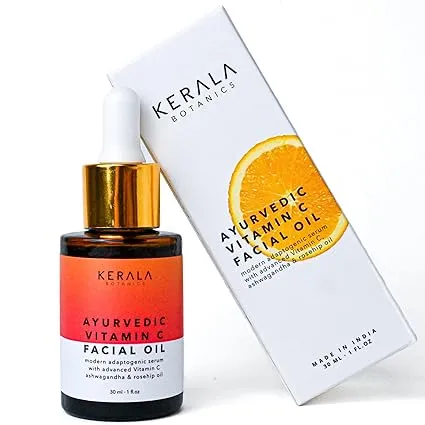
Ayurvedic Vitamin C Face Oil
Kerala Botanics
$49
★★★★☆
Kama Ayurveda’s Eladi Hydrating Face Cream is one of the more accessible Ayurvedic formulations that incorporates traditional herbs including manjistha alongside eladi (cardamom) complex. It reads as a genuine Ayurvedic formulation rather than a Western product with Ayurvedic branding grafted on. The concentration of each botanical isn’t disclosed in detail, which is a real limitation — but for those building an Ayurvedic skincare practice, it’s a reasonable starting point.
Eladi Hydrating Ayurvedic Face Cream
Kama Ayurveda
$38
★★★★☆
Forest Essentials Soundarya Radiance Cream sits at the more luxurious end of the Ayurvedic skincare market. It contains manjistha alongside other traditional brightening herbs. At $72, you’re paying for the brand’s positioning and formulation philosophy as much as raw actives. If budget is the question, there are more cost-effective ways to get botanical brightening benefits. If the ritual matters to you, the formulation is well-made.
Soundarya Radiance Cream with 24K Gold
Forest Essentials
$72
★★★★☆
Who Should Consider Manjistha
Manjistha makes the most sense for a specific subset of people:
Those with PIH from breakouts or irritation. The anti-inflammatory mechanism is genuinely useful here, and the gentle profile makes it appropriate for reactive skin that doesn’t tolerate aggressive exfoliants.
Anyone building an Ayurvedic-rooted routine. If you’re interested in amla, ashwagandha, and the broader tradition, manjistha is a coherent addition. It’s one of the most historically supported Ayurvedic herbs for skin — not a modern marketing invention.
People who want to layer brightening actives. As a supporting ingredient alongside niacinamide or vitamin C, it adds a different inhibition pathway without creating compatibility problems.
Who should probably look elsewhere first: Anyone dealing with significant melasma or deep dermal pigmentation should prioritize ingredients with stronger clinical backing — tranexamic acid, azelaic acid, or prescription hydroquinone under dermatologist supervision. Manjistha as a solo treatment for these conditions is likely undershooting the problem.
Putting It All Together
Manjistha (Rubia cordifolia) is a legitimate brightening ingredient with a clear mechanism and a long track record in Ayurvedic practice. Its anthraquinone compounds inhibit tyrosinase and reduce inflammation — two relevant pathways for dark spots and uneven tone.
The honest caveats: human clinical data is thin, standard formulations don’t always disclose concentrations, and it works best as part of a broader strategy rather than a standalone fix.
Used alongside a stable vitamin C source, consistent SPF, and — for more stubborn pigmentation — a well-evidenced active like niacinamide or tranexamic acid, manjistha adds a thoughtful, botanically grounded layer to a brightening routine. That’s not a small thing. It’s just not magic, either.
No ingredient is.