
Routines
Skincare During and After Cancer Treatment: A Gentle, Barrier-First Guide
Cancer treatment changes your skin fast. Here's how to care for it — fragrance-free, active-free, and without making things worse.
Disclosure — This article may contain affiliate links. We earn a small commission at no extra cost to you when you purchase through our links. This supports our ability to create independent, evidence-based skincare content.
Nobody told me this was going to happen to your skin. That’s what I hear, again and again, from people going through cancer treatment. The fatigue, the nausea, the hair loss — those are the things oncology teams prepare you for. But the skin? The way it becomes suddenly, brutally reactive? The dryness that no moisturizer seems to touch? The way your favorite serum, the one you’ve used for two years without a single problem, suddenly burns like you’ve applied battery acid?
It’s a lot. And it deserves a real, honest answer.
This guide is not a replacement for your oncology team’s advice. Please, always run anything new by your doctor first — especially if you’re undergoing active treatment. What this is: a practical, ingredient-by-ingredient breakdown of how to approach skincare when your skin is compromised, reactive, and asking for help. Written for people who are going through treatment right now, and for those who are in the recovery stretch afterward.
Let’s start with what’s actually happening.
What Cancer Treatment Does to Your Skin
Chemotherapy, radiation, immunotherapy, and targeted therapies all affect the skin differently. But they share a common thread: they compromise your barrier.
Your skin barrier — the outermost layer — is your first line of defense against the world. It’s made up of ceramides, fatty acids, and cholesterol that act like mortar between skin cells. When that’s intact, your skin holds onto water, keeps irritants out, and generally behaves. When it’s not intact, everything gets in, nothing stays hydrated, and your skin turns into a chaos zone.
Chemotherapy often causes widespread dryness, sensitivity, and sometimes a kind of generalized inflammation. Certain chemo drugs can cause hand-foot syndrome — painful redness, cracking, and peeling on the palms and soles. Radiation causes intense localized reactions in the treatment area: redness, peeling, sometimes blistering. Immunotherapy can trigger unexpected skin rashes. Targeted therapies (like EGFR inhibitors) are notorious for causing acne-like breakouts across the face and body, which is, genuinely, a cruel twist.
What all of this means practically: your usual routine probably needs to go on pause. Not forever. But for now.
The Golden Rule: Barrier First, Everything Else Later
If you take nothing else from this article, take this. During active treatment, your only skincare job is to protect and support your barrier. That’s it.
No retinol. No acids. No actives of any kind. No vitamin C serums with L-ascorbic acid. No physical scrubs. No enzyme masks. Nothing that exfoliates, stimulates cell turnover, or tinkers with your skin’s chemistry. Your barrier is already under siege — you don’t need to add to its problems.
This is also a fragrance-free moment. Fragrance — synthetic or natural — is the most common skin irritant there is. When your barrier is compromised, it gets in faster and causes more damage. Essential oils count. “Natural fragrance” counts. Anything with a scent that isn’t just… nothing… is worth avoiding right now. I know that’s annoying if you love the ritual of a beautifully scented routine. But this is temporary, and your skin will thank you.
Here’s your simplified framework:
- Gentle, fragrance-free cleanser
- Rich, occlusive moisturizer (ceramide-based ideally)
- Mineral SPF (non-negotiable, more on this below)
Three steps. That’s the whole routine during active treatment. Add things back slowly, one at a time, once treatment ends and your skin settles.
Cleansing: Less Is More
Your cleanser has one job: remove surface grime without stripping your barrier. That’s it. You do not need a “deep clean.” You do not need anything clarifying or purifying or balancing. Those are marketing words for “mildly irritating.”
Look for creamy or gel cleansers that are labeled fragrance-free and for sensitive skin. Avoid anything with salicylic acid, glycolic acid, sulfates, or alcohol in the first five ingredients.
Vanicream Gentle Facial Cleanser is about as stripped-down as it gets. No dyes, no fragrance, no parabens. It’s $9 and it’s genuinely one of the most barrier-friendly options on the market. Oncology estheticians recommend it constantly.

Vanicream Gentle Facial Cleanser
Vanicream
$9
★★★★½
La Roche-Posay Toleriane Hydrating Gentle Cleanser is another excellent option, with a slightly creamier texture that works well for skin that’s skewing dry. It rinses clean, doesn’t foam aggressively, and leaves zero tightness. I’d reach for this one if Vanicream feels too basic and your skin needs that extra hit of hydration at the cleansing step.

La Roche-Posay Toleriane Hydrating Gentle Cleanser
La Roche-Posay
$18
★★★★½
One more thing: lukewarm water only. Hot water strips the barrier faster than most cleansers. You’ll survive the temperature adjustment.
Moisturizing: This Is Where You Invest the Most
Treatment-related dryness isn’t like regular winter dryness. It’s deeper, more persistent, and doesn’t respond well to light lotions. You need something that both replenishes the barrier and locks water in.
The ingredients you’re looking for: ceramides (repair the lipid barrier), glycerin (draws water into the skin), hyaluronic acid (binds moisture), and petrolatum or mineral oil (occlusive seal so that moisture doesn’t escape). Not all of these need to be in one product, but ceramides plus at least one occlusive is a winning combination.
CeraVe Moisturizing Cream is the one I’d tell everyone to start with. It has all three essential ceramides, glycerin, and a proper occlusive finish. It’s affordable, available everywhere, and it works. Full stop. If you want to go deeper on why ceramides matter so much right now, this breakdown is worth reading.
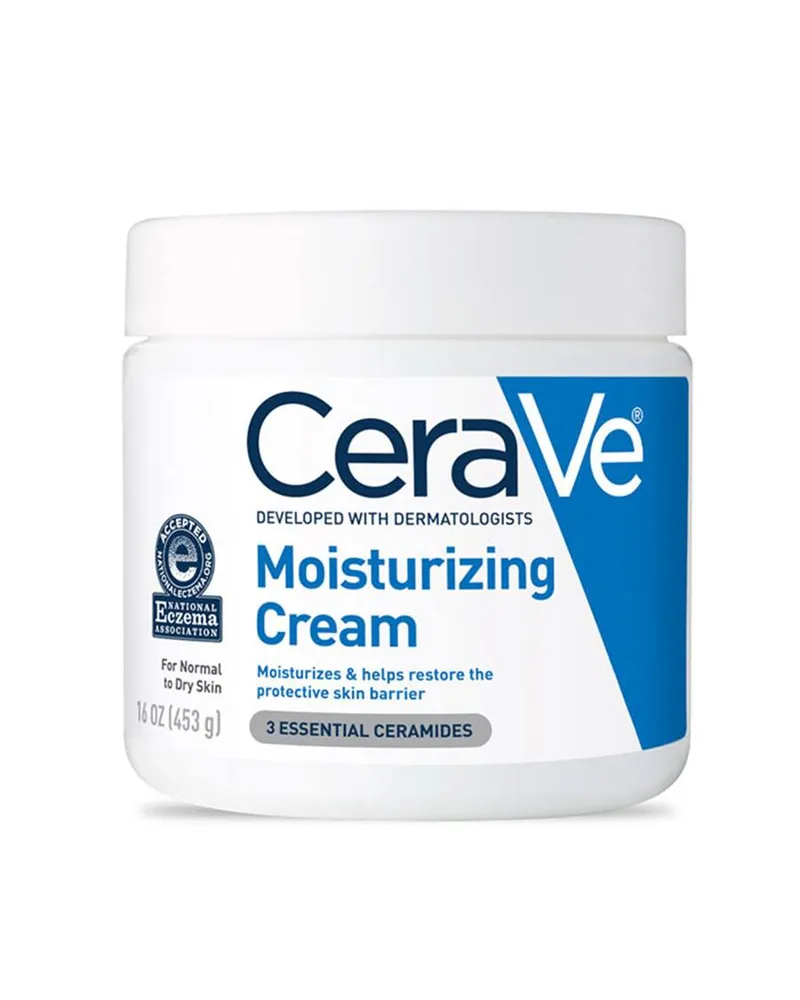
CeraVe Moisturizing Cream
CeraVe
$19
★★★★½
For areas that are particularly raw — radiation treatment zones, hands dealing with hand-foot syndrome, peeling patches — go straight to Aquaphor Healing Ointment. It’s basically just petrolatum and panthenol. It’s greasy. It’s not glamorous. It will absolutely save your skin. Apply it over your moisturizer as a final occlusive layer, or use it alone on very angry areas overnight.
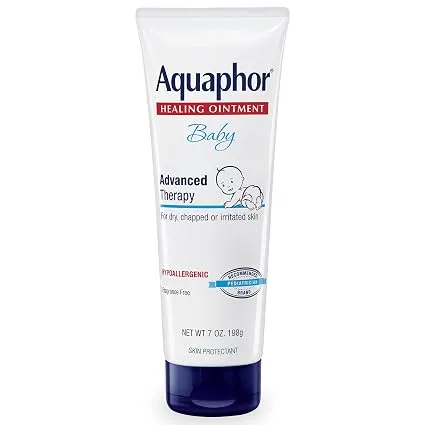
Aquaphor Healing Ointment
Aquaphor
$14
★★★★½
Avène Cicalfate+ Restorative Protective Cream deserves a mention for skin that’s not just dry but actually broken or blistered. Avène’s thermal spring water has real soothing properties, and Cicalfate+ has copper-zinc sulfate, which has wound-healing and antimicrobial properties. It’s the one I’d suggest for radiation-treated skin specifically, or for anyone dealing with open skin reactions. Always check with your oncology team before applying anything to actively broken skin in a radiation field.

Avène Cicalfate+ Restorative Protective Cream
Avène
$28
★★★★½
On the body
The same rules apply below the neck. Use a fragrance-free body cream — not lotion, cream — applied while your skin is still slightly damp. CeraVe, Vanicream, or Eucerin Original Healing Cream all work well. Apply twice a day if you can.
Sunscreen: More Important Than Ever
Chemotherapy and radiation can make skin significantly more photosensitive. Some drugs cause photosensitizing reactions that mean you burn faster and more severely than you ever have before. Post-treatment skin is also more vulnerable to sun-triggered hyperpigmentation. Radiation can also leave skin more prone to long-term UV damage in the treated area.
Mineral sunscreen is the call here, not chemical. Chemical filters (like oxybenzone or avobenzone) need to penetrate slightly into the skin to work — that’s how they absorb UV. On compromised, reactive skin, that’s a problem. Mineral filters (zinc oxide and titanium dioxide) sit on top of the skin and physically deflect UV. They’re gentler, they’re less likely to sting, and they’re less likely to cause reactions.
EltaMD UV Physical Broad-Spectrum SPF 41 is one of the cleaner mineral options. It’s tinted enough to reduce white cast, the formula is fragrance-free, and it was developed with dermatologists. It sits comfortably under nothing, because “under makeup” might not be your current priority — but it works fine if it is.
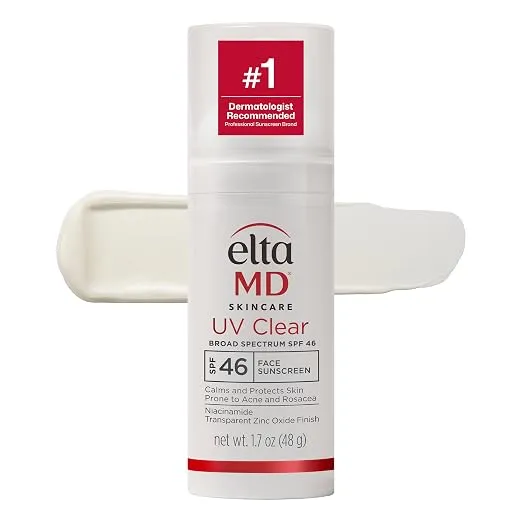
EltaMD UV Physical Broad-Spectrum SPF 41
EltaMD
$36
★★★★½
If you want more options, our mineral sunscreen guide covers no-white-cast formulas across price points. Apply SPF every single morning, even if you’re staying home. Windows let in UVA.
What to Avoid (At Least for Now)
I want to be specific here because “avoid harsh ingredients” is vague and not helpful.
Pause these during active treatment:
- Retinol, retinaldehyde, tretinoin — all of it. The cell-turnover stimulation is too aggressive for compromised skin. Here’s why they’re so potent — and why that’s a reason to wait.
- AHAs and BHAs: glycolic acid, lactic acid, salicylic acid, mandelic acid. Exfoliating acids of any kind.
- L-ascorbic acid vitamin C serums at high concentrations (10%+). These can sting significantly on a damaged barrier and may not be absorbed efficiently anyway.
- Niacinamide above 5%. Some people tolerate it fine; others find it irritating when their barrier is down.
- Fragrance — synthetic and natural both.
- Essential oils.
- Alcohol (ethanol) as a primary ingredient.
- Physical scrubs, cleansing brushes, washcloths with texture.
After treatment ends, you can slowly reintroduce these, one at a time, with weeks between each addition. Your skin needs time to rebuild before you ask it to handle actives again. Our guide on damaged skin barrier repair walks through exactly how to do this.
A Note on EGFR Inhibitor Rash
If you’re on a targeted therapy like erlotinib, cetuximab, or similar EGFR inhibitors, you may be dealing with an acne-like rash that doesn’t respond to the usual acne treatments. This is because it isn’t acne — it’s an inflammatory reaction to the drug, and treating it like acne can make it worse.
Do not use salicylic acid or benzoyl peroxide on this rash without your oncology team’s guidance. The standard approach is usually gentle moisturization, mild topical antibiotics (prescribed), and sun protection. Tell your oncologist — there are specific management protocols, and this side effect is well-documented.
Rebuilding After Treatment: Reintroducing Actives Slowly
Treatment ends. Your skin starts to stabilize. You want your vitamin C serum back. You miss your retinol. Completely understandable.
The approach: go slow, go gentle, go one thing at a time.
Start with the barrier basics for at least four to six weeks after treatment ends. If your skin is holding steady — no redness, no stinging when you apply your moisturizer, no random flares — you can start to layer things back in.
First back in: a low-concentration niacinamide (around 4-5%) is a reasonable starting point. It’s well-tolerated, it helps with post-treatment pigmentation changes, and it supports barrier function. Full niacinamide guide here if you want the details.
Second: vitamin C. But consider starting with a gentler format. Oil-soluble vitamin C derivatives are significantly less irritating than L-ascorbic acid serums. If you’re rebuilding and want the antioxidant benefits without the sting risk, an oil-based formula is worth considering.
Kerala Botanics’ Ayurvedic Vitamin C Face Oil uses a stabilized, oil-soluble form of vitamin C that stays active in skin cells significantly longer than standard L-ascorbic acid serums, without the low pH that makes those serums sting. It also contains bakuchiol — a plant-based retinol alternative — which means when you’re ready to ease back into some gentle cell-renewal support, this covers both bases in one step. Bakuchiol is a genuinely solid option for people who can’t yet handle retinol, and that includes many people in the post-treatment recovery stretch.
The oil format does mean it’s not ideal for everyone — if you’re prone to congestion or breakouts, introduce it slowly and watch how your skin responds. It’s also not a substitute for a medical-grade treatment if your oncology team has prescribed something specific. But as a gentle reentry into “actives,” it’s a thoughtful option.
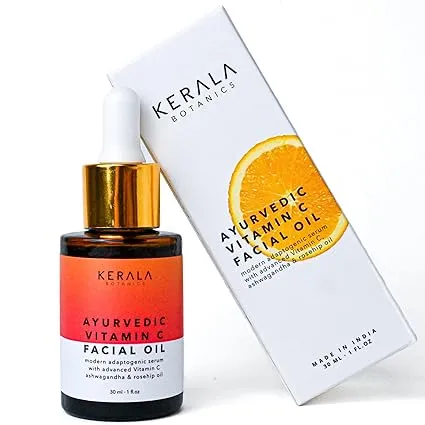
Ayurvedic Vitamin C Face Oil
Kerala Botanics
$49
★★★★☆
Third — and much later: retinol, if you want it. Start at the lowest concentration possible. Once a week. Work up slowly over months, not weeks. Skin cycling is actually a sensible approach for this phase — it builds in the rest nights your skin still needs.
Hyperpigmentation After Treatment
Some chemotherapy drugs cause post-inflammatory hyperpigmentation. Radiation can leave darker or lighter patches in the treated area. This is real and it’s frustrating, especially when you’ve been through enough already.
The good news: most of it fades with time and consistent SPF. The better news: once your barrier is solid, there are gentle brightening options that don’t require aggressive actives.
Niacinamide at 5-10%, azelaic acid (which is anti-inflammatory as well as brightening), and vitamin C are all reasonable approaches. Work with a dermatologist if you can — post-treatment pigmentation can sometimes be more stubborn and may benefit from prescription options. Our hyperpigmentation guide covers the ingredient options in detail, and the melasma guide has useful overlap for hormonally-driven pigmentation that can sometimes occur post-treatment.
Putting It All Together
During active treatment, your routine is three steps and nothing more: a fragrance-free, non-stripping cleanser, a ceramide-rich moisturizer applied generously, and a mineral SPF every morning. That’s the whole job right now. Resist the urge to add, fix, or optimize.
After treatment ends, give your skin four to six weeks on that simple routine before you even think about actives. Then add one thing at a time, slowly. Niacinamide first. Gentle vitamin C next. Retinol much later, if at all.
Be patient with your skin. It has been through something. It’s rebuilding. The routine you had before will largely come back — just not all at once.
And if something stings, burns, or causes a reaction: that’s information. Take it out. Wait. Try again later.
Your skin is tougher than it feels right now. Give it the right conditions and it’ll remind you.
Always consult your oncologist or dermatologist before starting or changing your skincare routine during active cancer treatment. The guidance above is general; your treatment protocol may have specific considerations that override it.