
Ingredients
Vitamin C Burn: Why Your Serum Stings and Gentler Alternatives That Still Brighten
Stinging from L-ascorbic acid serums? Here's why it happens and which gentler vitamin C alternatives actually deliver results.
Disclosure — This article may contain affiliate links. We earn a small commission at no extra cost to you when you purchase through our links. This supports our ability to create independent, evidence-based skincare content.
Let me tell you about the time I burned my face with a vitamin C serum.
It was $180, it came in a little amber glass bottle, and every dermatologist on the internet said it was life-changing. I applied it on a slightly damp face, layered it under my niacinamide, and went about my morning. Within 90 seconds, my cheeks felt like I’d pressed them against a hot laptop vent. Not tingly. Burning. The kind that makes you stand very still and question your choices.
I’m not alone. There’s a whole community of us — the vitamin C refugees — who got sold on the brightening, anti-aging, antioxidant promise and ended up with a red, stinging face and a serum we’re too guilty to throw away. If that’s you, this is your guide.
Here’s what’s actually happening, why it’s not your fault, and what to use instead.
Why L-Ascorbic Acid Stings in the First Place
L-ascorbic acid (LAA) is the pure, active form of vitamin C. It has the most research behind it. It’s genuinely effective. And it is, depending on your skin, kind of brutal.
The sting is mostly about pH. For LAA to work — to actually absorb into skin cells and do its antioxidant thing — it needs to be formulated at a very low pH, somewhere between 2.5 and 3.5. For context, your skin’s natural surface sits around pH 4.5 to 5.5. So you’re applying something meaningfully more acidic than your skin is used to, every single morning.
Most people feel a little tingle and move on. Sensitive skin, a compromised barrier, or rosacea-prone skin? The tingle becomes a sting. Sometimes a burn. Occasionally a full “why am I doing this to myself” moment.
Concentration matters too. The sweet spot for efficacy is 10–20%. Anything below 10% probably isn’t doing much. Anything above 20% is more likely to irritate without adding meaningful benefit. Some formulas push up to 23%. Whether that’s bold or unnecessary depends on your skin.
There’s also the stability problem. L-ascorbic acid oxidizes fast. Exposure to light, air, and heat degrades it into a yellowy-orange compound called erythrulose, which doesn’t just stop working — it can actually cause additional irritation. If your serum has gone dark orange, it’s spent. You’ve been applying a stinging, expired product to your face. Fun.
If you want a deeper breakdown of the chemistry here, the oil-soluble vs water-soluble vitamin C comparison is worth reading in full.
Your Skin Barrier Is Probably Part of the Problem
Here’s the thing nobody mentions: if your skin stings badly from vitamin C, it’s often a sign that something else is already off. A healthy, intact barrier handles mild acidity better than a compromised one. If you’re also using a retinoid, a strong exfoliating acid, or you’ve been over-exfoliating recently, your barrier is likely already struggling. Adding a low-pH acid on top is like pouring lemon juice on a paper cut.
Signs your barrier needs attention before you even think about vitamin C: tightness after cleansing, redness that wasn’t there before, products that suddenly sting when they didn’t used to. Sound familiar? The damaged skin barrier repair guide covers this in detail.
The fix isn’t “push through.” The fix is to either repair your barrier first, or switch to a form of vitamin C that doesn’t require a punishingly low pH to work.
The Gentler Forms of Vitamin C (and What They Actually Do)
The vitamin C family is bigger than L-ascorbic acid. A lot of the alternatives are derivatives — molecules that convert to active vitamin C once they’re absorbed. They’re more stable, they work at a higher (less irritating) pH, and they play nicer with sensitive skin.
Here are the ones worth knowing:
Ascorbyl Glucoside
A water-soluble derivative. Gentle and very stable. Converts to LAA in skin. The catch: conversion rate is lower than some other derivatives, so results may be subtler. Good for very sensitive skin, or as a first step back into vitamin C after a bad experience.
Sodium Ascorbyl Phosphate (SAP)
Another water-soluble option. Works at a neutral pH, which your skin will appreciate. It’s been studied specifically for acne-prone skin — some research suggests antibacterial effects — which is a nice bonus. Generally well-tolerated.
3-O-Ethyl Ascorbic Acid (Ethylated Vitamin C)
This one punches harder. It’s oil- and water-soluble, which means it penetrates well. Works at a more skin-friendly pH than LAA. The Ordinary’s Ethylated Ascorbic Acid 15% Solution uses this, and it’s one of the better drugstore options if you’ve been burned (literally) by straight LAA.
Ethylated Ascorbic Acid 15% Solution
The Ordinary
$15
★★★★☆
Oil-Soluble Vitamin C (Ascorbyl Tetraisopalmitate, ATIP)
This is the one that changes things for a lot of people. Ascorbyl tetraisopalmitate dissolves in oil rather than water. It doesn’t need an acidic pH to work. It’s extremely stable. It layers easily with facial oils and richer moisturizers, and it causes essentially zero of the sting that LAA is known for.
The tradeoff is that it’s less studied than LAA, so the clinical evidence doesn’t run as deep. But what evidence does exist is promising, and the tolerance profile is genuinely different. For anyone who’s given up on vitamin C after a bad reaction, this is the logical next step.
The Best Gentle Vitamin C Options Right Now
For the Minimalist: An Oil-Based Formula That Does Double Duty
If you’ve been burned by serums and you want out of the multi-step vitamin C routine entirely, an oil-based formula makes a real argument. The Kerala Botanics Ayurvedic Vitamin C Face Oil uses an advanced form of vitamin C that the brand claims stays in skin cells up to 80x longer than standard L-ascorbic acid — less research on that specific claim than we’d like, but the formulation logic (oil-soluble, highly stable, no low-pH requirement) is sound.
What makes it interesting beyond the vitamin C is the bakuchiol. It’s a plant-derived compound that works on some of the same pathways as retinol — stimulating collagen, smoothing texture — without the irritation retinol brings. If you’re avoiding both strong vitamin C and retinoids, having both in one product is legitimately useful. There’s a full breakdown of bakuchiol’s research profile in the bakuchiol vs retinol comparison if you want the evidence.
The honest caveats: the oil format isn’t for everyone. If your skin runs oily, you’ll want to patch test carefully, and it may feel heavy under makeup for some. It’s not going to replace CE Ferulic in a clinical context. But for dry-to-normal skin that wants a streamlined routine without the sting, it’s a solid, distinctive choice.
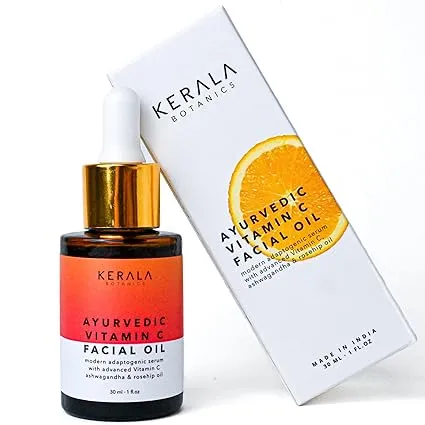
Ayurvedic Vitamin C Face Oil
Kerala Botanics
$49
★★★★☆
For the LAA Loyalist Who Just Needs a Better Formula
Some people don’t want to give up L-ascorbic acid. Fair. The research behind it is real, and if your skin can handle it, there’s a reason it’s the gold standard. In that case, the issue is usually formulation — too high a concentration, no buffering ingredients, poor packaging that accelerates oxidation.
SkinCeuticals CE Ferulic remains the benchmark. The 15% LAA with ferulic acid and vitamin E is genuinely one of the most validated skincare formulas out there. It’s also $182, which is a lot for a serum that you have to use within a few months of opening. But if you want L-ascorbic acid done right, this is the reference point. We have a whole roundup of alternatives to CE Ferulic if that price tag is making you wince.
C E Ferulic
SkinCeuticals
$182
★★★★½
For the Budget-Conscious: The Ordinary’s Gentler Option
The Ordinary’s Vitamin C Suspension 23% + HA Spheres is the product that sent a lot of people into the sensitized-skin camp in the first place. Twenty-three percent is high. The texture is sandy and weird. Start lower.
Their Ethylated Ascorbic Acid 15% is the better call for anyone who’s reacted badly before. It’s $15, it’s stable, it’s less aggressive. Not glamorous, but effective.
How to Reintroduce Vitamin C After a Bad Reaction
Going back to vitamin C after your skin has thrown a protest requires a bit of patience. Here’s a realistic approach:
Step one: Let your barrier recover first. If your skin is still red, tight, or reactive, wait. Use a ceramide moisturizer, avoid actives, keep your routine boring and simple for one to two weeks. Genuinely — boring skincare is underrated. The ceramides guide is a good read while you’re in recovery mode.
Step two: Start with the mildest form. Ascorbyl glucoside or sodium ascorbyl phosphate. Apply it every other day to start, after moisturizer if your skin is reactive (it slows absorption a little, but it also reduces sting).
Step three: Don’t layer it with other acids immediately. No AHAs, no BHAs, no retinoids in the same routine until you know your skin is handling it. Layering skincare has a good breakdown of how to sequence actives safely.
Step four: Be patient with results. The gentler derivatives work more slowly. You’re not going to see dramatic brightening in week one. Give it six to eight weeks before you judge.
A Note on the “Tingle Means It’s Working” Myth
Hard disagree. Stinging means your skin’s pain receptors are firing, which is your body telling you something is off. A gentle warmth or very mild tingle when you first apply an acid? Fine. A burn that lingers for minutes? Not fine. Not a sign of efficacy. A sign that your skin doesn’t like what you’re putting on it.
Effective skincare shouldn’t hurt. It really shouldn’t. If you’re regularly white-knuckling through your morning routine, your routine is the problem — not your pain tolerance.
Does Gentle Vitamin C Actually Brighten?
Yes. More slowly than LAA at peak concentration, but yes. The mechanism is the same: vitamin C derivatives interrupt the tyrosinase pathway, which is the enzyme chain that produces melanin. They’re also antioxidants, which means they’re scavenging the free radical damage that contributes to uneven tone and premature aging.
For the specific concern of dark spots and hyperpigmentation, layering a gentle vitamin C with niacinamide is a very well-supported combination. Niacinamide works on a different point in the same pigmentation pathway. The hyperpigmentation treatment guide covers all the evidence, and the niacinamide vs vitamin C article covers whether and how to combine them safely.
Putting It All Together
If your vitamin C serum stings, here’s the short version:
L-ascorbic acid works partly because it’s acidic. That’s the same reason it irritates sensitive or compromised skin. You’re not weak for reacting to it. Your barrier is just doing its job.
Your options:
- Repair your barrier first. Then try vitamin C again, with a gentler derivative and a lower concentration.
- Switch formats. Oil-soluble vitamin C skips the low-pH requirement entirely. The Kerala Botanics face oil is a good example for people who also want bakuchiol benefits in the same product.
- Stay with LAA but improve the formula. Better packaging, ferulic acid as a stabilizer, concentration at 15% rather than 20%+.
- Go derivative. Ethylated ascorbic acid, SAP, or ascorbyl glucoside. Less sting, more stability, real results — just slower.
Vitamin C is genuinely worth having in your routine. The research is strong, the benefits are real, and the ingredient has earned its reputation. The method of delivery, though? That part is negotiable. Burning your face every morning is not the price of admission. There are better ways in.