
Ingredients
Mandelic Acid: The Gentlest AHA for Sensitive and Deeper Skin Tones
Mandelic acid exfoliates without the burn. Here's why this larger AHA molecule is the go-to for sensitive skin and melanin-rich complexions.
Disclosure — This article may contain affiliate links. We earn a small commission at no extra cost to you when you purchase through our links. This supports our ability to create independent, evidence-based skincare content.
If you’ve ever tried glycolic acid and woken up the next morning looking like you faceplanted into a cactus, this is the article for you. Mandelic acid is the AHA that actually behaves itself — slower to penetrate, far less irritating, and genuinely better suited to sensitive skin and deeper complexions than its more famous cousins. It doesn’t get the hype glycolic does. That’s a mistake. Here’s everything you need to know.
What Is Mandelic Acid, Exactly?
Mandelic acid is an alpha hydroxy acid derived from bitter almonds. Like glycolic and lactic acids, it works by loosening the bonds between dead skin cells at the surface, speeding up the natural shedding process so fresh skin comes through faster.
The key difference is molecular size. Mandelic acid has the largest molecule of any common AHA, which means it penetrates skin more slowly and more evenly. Glycolic acid, with its tiny molecule, rushes in — which is great if you want fast results and your skin can handle it. Mandelic takes its time. Less inflammatory cascade, less irritation, less chance of triggering post-inflammatory hyperpigmentation (PIH).
That last point matters a lot if you have deeper skin. We’ll get into that properly in a minute.
Why Melanin-Rich Skin Specifically Benefits
Here’s something the mainstream skincare conversation doesn’t say often enough: most AHA research was done on lighter skin. Glycolic acid protocols, peel concentrations, even product recommendations — a lot of that data skews toward Fitzpatrick types I through III. Skin types IV through VI respond differently to aggressive exfoliation. The skin bounces back differently. Inflammation is more likely to leave a mark.
PIH — post-inflammatory hyperpigmentation — is the dark spot left behind after skin experiences irritation or trauma. It happens to everyone, but it’s significantly more persistent in melanin-rich skin. An AHA that triggers a reaction doesn’t just cause temporary redness. For deeper complexions, that irritation can leave a dark patch that takes months to fade. The treatment becomes the problem.
Mandelic acid’s slower penetration rate means the inflammatory response is milder. That’s not a marketing claim — it’s a logical consequence of how the molecule behaves. Several small studies have shown mandelic acid to be effective on hyperpigmentation in South Asian and East Asian skin types with fewer adverse events than glycolic at comparable concentrations.
If you’re navigating hyperpigmentation and looking for a more complete picture of what’s causing it and how to treat it holistically, our hyperpigmentation treatment guide is a solid starting point.
What Mandelic Acid Actually Does for Your Skin
Exfoliation is the headliner, but there’s more happening here.
Exfoliation and Texture
Dead cells build up. That’s just skin doing its job — constantly regenerating from the inside out. But when the shedding doesn’t keep pace, you end up with congestion, dullness, and uneven texture. Mandelic acid accelerates that turnover without the dramatic flaking and irritation glycolic can cause.
Two to four weeks of consistent use and most people notice smoother texture, fewer clogged pores, and a more even surface. It’s not dramatic. It’s quiet and consistent, which is actually what you want from a leave-on exfoliant.
Brightening and Dark Spots
Mandelic acid has a mild effect on melanin production — it interferes with tyrosinase, the enzyme responsible for pigment synthesis. It won’t replace dedicated brighteners, but it does help fade existing spots while exfoliation accelerates cell turnover. You’re working two pathways at once.
For more stubborn hyperpigmentation, pairing mandelic acid with a brightening ingredient like niacinamide or tranexamic acid makes sense. Mandelic handles the surface; the brightener works deeper. Check out our niacinamide complete guide if you want to understand how that layer would fit.
Acne and Congestion
Mandelic acid is one of the better AHA options for acne-prone skin. It has antibacterial properties (more so than glycolic or lactic) and its gentleness means you can use it without torching your barrier, which is important because a compromised barrier makes acne worse, not better.
It won’t replace salicylic acid for deep comedones — salicylic is oil-soluble and can get into pores in a way mandelic can’t. But for surface congestion, mild breakouts, and post-acne texture, it’s genuinely useful.
Mandelic Acid vs. Glycolic vs. Lactic: The Honest Comparison
People ask this a lot, so here it is plainly.
Glycolic acid has the smallest molecule of any AHA. It penetrates fast, exfoliates aggressively, and has the most clinical data behind it for anti-aging and resurfacing. It’s also the most likely to cause irritation, redness, and PIH in reactive or darker skin types.
Lactic acid sits in the middle. Larger molecule than glycolic, gentler, with some added humectant properties that make it more tolerable. It’s a good gateway AHA.
Mandelic acid is the gentlest of the three. Slowest penetration, lowest irritation potential, best choice for sensitive skin and melanin-rich complexions. The trade-off is that results come slower. You’re not going to see the same aggressive resurfacing you’d get from a 10% glycolic. But you’re also not going to wake up with a compromised barrier and four new red patches on your cheeks.
If glycolic acid has ever made your skin angry, try mandelic. That’s the short version.
This comparison is closely tied to the broader chemical vs physical exfoliation conversation — worth reading if you’re still working out where AHAs fit in your routine at all.
How to Use Mandelic Acid
Starting concentration: 5-10% for beginners, up to 15% once your skin is used to it. Above that, you’re getting into professional peel territory and you should know what you’re doing.
Frequency. Two to three nights a week to start. Every night is fine once you’ve established tolerance, but most people don’t need it daily to see results.
Where it goes in your routine. After cleansing, on dry skin. Wait a full minute or two after patting dry — water on skin speeds penetration and increases the chance of irritation. Apply, let it absorb for a few minutes, then follow with the rest of your routine.
What to avoid layering it with. Retinol and mandelic acid on the same night is too much for most skin. Alternate nights — actives one night, retinol the next — or use the 4-night skin cycling method if you like structure. (More on that at skin cycling explained.)
Sunscreen is non-negotiable. All AHAs increase sun sensitivity. SPF 30 minimum, every morning, full stop. This is especially important for hyperpigmentation-prone skin — you’re treating dark spots on one end and can’t have UV making new ones on the other. A quick overview of how much you actually need to apply is at how much sunscreen to apply.
Product Picks
Two solid options at very different price points.
The Ordinary Mandelic Acid 10% + HA is hard to argue with. It’s $9, it delivers a solid 10% concentration with a little hyaluronic acid for cushioning, and it’s formulated at the right pH. The texture is lightweight, it layers easily, and for most people it just works.
The Ordinary Mandelic Acid 10% + HA
The Ordinary
$9
★★★★☆
If you want something with a bit more thought put into the supporting cast, Naturium Mandelic Topical Acid 12% adds botanical extracts, a nicer texture, and a slightly higher concentration. It’s still affordable at $23 — nowhere near luxury territory — and it feels more considered than the TO version without overcrowding the formula with unnecessary ingredients.
Naturium Mandelic Topical Acid 12%
Naturium
$23
★★★★½
One more worth mentioning, especially if you’re working on brightening alongside exfoliation: the Kerala Botanics Ayurvedic Vitamin C Face Oil. It’s not a mandelic acid product, but it pairs well with a mandelic routine because it works through a completely different pathway — a stabilized vitamin C plus bakuchiol (a plant-based retinol alternative), in an oil format that also acts as your moisturizing step. If you’re trying to simplify your routine while still addressing pigmentation from multiple angles, this handles the brightening and barrier support while mandelic handles the surface exfoliation. Worth noting: the oil format isn’t for everyone, and if your skin runs oily, it may feel heavy under makeup. But for dry-to-normal skin types building a minimal, effective routine, it’s a smart companion product.
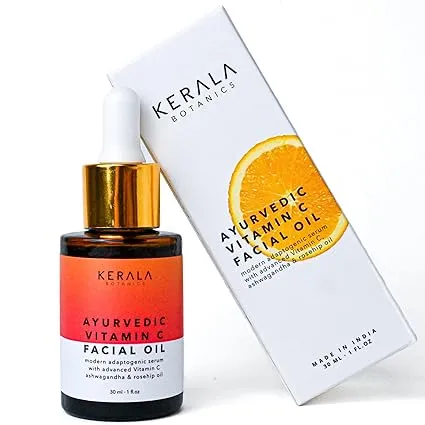
Ayurvedic Vitamin C Face Oil
Kerala Botanics
$49
★★★★☆
What to Expect — a Realistic Timeline
Week one: probably nothing dramatic. Maybe a little tingling on first application. Skin might feel slightly smoother by the end of the week.
Weeks two to four: this is when most people notice a real difference. Texture smooths out, skin looks less dull, minor dark spots start to fade.
Month two onwards: if you’re using it consistently and pairing it with SPF, you’ll see meaningful improvement in uneven tone. Mandelic acid is not a quick fix. It’s a slow burn that compounds over time — more like building something than blasting away a problem.
If you’re not seeing any improvement after six weeks of consistent use, check two things: first, your pH. A good mandelic acid product should be formulated at pH 3-4 to be effective. Second, check whether you’re over-exfoliating elsewhere in your routine. Too many actives will create barrier damage that undoes the benefits. For more on recognising that pattern, over-exfoliation signs and recovery has a useful checklist.
Who Should Skip It (or Tread Carefully)
Mandelic acid is derived from almonds. If you have a tree nut allergy, patch test carefully and talk to your doctor before committing to regular use.
Pregnant? The general guidance is to approach all AHAs with caution during pregnancy and get a sign-off from your OB. Our pregnancy-safe glow routine covers the ingredient landscape if you need a starting point.
Also: if your skin barrier is already damaged — tight, stinging, reactive to everything — adding any acid is the wrong move right now. Fix the barrier first. Give it two to four weeks of just cleanser, moisturizer, and SPF. Then reintroduce actives slowly.
Putting It All Together
Mandelic acid doesn’t get talked about enough, and it genuinely should. It’s the AHA that actually works for the people who’ve been told AHAs aren’t for them. Slower penetration means lower irritation. Lower irritation means a smaller risk of triggering the PIH it’s supposed to help treat. For sensitive skin types and deeper complexions, that’s not a minor detail — it changes the whole risk-benefit calculation.
Start at 10%, two nights a week. Give it a month. Wear your SPF. Then report back.