
Ingredients
Best Gentle Vitamin C for Sensitive Skin (2026)
The best low-irritation vitamin C for sensitive skin — oil-soluble formulas, gentle derivatives, and picks that actually won't burn.
Disclosure — This article may contain affiliate links. We earn a small commission at no extra cost to you when you purchase through our links. This supports our ability to create independent, evidence-based skincare content.
Vitamin C is one of the most researched actives in skincare. It also causes some of the most reported reactions — stinging, redness, flushing that lasts half the day. For sensitive skin, that track record is exhausting.
The problem isn’t usually vitamin C itself. It’s the form, the pH, the concentration, or all three combined. Standard L-ascorbic acid serums work at a low pH (around 3.5), which is necessary for absorption but hard on a compromised barrier. Add a high concentration — 15%, 20% — and you have an active that reactive skin treats like an insult.
The good news: there are gentler paths to the same destination. Oil-soluble derivatives, encapsulated forms, and lower-pH formulations can deliver brightening, collagen support, and antioxidant protection without the burn. We looked at texture, formulation logic, ingredient quality, and real-world tolerability to find the picks worth considering.
How We Selected These Products
Six products made the final list. To get here, the criteria were straightforward:
- Low irritation potential. Either a gentle derivative (ascorbyl glucoside, 3-O-ethyl ascorbic acid, oil-soluble forms), a stabilizing system that reduces the need for an aggressively low pH, or a format (oil, encapsulated serum) that changes how the active meets skin.
- Transparency about what’s in the bottle. Concentration listed, form of vitamin C identifiable, no mystery blends labeled only as “vitamin C complex.”
- Fragrance-free or essentially so. Fragrance is a leading sensitizer. On reactive skin, it’s not worth the tradeoff.
- Honest results. Gentler formulas take longer. Anything promising dramatic whitening in two weeks didn’t make the cut.
If you’re coming off a reaction to a traditional serum, the vitamin C burn guide is worth reading first — it explains what actually happened and how to let skin settle before restarting.
#1 Best Overall: La Roche-Posay Vitamin C10 Serum
La Roche-Posay built this formula specifically for sensitive skin, and it shows in the restraint. Ten percent L-ascorbic acid is meaningful — real enough to do something — without crossing into the territory where the majority of reactions occur. The pH sits higher than most vitamin C serums, which softens the sting without fully sacrificing efficacy.
The ingredient list is unusually clean. No added fragrance, no alcohol in a problematic position, no long list of potential sensitizers padding the formula. It comes in dark glass, which actually matters — ascorbic acid is notoriously light-sensitive, and clear bottles are essentially asking it to oxidize faster.
This is not the strongest vitamin C on the market. People expecting the speed of a 20% L-ascorbic acid serum will be disappointed. But for someone with reactive skin who wants a starting point that won’t set off a three-day redness spiral, this is the most logical first move.
Vitamin C10 Serum
La Roche-Posay
$40
★★★★½
What we liked
- + True 10% ascorbic acid at a tolerable pH
- + Fragrance-free
- + Clinically tested on sensitive skin
- + Stable dark glass bottle
Worth noting
- - Still L-ascorbic acid — reactive skin may need patch testing
- - Oxidizes faster than derivative-based serums
The most trusted entry point for sensitive skin wanting real ascorbic acid with minimal additives.
#2 Best Oil-Based Formula: Kerala Botanics Ayurvedic Vitamin C Face Oil
Oil-soluble vitamin C is fundamentally different from what most serums use. It doesn’t require a low pH to penetrate. It works at physiological pH, which means the skin’s barrier isn’t being asked to tolerate an acidic environment — it just absorbs. For skin that stings at the sight of a traditional serum, that’s not a small distinction.
Kerala Botanics uses an advanced oil-soluble form described as staying active in skin cells significantly longer than standard L-ascorbic acid. It’s paired with bakuchiol — a plant-derived compound with retinol-like effects on collagen and cell turnover — which makes this more than a single-action product. The Ayurvedic formulation connects it to a tradition of botanical-forward skincare that takes ingredient sourcing seriously. For a deeper look at how that tradition translates to modern formulas, the Ayurvedic skincare guide covers the logic well.
In practice, the oil format means it doubles as a moisturizer. Dry and barrier-compromised skin will likely find it genuinely useful as a one-step evening treatment. Oily or acne-prone skin should patch test — face oils are not universally compatible with every skin type, and the richness here is real. It can feel heavy under makeup if worn in the morning without time to absorb.
The trade-off versus something like CE Ferulic is the clinical data. SkinCeuticals has decades of published research. Kerala Botanics is a newer brand with a different approach. The formulation logic is sound, but this is honest: the evidence base is not equivalent. That said, at $49 for a product replacing serum, moisturizer, and facial oil, the value case is genuinely strong for the right skin type.
For anyone weighing the bakuchiol component more carefully, the bakuchiol vs retinol comparison is the clearest breakdown we’ve seen.
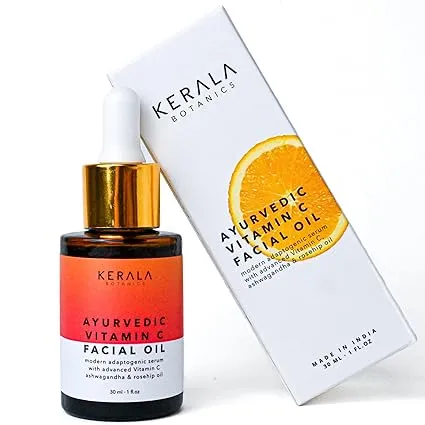
Ayurvedic Vitamin C Face Oil
Kerala Botanics
$49
★★★★☆
What we liked
- + Oil-soluble vitamin C is inherently gentler on skin barrier
- + Includes bakuchiol — a plant-based retinol alternative
- + Replaces serum, oil, and moisturizer in one step
- + Ayurvedic formulation with strong natural-ingredient credentials
Worth noting
- - Oil format won't suit everyone — oily or acne-prone skin should patch test
- - Less clinical research than benchmark serums like CE Ferulic
- - Can feel heavy under makeup
The rare vitamin C that works like a moisturizer — best for dry or barrier-compromised skin that wants simplicity.
#3 Best for Freshness: Drunk Elephant C-Firma Fresh Day Serum
The standard problem with L-ascorbic acid serums: they oxidize. You open the bottle, use it twice a week, and six weeks later it’s turned a worrying shade of amber. Oxidized vitamin C doesn’t just stop working — it may actually generate free radicals rather than neutralize them. That’s not a reason to panic, but it is a reason to think about freshness.
Drunk Elephant’s approach is to separate the powder and the liquid until you’re ready to use them. Each pod combines at the moment of application, which means the vitamin C is fresh every single time. For sensitive skin, that freshness matters: oxidized product is a common but underappreciated irritant.
The serum itself is 15% ascorbic acid — genuinely strong. This isn’t a gentle derivative; it’s the real thing. What earns it a place on this list is the freshness logic and the absence of fragrance, silicones, and essential oils that frequently complicate reactions. If your skin has reacted to vitamin C before and you’re unsure whether the product or the oxidation was the culprit, this is a useful test. The mixing ritual is mildly annoying, and the price is high for the quantity. But the concept is sound.
Skip it if you’re in the early stages of reactive skin. Come back to it once your barrier is solid.
C-Firma Fresh Day Serum
Drunk Elephant
$90
★★★★☆
What we liked
- + Single-use format means zero oxidation risk
- + 15% L-ascorbic acid feels fresher than typical bottled serums
- + Clean formula, no silicones or fragrance
Worth noting
- - Fiddly to mix daily
- - Expensive for what it is
- - 15% is still strong — not for the most reactive skin
For sensitive skin that wants full-strength vitamin C without worrying about the bottle going orange.
#4 Best Multitasker: Allies of Skin 10% Vitamin C Self-Preserving Moisturizer
3-O-ethyl ascorbic acid — the vitamin C form in this moisturizer — converts to ascorbic acid after absorption rather than sitting on skin at a low pH. That conversion step is what makes it gentler. The barrier encounters a near-neutral pH; the active form does its work once it’s already inside.
The moisturizer format is the other relevant detail. Rather than adding a serum under your moisturizer, this is both at once. For sensitive skin that does better with fewer products and fewer layering decisions, that simplicity has real value. The self-preserving formula also means it’s stable without heavy preservation systems that can themselves irritate.
The price is noticeable — $78 for a moisturizer is a commitment. And 3-O-EAA, while well-regarded, has a thinner clinical literature than L-ascorbic acid. The results come, but they’re gradual. Pair it with a dedicated SPF and you have a reasonable morning routine in two steps.
10% Vitamin C Self-Preserving Moisturizer
Allies of Skin
$78
★★★★☆
What we liked
- + 3-O-ethyl ascorbic acid is gentler than L-ascorbic acid
- + Moisturizer format means fewer steps
- + Self-preserving formula stays stable without extra effort
Worth noting
- - Premium price for a moisturizer
- - 3-O-EAA less studied than L-ascorbic acid in clinical literature
A smart two-in-one for sensitive skin that wants vitamin C benefits without a dedicated serum step.
#5 Best Value: Timeless Vitamin C + E + Ferulic Acid Serum
At $25, the Timeless serum is about as close as you get to a genuine CE Ferulic dupe without paying CE Ferulic prices. Ferulic acid does two things here: it boosts the stability of ascorbic acid (meaning slower oxidation), and it enhances the antioxidant effect. Some research also suggests ferulic acid reduces the irritation potential of the combination, which is relevant for this list.
The caveat is the concentration. Twenty percent L-ascorbic acid is on the higher end — most sensitive skin formulas sit at 10–15% for a reason. This is not a beginner product. It’s the pick for someone whose skin is sensitive but has done the work: patched tested, introduced actives slowly, knows their barrier is in reasonable shape. For those people, the price-to-efficacy ratio is hard to argue with.
Finish the bottle within three months of opening. The fragrance is the classic vitamin C smell — faintly citrusy, noticeable. Most people habituate. If scent is a sensitizer for your skin, the vitamin C serums without smell roundup covers alternatives. For more context on the Timeless vs. CE Ferulic comparison, the best SkinCeuticals alternatives guide goes deep on it.
20% Vitamin C + E + Ferulic Acid Serum
Timeless
$25
★★★★☆
What we liked
- + Ferulic acid boosts stability and reduces irritation potential
- + Closest affordable match to CE Ferulic
- + Fragrance-free
Worth noting
- - 20% concentration is higher than most sensitive skin needs
- - Oxidizes relatively quickly — finish within 3 months
- - Familiar vitamin C smell that some find off-putting
The budget pick for sensitive skin that's tested its tolerance and wants real results without a luxury price tag.
#6 Best for Sensitive: Krave Beauty Great Barrier Relief — Glow Drops
Ascorbyl glucoside is the derivative for people who have reacted to everything else. It’s a vitamin C molecule bonded to glucose, which makes it water-soluble, stable at a wider pH range, and significantly less likely to cause the kind of stinging that turns people off vitamin C entirely. The tradeoff is conversion efficiency — not all of it becomes active ascorbic acid, and the results are more subtle than a 15% L-ascorbic acid serum.
Krave Beauty built Glow Drops with barrier integrity as the priority. The formula is lightweight and designed to layer easily — no silicone paste that sits on skin and pills, no alcohol that evaporates the moisture out. The K-beauty minimalist philosophy is visible in what’s not in the bottle as much as what is. For context on how this fits into a broader routine, the minimalist 3-step routine guide is worth reading.
This is the right pick when the goal is “vitamin C without ever worrying about it again.” It won’t produce dramatic before-and-after photos. But used consistently, ascorbyl glucoside does accumulate benefits. And for reactive skin, consistent use of a gentle product beats occasional use of a strong one that keeps causing flare-ups.

Glow Drops
Krave Beauty
$34
★★★★☆
What we liked
- + Ascorbyl glucoside is one of the gentlest vitamin C derivatives available
- + Lightweight, layerable texture
- + K-beauty minimalist ethos — no unnecessary actives
Worth noting
- - Milder derivative means slower, more subtle results
- - Less efficacy data versus L-ascorbic acid at equivalent concentrations
The kindest vitamin C on the list — built for skin that has reacted to everything else.
Quick Comparison
| Product | Form of Vitamin C | Concentration | Price | Best For |
|---|---|---|---|---|
| La Roche-Posay C10 | L-ascorbic acid | 10% | $40 | Sensitive skin starter |
| Kerala Botanics Face Oil | Oil-soluble vitamin C | Undisclosed | $49 | Dry/barrier-compromised skin |
| Drunk Elephant C-Firma | L-ascorbic acid | 15% | $90 | Freshness-first approach |
| Allies of Skin Moisturizer | 3-O-ethyl ascorbic acid | 10% | $78 | Simplified two-in-one routine |
| Timeless C+E+Ferulic | L-ascorbic acid | 20% | $25 | Sensitive-but-tolerant skin on a budget |
| Krave Beauty Glow Drops | Ascorbyl glucoside | Undisclosed | $34 | Most reactive skin types |
Understanding Why Vitamin C Burns (and How These Avoid It)
The burn usually comes from one of three places: a high concentration of L-ascorbic acid, a very low pH formula, or a compromised skin barrier that’s been pushed past its limit.
Standard vitamin C serums need a pH around 3.0–3.5 to drive absorption. That’s more acidic than most toners and significantly below skin’s natural pH of around 5.5. For intact, well-moisturized skin, that’s manageable. For reactive, dry, or barrier-damaged skin, it registers as an insult.
Gentler derivatives sidestep this entirely. Ascorbyl glucoside is stable at pH 5–7. Oil-soluble forms work at physiological pH without needing to force their way through the barrier. They’re slower, but they don’t require the skin to tolerate an acidic assault.
The oil-soluble vs water-soluble vitamin C guide goes deeper if you want the full chemistry. The short version: if your skin burns with traditional serums, it’s not necessarily the vitamin C — it’s the delivery system.
Putting It All Together
For most sensitive skin, the path forward is simpler than the number of products on this list might suggest.
Start with the La Roche-Posay if you want L-ascorbic acid and haven’t confirmed you can’t tolerate it — 10% is the most forgiving concentration of the real thing. If your skin is dry and you’re tired of layering, the Kerala Botanics oil covers vitamin C and moisture in one step. If you’ve reacted to everything and want the lowest possible chance of a response, Krave’s ascorbyl glucoside is the right answer.
What to skip: aggressive concentrations before your barrier is ready, products with fragrance or essential oils buried in the ingredient list, and anything claiming to be “gentle” with 20% ascorbic acid at pH 3. Those two things don’t coexist.
Vitamin C works. It just doesn’t have to hurt to do it.
Methodology
Products were evaluated on formulation logic, ingredient transparency, form of vitamin C used, fragrance status, and reported tolerability data where available. Concentration, pH (where disclosed), and format were weighted heavily for this sensitive-skin-specific list. No products were included based on affiliate relationships. Ratings reflect a combination of editorial assessment and aggregated user reviews across Sephora, Ulta, and brand sites.