
Ingredients
Lactic Acid: The AHA for People Glycolic Acid Hurts
Lactic acid exfoliates more gently than glycolic, with built-in humectant benefits. Here's how it works and who it's actually for.
Disclosure — This article may contain affiliate links. We earn a small commission at no extra cost to you when you purchase through our links. This supports our ability to create independent, evidence-based skincare content.
Glycolic acid gets most of the attention. It’s the AHA that shows up in every dermatologist-recommended toner, every “glass skin” listicle, every serious exfoliation conversation. And it earns that attention — the clinical evidence behind it is genuinely solid.
But a meaningful number of people can’t use it. Their skin tingles badly, flares red, or just gives up and gets dry. They read that AHAs are worth using, try glycolic, and conclude that chemical exfoliation isn’t for them.
That’s the wrong conclusion. They just need lactic acid instead.
Lactic acid is an AHA, like glycolic. It does the same fundamental job — breaking the bonds between dead skin cells so they shed faster and more evenly. What makes it different is how it gets there, and what it does along the way.
Why Lactic Acid Behaves Differently Than Glycolic
The short answer is molecular size.
Glycolic acid has the smallest molecule of any AHA. That’s part of why it works so efficiently — it penetrates skin quickly and gets to work fast. The downside is that faster penetration means more irritation potential, more barrier disruption, more chance of stinging. For compromised or reactive skin, glycolic can be genuinely too much.
Lactic acid’s molecule is larger. It penetrates more slowly. That one difference changes the entire user experience: less stinging, less barrier disruption, lower risk of over-exfoliation. The trade-off is that results take a little longer to appear. But for most people with sensitive or dry skin, that’s an acceptable exchange.
There’s also a second mechanism that glycolic doesn’t have. Lactic acid is a component of the skin’s natural moisturizing factor (NMF) — a mix of compounds found naturally in the stratum corneum that help maintain hydration. Sodium PCA, amino acids, and lactate (a salt of lactic acid) are all part of it. This means lactic acid doesn’t just exfoliate; it also behaves as a humectant, drawing water into the skin. You’re sloughing and hydrating at the same time. It’s a meaningful distinction, not a marketing one.
If you want to understand more about chemical vs physical exfoliation before adding either to your routine, that guide covers the fundamentals.
How Lactic Acid Compares to Mandelic Acid
There are three AHAs that come up most often in sensitive-skin exfoliation conversations: glycolic, lactic, and mandelic. Understanding where lactic sits relative to the other two is useful.
Mandelic acid has the largest molecule of the three, which makes it the slowest to penetrate and the gentlest option overall. It’s often cited as the best AHA for people with deeper skin tones, because its slower action appears to carry a lower risk of post-inflammatory hyperpigmentation. If lactic acid still causes irritation, mandelic is the next step down.
Lactic sits in the middle. More effective than mandelic, gentler than glycolic. For most people with reactive or dry skin, it’s the sweet spot.
PHAs (polyhydroxy acids like gluconolactone) are gentler still — so large they barely penetrate at all. They’re worth knowing about for extremely reactive skin. The full breakdown on PHAs is covered separately.
What Lactic Acid Actually Does for Skin
Exfoliation and texture
The primary job is exfoliation. By loosening the bonds between corneocytes (dead cells on the skin’s surface), lactic acid speeds up cell turnover. Over weeks of consistent use, this translates to smoother texture, reduced rough patches, and a more even surface.
It won’t match glycolic speed-for-speed. But for skin that flares with glycolic, the gentler pace is the point.
Hyperpigmentation and uneven tone
AHAs — including lactic acid — have a decent evidence base for mild brightening. The mechanism is indirect: faster cell turnover means pigmented cells move to the surface and shed more quickly. It’s not dramatic, and it works slowly. But for surface-level uneven tone and post-blemish marks, consistent use does produce a visible difference over time.
For more complex hyperpigmentation issues, exfoliation alone isn’t enough. The hyperpigmentation treatment guide covers the full toolkit.
Hydration
This part often surprises people. Most exfoliants are drying by nature — removing surface cells can disrupt barrier function if you’re not careful. Lactic acid’s humectant behavior partially offsets this. It’s not a replacement for a good moisturizer, but skin typically feels less tight and stripped after lactic acid than after glycolic at equivalent concentrations.
This makes it particularly useful in winter or in dry climates, when barrier function is already under pressure. The fall skincare transition guide covers this well if you’re building your cold-weather routine.
Concentrations: What You Actually Need
Lactic acid products range from 5% to 25%, with a few professional peels going higher.
5–10%: This is the everyday range. Effective for regular exfoliation, tolerable for most skin types, including dry and mildly sensitive. Good starting point if you’re new to AHAs or switching from something that irritated you.
10–15%: More aggressive. Still appropriate for at-home use but should be introduced slowly — once or twice a week at first. People who’ve used AHAs before and want more visible results often land here.
Above 15%: Peel territory. The line between a topical leave-on product and a peel gets blurry above this threshold. These concentrations work, but the risk of over-exfoliation and barrier damage is real. If you’re seeing signs of over-exfoliation — persistent redness, tightness, a shiny rather than dewy look — back off regardless of concentration.
pH matters here too. AHAs require an acidic pH (roughly 3.5–4.5) to function as exfoliants. Products formulated at the right pH but lower concentrations will often outperform poorly buffered products at higher ones.
Who Should Use Lactic Acid
Sensitive and reactive skin
The obvious fit. If glycolic acid has reliably caused stinging, redness, or barrier disruption, lactic acid is worth trying instead. Start at 5% and use it twice a week.
Dry skin
Dry skin benefits from exfoliation — rough patches and flakiness are partly a cell-turnover problem — but many exfoliants make things worse before they get better. The humectant component in lactic acid makes it a better fit for dry skin than most alternatives. Pair it with a ceramide-based moisturizer afterward.
People new to chemical exfoliation
The first skincare routine guide recommends starting conservatively. Lactic acid at 5–8% is a reasonable first AHA for anyone who hasn’t used one before.
Hyperpigmentation on deeper skin tones
Glycolic acid carries a modest but documented risk of PIH in people with medium to deep skin tones — partly because its aggressive penetration can trigger a reactive melanin response. Lactic acid’s slower action makes it a safer starting point. (Mandelic acid is the other option worth considering in this context, and the guides on both overlap usefully.)
People managing skin barrier issues
If your barrier is already compromised — tight, reactive, sensitized — exfoliation should wait. But once the barrier is stabilized, lactic acid is a reasonable reintroduction. It’s more forgiving than glycolic when barrier function isn’t quite where it should be.
Who Probably Shouldn’t
Lactic acid is gentler than glycolic, but it’s still an acid. A few situations where it’s worth pausing:
If you’re actively using tretinoin or another retinoid, combining it with an AHA on the same night is a common cause of over-exfoliation. Skin cycling — rotating actives across nights — is a more sensible approach. The skin cycling explainer covers the logic.
If your skin is currently broken out in inflamed active acne, lactic acid won’t help the breakout and may irritate already-inflamed skin. Salicylic acid (a BHA) is better suited for active breakouts because it’s oil-soluble and works inside the pore.
And if you’re pregnant: AHAs are generally considered lower-risk than retinoids, but use at low concentrations and check with your provider. The pregnancy-safe brightening guide is a useful reference.
How to Use Lactic Acid in a Routine
Apply it at night. AHAs make skin temporarily more photosensitive — this is not debated. SPF every morning is non-negotiable if you’re using one. That applies to every day, not just the day after application.
Cleanse first. Apply the lactic acid product to dry skin. Wait a few minutes before layering anything else over it — going in with a moisturizer immediately dilutes the acid and raises the pH, reducing efficacy.
Start slow. Two nights a week for the first month. If your skin tolerates it without complaint, you can increase frequency. Most people with sensitive skin land at three or four nights a week and stay there. For guidance on sequencing this with the rest of your routine, the how to layer skincare guide is the clearest reference on the site.
Product Picks
The Budget Entry Point
The Ordinary’s 10% + HA is the logical starting place. It’s correctly formulated (pH around 3.6), delivers an effective dose, and costs less than a coffee. The hyaluronic acid in the formula is partly a delivery vehicle, partly a nod to tolerability. It works. There’s no elegant way to say it more clearly than that.
The Ordinary Lactic Acid 10% + HA
The Ordinary
$8
★★★★☆
The Mid-Range Formula
Paula’s Choice 8% AHA Gel is the thoughtful step up. The concentration is slightly lower, which sounds counterintuitive, but the gel base is comfortable, it layers cleanly, and the formulation is stable. Paula’s Choice is consistent with pH and concentration accuracy in a way that not every brand can claim. For people who want something they can use more frequently without constant monitoring, this is a reliable choice.
Skin Perfecting 8% AHA Gel Exfoliant
Paula's Choice
$35
★★★★½
The Convenient Format
First Aid Beauty Facial Radiance Pads use lactic acid alongside mandelic acid, which makes them particularly well-suited for people who want gentle, consistent exfoliation without measuring or fussing. The pad format delivers a controlled amount of product. The results are mild — this isn’t a high-concentration product — but for everyday maintenance exfoliation, the simplicity is the selling point.
Facial Radiance Pads
First Aid Beauty
$38
★★★★½
If You Want Vitamin C + Exfoliation Without Multiple Steps
Kerala Botanics’ Ayurvedic Vitamin C Face Oil isn’t a lactic acid product, but it’s worth mentioning in this context. It uses a stabilized form of vitamin C alongside bakuchiol — a plant-based retinol alternative — in an oil base. For people building a simplified routine who want brightening and mild cell-turnover support without layering multiple actives, this addresses both goals in one step. The oil format means it’s not for everyone — it can feel heavy under makeup, and people with oily skin may find it too much. But for dry skin types who are using lactic acid for exfoliation and want a complementary treatment that doesn’t overlap aggressively, it fits cleanly.
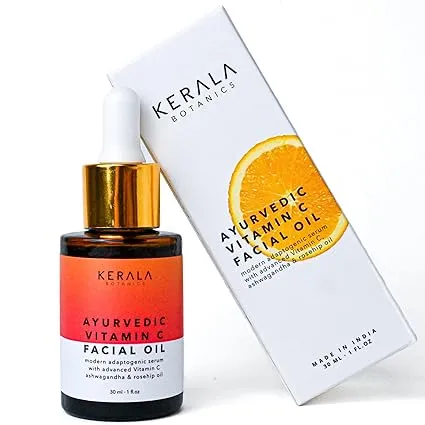
Ayurvedic Vitamin C Face Oil
Kerala Botanics
$49
★★★★☆
Putting It All Together
Lactic acid isn’t the most glamorous ingredient. It doesn’t have the cult following of glycolic or the “I just discovered this” energy of mandelic. But for people who’ve tried glycolic and found it too aggressive, it’s the answer that was there the whole time.
Larger molecule. Slower penetration. Genuine humectant action through NMF. Less irritation, comparable long-term results. If you’ve written off AHAs because glycolic burned, start at 5–10% lactic, use it twice a week, and give it six weeks before drawing conclusions.
The evidence for AHAs is solid. You just might need a different one.