
Routines
Pregnancy-Safe Brightening: Vitamin C + Bakuchiol Instead of Retinol
Retinol is off the table during pregnancy. Here's how to keep skin bright using vitamin C and bakuchiol — the combo that actually works.
Disclosure — This article may contain affiliate links. We earn a small commission at no extra cost to you when you purchase through our links. This supports our ability to create independent, evidence-based skincare content.
The moment you get pregnant, someone hands you a list of things you can no longer do. No soft cheese. No deli meat. No retinol.
The first two I managed fine. The retinol one stung a little. I’d finally gotten my texture under control, my dark spots were actually fading, and suddenly I had to bench my entire PM routine.
Here’s what nobody tells you: you don’t have to go dark. You just have to rebuild the routine with the right ingredients. Vitamin C and bakuchiol do a lot of the same work retinol was doing — brightening, evening tone, supporting collagen — and both are considered safe during pregnancy. Not as a consolation prize, either. As a genuinely solid strategy.
This guide is specifically about brightening. If you want the broader overview, we’ve already covered the full pregnancy-safe glow routine. This one goes deeper on the vitamin C and bakuchiol pairing, how to use them, and what products are worth your time.
Why Retinol Goes Off the Table
Quick explainer, because it’s worth understanding rather than just following the rule blindly.
Retinoids — that category includes retinol, retinaldehyde, tretinoin, and adapalene — are vitamin A derivatives. In high doses, vitamin A is teratogenic, meaning it can interfere with fetal development. The concern with topical retinoids is mostly extrapolated from oral retinoid data (isotretinoin, specifically, which causes serious birth defects at high doses). The actual absorption from a topical serum is low, but the risk-to-benefit calculus just doesn’t make sense when there are safe alternatives. No dermatologist will greenlight it during pregnancy. Full stop.
If you want the ingredient science on retinoids generally, the retinol vs retinaldehyde vs tretinoin guide has all of it.
The Substitute Strategy: Why This Pairing Works
Retinol was doing two things for your skin: accelerating cell turnover (which fades dark spots and smooths texture) and stimulating collagen production (which firms and plumps). Replacing it with one ingredient doesn’t quite get you there. But two? You’re much closer.
Vitamin C handles the brightening and antioxidant side. It inhibits melanin production, which means it actively fades existing dark spots and prevents new ones from forming. It also supports collagen synthesis. Pregnancy brings hormonal shifts that can trigger melasma — the mask-of-pregnancy kind of hyperpigmentation — and vitamin C is one of the few pregnancy-safe ingredients that addresses it directly.
Bakuchiol covers the cell-turnover side. Multiple studies (including a split-face trial published in the British Journal of Dermatology) have shown bakuchiol reduces fine lines and hyperpigmentation comparably to 0.5% retinol, without the irritation or the safety concerns. It’s a plant-derived compound from the babchi plant, and it’s generally considered safe during pregnancy — though, as always, check with your OB before adding anything new.
Together, you’ve got a brightening routine that’s genuinely doing something. Not just keeping the lights on until you can have retinol back.
For more on how bakuchiol stacks up against retinol in clinical terms, the bakuchiol vs retinol deep-dive is worth a read.
What About Melasma?
Pregnancy melasma is its own situation and deserves a mention. The hormonal surge during pregnancy ramps up melanin production, and sun exposure makes it significantly worse. If you’re dealing with it, vitamin C alone probably won’t clear it — but it will help prevent it from getting darker while you’re pregnant, and it’s one of the few actives you can safely use.
Post-partum, you have more options. Azelaic acid, tranexamic acid, and niacinamide all have good safety profiles and strong evidence for melasma. Our melasma treatment guide goes into all of them in detail. But during pregnancy, vitamin C plus strict SPF discipline is your best defensive move.
Speaking of SPF: please, please don’t skip it. Mineral sunscreens (zinc oxide, titanium dioxide) are the recommended choice during pregnancy, and they’re non-negotiable when you’re dealing with any kind of hyperpigmentation.
How to Build the Routine
Here’s how the vitamin C + bakuchiol routine actually fits into a day. It’s genuinely simple — which, when you’re exhausted and nauseous in the first trimester, is a feature.
Morning
- Gentle cleanser
- Vitamin C serum or oil
- Moisturizer (if your vitamin C product isn’t already moisturizing)
- Mineral SPF
Vitamin C goes on in the morning because it works best when your skin needs antioxidant protection against UV and pollution. It doesn’t make you photosensitive, but pairing it with SPF amplifies what both products are doing.
Evening
- Gentle cleanser
- Bakuchiol serum or treatment
- Moisturizer or face oil
Bakuchiol goes at night. It’s not photosensitive the way retinol is, so technically you could use it any time — but night is when your skin does its repair work, and bakuchiol supports that process. It also layers nicely under a richer moisturizer, which is usually what tired pregnancy skin wants at night anyway.
If you want to understand how layering works more broadly, the skincare layering guide covers the logic.
Product Recommendations
Vitamin C: Three Options by Format and Budget
The budget-friendly serum: Timeless 20% Vitamin C + E Ferulic Serum is the open secret of the vitamin C world. It’s a near-exact dupe for the Skinceuticals formula at a fraction of the cost. The 20% L-ascorbic acid concentration is potent — if your skin is sensitive during pregnancy (which it often is), start with one or two days a week and work up. Oxidizes faster than you’d like if you’re not careful with storage; keep it in a dark, cool spot.

Timeless 20% Vitamin C + E Ferulic Serum
Timeless
$25
★★★★½
The drugstore pick with extra brightening support: Versed Stroke of Brilliance Brightening Serum leans on vitamin C alongside niacinamide, which makes it a nice choice if you’re also dealing with uneven tone or congestion. The concentration is lower than Timeless, so it’s gentler — which can be a plus when skin is reactive. Niacinamide is pregnancy-safe and plays well with vitamin C at low-to-moderate concentrations.
Stroke of Brilliance Brightening Serum
Versed
$22
★★★★☆
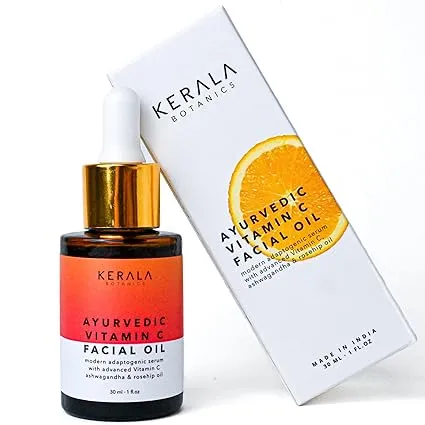
The oil-based option (and the multitasker): Kerala Botanics Ayurvedic Vitamin C Face Oil does something none of the above do — it puts vitamin C and bakuchiol in the same product, in an oil base. The vitamin C form here is more stable than L-ascorbic acid and reportedly stays active in skin cells significantly longer. It also contains bakuchiol, which means you’re getting both brightening and cell-turnover support from a single bottle. For anyone who wants to simplify a pregnancy routine down to the minimum number of steps, this is the most efficient option.
The downside: oil format isn’t for everyone. If your skin is oily or you’re breaking out (hello, first trimester), a face oil might feel like a lot. It can also feel heavier under makeup, so I’d suggest it for evening use or for skin that tends toward dryness. But for someone who wants the vitamin C + bakuchiol pairing without managing two separate products? This is genuinely clever.
Ayurvedic Vitamin C Face Oil
Kerala Botanics
$49
★★★★☆
If you’re curious how oil-based vitamin C compares to the standard serum format, we broke it down in the vitamin C serum vs vitamin C oil guide.
Bakuchiol: Two Options Worth Knowing
For a dedicated bakuchiol treatment: Herbivore Bakuchiol Retinol Alternative Smoothing Serum is one of the cleaner options on the market — minimal ingredients, no fragrance, and a concentration that’s effective without being aggressive. It layers well under moisturizer and absorbs faster than you’d expect from a brand that leans heavily into the “natural” aesthetic. Pregnancy-safe, vegan, and actually does what it says.
Bakuchiol Retinol Alternative Smoothing Serum
Herbivore
$54
★★★★☆
If you want more targeted dark-spot action: Kiehl’s Clearly Corrective Dark Spot Solution pairs vitamin C with white birch and activated C to target existing hyperpigmentation. It’s a solid choice if melasma or post-inflammatory marks are your main concern rather than general brightening. Slightly pricier, but dermatologists recommend it frequently for exactly this use case.
Clearly Corrective Dark Spot Solution
Kiehl's
$68
★★★★☆
Ingredients to Avoid (and What to Use Instead)
Since we’re in rebuilding mode, here’s a quick rundown of what else to skip during pregnancy and the safe swap.
Retinol/retinoids: Swap for bakuchiol. Covered above.
High-dose salicylic acid: Low concentrations (under 2%) in rinse-off products are generally considered fine, but high-concentration salicylic acid peels are a no. For exfoliation, lactic acid or polyhydroxy acids are gentler alternatives.
Hydroquinone: Still the gold standard for hyperpigmentation outside of pregnancy, but not recommended during it. Vitamin C, niacinamide, and azelaic acid (post-first trimester in many guidelines, check with your doctor) are the safe alternatives.
Certain essential oils: Some — like rosemary, clary sage, and juniper — are flagged during pregnancy. Read your ingredient labels, especially on anything marketed as “natural.”
One thing worth noting: “natural” doesn’t automatically mean safe during pregnancy, and “chemical” doesn’t mean dangerous. If you want to understand that distinction better, the chemical-free skincare myth piece is a good read.
Managing Sensitivity
Pregnancy skin is unpredictable. Some people get the glow everyone talks about. Others get sudden sensitivity, breakouts, or skin that reacts to things it never reacted to before.
If you’re in the reactive camp, here’s how to adjust:
- Drop vitamin C concentration. Start at 10% or lower instead of jumping straight to 15-20%.
- Use bakuchiol every other night to start. There’s no rule that says you have to use it daily.
- If your skin barrier feels compromised, deal with that first. Actives on a damaged barrier just cause irritation. The damaged skin barrier repair guide has a step-by-step approach.
- Patch test everything. I know, I know. But pregnancy skin is a different animal, and a patch test takes thirty seconds.
The other thing: vitamin C can sting on sensitive skin even outside of pregnancy, and that’s amplified when your skin is already irritated or reactive. If you’re experiencing that, the vitamin C burn guide has specific troubleshooting.
Putting It All Together
The routine itself is not complicated. Morning: vitamin C, then SPF. Evening: bakuchiol, then moisturizer. That’s it. You don’t need six steps. You need the right two.
The vitamin C handles brightening, melanin suppression, and antioxidant defense — all things that matter more during pregnancy, not less. The bakuchiol picks up where retinol left off: cell turnover, texture refinement, early collagen support. Together they address most of what a traditional brightening routine was doing.
If you want one product that does both, the Kerala Botanics oil is worth considering — it’s not for every skin type, but for someone who wants to simplify, it’s a genuinely smart formulation.
And if you want to keep them separate: Timeless for vitamin C, Herbivore for bakuchiol. Both are pregnancy-safe, both work, and the total cost is under $80.
The glow doesn’t have to disappear for nine months. You just need to find it a different way.
Always check new skincare additions with your OB or midwife, especially during the first trimester. This guide is for informational purposes and isn’t a substitute for medical advice.