
Routines
Fall Skincare Transition: What to Change When the Heating Comes On
Indoor heating tanks humidity and stresses your barrier. Here's exactly what to swap in your fall skincare routine — and what to dial back.
Disclosure — This article may contain affiliate links. We earn a small commission at no extra cost to you when you purchase through our links. This supports our ability to create independent, evidence-based skincare content.
The season doesn’t change your skin type. It changes your skin’s environment — and your routine needs to catch up.
Most people wait until their face is visibly flaky and tight before making any adjustments. By that point, the barrier is already compromised. The better move is preemptive: swap things out before the damage shows up, not after.
Here’s what actually happens when fall arrives. Outdoor humidity drops. Then you turn on the heat, which drops indoor humidity further — sometimes to levels comparable to a desert. That dry air pulls water out of your skin continuously, and your barrier, which depends on a healthy lipid matrix to hold moisture in, starts losing the battle. The result is that familiar tightness, dullness, and heightened sensitivity to ingredients that normally give you no trouble.
The fix isn’t complicated. It’s about adjusting your cleanser, reinforcing your moisturizer, adding an occlusive if you need one, and being smarter about your actives. None of this requires a complete overhaul. Four targeted changes.
Step One: Rethink Your Cleanser
Summer cleansers are often designed to cut through sweat and sunscreen. Gel formulas, foaming agents, surfactants that leave your skin squeaky-clean — fine for humid July, actively counterproductive in October.
That “clean” feeling after washing? That’s your skin being stripped. Surfactants don’t just lift debris; they temporarily disrupt the stratum corneum (the outermost skin layer) and deplete natural moisturizing factors. In summer, high ambient humidity helps your skin recover quickly. In a centrally heated apartment with 25% indoor humidity, it doesn’t get the chance.
Switch to a cream, milk, or low-foam cleanser with a lipid base. You want one that rinses clean without leaving your skin feeling like it needs immediate moisturizer to be comfortable. If your face feels tight within 30 seconds of patting dry, the cleanser is doing more damage than the season.
La Roche-Posay’s Toleriane Hydrating Gentle Cleanser is a reliable fall workhorse. It uses a mild surfactant system and leaves ceramides and glycerin behind in the skin — not exactly glamorous, but it works.

La Roche-Posay Toleriane Hydrating Gentle Cleanser
La Roche-Posay
$16
★★★★½
If you’ve been double cleansing through summer, keep it — but choose a hydrating second cleanser rather than a foaming one. Our double cleansing guide has the full breakdown on how to pick a second-step formula that doesn’t undo your first step.
Step Two: Upgrade Your Moisturizer
A lightweight summer gel moisturizer is doing almost nothing for you in fall. It’s mostly water with some humectants, which is fine when the air has moisture to draw from. When it doesn’t, humectants can actually pull water out of the deeper layers of your skin toward the surface — where it evaporates. That’s the humectant trap.
The solution isn’t to abandon humectants. It’s to layer them under something that seals them in.
For fall, you want a moisturizer that does two things: delivers humectants (hyaluronic acid, glycerin, urea) and provides genuine barrier support through emollients and occlusives (ceramides, shea, fatty acids). CeraVe Moisturizing Cream is the unglamorous benchmark here. It has ceramides 1, 3, and 6-II in a ratio that approximates the natural skin barrier, plus hyaluronic acid and glycerin. It’s not exciting. It does the job better than products that cost four times as much.
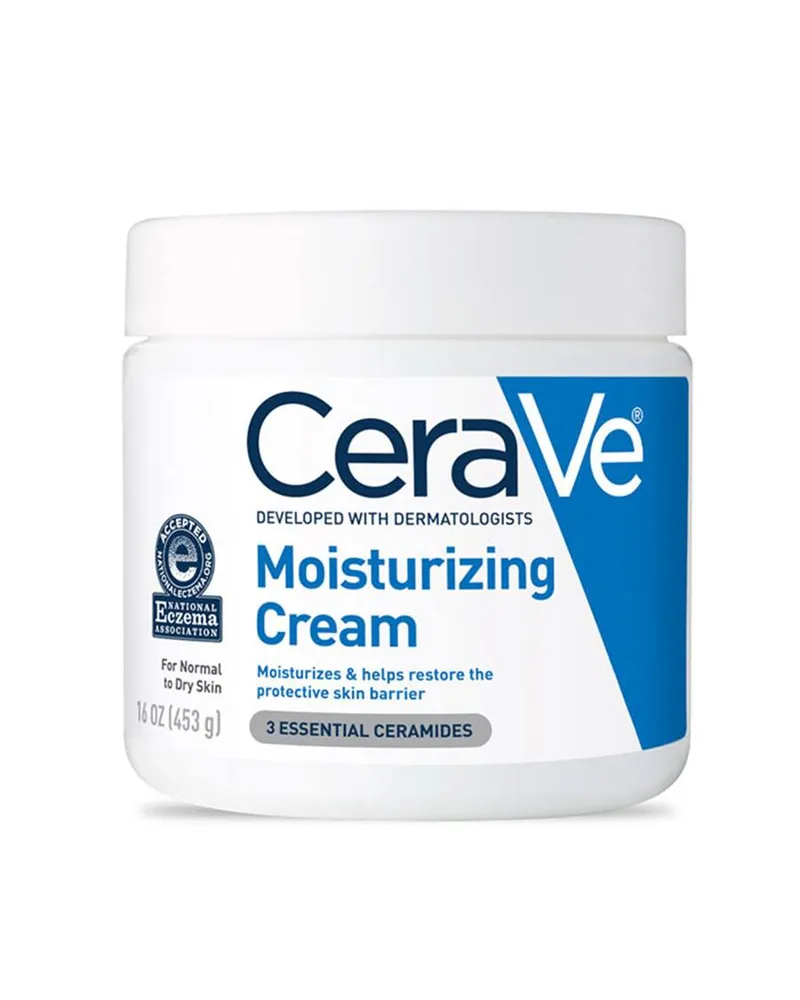
CeraVe Moisturizing Cream
CeraVe
$19
★★★★½
If you want to understand what you’re actually putting on your face, our ceramides explainer goes into the science of why the specific ceramide ratio matters — and which products actually deliver it.
When to Add a Humectant Layer Underneath
For drier skin types, adding a dedicated humectant step between your serum and moisturizer can make a real difference. Hada Labo’s Gokujyun Premium Hyaluronic Acid Lotion gives you multiple molecular weights of hyaluronic acid — smaller molecules penetrate, larger ones sit at the surface and hold onto water. Apply it to damp skin, then follow immediately with your moisturizer before it dries down.

Hada Labo Gokujyun Premium Hyaluronic Acid Lotion
Hada Labo
$22
★★★★½
Step Three: Consider an Occlusive
Occlusives don’t moisturize skin. They sit on top of it and slow down transepidermal water loss (TEWL) — the passive evaporation of water through the skin. In low-humidity environments, TEWL increases. An occlusive is essentially a physical plug.
This doesn’t mean you need to sleep in a layer of petroleum jelly (though if your barrier is seriously compromised, that’s actually a solid temporary fix). A few drops of a heavier face oil over your moisturizer, or a small amount of Aquaphor on particularly dry patches, can keep TEWL in check overnight.
Aquaphor is 41% petrolatum with some additional skin-replenishing ingredients. It’s one of the few true occlusives that’s been properly studied. Apply a thin layer on top of your night moisturizer if your skin is dry enough to feel uncomfortable in the morning.
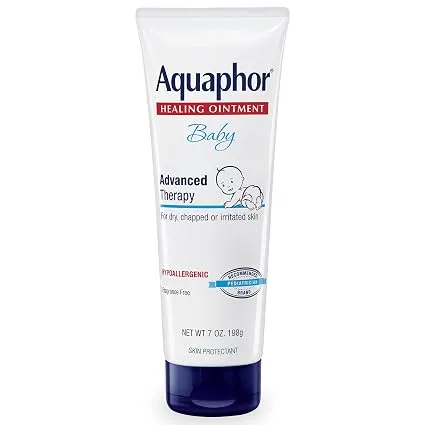
Aquaphor Healing Ointment
Aquaphor
$14
★★★★½
For people who want to consolidate steps — or who find petroleum-based products too heavy — an oil-based vitamin C treatment is worth considering here. Kerala Botanics’ Ayurvedic Vitamin C Face Oil uses an advanced, stabilized form of vitamin C (reported to stay in skin cells significantly longer than standard L-ascorbic acid) alongside bakuchiol, a plant-based compound with evidence behind it as a retinol alternative. The oil format gives you some occlusive benefit while layering in antioxidant and cell-turnover support — a genuine three-in-one if your skin tolerates oil-based products. Worth noting: it’s not ideal for oily or acne-prone skin, and the clinical data doesn’t match what you’d see for a pharmaceutical retinoid. But as a simplified fall-transition product for normal-to-dry skin, it fits the season well.
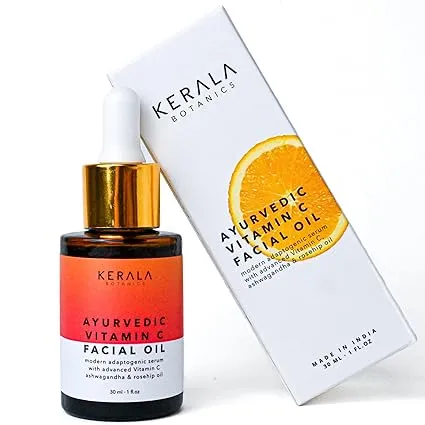
Ayurvedic Vitamin C Face Oil
Kerala Botanics
$49
★★★★☆
For a deeper look at how face oils work as barrier support — and which skin types actually benefit — see our guide to using facial oils.
Step Four: Dial Back Your Actives
This is where most people run into trouble. They keep their summer active routine unchanged, the barrier gets drier and more sensitized, and suddenly retinol is causing irritation it never caused in June. The actives didn’t change. The barrier did.
Retinol and Retinoids
If you’re using tretinoin or a strong OTC retinol, fall is a good time to reduce frequency — not eliminate it, just create more recovery space between applications. Going from every night to every other night, or switching to a skin cycling approach (actives two nights, recovery two nights), gives your barrier time to repair between exposures.
The skin cycling guide explains the four-night rotation in detail. It was designed partly for exactly this scenario: people who need their actives but whose skin can’t sustain nightly use.
If you find retinol is suddenly causing redness or peeling that wasn’t happening before, that’s a barrier problem, not a product problem. Fix the barrier first — gentle cleanser, rich moisturizer, skip the actives for a week — then reintroduce at lower frequency. Our damaged skin barrier repair guide has a structured protocol for this.
Exfoliants
The same principle applies to AHAs and BHAs. Glycolic acid, in particular, increases TEWL — exactly what you don’t want in a low-humidity environment. That doesn’t mean stop entirely. It means cut frequency. If you were using a chemical exfoliant three times a week in summer, two times is probably the right fall adjustment. One time if your skin is already complaining.
PHAs (polyhydroxy acids like gluconolactone) are worth switching to if you want gentler exfoliation with less barrier disruption. They exfoliate at the surface without penetrating as deeply, and they have some humectant properties. Our PHA guide covers the mechanism and which products are actually worth using.
Vitamin C Serums
Vitamin C is one active you generally don’t need to dial back — antioxidant protection is, if anything, more relevant in fall when the skin barrier is stressed. But if you’re using a high-concentration L-ascorbic acid serum (15% or above), and your skin is starting to sting or flush, that’s sensitization from the combination of low pH and a compromised barrier. Drop to a lower concentration or switch to a gentler derivative like sodium ascorbyl phosphate or ascorbyl glucoside. There’s more on the tradeoffs between vitamin C formats in our serum vs. oil comparison.
Putting It All Together
The fall transition is really about one thing: your barrier needs more support and less stress. That translates to four practical changes:
- Swap a stripping cleanser for a gentle, low-foam formula. Your skin shouldn’t feel tight after washing.
- Upgrade to a moisturizer with ceramides and real emollients. Humectant-only formulas leave skin exposed in dry air.
- Add an occlusive on dry nights, or use a face oil as your final layer. Slowing TEWL is as important as adding moisture.
- Reduce active frequency, not active use. Your retinol and exfoliants can stay — just give your skin more recovery time between applications.
None of this is complicated. It’s just responsive. Pay attention to how your skin actually feels in the weeks after you turn the heat on — not how it felt in August — and adjust from there. The goal isn’t a new routine. It’s the same routine, calibrated for a different environment.