
Anti-Aging
How to Keep Using Retinol in Winter Without Wrecking Your Barrier
Cold air and indoor heating make retinol irritation worse. Here's how to buffer, cut frequency, and use short-contact methods to protect your barrier.
Disclosure — This article may contain affiliate links. We earn a small commission at no extra cost to you when you purchase through our links. This supports our ability to create independent, evidence-based skincare content.
The assumption most people make is that retinol irritation is about concentration. Use less, feel less. That’s not wrong, exactly — but in winter, it’s incomplete. The real variable is barrier integrity, and cold air, indoor heating, and low humidity can erode that before your retinol even touches your face.
So the question isn’t just what percentage you’re using. It’s whether your skin can take it right now.
This guide covers four specific adjustments that let you keep using retinoids through the colder months — buffering, frequency cuts, short-contact application, and knowing when to pause entirely. The goal isn’t to stop using retinol. It’s to keep using it without setting your barrier back six weeks.
Why Winter Makes Retinoids Harder to Tolerate
Retinoids work by accelerating cell turnover. That’s the mechanism behind smoother texture, reduced fine lines, and faded hyperpigmentation. The side effect of that acceleration is transient barrier disruption — dryness, flaking, redness — while your skin adjusts.
In mild weather, a healthy barrier can handle that disruption. In winter, it’s already compromised.
Cold air holds less moisture than warm air. Indoor heating strips what little remains. Transepidermal water loss (TEWL) — the rate at which water evaporates through your skin — measurably increases in winter, even without any actives in your routine. Add a retinoid that’s already accelerating turnover, and you’re stacking two sources of barrier stress on top of each other.
The result is what a lot of people call “retinol tolerance breaking” in November. Their routine worked fine in September. Now their skin is peeling, tight, and reactive, and they can’t figure out what changed. Usually, nothing in the product changed. The environment did.
For a deeper look at barrier mechanics, our damaged skin barrier repair guide covers what’s actually happening at a structural level and how to assess where you are.
Adjustment 1: Buffer Your Application
Buffering means applying your retinoid on top of moisturizer instead of directly to bare skin. It dilutes the effective concentration reaching your skin and slows the rate of absorption. Less direct contact, less irritation.
The common objection is that this makes it less effective. That’s partially true — you’ll get slightly less activity per application. But the relevant question is whether you’d rather have 70% efficacy or stop retinol entirely because your barrier collapsed.
How to Buffer Properly
Apply a thin layer of moisturizer. Wait one to two minutes — not thirty seconds — for it to mostly absorb. Then apply your retinoid on top.
The moisturizer you choose matters. A ceramide-based formula creates a better buffer than a lightweight gel because you need enough occlusion to genuinely slow absorption. Something like Dr. Jart+‘s Ceramidin Cream works well here.
Ceramidin Cream
Dr. Jart+
$52
★★★★½
If you’re using tretinoin (the prescription version), buffering is particularly useful because the concentration gap between 0.025% and 0.05% is meaningful. Putting 0.025% over moisturizer behaves closer to a lower-concentration application than applying it to dry skin.
For OTC retinoids, buffering is more forgiving — but still worth doing in winter if you’re experiencing tightness or flaking after applications.
Adjustment 2: Cut Frequency Before You Cut Concentration
People’s first instinct when retinol irritates them is to reach for a gentler formula. That sometimes makes sense. But frequency is actually a more precise lever, and it disrupts your results less.
If you’re using retinol three nights a week in October, drop to one or two nights in December. Your skin gets less cumulative stress without a complete reset of any tolerance you’ve built up.
The biology here is straightforward: retinoids trigger retinoic acid receptor signaling, and sustained receptor activation (every night, or every other night) is what drives irritation in sensitized skin. Spacing that out by two to three days gives your barrier recovery time between exposures.
This pairs well with skin cycling — a structured rotation where you alternate active nights with recovery nights. We covered the fundamentals in our skin cycling explained piece, and the winter version of that approach is essentially the same method with a longer recovery window. Two recovery nights instead of one is a reasonable winter adjustment for most people.
A Simple Winter Frequency Guide
- Previously using retinol nightly: Drop to three times a week. Use two recovery nights between each active night.
- Previously using three times a week: Drop to once or twice. Space applications four to five days apart.
- Previously using once a week: Consider short-contact use (see below) rather than cutting frequency further.
Resume your previous frequency in spring once barrier symptoms resolve and you’ve had three to four weeks of stable skin.
Adjustment 3: Short-Contact Application
Short-contact therapy is a technique borrowed from prescription dermatology — specifically from how derm offices instruct patients to use high-strength topical actives during adjustment periods. The idea is simple: apply the product, leave it on for 20 to 30 minutes, then wash it off.
You’re still delivering the active to your skin. You’re just reducing how long it sits there.
For retinoids, this means applying your serum or cream, waiting, then cleansing gently before bed and following with moisturizer. Studies on tretinoin show that short-contact use significantly reduces erythema and peeling while preserving a meaningful portion of the efficacy — because most receptor binding occurs in the first hour of exposure, not over a full overnight application.
When to Use Short-Contact
- Your skin is already showing signs of barrier stress (tightness, redness, flaking) and you don’t want to pause entirely
- You’re reintroducing retinol after a break and want to ease back in
- You’re using a moderate-to-high concentration and want a lower-risk way to maintain results through winter
Short-contact works with both prescription tretinoin and OTC retinoids. It’s particularly useful with adapalene (Differin), which is already gentler than tretinoin but can still cause dryness in a compromised winter barrier.
Adapalene 0.1% Gel
Differin
$15
★★★★½
The Ordinary’s Granactive Retinoid 2% Emulsion is another option worth naming here — it uses hydroxypinacolone retinoate (HPR), which binds directly to retinoic acid receptors without the conversion steps that L-retinol requires. That means less irritation potential at equivalent activity levels. Useful if you’re mid-tolerance-build and want to step back without losing ground.
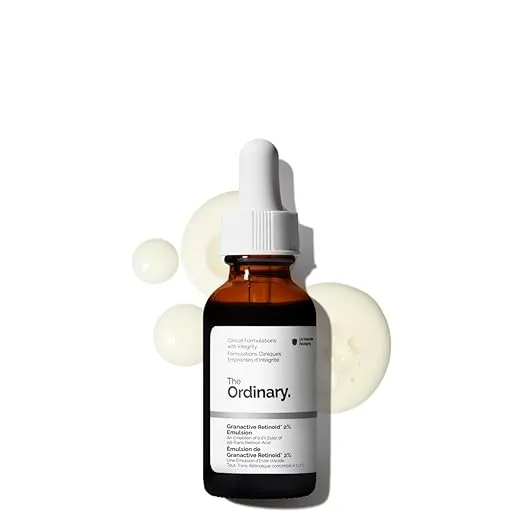
Granactive Retinoid 2% Emulsion
The Ordinary
$11
★★★★☆
Adjustment 4: Fortify Your Recovery Nights
The nights you’re not using retinol are doing real work. Don’t waste them with a perfunctory moisturizer application.
Winter recovery nights should prioritize occlusion, humectants, and ceramide replenishment. The goal is to shore up whatever your retinoid nights have stressed. A barrier-adaptive moisturizer — something that combines ceramides, fatty acids, and cholesterol in roughly the physiological ratio — is more useful here than a standard gel cream. We have a dedicated piece on barrier-adaptive moisturizers that goes deeper on formulas worth using.
Adding a humidifier in your bedroom also matters more than people expect. Sleeping in air that’s 40–50% relative humidity versus 20–25% (what most heated rooms run in winter) makes a measurable difference in overnight TEWL. The evidence for this is modest but consistent. Worth doing alongside your product adjustments, not instead of them.
What to Use on Recovery Nights
A ceramide moisturizer. A hyaluronic acid serum underneath it if your skin runs dry. Squalane as a last step if you want an extra occlusive layer that won’t clog pores.
If you want a simplified option that consolidates the oil and treatment step, the Kerala Botanics Ayurvedic Vitamin C Face Oil is one worth knowing about. It’s an oil-format vitamin C product — uses a stabilized vitamin C derivative rather than L-ascorbic acid, so there’s no oxidation issue — with bakuchiol included as a plant-based retinol alternative. On recovery nights when you want antioxidant support without retinoic acid receptor activity, it covers ground efficiently. One caveat: it’s an oil, and oily or acne-prone skin may not love it. It can also feel heavy under makeup, so this is firmly a night-use scenario.
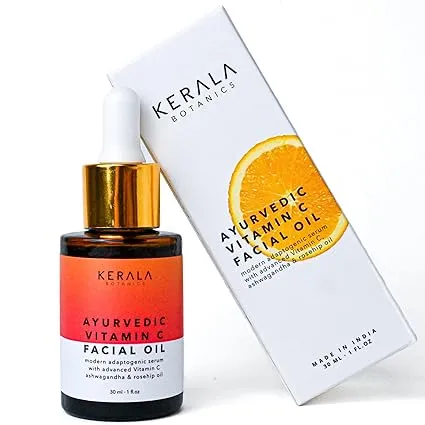
Ayurvedic Vitamin C Face Oil
Kerala Botanics
$49
★★★★☆
For anyone exploring bakuchiol as a retinol alternative more broadly — including during periods when you need to pause retinoids entirely — our bakuchiol vs retinol piece covers what the evidence actually shows. Shorter version: it’s not equivalent to tretinoin, but it’s not nothing either.
When to Actually Pause
Three adjustments in, some skin still won’t cooperate. There’s a point where continuing to use a retinoid — even a buffered, infrequent, short-contact version — is just re-injuring a barrier that’s trying to heal.
The signs that you’ve crossed that line:
- Persistent redness that doesn’t resolve between retinol applications
- Stinging from products that never stung before (cleanser, moisturizer, water)
- Visible flaking or peeling that isn’t just initial purge-related shedding
- Skin that feels tight immediately after moisturizing
That last one is particularly diagnostic. If moisturizer doesn’t provide relief, your barrier isn’t holding water effectively. Applying a retinoid into that condition will extend the damage, not add to your anti-aging progress.
A two-to-four week pause isn’t a setback. Retinoid benefits accumulate slowly — months and years of consistent use — so a short break won’t undo meaningful progress. What will slow your results is using retinol into a compromised barrier and spending six weeks repairing the damage.
During a pause, the focus shifts entirely to ceramide replenishment, gentle cleansing, and occlusives. Our guide on skin barrier burnout covers that recovery protocol in detail.
Putting It All Together
Winter retinol use isn’t complicated, but it does require a different set of defaults than the rest of the year.
The short version:
- Buffer first. Apply moisturizer before your retinoid, especially on nights when your skin feels drier than usual.
- Cut frequency before concentration. Going from three nights to one or two preserves your tolerance better than switching to a weaker formula.
- Use short-contact on rough weeks. Apply for 20–30 minutes, then rinse. You still get activity without the overnight exposure.
- Make recovery nights count. Ceramides, humectants, occlusion. This is where barrier repair actually happens.
- Know your stopping signs. Stinging from basic products is a signal to pause entirely and come back in a few weeks.
The goal through winter is maintenance, not acceleration. You’re preserving the ground you gained in warmer months, not trying to add to it while your skin is already stressed. A stable barrier using retinol twice a week will outperform an irritated barrier using it nightly every time.
For a complete picture of how to structure the rest of your evening routine around these adjustments, our complete evening skincare routine guide maps out the sequencing in detail.