
Sunscreen
When SPF Labels Lie: Inside the Sunscreen Testing Problem
Independent labs keep finding sunscreens short of their labeled SPF. Here's why testing varies so wildly — and what to actually do about it.
Disclosure — This article may contain affiliate links. We earn a small commission at no extra cost to you when you purchase through our links. This supports our ability to create independent, evidence-based skincare content.
The number on your sunscreen bottle is a promise. The question is whether anyone’s actually keeping it.
Independent laboratory retests have repeatedly found sunscreens delivering meaningfully less protection than their labels claim. A 2023 analysis by Consumer Reports tested 82 sunscreens and found that more than a quarter failed to reach their labeled SPF — some by a wide margin. An SPF 50 product testing at SPF 30 isn’t a rounding error. That’s a real gap in your UV defense, repeated every day you wear it.
The problem isn’t straightforward fraud. It’s messier than that. Sunscreen testing is genuinely hard to standardize, the regulatory framework in the US hasn’t kept pace with the science, and labs using technically correct methods can still arrive at very different results. Here’s how that happens, why it matters, and what you can actually do about it.
How SPF Is Measured — and Why That’s Already a Problem
SPF (Sun Protection Factor) is determined through in vivo testing: you apply sunscreen to a real person’s back, expose them to UV light, and measure how much more radiation it takes to produce a minimal erythemal dose (the first visible reddening of skin) compared to unprotected skin. If it takes 50 times as much UV to redden treated skin, you’ve got SPF 50.
On paper, this seems rigorous. In practice, the variables compound quickly.
The application thickness problem is the biggest one. SPF is determined by applying 2 mg of product per square centimeter of skin — a thick, even layer that most people never come close to in real life. Labs have to hit that 2 mg/cm² precisely, but even small deviations matter. One study in Photodermatology, Photoimmunology & Photobiology found that applying at 0.75 mg/cm² — roughly what most people actually use — reduces effective SPF by about 50 to 80 percent depending on the original SPF rating. We’ve written about this problem separately in how much sunscreen to apply, and it doesn’t get less alarming on re-read.
Inter-lab variance adds another layer. Even when multiple labs use the same ISO 24444 method (the international in vivo standard), their results diverge. Different UV sources, different panels of test subjects, different application techniques, and different measurement timing all introduce variation. A 2019 study published in Photodermatology, Photoimmunology & Photobiology compared results from eight labs testing the same sunscreen formulations and found standard deviations significant enough to shift products across SPF categories.
The FDA’s own testing protocol (FDA 21 CFR Part 352) adds yet another variable. The US method isn’t identical to the ISO standard used in Europe and Asia. A product formulated and tested to pass the FDA protocol can produce different numbers when tested under ISO methods, and vice versa. This is part of why European and Korean sunscreens often look stronger on paper — different test, different result, different SPF ceiling.
Why Third-Party Retests Come Back Low
When independent labs buy products off shelves and retest them, they’re working with the same in vivo method — but the conditions diverge from the manufacturer’s original testing in ways that matter.
Formula stability is one factor. Sunscreen filters degrade over time and with exposure to light, heat, and air. A product that tested at SPF 50 when freshly manufactured may deliver less by the time it reaches a consumer months later. Some chemical filters (particularly older ones like oxybenzone and avobenzone when unstabilized) are photounstable — they break down under the same UV they’re supposed to block. This is part of why next-gen UV filters like bemotrizinol and bisoctrizole, which are photostable, matter for consistent real-world protection.
Batch-to-batch variation in manufacturing also plays a role. Getting filter concentrations perfectly consistent across large production runs is genuinely difficult. A lab testing one batch of 24 units from different production lots might get a range of SPF values across those units.
The regulatory gap matters too. In the US, sunscreens are regulated as over-the-counter drugs, which means manufacturers are required to test and label correctly — but the FDA doesn’t independently verify SPF claims before products go to market. Compliance is largely post-market. If no one tests your product and finds a problem, nothing happens. Compare that to the European system, where the COLIPA method has stricter inter-lab calibration requirements and there’s stronger expectation of conformity testing.
The Consumer Reports findings (and similar results from EWG’s testing in prior years) aren’t anomalies. They’re a predictable outcome of a system that relies on manufacturer self-testing with limited external verification.
What This Means for UVA — Which Is Worse
Here’s where it gets more complicated. Most of the SPF discussion focuses on UVB protection, because SPF is a UVB metric. UVA — the longer wavelengths that penetrate deeper, cause photoaging, and contribute to skin cancer — has its own separate testing requirements, and they’re less standardized.
In the US, “broad spectrum” claims require a critical wavelength of ≥370 nm (essentially a minimum UVA coverage threshold). Europe uses a different approach: UVA protection must be at least one-third of the SPF value. These aren’t equivalent standards, and neither is particularly stringent relative to what the dermatology literature would call meaningful UVA protection.
In vivo UVA testing (the PPD method — persistent pigment darkening) is more variable than UVB testing, more expensive, and not consistently required across markets. Many products with strong SPF numbers have notably weaker UVA coverage. If you’re relying on your SPF 50 for broad-spectrum protection and it tested borderline on UVA to begin with — then degrades — you may have less UVA defense than you think.
This is particularly relevant if you’re managing hyperpigmentation or melasma, where UVA exposure is a primary driver. The melasma treatment guide covers this in more detail, but the short version is: sun protection is load-bearing for those conditions, and a weaker-than-labeled product has real consequences.
The Products That Hold Up Better
The testing failures aren’t evenly distributed. A few patterns hold across independent retests:
Mineral sunscreens (zinc oxide and titanium dioxide) tend to be more stable. Physical filters don’t degrade under UV the way some chemical filters do. They’re also easier to verify analytically — you can measure zinc concentration and estimate protection more reliably than with a complex chemical filter blend. That doesn’t mean every mineral product passes independent testing, but the class has a stronger track record.
Products with robust, proven filter combinations — particularly those using photostabilizing agents like polyester-8 (trade name Escalol HP 610) alongside avobenzone — hold up better than solo-filter formulas. If a product relies on a single unstabilized chemical filter, it’s more likely to degrade.
Pharmaceutical-grade brands with in-house testing infrastructure (EltaMD, La Roche-Posay, Isdin) have generally fared better in independent retests, possibly because they’ve invested more in quality control and formula stability. This isn’t a guarantee, but it’s a pattern worth noting.
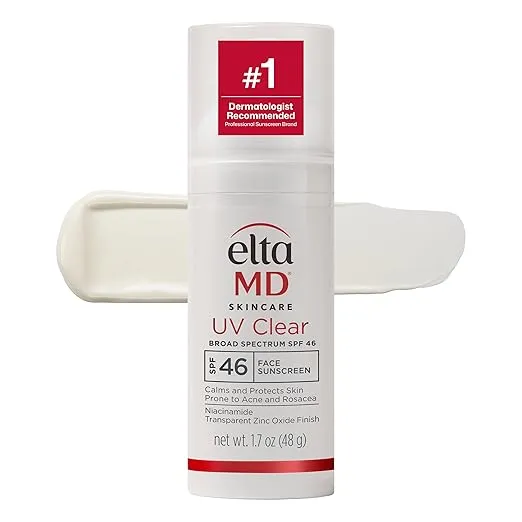
EltaMD UV Clear Broad-Spectrum SPF 46
EltaMD
$41
★★★★½
La Roche-Posay Anthelios Melt-In Milk Sunscreen SPF 60
La Roche-Posay
$38
★★★★½
Korean sunscreens occupy an interesting position here. The Korean MFDS regulatory framework requires conformity to ISO 24444 with third-party testing before market entry — a stricter pre-market standard than the US. Independent retests of popular Korean sunscreens, including the Beauty of Joseon Relief Sun, have generally held up well against label claims. The filter systems used in Korean formulations also tend to be more photostable, since they have access to next-gen filters not yet FDA-approved for US sale.
Beauty of Joseon Relief Sun: Rice + Probiotic SPF 50+ PA++++
Beauty of Joseon
$16
★★★★½
What You Can Actually Do
The testing problem is real, but it doesn’t mean sunscreen isn’t worth wearing. An SPF 30 that delivers SPF 20 is still dramatically better than nothing. The goal is to work within the system’s limitations intelligently.
Apply more than you think you need. The 2 mg/cm² application rate that generates label SPF is a thick layer. For a full face and neck, that’s roughly a quarter to half a teaspoon. Most people apply a fraction of that. If you’re unsure whether you’re applying enough, we’ve covered this in detail at how much sunscreen to apply.
Reapply. Every two hours during sun exposure, without exception. Not because the SPF wears off like a battery dying, but because physical removal (sweating, wiping, touching your face) reduces the film on your skin over time. Reapplication also corrects for the initial underapplication most of us are guilty of. Reapplying sunscreen over makeup is its own logistical challenge — that guide covers the realistic options.
Choose products with higher labeled SPF than you think you need. If label SPF 50 sometimes delivers SPF 30 in practice, and you’re also applying too little, starting at SPF 50+ gives you a buffer. There’s diminishing returns above SPF 50 in ideal conditions, but given real-world underapplication and potential label shortfalls, SPF 50+ is a reasonable default.
Stick with brands and formulas with track records. Not brand loyalty for its own sake, but genuine attention to which products have held up in independent testing. Consumer Reports and EWG both publish sunscreen testing databases. They’re imperfect, but they’re data.
Don’t skip sun-protective behaviors. Shade, UPF clothing, and timing (limiting direct sun exposure from 10am–4pm) are free, highly effective, and not subject to any testing variance. Sunscreen is part of a system, not a substitute for everything else.
What Needs to Change at the Regulatory Level
The US sunscreen market is operating on rules that haven’t meaningfully updated since 1999. The FDA’s Sunscreen Innovation Act (2014) and subsequent actions have been slow to implement. Next-generation UV filters — some of which have been in use in Europe and Asia for over a decade — are still not FDA-approved for US sale because the safety review process has stalled. We’ve covered the bemotrizinol situation separately: those filters are more photostable and would likely reduce some of the testing variance problem, but US consumers can’t access them in domestic products.
Mandatory pre-market SPF verification, stricter inter-lab calibration standards, and post-market surveillance with enforcement teeth would all help. None of these are on an imminent timeline.
MoCRA (Modernization of Cosmetics Regulation Act, 2022) improved some FDA oversight of cosmetics generally — MoCRA enforcement in 2026 covers what’s actually changed — but sunscreens as OTC drugs fall under a different regulatory track where progress has been slower.
Putting It All Together
The SPF on your sunscreen bottle reflects the best-case result from a tightly controlled lab test that doesn’t fully replicate how you apply the product, how long you wear it, or how it degrades over time. Independent retests consistently confirm this gap. It’s not a reason to stop wearing sunscreen. It is a reason to apply more of it, choose products with better testing track records, and not treat the SPF number as a ceiling you’re actually reaching.
The evidence points toward: SPF 50 or higher, from brands with pharmaceutical-grade quality control or pre-market third-party testing requirements. Apply a generous layer. Reapply. Wear a hat. And treat the label SPF as an optimistic estimate rather than a guarantee.
The system has real problems. Working around them is still possible.