
Sunscreen
Do You Really Need Sunscreen in Winter?
UVA rays don't take a season off. Here's what actually changes in winter—and honest guidance for people who won't wear SPF every day.
Disclosure — This article may contain affiliate links. We earn a small commission at no extra cost to you when you purchase through our links. This supports our ability to create independent, evidence-based skincare content.
The short answer is yes. But that framing misses the more useful question, which is: what exactly is hitting your skin in December, and does it actually warrant the same behavior as July?
Those are different questions with different answers. Once you understand what changes in winter and what doesn’t, the guidance stops feeling like a blanket rule and starts making sense.
What Actually Changes in Winter
Solar radiation isn’t one thing. It’s a spectrum. And different parts of that spectrum behave very differently across seasons.
UVB: The Burn Ray That Follows the Sun
UVB intensity tracks closely with the sun’s angle in the sky. In winter, the sun sits lower on the horizon. The UV index drops, sometimes sharply. At northern latitudes — think Chicago, Toronto, Stockholm — UVB can fall to near-zero on winter days. This is the ray responsible for sunburn, and in most of the northern hemisphere, it’s doing very little damage from November through February.
So if UVB is what you’ve always associated with sun protection, your instinct that winter sunscreen matters less isn’t entirely wrong.
UVA: The Constant You’re Not Accounting For
UVA is the problem. It operates on a much longer wavelength, which means it passes through clouds with minimal resistance and penetrates glass completely. It also doesn’t vary with the seasons the way UVB does. On an overcast December afternoon, the UVA hitting your face through a car window is roughly equivalent to what it would be on a clear day in May.
UVA is what drives photoaging. Collagen breakdown, hyperpigmentation, the leathery texture that accumulates over decades — UVA is behind most of it. It doesn’t burn you. It just quietly damages. Which is why the lack of visible consequence in winter makes it so easy to skip.
If you’re working on fading dark spots or trying to prevent premature aging, UVA exposure in winter matters more than most people realize. We have a longer look at the UV memory effect on acne scars and hyperpigmentation that goes into the cellular mechanics, if you want to understand why this stacks up over time.
The Snow Factor
One variable that’s easy to forget: snow reflects UV radiation, including UVA, back upward. On a clear winter day with fresh snow on the ground, UV reflectance can reach 80 percent or higher. For context, dry sand reflects about 15 percent. Water, around 10.
If you’re skiing, snowboarding, or spending extended time outdoors in a snowy environment, your UV exposure can rival summer beach conditions. Altitude compounds this — UV intensity increases roughly 10 to 12 percent for every thousand meters of elevation. A day on the mountain in February is not a low-exposure day.
The Geography Factor
Where you live matters more than what month it is.
In Los Angeles, Miami, or anywhere near the equator, the sun angle stays relatively high year-round. UVB doesn’t drop to zero. UVA is consistent throughout. Daily sunscreen in winter here isn’t a suggestion — it’s the same recommendation as July.
In Seattle, Minneapolis, or anywhere above roughly 45 degrees latitude, UVB genuinely does fall off in winter. The UV index on a cloudy January day might be 1 or 2, versus 9 or 10 in August. The argument for daily SPF gets weaker — but it doesn’t disappear, because UVA is still present, and so are windows.
A useful rule: if the UV index is regularly below 3 where you live in winter, your photoaging risk from outdoor UVB exposure drops significantly. UVA protection still matters, especially if you spend time near glass.
The Glass Problem
This one doesn’t get discussed enough. Standard window glass blocks almost all UVB but transmits roughly 50 to 70 percent of UVA. If you work near a window, drive for more than a few minutes daily, or spend time in sunlit rooms, you’re getting UVA exposure that no amount of cloudy-sky logic accounts for.
Chronic, low-level UVA through glass is a documented cause of asymmetric photoaging. There’s a frequently cited case study of a truck driver who spent 28 years with the left side of his face in direct window light — the left side aged dramatically faster than the right. It’s extreme, but the mechanism is real.
For people who sit near a window during the day, broad-spectrum protection is genuinely worth it in winter, even indoors.
Honest Guidance for People Who Won’t Wear It Daily
Some people are not going to wear sunscreen every day in winter. That’s the reality, and working around it is more useful than insisting.
If daily SPF isn’t happening, here’s where to prioritize:
- Any day the UV index hits 3 or above. Most weather apps now show UV index. When it crosses 3, protection matters.
- Mountain or snow days, regardless of UV index. Reflectance changes everything.
- Long drives or work-from-window setups. If you’re near glass for hours, a broad-spectrum SPF on the exposed side makes a measurable difference over years.
- If you’re treating hyperpigmentation or melasma. Skipping SPF while actively using brightening actives is counterproductive. See our melasma treatment guide for why this combination matters.
If you’re using retinoids in winter, they increase photosensitivity even when UVB is low. Retinol in winter and barrier health has more on managing that combination without burning yourself out.
What to Actually Wear
For most winter routines, the texture concern is real. Thick sunscreens that work fine in summer can feel suffocating layered under moisturizer in cold weather. The formats that tend to work best are lightweight fluid or serum-type SPFs that double as a moisturizer base.
EltaMD UV Clear SPF 46 is a consistent recommendation for this reason. It’s lightweight, doesn’t pile up under layers, and works for sensitive or acne-prone skin. Niacinamide in the formula is a bonus for anyone dealing with winter redness.
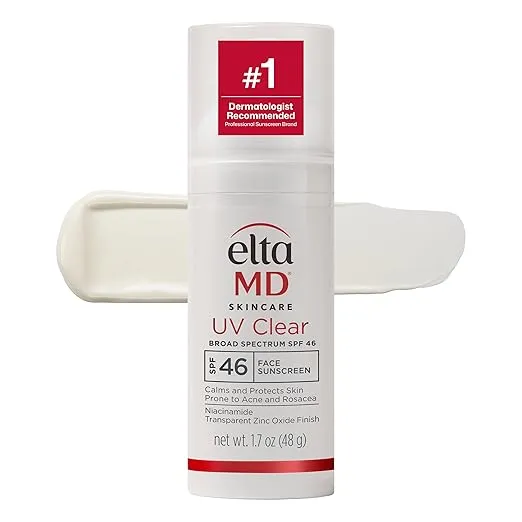
EltaMD UV Clear Broad-Spectrum SPF 46
EltaMD
$41
★★★★½
La Roche-Posay Anthelios Melt-In SPF 60 handles the heavy-moisturizer-under-SPF problem by absorbing quickly without needing much slip from underneath. It runs a little dewy, which is actually welcome in dry winter months.

La Roche-Posay Anthelios Melt-In Sunscreen Milk SPF 60
La Roche-Posay
$36
★★★★½
Beauty of Joseon Relief Sun SPF 50+ is worth mentioning for anyone who finds Western sunscreens too heavy in general. The finish is more matte, the texture is genuinely thin, and it applies comfortably over moisturizer. It’s one of the more elegant daily-wear formulas at this price.
Beauty of Joseon Relief Sun: Rice + Probiotics SPF 50+
Beauty of Joseon
$17
★★★★½
If your winter routine is already on the heavier side, and you’re looking for ways to consolidate steps rather than add one, the Kerala Botanics Ayurvedic Vitamin C Face Oil is worth understanding. It’s not a sunscreen — and it shouldn’t be positioned as one — but it addresses UVA-adjacent concerns: it contains a stabilized form of vitamin C designed to stay active in skin cells significantly longer than standard L-ascorbic acid, plus bakuchiol, a plant-based retinol alternative. Using it in the evening gives you antioxidant and renewal support that complements morning SPF rather than replacing it. For people who want a simplified winter routine, it consolidates serum, oil, and treatment into one step. The oil format may feel heavy for oily skin types, and the clinical data doesn’t match something like SkinCeuticals CE Ferulic — but for a natural-leaning, multi-benefit evening step, it holds up.
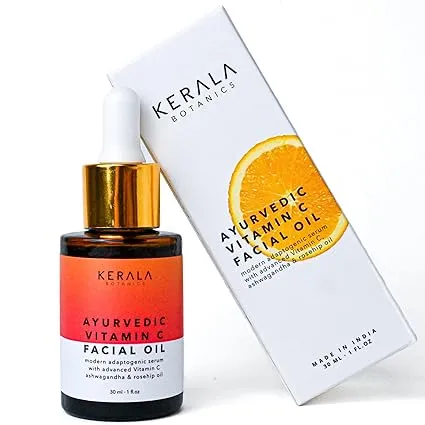
Ayurvedic Vitamin C Face Oil
Kerala Botanics
$49
★★★★☆
A Note on SPF Numbers in Winter
People often ask whether they need SPF 50 in winter or if SPF 30 is enough. The honest answer is that in winter, at higher latitudes, with low UV index days, an SPF 30 that actually gets applied is infinitely more effective than an SPF 50 you skip. SPF number is secondary to consistency and application amount.
If you want to understand how much product actually delivers the labeled protection — it’s more than most people use — how much sunscreen to apply covers that specifically.
Putting It Together
Here’s where the evidence actually lands:
UVA doesn’t take a winter break. It travels through clouds. It travels through windows. It doesn’t leave a visible mark the way UVB does, which is exactly why it accumulates without notice.
UVB does drop in winter, especially at higher latitudes. The argument for daily SPF becomes more latitude-dependent and more situational from November through February.
Snow, altitude, and proximity to glass change the calculation entirely. On a ski day or a sunny commute, exposure is real regardless of the season.
Daily sunscreen in winter is genuinely worth it for most people in most climates. But if it’s not happening every day, applying it on high UV index days, snow days, and window-heavy situations captures the majority of meaningful risk reduction. That’s not a compromise — it’s an informed choice.
The goal is skin that holds up well over decades. Consistent, reasonable protection gets there. Perfection that falls apart in January doesn’t.
For more on building a morning routine that makes SPF the last easy step, see our complete morning skincare routine guide. If you’re adjusting your routine for colder months more broadly, fall skincare transition covers what actually needs to change when the heating comes on.