
Sunscreen
SPF 30 vs SPF 50: Does the Number Matter?
SPF 30 vs SPF 50: the real difference is about 1% of UVB. Here's the math, why how much you apply matters more, and when SPF 50 is actually worth choosing.
Disclosure — This article may contain affiliate links. We earn a small commission at no extra cost to you when you purchase through our links. This supports our ability to create independent, evidence-based skincare content.
SPF 50 is not “almost twice as strong” as SPF 30. It blocks about one percentage point more UVB, and most people will never feel or see that gap. What decides your protection is how much sunscreen goes on your skin, and how often it goes on again.
Here’s the math, why application swamps it, and the handful of situations where the higher number is worth choosing.
What the SPF number actually measures
SPF stands for sun protection factor. It tells us how much longer skin takes to redden with sunscreen than without, but only for UVB, the rays that cause sunburn.
It says nothing about UVA, the longer wavelengths tied to skin aging and pigment changes. That’s what “broad spectrum” on the label covers. In the US it means the product passed a UVA test. A broad-spectrum SPF 30 beats a non-broad-spectrum SPF 50 for everyday use.
The number also comes from a lab test. Sunscreen is applied at 2 milligrams per square centimeter, then measured under a lamp. Hold on to that figure, because it matters later. For how those lab results can drift, see When SPF Labels Lie.
The percentage-blocked math
The scale isn’t linear. A product’s SPF is the inverse of the UVB fraction that gets through. SPF 30 lets about 1/30 through. SPF 50 lets about 1/50 through.
| SPF | UVB blocked | UVB reaching skin |
|---|---|---|
| 15 | ~93.3% | ~6.7% |
| 30 | ~96.7% | ~3.3% |
| 50 | ~98% | ~2% |
| 100 | ~99% | ~1% |
Going from 15 to 30 cuts the UVB reaching skin in half. Going from 30 to 50 cuts it by about a third. Going from 50 to 100 saves one more percentage point, which is why SPF 100 is mostly a marketing number.
In other words, the first 30 points of SPF do most of the work. Everything after is diminishing returns.
This is why the American Academy of Dermatology’s baseline is “SPF 30 or higher, broad spectrum, water resistant.” That’s a floor with a built-in cushion, not a ceiling.
Why application amount swamps the difference
The tested amount, 2 mg/cm², works out to roughly a quarter teaspoon for the face and neck. Studies of real behavior keep finding that people apply somewhere between a quarter and half of that.
And protection doesn’t drop in a straight line when the layer thins. Research suggests it falls off steeply, closer to an exponential curve. As a rough guide:
- SPF 50 at half the amount behaves more like SPF 7.
- SPF 30 at half the amount behaves more like SPF 5 or 6.
Look at those two numbers. At realistic application, the gap between a 30 and a 50 nearly disappears. Both are far below what the label promises, and the thin layer is the real problem.
So the useful question is not “30 or 50?” It’s “are we using enough, and are we reapplying?” A generous layer of SPF 30 will outperform a thin layer of SPF 50 every time. Our guide on how much sunscreen to apply breaks down the amounts and the two-finger method.
A related point: a higher SPF can make people feel safer, so they stay out longer or skip reapplying. That behavior erases whatever the extra points bought. No SPF lasts all day. Reapply every two hours outdoors, and after swimming or sweating. If makeup is in the way, here’s how to do it over makeup.
Texture is the hidden variable
The best SPF is the one that feels pleasant enough to wear a thick layer of, daily. This is where the number often misleads.
Higher-SPF formulas can need more filter load, and some feel heavier, greasier, or leave a cast. If SPF 50 feels sticky and SPF 30 feels like nothing, the 30 will get applied properly and the 50 will get dabbed on thin.
If we’re choosing between two formulas we like equally, we take the higher number. If one is clearly nicer to wear, we take the nicer one.
When SPF 50 genuinely earns its place
The higher number isn’t useless. A few situations tip the choice.
Skin that burns easily or has a cancer history
Fair skin that burns in minutes, or a personal history of skin cancer, leaves very little margin for error. When even a small difference in transmitted UV matters, 50 is a reasonable buffer against imperfect application.
Pigment-prone skin
Melasma and post-inflammatory hyperpigmentation respond to tiny amounts of UV and visible light. That’s why dermatologists tend to push tinted, high-SPF, or mineral formulas for those skin concerns. Our melasma treatment guide covers the full sun-discipline picture. The SPF number is only one piece of it, and a tint matters as much.
Long days outdoors, high altitude, or reflective surfaces
Snow, water, sand, and altitude all increase UV exposure. Hiking above 8,000 feet or spending a day on a boat is exactly where an extra buffer helps. Even then, reapplying on schedule still counts for more than the label.
Medications that raise sun sensitivity
Some prescriptions, including certain antibiotics and retinoids, make skin more reactive to UV. If a prescriber has flagged photosensitivity, going higher is sensible. So is asking them for specifics.
When you know you apply thin
If we’re honest, this is most of us. Choosing a 50 as insurance against under-application is a reasonable argument. It’s a safety margin, not a fix, and the better habit is still a proper layer.
When SPF 30 is plenty
Most days, SPF 30 is fine. A commute, a lunch break, a walk with the dog, a desk by a window. Even winter has UV worth covering, which we get into in winter sunscreen: do you need SPF?. Daily use with generous application beats occasional heroics with a high number.
If you’re breaking out, irritated, or skipping sunscreen because a formula bothers you, the answer is a different product, not a different number.
Three sunscreens worth knowing
We’re not ranking here. These are examples of how the number plays out in real formulas. Each is a product we’d reach for in a different situation.
An in-between pick: EltaMD UV Clear (SPF 46)
SPF 46 is a nice reminder that the label numbers on the shelf aren’t a 30-or-50 binary. This is a lightweight, niacinamide-containing formula many people with acne-prone or sensitive skin tolerate well. It leaves no obvious cast on lighter and medium skin and is quite elegant for daily wear. The downsides: it costs more than most daily sunscreens, and it’s a chemical-and-mineral hybrid with a slightly slick finish that some deeper skin tones may notice. We go deeper in our EltaMD UV Clear review.
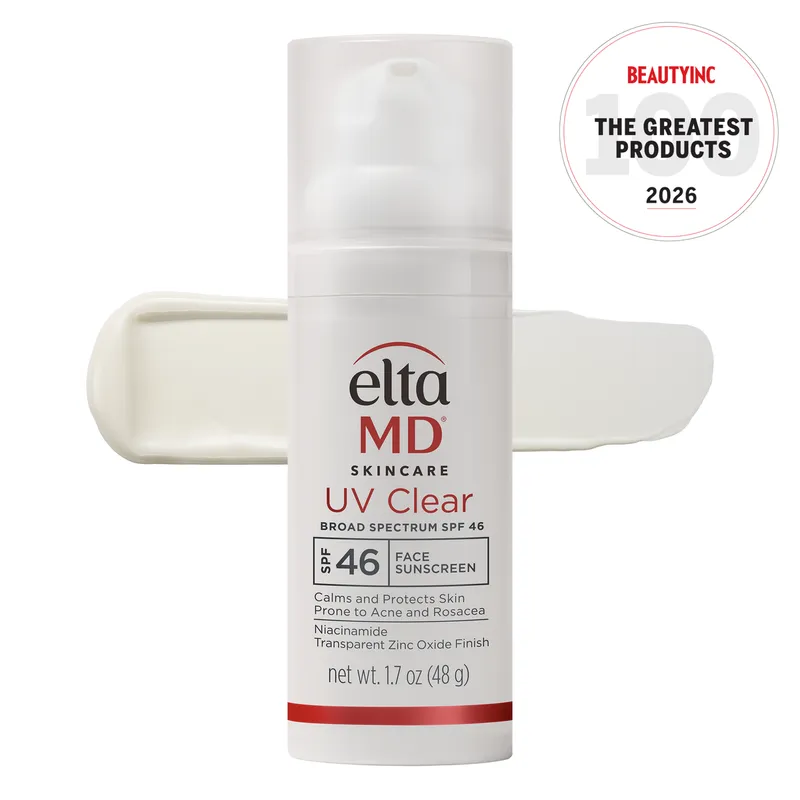
UV Clear Broad-Spectrum SPF 46
EltaMD
$43
★★★★½
An affordable SPF 50+: Beauty of Joseon Relief Sun
A soft, creamy Korean sunscreen with a PA++++ rating, which is Asia’s UVA grading scale and the highest tier. It’s light, moisturizing, and easy to apply generously, which matters more than the 50+. The trade-offs are a slightly dewy finish that can look shiny on oily skin, and that it’s less water-resistant than a sport formula. Read the full Beauty of Joseon Relief Sun review for texture details.

Relief Sun: Rice + Probiotics SPF 50+ PA++++
Beauty of Joseon
$18
★★★★½
For long outdoor days: La Roche-Posay Melt-in Milk SPF 60
This is the one we’d choose for a beach day or a hike. It’s water-resistant and built for heavy sun, and the higher number is genuinely useful in those conditions. It’s fragranced, a little heavy for everyday wear, and the price is higher than most. We cover it in our Anthelios Melt-in Milk review.
Anthelios Melt-in Milk Sunscreen SPF 60
La Roche-Posay
$40
★★★★½
A quick decision guide
Skip the agonizing. Three questions get us there:
- Do we burn quickly, have pigment concerns, or a skin cancer history? Go SPF 50.
- Will we spend hours outdoors, at altitude, or near water? Go SPF 50 and reapply.
- Is it a normal day, and does the SPF 30 feel better on the skin? Go SPF 30 and use plenty.
Beyond the number, check three things on the label. Broad spectrum. Water resistant if sweating or swimming. And a texture we’ll actually wear daily.
Putting it all together
The difference between SPF 30 and SPF 50 is real but small: roughly 97% versus 98% of UVB blocked. Most of the protection comes in the first 30 points.
What counts is the amount on the skin, reapplication, and whether the formula is pleasant enough to use every day. A quarter teaspoon for the face, every morning, topped up when outdoors.
Choose 50 when the stakes are higher, or when we know we under-apply. Otherwise a well-applied 30 does the job. The sunscreen that gets used beats the one that sits in a drawer.