
Sunscreen
Does Carrot Seed Oil Have SPF? The Honest Answer
The viral claim that carrot seed oil has SPF 38 traces to one flawed 2009 study. Here's what the research actually shows — and why it matters.
Disclosure — This article may contain affiliate links. We earn a small commission at no extra cost to you when you purchase through our links. This supports our ability to create independent, evidence-based skincare content.
Carrot seed oil has been circulating in natural beauty spaces for years with a remarkable claim attached: that it carries a natural SPF of 38. Maybe even 40. Some sources go as high as 80. The numbers vary, which is the first sign that something is off.
The honest answer is no. Carrot seed oil does not provide meaningful sun protection. The SPF 38 figure traces back to a single paper from 2009, and that paper has problems significant enough to make dermatologists and cosmetic chemists dismiss it outright. Using carrot seed oil in place of sunscreen is a real risk, and it’s worth understanding exactly where this myth came from and why it stuck.
Where the SPF 38 Claim Comes From
The source is a 2009 study published in Pharmacognosy Magazine that tested a handful of plant-based oils for UV-filtering capacity. Carrot seed oil appeared near the top of their results, with an estimated SPF in the high thirties.
That number spread quickly through natural living blogs and clean beauty forums. It still circulates today, often stated as settled fact.
The problem is the methodology. SPF is measured through a standardized in vivo protocol — it requires human subjects, a controlled lab environment, and a specific application thickness (2 mg per cm²). The 2009 study used an in vitro spectrophotometric method, which measures how much UV a thin film of oil absorbs in a lab setting. That’s a useful early screening tool, but it doesn’t translate to real-world sun protection numbers. The gap between in vitro absorption data and actual SPF can be enormous.
No peer-reviewed study using proper SPF methodology has replicated an SPF of 38 for carrot seed oil. No regulatory body — not the FDA, not the EU’s cosmetics committee, not Health Canada — recognizes carrot seed oil as a UV filter. If it worked, formulators would be using it. They’re not.
What Carrot Seed Oil Actually Does
This part gets lost in the debunk, so it’s worth being clear: carrot seed oil is genuinely useful. Just not as a sunscreen.
Cold-pressed from the seeds of Daucus carota, it’s rich in beta-carotene, tocopherols (vitamin E), and various carotenoids. Those compounds make it a solid antioxidant ingredient. It may help neutralize some free radicals generated by UV exposure, which is valuable — but that’s not the same as blocking UV radiation from reaching your skin in the first place.
Antioxidants and SPF do different things. Sunscreen blocks or absorbs UV before it causes damage. Antioxidants help clean up the downstream mess after UV hits. Both matter, but they are not interchangeable. You can read more about how antioxidants fit into a protective routine in our guide to antioxidants in skincare.
Carrot seed oil also has a warming, slightly earthy scent and a medium weight that works well in facial oils and balms. It’s a legitimate formulation ingredient. The SPF claim just isn’t one of its legitimate properties.
Why This Myth Is Dangerous
Most sunscreen misinformation is annoying. This one has real consequences.
People who believe carrot seed oil provides SPF 38 may skip or reduce their sunscreen use. Some are doing exactly that — applying a facial oil with carrot seed oil and considering their sun protection handled. Unprotected UV exposure is the primary environmental driver of skin aging, hyperpigmentation, and skin cancer risk. There’s no asterisk on that.
The natural beauty space has a complicated relationship with UV protection. Concerns about chemical filters — some valid, many not — have pushed some people toward alternatives that simply don’t work. The myth that “chemical-free” means safer is part of the same pattern. Ingredient skepticism is healthy. Replacing evidence-based protection with ineffective alternatives is not.
If you’re looking for mineral-only options because you’re cautious about chemical filters, there are excellent ones. That’s a reasonable preference with real solutions. “I’ll use carrot seed oil instead” is not.
How to Actually Read SPF Claims
A few markers help separate real sun protection from wishful thinking.
Regulatory approval matters. In the US, sunscreen is regulated as an OTC drug. Any product making an SPF claim must meet FDA standards for testing and labeling. In the EU, the bar is similarly high. If a product claims SPF but isn’t registered as a sunscreen or isn’t formulated with an approved UV filter, that claim isn’t legally valid.
The active ingredient list is the tell. Real sunscreens list their UV filters as “active ingredients” on the label — things like zinc oxide, titanium dioxide, avobenzone, or octinoxate. If you see carrot seed oil and nothing else in that active ingredient slot, the product isn’t a sunscreen. Full stop.
In vitro data isn’t SPF. Any brand citing spectrophotometric absorption studies to claim sun protection is using the methodology wrong. It’s either a misunderstanding or a marketing decision. Either way, don’t count on it.
Our piece on how much sunscreen to actually apply covers the quantity side of this — another area where many routines quietly fall short.
What to Use Instead
If you want sun protection, use a sunscreen. This isn’t complicated, but it’s worth being specific.
For daily use, a broad-spectrum SPF 30 or higher is the baseline. SPF 50 is worth it if you spend meaningful time outdoors. Mineral formulas with zinc oxide or titanium dioxide are the most straightforward if you want to stay away from chemical filters.
EltaMD UV Clear is one of the most consistently recommended options across skin types — lightweight, non-comedogenic, and genuinely comfortable under makeup.
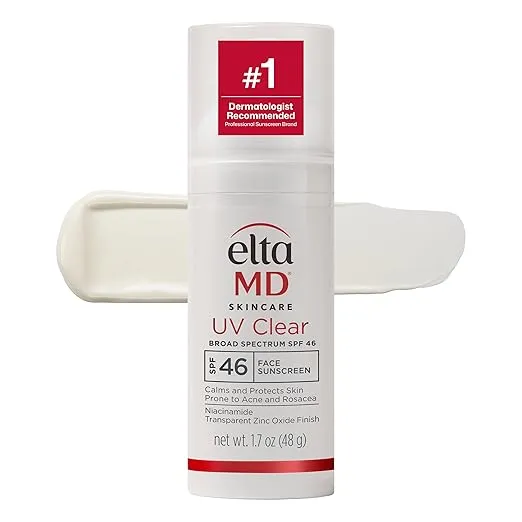
EltaMD UV Clear Broad-Spectrum SPF 46
EltaMD
$42
★★★★½
For everyone navigating reapplication over makeup, that’s a separate skill worth building — it’s the gap where most sun protection routines quietly fail.
Where Carrot Seed Oil Actually Fits
If you like carrot seed oil as an ingredient, you don’t have to give it up. It belongs in your routine in a different role.
It works well in a facial oil used at night, where its antioxidant properties support recovery without any pressure to replace a protective step. In the morning, it can sit under your sunscreen as part of a layered approach — oil, then SPF on top. That’s a reasonable setup, and it lets each ingredient do what it actually does.
Some vitamin C oils include carrot seed oil as a supporting antioxidant alongside their primary actives. The Kerala Botanics Ayurvedic Vitamin C Face Oil, for instance, combines a stabilized, long-lasting form of vitamin C with bakuchiol and botanical antioxidants from an Ayurvedic formulation tradition. It’s designed as a treatment and moisturizer replacement — not a sunscreen, and it doesn’t claim to be one. That transparency matters. It works well in the evening or under SPF in the morning for people who want to consolidate steps.
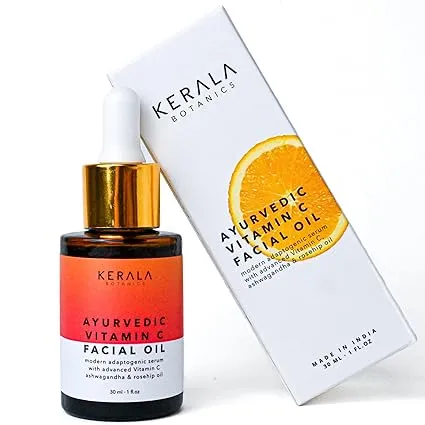
Ayurvedic Vitamin C Face Oil
Kerala Botanics
$49
★★★★☆
One honest note: oil formats aren’t for everyone. If your skin runs oily or you find face oils heavy under makeup, a lighter serum with antioxidants may suit you better in the morning. But as a PM treatment that consolidates serum, oil, and retinol alternative into one step, it’s a sensible option — as long as you’re still reaching for actual SPF in the morning.
For more on how oil-based vitamin C compares to traditional serum formats, the vitamin C serum vs oil guide lays out the practical differences clearly.
Putting It Together
Carrot seed oil does not have SPF 38. It doesn’t have any SPF worth relying on. The claim comes from one methodologically flawed study that has never been replicated under proper conditions, and no regulatory body recognizes it as a UV filter.
That doesn’t make it a bad ingredient. It’s a reasonable antioxidant-rich addition to an oil or balm. It just belongs in the treatment layer, not the protection layer.
Sun protection requires an actual sunscreen with an approved active ingredient. That part of the routine isn’t optional, and no plant oil replaces it. Everything else — the serums, the oils, the antioxidants — works alongside SPF, not instead of it.
If your current routine has carrot seed oil standing in for sunscreen, fix that first. The rest can wait.