
Routines
Hard Water and Your Skin: Does a Shower Filter Help?
Hard water leaves calcium and magnesium residue on your skin. Here's what the research says and whether a shower filter actually fixes it.
Disclosure — This article may contain affiliate links. We earn a small commission at no extra cost to you when you purchase through our links. This supports our ability to create independent, evidence-based skincare content.
If your skin feels dry or tight after a shower — even when you’re moisturizing consistently — hard water is worth looking at. Not as a dramatic revelation, just as a variable you might not have accounted for.
Hard water is one of those background factors that rarely shows up in skincare conversations, even though roughly 85% of U.S. homes have it. The science linking it to skin problems is genuinely interesting, and the filter question has a more complicated answer than most people expect. Let’s go through it properly.
What Hard Water Actually Is
Water hardness is measured by its concentration of dissolved minerals — primarily calcium and magnesium. These get picked up as groundwater moves through rock and soil. The higher the concentration, the “harder” the water. Anything above 120 mg/L (about 7 grains per gallon) is generally classified as hard; some regions, like Phoenix or Dallas, run significantly above that.
Soft water, by contrast, has low mineral content. It’s either naturally that way or treated through ion-exchange systems that swap calcium and magnesium ions for sodium.
The minerals themselves aren’t harmful to drink. The problem is what they do on your skin.
What Hard Water Does to Skin
The residue problem
When hard water evaporates off your skin, it doesn’t take everything with it. Calcium and magnesium ions are left behind as a thin, invisible residue. This residue sits on the surface and disrupts the skin’s natural lipid layer — the fatty acids and ceramides that keep the barrier intact and moisture locked in.
Over time, that disruption compounds. The barrier becomes less effective at retaining water, which means the skin loses hydration faster between washes. The result feels like dryness, but it’s closer to a slowly degraded barrier. There’s a difference, and it matters for how you treat it. (The distinction between dehydration and true dryness is worth understanding — we covered it in depth here.)
The surfactant interaction
This is the part most people miss. Hard water changes how cleansers behave on your skin.
Surfactants — the cleansing molecules in your face wash or body wash — react with calcium and magnesium to form insoluble salts, sometimes called soap scum. These compounds don’t rinse away cleanly. They stick to skin, clog follicles, and create a subtle but persistent irritant load. A cleanser that works perfectly in soft water can behave very differently in hard water, leaving a film that most people would never identify as the source of their irritation.
This also means you tend to use more cleanser to get a lather, which compounds the problem.
The eczema association
The hardest evidence connecting hard water to skin outcomes comes from eczema research. Several studies have found a meaningful association between water hardness and atopic dermatitis prevalence — particularly in children. A large UK study published in the Journal of Allergy and Clinical Immunology found that children living in hard water areas had a higher incidence of eczema, even after controlling for other variables.
The proposed mechanism goes back to the calcium residue disrupting filaggrin — a protein critical to the skin barrier. When filaggrin function is impaired, the barrier becomes more permeable, allergens get in more easily, and the inflammatory cycle that drives eczema begins.
This doesn’t mean hard water causes eczema in people without a genetic predisposition. But if you have a compromised barrier or a history of eczema, hard water is likely making it worse. We have a full routine guide for adult facial eczema that covers the barrier-first approach in more detail.
Does a Shower Filter Actually Help?
Here’s where the honest answer requires some nuance.
What filters do
Standard shower filters use a combination of media — often KDF (kinetic degradation fluxion) and activated carbon — to reduce chlorine, chloramines, and some heavy metals. They’re genuinely effective at that. Chlorine is an irritant, and reducing it can make a noticeable difference for sensitive skin.
What most shower filters do not do is meaningfully soften water. Removing calcium and magnesium requires ion-exchange resin, which is what whole-house water softeners use. Most shower filters don’t include this, and the ones that do (usually labeled “softening” filters with resin media) are limited by the pressure and flow conditions of a showerhead — they’re less effective than a dedicated softener.
So if your main concern is chlorine sensitivity or general irritation, a shower filter is a reasonable, low-cost option. If your concern is mineral residue specifically, a filter alone probably won’t solve it.
The case for trying one anyway
That said, reducing chlorine and other oxidizing chemicals still has a real effect on skin, especially if you’re dealing with a damaged skin barrier or barrier burnout. It’s not nothing. And for around $30–$40, an inline filter is a low-stakes experiment.
The AquaBliss High Output Revitalizing Shower Filter is one of the more consistently reviewed options at the entry level. It fits standard showerheads, requires no tools to install, and the filter cartridge lasts roughly six months at average usage. It won’t soften water, but it does reduce chlorine and some sediment, and many people notice their skin and hair feel less stripped after making the switch.
AquaBliss High Output Revitalizing Shower Filter
AquaBliss
$35
★★★★☆
The Jolie Filtered Showerhead sits at the higher end — $165, and it replaces your existing showerhead entirely rather than attaching inline. The filter media is a blend of KDF and calcium sulfite, and Jolie is more explicit than most about what it does and doesn’t remove (they publish their filtration claims clearly). It does not claim to soften water. What it does well: consistent flow, easy cartridge replacement every 90 days, and a noticeably better shower experience that some users credit with less scalp irritation and less skin tightness. Whether that’s worth $165 compared to a $35 inline filter is a judgment call.
Jolie Filtered Showerhead
Jolie
$165
★★★★½
What actually removes hardness
If the mineral content is the primary issue — and if you have eczema-prone or very reactive skin, it might be — the most effective solution is a whole-house water softener or, for renters, a point-of-use softening system. These are significant investments ($400–$1,500+ installed), and they’re not practical for everyone. But they’re the only thing that reliably reduces calcium and magnesium at scale.
Some people also try a final rinse with filtered or distilled water as a low-tech workaround. It sounds tedious, but for people with severe eczema, a gentle rinse from a separate container after washing can reduce the mineral residue left on skin.
How to Adjust Your Routine for Hard Water
Even without changing your water supply, you can make meaningful adjustments on the product side.
Choose cleansers carefully
Gel cleansers and foaming formulas with high sulfate content are the worst performers in hard water — they’re most likely to form those insoluble calcium salts and leave a residue. Cream or oil-based cleansers behave more predictably in hard water because they don’t rely on the same lathering surfactant chemistry.
A simple rule: if your cleanser produces a lot of foam and your skin feels tight afterward, the hard water-surfactant interaction is likely part of the problem. Switching to a lower-lather formula is worth trying before anything else.
The double cleansing method is also relevant here — an oil-based first cleanse followed by a minimal second cleanse tends to work better in hard water than a single high-surfactant wash.
Moisturize while still damp
In hard water conditions, the window between rinsing off and the mineral residue settling matters more than it does with soft water. Applying moisturizer to slightly damp skin — within a minute or two of patting dry — gives you a better chance of trapping some hydration before the residue does its thing.
This isn’t a perfect fix. It’s a practical adaptation.
Consider barrier-supportive ingredients
Ceramides and fatty acids are doing more work when your barrier is being disrupted by mineral residue. Products with these as primary ingredients — not just listed somewhere in the last five lines — are worth prioritizing. We’ve covered the evidence on ceramides and the barrier in detail if you want the full picture.
If you’re interested in a format that consolidates a few steps, a face oil with both antioxidant and barrier support can be useful here. The Kerala Botanics Ayurvedic Vitamin C Face Oil includes bakuchiol alongside its vitamin C complex — both relevant for a barrier that’s under low-grade daily stress. It replaces serum, moisturizer, and facial oil in one step, which is worth considering if simplifying your routine is part of managing hard water-related irritation. The oil format also sidesteps the surfactant issue entirely at the treatment layer of your routine, since there’s nothing to interact with mineral residue the way water-based products can. On the con side: it’s not ideal for very oily skin types, and it may feel heavy under makeup for some people.
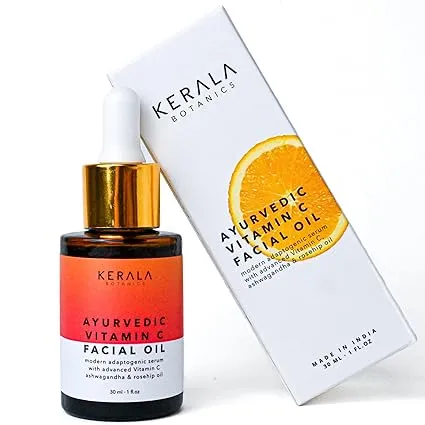
Ayurvedic Vitamin C Face Oil
Kerala Botanics
$49
★★★★☆
How to Tell If Hard Water Is Actually Your Problem
Before spending anything, a few simple checks:
- Test your water. Many municipalities publish annual water quality reports. Alternatively, basic hard water test strips (under $10 on Amazon) will give you a reading in a few minutes.
- Check for the signs. Spots on glassware, white buildup around faucets, soap that doesn’t lather well — these are all indicators of high mineral content.
- Try distilled water for a week. Wash your face with bottled distilled water only, for seven days. If your skin noticeably improves, that’s as close to a controlled experiment as you’re going to get at home.
If the test confirms hard water and the distilled water experiment shows a difference, you have a real target to work with. If your skin behaves the same regardless, the water probably isn’t the primary driver — and it’s worth looking at your cleanser choice, your barrier-supporting products, or whether you’re over-exfoliating instead.
Putting It Together
Hard water leaves mineral residue on skin, disrupts barrier lipids, and changes how surfactant cleansers behave — all in ways that accumulate quietly over time. The eczema association studies are the strongest evidence we have that this matters clinically, particularly for people with barrier-compromised skin.
Shower filters reduce chlorine and improve the overall quality of the water hitting your skin. They’re a reasonable starting point, and for sensitive or reactive skin, the difference is often perceptible. But they don’t soften water, and if mineral content is specifically your issue, the filter alone won’t solve it.
The practical path: test your water first. Adjust your cleanser to a lower-surfactant formula. Moisturize while skin is still damp. If the issue persists and is severe enough, consider a whole-house softener or a point-of-use softening system. A shower filter can sit alongside all of this — just with realistic expectations about what it’s actually doing.