
Routines
Best Cleansers for Dry Skin
The best cleansers for dry skin, ranked: cream, oil, and syndet formulas explained, plus surfactant and pH basics and a gentle pick for eczema-prone skin.
Disclosure — This article may contain affiliate links. We earn a small commission at no extra cost to you when you purchase through our links. This supports our ability to create independent, evidence-based skincare content.
Dry skin doesn’t need a special cleanser. It needs one that removes sunscreen and grime without taking the skin’s own oils along with them.
That narrows the field fast. Most of the “dry skin” cleansers on the shelf are fine, and a handful are genuinely good. We picked five, covering cream, oil, and syndet formats, and one is built for eczema-prone skin.
How We Chose These Cleansers
Three criteria, in order of importance.
- Gentle surfactants. The cleansing agents should lift dirt without stripping lipids.
- A skin-friendly pH. Closer to the skin’s natural range than to traditional soap.
- A short, boring ingredient list. No fragrance, no essential oils, no scrubs.
Price mattered, but only as a tiebreaker. A $9 cleanser that rinses off in thirty seconds doesn’t have much room to justify a $50 one.
Cream, Oil, or Syndet: Which Format Fits Dry Skin
Cleanser format changes how it feels, not whether it works. Here’s the short version.
Cream and lotion cleansers are the default for dry skin. They’re thick, low-foam, and often contain moisturizing ingredients like glycerin or ceramides. They clean lightly, which is usually what dry skin needs.
Cleansing oils and balms dissolve oil-based dirt, meaning sunscreen, makeup, and sebum. They work well if you wear either of the first two daily. If your face is bare by evening, a cream cleanser covers it.
Syndet cleansers (short for “synthetic detergent”) are the category people overlook. They’re built from mild synthetic surfactants rather than soap, and they’re formulated at a gentler pH. Many cream cleansers are technically syndets. The term matters most when you’re comparing a cleansing bar to a true soap.
If you’re unsure, start with a cream. We covered the oil option in more depth in our guide to the double cleansing method, including when a second cleanse is unnecessary.
Surfactants: What’s Actually Doing the Cleaning
A surfactant is the ingredient that grabs oil on one end and water on the other, so rinsing carries the dirt away. Every cleanser has at least one.
The trouble is strength. Harsh surfactants like sodium lauryl sulfate (SLS) lift away oil very efficiently, and that includes the lipids your barrier depends on. Dry skin already runs short on those.
What we look for instead:
- Mild anionic surfactants such as sodium cocoyl isethionate or sodium lauroyl sarcosinate.
- Amphoteric surfactants such as cocamidopropyl betaine, often used as a buffer.
- Non-foaming emulsifiers in cream cleansers, which clean by emulsifying rather than lathering.
A caveat. SLS isn’t toxic, and a small amount in a well-built formula isn’t a disaster. It’s just a poor match for skin that’s already tight or flaky. The rule of thumb is simple: if your face feels tight after rinsing, the surfactant system is too strong for you.
Why pH Matters More Than Most People Think
Healthy skin sits around pH 4.5 to 5.5, slightly acidic. Traditional soap is alkaline, typically around pH 9 to 10, and it temporarily raises skin pH after washing. For dry or eczema-prone skin, that shift can mean more irritation and a slower return to normal.
Good cleansers for dry skin tend to sit closer to neutral or mildly acidic. Most brands don’t publish exact numbers, so the practical test is how your skin feels 20 minutes later. Smooth is right. Tight, itchy, or shiny-but-rough means the formula is too alkaline or too strong.
Our full explainer on skincare pH covers how much it matters for different product types. For cleansers, it matters a lot.
One more distinction. Dry skin lacks oil. Dehydrated skin lacks water, and any skin type can be dehydrated. Cleansing habits affect both, but the fixes differ, which is why we like this breakdown of dehydrated vs dry skin.
#1 Best Overall: CeraVe Hydrating Facial Cleanser
This is the cleanser we’d hand to almost anyone with dry skin.
It’s a creamy, low-foam formula built around three ceramides, hyaluronic acid, and glycerin. It spreads like a thin lotion, barely lathers, and rinses off cleanly. That “barely lathers” part is what you want. Lather usually means stronger surfactants.
After washing, skin feels soft rather than squeaky. That’s the clearest sign a cleanser is doing its job. It also removes daily sunscreen and light makeup adequately, though it won’t dissolve a full face of waterproof product.
The cons are small. Some people notice a faint film if they rinse too quickly, and a minute of massaging followed by thorough rinsing fixes it. And ceramides in a wash-off product won’t do much, since they’re rinsed away within seconds. Treat them as a nice extra, not the reason to buy.
At $17 for a large bottle that lasts months, it’s hard to beat. For most dry skin, you can stop shopping here.
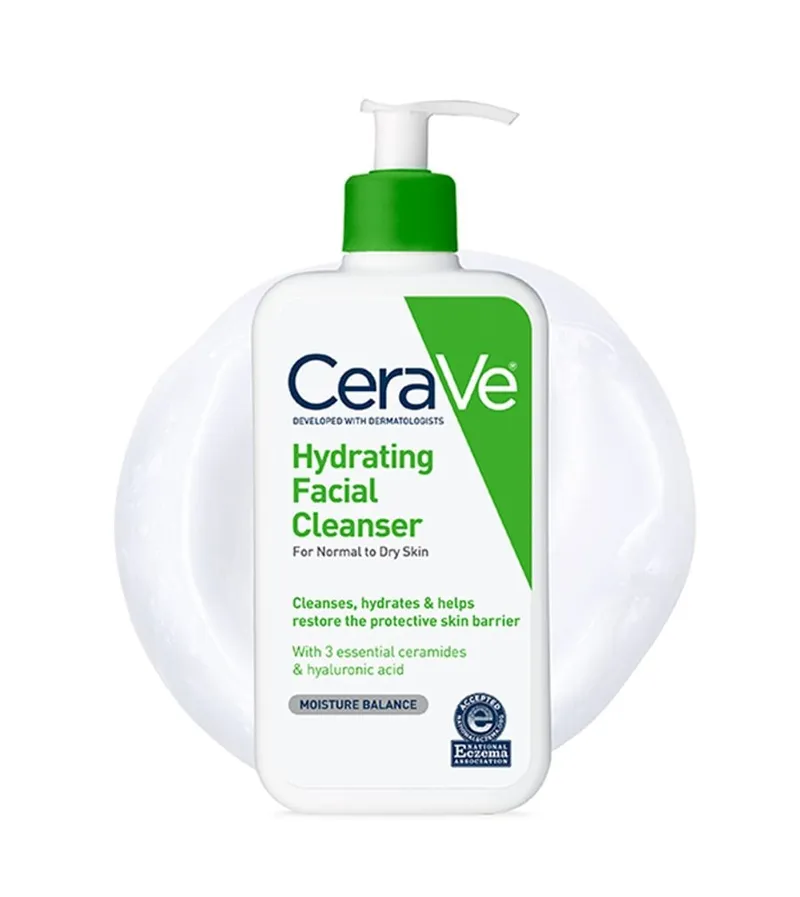
Hydrating Facial Cleanser
CeraVe
$17
★★★★½
What we liked
- + Creamy, low-foam texture leaves skin soft
- + Ceramides and glycerin support the barrier
- + Fragrance-free and widely available
Worth noting
- - Won't fully dissolve waterproof makeup
- - Some people find the rinse-off slightly filmy
The easiest recommendation for dry skin: gentle, cheap, and boring in the best way.
#2 Best for Eczema-Prone Skin: Vanicream Gentle Facial Cleanser
When skin is reactive, the goal changes. You stop looking for good ingredients and start removing potential triggers.
Vanicream’s cleanser is made without fragrance, dyes, parabens, lanolin, or formaldehyde-releasing preservatives. That’s a deliberately short list of the usual suspects behind contact irritation. The texture is plain, a light lotion that foams very little and rinses off easily.
For eczema-prone facial skin, that plainness is the feature. Fewer ingredients means fewer chances for a flare, and easier detective work if one does happen. If you’re managing eczema around the eyes or cheeks, our facial eczema routine guide walks through the full set of steps, not just the cleanser.
Use lukewarm water, keep the wash under a minute, and pat dry. Hot water and long scrubbing undo the work of any gentle cleanser.
Downsides: it does very little with makeup, and the formula has no extras. For $9, that’s fine. If you pair it with the brand’s moisturizer, our Vanicream Moisturizing Cream review covers how that one holds up.
One honest note. “Eczema-friendly” isn’t a regulated label, and every skin reacts differently. Patch test anything new on the jaw or inner arm before using it on your face.
Gentle Facial Cleanser
Vanicream
$9
★★★★½
What we liked
- + Free of fragrance, dyes, parabens, lanolin, and formaldehyde releasers
- + Very inexpensive
- + Rinses clean without tightness
Worth noting
- - Plain texture with no extras
- - Minimal makeup-removing power
Our pick for eczema-prone and reactive skin, where fewer ingredients means fewer problems.
#3 Best Cream-to-Foam: La Roche-Posay Toleriane Hydrating Gentle Cleanser
This one sits between a cream and a gel. It starts creamy and turns into a soft, low lather with water.
That small amount of foam makes it feel more like a “real” cleanser, which matters if a totally lather-free wash leaves you feeling like nothing happened. The formula includes glycerin, niacinamide, and ceramide-3, and it’s fragrance-free.
Skin feels clean but not stripped. In our view the texture is slightly more polished than CeraVe’s, and that’s the entire argument for it. Performance is very similar.
It runs about the same price as CeraVe for a smaller bottle, so the value is a notch lower. If you like a gentle lather and your skin isn’t reactive, this is a pleasant swap. If your skin is, go back to #2.
Toleriane Hydrating Gentle Cleanser
La Roche-Posay
$17
★★★★☆
What we liked
- + Cream-to-light-foam texture feels more refined
- + Contains niacinamide, ceramide-3, and glycerin
- + Fragrance-free
Worth noting
- - Costs more than Vanicream for a similar result
- - Gentle lather isn't for people who want a squeaky feel
A slightly nicer-feeling cream cleanser if you want a little lather without the tightness.
#4 Best Oil Cleanser: Beauty of Joseon Ginseng Cleansing Oil
If you wear sunscreen daily, and you should, an oil cleanser makes evening cleanup easier. Oils dissolve sunscreen and makeup far better than water-based washes can.
Beauty of Joseon’s version is a light plant-oil blend that turns milky when you add water. That emulsifying step is what lets it rinse off instead of leaving a greasy layer. Massage it onto dry skin, add a splash of water, then rinse.
It’s gentle and leaves skin comfortable, not squeaky. The price is also friendly. Cleansing oils can run $30 or more, and this one doesn’t.
The cons are practical. Rinse thoroughly, because leftover oil can cloud skin or transfer onto pillowcases. And if you don’t wear sunscreen or makeup, a cream cleanser is simpler. Check the ingredient list if you react to fragrance or plant extracts.
Comparing options? Our roundup of the best Korean cleansing oils covers more of the category, and for readers with oilier skin there’s a separate guide to cleansers for oily skin.

Ginseng Cleansing Oil
Beauty of Joseon
$17
★★★★☆
What we liked
- + Melts sunscreen and makeup without stripping
- + Emulsifies into a milky rinse
- + Good price for an oil cleanser
Worth noting
- - Needs a thorough rinse to avoid residue
- - Not ideal as a morning-only cleanser for people who don't wear sunscreen
A solid oil cleanser for dry skin that wears sunscreen or makeup, and not necessary if you don't.
#5 Best Drugstore Classic: Cetaphil Gentle Skin Cleanser
Cetaphil is the cleanser dermatologists have recommended for decades. It’s thin, fragrance-free, and available at nearly every pharmacy.
You can use it with water, or smooth it on and tissue it off, which is handy when you’re traveling or your skin is irritated and you want to avoid more rinsing. It cleans lightly and doesn’t leave much behind.
It ranks last for one reason: the formula contains a small amount of sodium lauryl sulfate. We don’t consider that alarming, and plenty of dry-skinned people use it happily. But newer cream cleansers get a similar result without a stronger surfactant, so we’d pick those first.
It’s still a respectable fallback, especially if it’s what’s on the shelf when you’re out of everything else.
Gentle Skin Cleanser
Cetaphil
$14
★★★★☆
What we liked
- + Fragrance-free and easy to find
- + Can be wiped off without water in a pinch
- + Long track record with dermatologists
Worth noting
- - Contains a small amount of sodium lauryl sulfate
- - Offers little beyond basic cleansing
Reliable and everywhere, though newer cream cleansers are a touch gentler.
Quick Comparison
| Rank | Product | Format | Price | Best for |
|---|---|---|---|---|
| 1 | CeraVe Hydrating Facial Cleanser | Cream | $17 | Most dry skin |
| 2 | Vanicream Gentle Facial Cleanser | Lotion | $9 | Eczema-prone, reactive skin |
| 3 | La Roche-Posay Toleriane Hydrating | Cream-to-foam | $17 | Those who want a little lather |
| 4 | Beauty of Joseon Ginseng Cleansing Oil | Oil | $17 | Sunscreen and makeup wearers |
| 5 | Cetaphil Gentle Skin Cleanser | Lotion | $14 | Budget, easy availability |
How to Wash Dry Skin Without Making It Worse
The cleanser matters, but technique matters nearly as much.
- Use lukewarm water. Hot water strips oils faster.
- Wash for 30 to 60 seconds, then rinse.
- In the morning, water alone is often enough. You’re not removing much overnight.
That last point gives you permission to skip a step. If your skin isn’t oily or covered in product when you wake up, a morning cleanser isn’t necessary. Rinse, moisturize, apply sunscreen.
If your barrier already feels damaged, with stinging, flaking, or redness, simplify further. Our guide to repairing a damaged skin barrier covers what to pause while things settle.
Methodology
We evaluated each cleanser on ingredient lists, surfactant strength, formulation type, and how closely the formula matches dermatologist guidance for dry and sensitive skin. Brand-published information on fragrance, preservatives, and format was cross-checked against retail listings. We favored fragrance-free formulas and mild surfactant systems, and we penalized unnecessary additions like essential oils or exfoliating particles.
Rankings aren’t influenced by affiliate relationships. Prices reflect typical retail pricing at the time of writing and may vary by retailer.
The Bottom Line
For most dry skin, CeraVe Hydrating Facial Cleanser is enough. For eczema-prone or easily irritated skin, Vanicream is the safer bet. Add an oil cleanser only if sunscreen or makeup demands it.
A good cleanser should feel like nothing happened. Skin that’s comfortable ten minutes later is skin that was cleaned properly.