
Ingredients
Why the pH of Your Products Matters
The acid mantle, cleanser pH, and the acid ranges your actives need to work — what the measurement data actually says about pH in skincare.
Disclosure — This article may contain affiliate links. We earn a small commission at no extra cost to you when you purchase through our links. This supports our ability to create independent, evidence-based skincare content.
Here’s a number most people have never thought about: your skin’s surface sits around pH 4.7 to 5.75. Slightly acidic, not neutral. That’s not trivia — it’s the reason some cleansers leave your face feeling stripped and tight while others don’t, and the reason a glycolic acid product at pH 6 does almost nothing while the same acid at pH 3.5 visibly exfoliates.
pH gets thrown around in skincare marketing as a vague badge of gentleness (“pH-balanced!”), which is a shame, because the actual mechanism is specific and measurable. This guide covers what the acid mantle is, why cleanser pH matters more than almost any other formulation detail, what pH range your acids actually need to function, and why the “wait 20 minutes between steps” rule has less science behind it than people assume.
What the Acid Mantle Actually Is
The acid mantle is a thin film on the skin’s surface made of sebum, sweat, and the breakdown products of dead skin cells. Lambers et al. measured skin surface pH across a large sample of adults in 2006 and confirmed what dermatologists had suspected for decades: healthy skin runs acidic, averaging below 5, and that acidity isn’t incidental.
It does two jobs. First, it discourages pathogenic bacteria — most of the microbes that cause trouble prefer a more neutral environment, while the commensal bacteria that make up a healthy skin microbiome tolerate acidity better. Second, and more relevant to your routine, it regulates the enzymes that break down corneocytes in the stratum corneum. Those enzymes — proteases involved in desquamation — are pH-dependent. Push the surface too alkaline and they stop working properly, which means dead skin cells don’t shed the way they should. That’s part of why over-cleansed, pH-disrupted skin often looks flaky and feels tight at the same time: the barrier is compromised and dead cell turnover has stalled.
Schmid-Wendtner and Korting’s 2006 review in Skin Pharmacology and Physiology laid out the mechanism clearly: repeated alkaline exposure measurably increases transepidermal water loss and takes time to recover. This isn’t a one-off insult. It’s cumulative.
Cleanser pH Is the Biggest Lever You Control
Of everything in a routine, cleanser pH has the most consistent research behind it. Soap sits around pH 9 to 10. Traditional bar soap and some foaming cleansers land in that range too, and Ananthapadmanabhan’s work on surfactant chemistry showed that high-pH cleansing increases corneocyte swelling and loosens the lipid matrix holding skin cells together — which sounds technical, but translates to: your barrier gets weaker with every wash.
Low-pH cleansers, formulated closer to 4.5–5.5, cause measurably less disruption. Studies comparing synthetic detergent (syndet) bars to traditional soap found less barrier damage and faster recovery with the lower-pH versions. This isn’t a small effect in people with already-compromised barriers — it’s one of the more actionable fixes for anyone dealing with a damaged skin barrier or chronic sensitivity.
The catch: pH isn’t printed on most cleanser labels. You’re relying on brand claims or testing it yourself with strips (more on that below). As a category, Korean low-pH cleansers tend to be the most reliably formulated and labeled in this range, which is part of why they’ve become a go-to recommendation for reactive or barrier-compromised skin.
Low pH Good Morning Gel Cleanser
COSRX
$13
★★★★½
This one sits around pH 5, close to the skin’s natural range, and it’s mild enough for daily use even on compromised skin. It won’t deep-clean the way a sulfate-heavy cleanser does, so if you’re removing heavy sunscreen or makeup, you’ll want a first step — see our double cleansing guide for how to pair it.
Verdict: a reliable, boring-in-the-best-way cleanser. It does one job — clean skin without disrupting the surface pH — and does it consistently.
The Acid Range Your Actives Actually Need
This is where pH stops being about comfort and starts being about whether a product works at all.
AHAs and BHAs are weak acids, and their effectiveness depends on how much of the acid is in its “free,” unionized form — governed by the ingredient’s pKa and the formula’s pH. Glycolic acid has a pKa around 3.83. For meaningful exfoliation, most formulations need a pH between 3 and 4. Above pH 4.5 or so, too much of the acid is in its ionized form to penetrate the skin effectively. It’s still an acid on the label. It’s just not doing much.
Salicylic acid behaves similarly, with a functional range usually cited between pH 3 and 4 for effective keratolytic activity. Our glycolic acid guide and salicylic acid guide go deeper on concentration and frequency, but pH is the variable that decides whether the percentage on the label means anything.
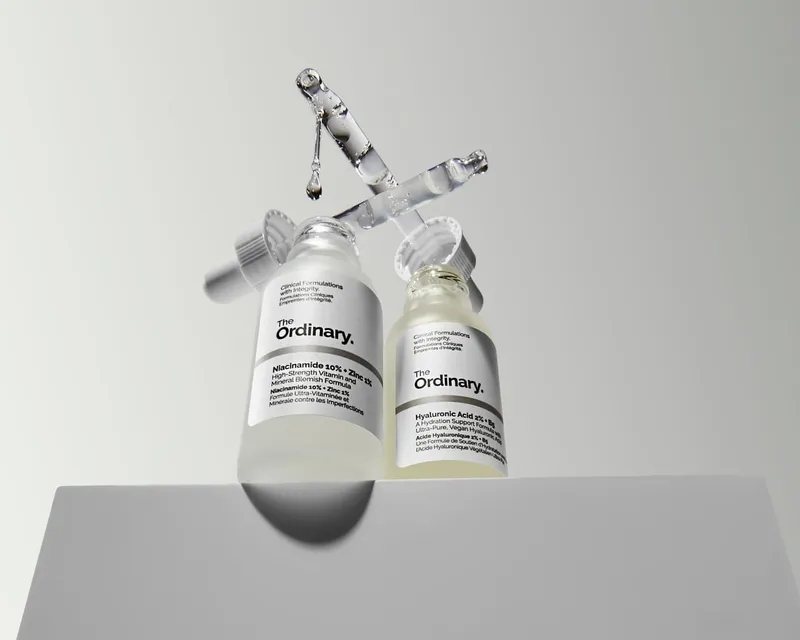
Glycolic Acid 7% Toning Solution
The Ordinary
$12
★★★★☆
This formula sits around pH 3.6, squarely in the functional range. We’ve covered it in more detail in our full review, but the short version: the concentration gets the headline, but it’s the pH that makes the 7% actually do something.
Verdict: solid, functional, and priced low enough that there’s no reason to tolerate a poorly formulated version of the same acid.
L-ascorbic acid (pure vitamin C) is the other ingredient where pH drives everything. It needs a formula pH below about 3.5 to stay in its active, unionized form — which is also why these serums tend to sting on compromised skin. If that’s you, we’ve written about vitamin C-related irritation and gentler formats.
The Layering Wait-Time Myth
Here’s where a lot of routines get needlessly complicated. The advice to “wait 20 to 30 minutes” between a low-pH acid product and your next step — so the second product doesn’t raise the pH and deactivate the first — shows up constantly in skincare content. It’s logical-sounding. It’s also not well supported by the measurement data.
Skin’s buffering capacity is fast. Research on surface pH recovery after exposure to alkaline substances (soap, for instance) shows the skin returns toward baseline within minutes, not because your skin “resets” on some fixed clock, but because the stratum corneum has its own buffering systems — including the sodium-hydrogen exchanger NHE1, studied by Behne and colleagues — that actively regulate surface acidity. The practical upshot: by the time you’ve patted on your next product, your skin has already done most of the rebalancing work. A full product already absorbed into the stratum corneum isn’t sitting on the surface waiting to be “neutralized” by whatever you put on top of it.
None of the oft-cited wait-time numbers trace back to a controlled study measuring actual product efficacy with and without a gap. It’s closer to skincare folklore repeated until it sounded like consensus. Our layering guide covers the order that genuinely matters — mostly texture (thin to thick) and which actives shouldn’t be combined for irritation reasons, like retinoids and strong acids on the same pass.
If you want a practical rule: apply your lowest-pH product first, let it absorb for a minute so you’re not just sliding it off your face, then move on. You don’t need a timer.
Sidestepping the pH Problem Entirely
If formula pH and acid stability feel like one more thing to manage, oil-based formats dodge the issue structurally. Oils don’t carry the same pH-dependent ionization concerns that water-based acid formulas do, because the active isn’t relying on an aqueous environment to stay in its functional form.

Ayurvedic Vitamin C Face Oil
Kerala Botanics
$49
★★★★☆
This one pairs a stabilized vitamin C derivative with bakuchiol in an oil base, which sidesteps the oxidation and surface-pH concerns that come with traditional L-ascorbic acid serums. It’s not going to out-perform a well-formulated low-pH vitamin C serum in a head-to-head penetration study — there’s simply less clinical data on oil-delivered vitamin C compared to the gold-standard L-ascorbic acid research. And the oil format isn’t for everyone; if you’re oily or acne-prone, it can feel like a lot under makeup. But for anyone who’s been burned (literally) by acidic vitamin C serums, or who wants to simplify a routine into one step instead of three, it’s a reasonable trade. We go deeper on the format differences in vitamin C serum vs. oil.
Verdict: not a replacement for a well-formulated acidic serum if penetration data is your priority, but a legitimate option for sensitive skin or simplified routines.
Putting It All Together
pH isn’t a wellness buzzword — it’s a measurable variable that determines whether your cleanser strips your barrier and whether your acid serum is doing anything beyond sitting on your skin. The acid mantle runs around pH 4.7 to 5.75, and the research is consistent that pushing too far outside that range, repeatedly, weakens the barrier over time.
Practical takeaways: pick a cleanser in the 4.5–5.5 range if you can find the data, especially if your skin runs sensitive or barrier-compromised. Check that your acid exfoliants and vitamin C serums fall in their functional pH windows — the percentage on the bottle is only half the story. And skip the elaborate wait-time rituals between steps. Your skin’s buffering systems are faster than the skincare lore gives them credit for.
None of this requires buying a lab’s worth of pH strips. It requires reading past the marketing copy and asking the one question that actually matters: not “does this have acid in it,” but “is the acid in a form my skin can use.”