
Ingredients
Microneedle Patches vs Spicules: Two Ways to Break the Skin Barrier
Dissolving microneedle patches and spicule serums both breach the skin barrier — but depth, control, and risk differ more than the hype suggests.
Disclosure — This article may contain affiliate links. We earn a small commission at no extra cost to you when you purchase through our links. This supports our ability to create independent, evidence-based skincare content.
At Cosmobeauty Seoul 2026, two technologies kept coming up in the same breath: dissolving microneedle patches and spicule serums. Both breach the stratum corneum. Both promise to push actives deeper than a regular serum ever could. And both have been described, at various points, as “liquid microneedling” — which is technically true for one of them and a marketing stretch for the other.
They are not the same thing. The mechanisms differ, the risks differ, and the conditions each one is actually suited for differ quite a bit. This guide breaks down both, with enough detail to help you decide whether either belongs in your routine — and which one to reach for first.
What Both Technologies Are Actually Doing
Standard serums and moisturizers are designed to stay at the surface. The stratum corneum, the outermost layer of the skin, is a deliberate barrier — it keeps things out. That’s its job. Most topical actives can only penetrate this layer to a limited degree, which is why vitamin C serums, for all their popularity, deliver relatively modest results compared to in-office treatments.
Both microneedle patches and spicule serums attempt to work around this limitation. But how they breach the barrier is fundamentally different.
Dissolving Microneedle Patches: Controlled Delivery, Measurable Depth
How They Work
Microneedle patches use arrays of microscopic needles — typically 200 to 800 micrometers long — made from dissolvable materials like hyaluronic acid, PVP, or polyvinylpyrrolidone. You press the patch against skin, the needles puncture the stratum corneum and dissolve into it, releasing whatever active ingredient they’re loaded with (hyaluronic acid, retinol, tranexamic acid, and peptides are common).
The key word is controlled. The needles are a fixed length. They deliver actives to a defined depth in the epidermis. There’s no ambiguity about where the ingredient is going.
Researchers have studied this delivery mechanism for applications far beyond cosmetics — transdermal drug delivery using microneedles is an active area of pharmaceutical research, with peer-reviewed data going back over a decade. The cosmetic versions are shorter and less aggressive than medical-grade equivalents, but the underlying physics are sound.
What They’re Good For
Targeted treatment. Microneedle patches are particularly well-suited for flat, discrete areas: under-eye hollows, forehead lines, nasolabial folds, or concentrated hyperpigmentation. You apply them to a specific zone and walk away. The patch does its work over 20 minutes to a few hours depending on the formula.
They’re also more predictable than spicules. The depth is built into the device. The release rate is controlled by the dissolution rate of the matrix material. You can’t over-apply a patch in the same way you can over-apply a serum.
What They’re Not Good For
Coverage. Patches cover centimeters, not a full face. If your goal is broad skin texture improvement or overall brightening, you’d need a patchwork of patches across your face, which is both expensive and time-consuming.
They also need dry, flat contact to work. Curved areas — around the nose, the corners of the mouth — are harder to cover. And if your skin is actively compromised (open breakouts, eczema, rosacea flare), introducing 200 puncture sites is not a good idea. See our guide on damaged skin barrier repair for context on when your barrier needs protection, not penetration.
Spicules: Mechanical Micro-Injury at Scale
How They Work
Spicule serums use siliceous skeletal fragments from freshwater sponges, most commonly Spongilla lacustris. These fragments are naturally microscopic — roughly 200 to 350 micrometers — with sharp, needle-like tips. When you massage a spicule serum into skin, those fragments physically penetrate the stratum corneum and create micro-channels.
It’s mechanical exfoliation at a depth that traditional scrubs can’t reach. The micro-injuries trigger the skin’s wound-healing response: increased cell turnover, collagen stimulation, and enhanced absorption of actives applied afterward.
We’ve covered the mechanism and the risks in full in the companion piece, Spicules: The ‘Liquid Microneedling’ Serums, Explained. The short version: they work, but the process comes with a meaningful reactivity window.
What They’re Good For
Broad skin texture improvement. Unlike patches, spicules can be applied across the full face. They’re effective for general resurfacing, dull skin, and rough texture — the kind of diffuse concerns that patches aren’t practical for.
Because spicule application creates a temporary inflammatory response, they also act as a “booster” for whatever comes after. Actives applied immediately post-spicule absorb more readily. Some protocols layer a targeted treatment — vitamin C, a peptide serum — directly after application for exactly this reason.
What They’re Not Good For
Precision. You cannot target a specific area with spicules the way a patch targets it. The distribution is manual, which means uneven pressure equals uneven results. Apply too aggressively or too many times per week and you’re looking at over-exfoliation, barrier damage, and persistent redness. If you’ve experienced that before, our piece on over-exfoliation signs and recovery is required reading before you start.
Sensitive skin types should be cautious. Active rosacea or reactive skin is generally not a candidate for spicule serums without a derm sign-off. Even normally resilient skin needs time between sessions — typically 5 to 7 days.
Comparing the Two Directly
| Dissolving Microneedle Patches | Spicule Serums | |
|---|---|---|
| Mechanism | Fixed needles puncture stratum corneum, dissolve in place | Sponge fragments create micro-channels via massage |
| Depth | Engineered (200–800 µm, controlled) | Variable (technique-dependent) |
| Coverage | Targeted (patch-sized areas) | Full face possible |
| Downtime | Minimal to none | Redness/tingling for 1–3 days |
| Active delivery | Yes, built into the patch matrix | Via enhanced absorption post-application |
| Risk of over-treatment | Lower (device limits depth) | Higher (pressure and frequency matter) |
| Skin type suitability | Most skin types, not active breakouts | Normal to oily; caution with sensitive/reactive |
| Price per session | Higher (patches are single-use) | Lower (one bottle, multiple sessions) |
The biggest practical difference is control. Microneedle patches remove most of the user variables. Spicules require more technique and more restraint. Neither is categorically better — they’re suited to different goals and different users.
Which One Should You Try First?
If you’re new to active delivery technology, patches are the more forgiving entry point. The downside is limited even if you choose the wrong product or use them slightly wrong. They’re also easier to evaluate: you apply them, you wait, you see if there’s a change. The feedback loop is cleaner.
Spicules reward experience. Knowing how your skin responds to exfoliation — knowing when to back off — matters more here. If you’ve been skin cycling for a while and you have a stable, well-functioning routine, spicules are a reasonable next step. If you’re still sorting out your barrier, they’re not. The guide on skin cycling is a useful baseline before adding anything this aggressive.
One note on sequencing: neither of these should be stacked with chemical exfoliants on the same day. No AHA or BHA in the 24 hours before or after. No retinol the same night. How to layer skincare has a fuller breakdown of active ingredient timing, but the principle is simple — multiple barrier-disrupting steps compound each other’s risks.
What Comes After: The Post-Treatment Window
Both technologies leave the skin temporarily more permeable. This is the point — but it also means whatever you apply immediately after is going to absorb more readily, for better or worse.
For patches: the dissolution process handles delivery, so you’re mostly focused on soothing and hydrating afterward. A simple barrier moisturizer is enough. No vitamin C, no actives with high irritation potential.
For spicules: the 20–30 minutes post-application is when many protocols suggest applying a targeted active. Vitamin C is a popular choice here, particularly stable, non-irritating formats. If you’re looking for an oil-based vitamin C that’s less likely to sting on sensitized skin, the Kerala Botanics Ayurvedic Vitamin C Face Oil uses an advanced, non-L-ascorbic-acid form of vitamin C that reportedly stays stable and absorbs without the pH-dependent sting of standard serums. The bakuchiol (plant-based retinol alternative, detailed in our bakuchiol vs retinol guide) is also relevant here — it delivers retinoid-like effects without the additional barrier disruption of actual retinol, which makes it a reasonable choice for post-spicule treatment nights.
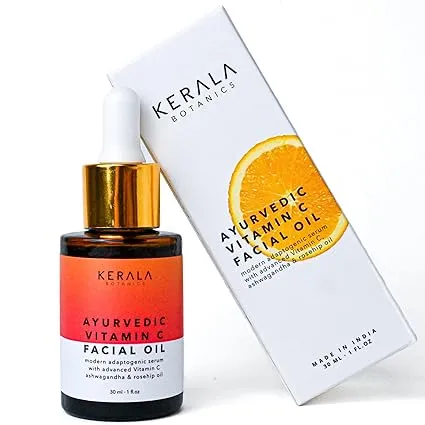
Ayurvedic Vitamin C Face Oil
Kerala Botanics
$49
★★★★☆
Worth being honest about the downsides: the oil format isn’t for everyone post-treatment. On skin that’s already inflamed from spicule application, an occlusive oil layer might feel heavy or contribute to congestion if you’re prone to it. And the clinical data on the advanced vitamin C derivative isn’t as deep as the L-ascorbic acid literature. It’s a reasonable option — not a universal one.
A Note on What Neither Can Do
Both technologies are real. The mechanisms are documented. But neither is a substitute for medical-grade procedures — professional microneedling with 1.5mm needles goes substantially deeper than a cosmetic patch at 600µm. In-office treatments like Fraxel or PRP operate at a different tier entirely.
If you’re targeting deep acne scarring, significant volume loss, or structural skin changes, these at-home methods are genuinely limited. They can improve texture, delivery, and surface renewal. They can’t replicate what a dermatologist does with actual equipment. It’s worth being clear-eyed about that before you spend money expecting otherwise.
The at-home device face-off guide has a useful comparison of what different consumer devices actually do versus what clinical treatments achieve — relevant reading if you’re trying to figure out where these technologies fit in a bigger picture.
Putting It Together
Two technologies, one category, meaningfully different experiences:
Microneedle patches — precise, controlled, low-skill-requirement, limited coverage. Use them for targeted concerns (under-eye, specific lines, focal hyperpigmentation). Best starting point for most people.
Spicule serums — broad coverage, stronger reaction window, technique-dependent, better for diffuse texture concerns. Best for experienced users with stable, resilient skin who know their exfoliation tolerance.
Neither stacks well with aggressive actives. Both benefit from a solid barrier foundation going in. And both are more interesting than the marketing makes them sound — which, in skincare, is not something we say very often.