
Ingredients
Colloidal Oatmeal: The Only OTC Skin Protectant the FDA Recognizes
Colloidal oatmeal is the only OTC skin protectant FDA-recognized for eczema relief. Here's what avenanthramides actually do — and why this one earned it.
Disclosure — This article may contain affiliate links. We earn a small commission at no extra cost to you when you purchase through our links. This supports our ability to create independent, evidence-based skincare content.
The clean beauty world has a complicated relationship with the word “natural.” Usually that means an ingredient gets praised loudly, tested minimally, and eventually forgotten when something newer shows up. Colloidal oatmeal is the rare exception: it’s a plant-derived ingredient with actual regulatory standing, peer-reviewed mechanism data, and clinical trials behind it.
The FDA added colloidal oatmeal to its OTC skin protectant monograph in 2003. That’s not a marketing claim. It’s a legal designation — one that took years of submitted evidence to earn, and one that no other botanical ingredient in the OTC space has matched since.
So what’s actually happening in your skin when you apply it? And which products are worth buying?
What “OTC Monograph” Actually Means
Before getting into the chemistry, it’s worth explaining what the FDA’s OTC monograph system is, because most people don’t know.
When a product is sold over the counter for a therapeutic purpose — think sunscreens, acne treatments, or skin protectants — it falls under FDA oversight. The monograph system establishes which active ingredients are “generally recognized as safe and effective” (GRASE) for specific conditions, at specific concentrations. If your product’s active ingredient is on the monograph, you can make that therapeutic claim without going through the full drug approval process.
Colloidal oatmeal is on the skin protectant monograph at concentrations between 0.007% and 50%. That means a product can legally say it treats or temporarily protects skin from minor irritation, itching, and rashes — including eczema — as long as it contains colloidal oatmeal in that range. No other oat derivative, and no other plant-derived ingredient, sits in this category.
This matters because it sets colloidal oatmeal apart from the enormous list of ingredients that get marketed for sensitive skin without any regulatory acknowledgment. The FDA looked at the evidence. It agreed. That’s unusual.
The Chemistry: Avenanthramides and What They Do
Colloidal oatmeal is finely milled oat grain — Avena sativa — processed so it disperses in water and can be incorporated into leave-on formulas. The milling is important: it’s what makes the active compounds bioavailable on skin.
The headline compound is avenanthramides (sometimes abbreviated AVA). These are phenolic alkaloids found only in oats — you won’t find them in most other grains. They’re the reason oat-based skincare has measurable anti-inflammatory effects rather than just a nice story.
Avenanthramides work by suppressing NF-κB, a transcription factor that regulates the production of pro-inflammatory cytokines including IL-6 and TNF-α. In plain terms: they interrupt part of the signaling chain that causes the redness, itching, and irritation response. A 2010 study published in the Journal of Drugs in Dermatology confirmed this mechanism in skin cell models, and subsequent work showed meaningful reductions in histamine-induced itch responses with topical AVA application.
Beyond avenanthramides, colloidal oatmeal contains:
- Beta-glucan — a polysaccharide that forms a film on skin and helps with moisture retention. If you’ve read our beta-glucan complete guide, you’ll recognize it as a legitimate humectant with solid barrier research behind it.
- Starch — contributes to the protective film-forming effect.
- Lipids — including oleic and linoleic acid, which support the lipid matrix of the skin barrier.
- Saponins — which have mild cleansing properties.
- Proteins — which contribute to barrier function.
The net result is an ingredient that addresses multiple aspects of compromised skin at once: it reduces inflammation, supports the barrier, retains moisture, and soothes itch. Most single-function actives can’t say all of that.
The Eczema Evidence
Eczema (atopic dermatitis) is the condition colloidal oatmeal is most studied for. The data is better than most people realize.
A 2015 randomized controlled trial in Journal of Drugs in Dermatology (Fowler et al.) looked at colloidal oatmeal cream in patients with mild-to-moderate atopic dermatitis over a four-week period. Participants saw significant improvements in itch, scaling, and dryness compared to baseline. No serious adverse events.
A 2017 review in the same journal pulled together multiple trials and concluded that colloidal oatmeal has a “favorable safety and efficacy profile” for atopic dermatitis, dry skin, and related conditions. The reviewers specifically called out the multi-mechanistic nature of the ingredient — that it doesn’t just do one thing, which makes it more durable as a treatment than targeted actives that can be worked around by the inflammatory cascade.
For people dealing with chronic itch specifically, the avenanthramide data is relevant beyond eczema. A trial looking at AVA applied after UV exposure found meaningful reductions in itch and erythema, which suggests utility in post-procedure or sun-damaged skin contexts too.
The pediatric safety profile is also well-established. Colloidal oatmeal has been used in infant eczema management for decades, and the clinical literature supports it as a first-line option before escalating to prescription topicals. For anyone navigating a damaged skin barrier repair situation — whether in kids or adults — it’s one of the few ingredients you can use aggressively without worrying about overuse effects.
How to Use It Effectively
A few practical points that don’t get enough attention.
Concentration matters more than format. A body wash containing colloidal oatmeal as a rinse-off product is not going to deliver the same benefit as a leave-on cream. The contact time is too short. If you’re using it to manage eczema or irritation, choose leave-on formats: creams, lotions, or ointments.
Wet skin application. Apply colloidal oatmeal-containing products immediately after bathing, while skin is still slightly damp. The barrier-support and film-forming effects work better when there’s moisture to seal in.
Oat baths work — but only if done right. Soaking in a tub with properly dispersed colloidal oatmeal (not just oats in a sock) can be genuinely soothing for widespread eczema or irritation. The key is true colloidal dispersion — the particles need to be milled fine enough to stay suspended. Most commercial oatmeal bath packets achieve this. Grinding regular oats in a food processor does not.
It layers well. Unlike actives that interact with each other (acids, retinoids, vitamin C), colloidal oatmeal plays well with most ingredients. It’s compatible with ceramides, niacinamide, and even low-concentration retinol. If you’re skin cycling and need a recovery night option, a colloidal oatmeal cream is a safe choice for the barrier restoration days.
Products Worth Buying
The market is saturated with “oat-containing” products that bury colloidal oatmeal low in the ingredient list and don’t meet the concentration thresholds to make any legitimate therapeutic claim. Read labels.
For products that actually list colloidal oatmeal as an active ingredient — not just buried in the “other ingredients” section — here are the ones we’d reach for.
Aveeno Eczema Therapy Daily Moisturizing Cream is the straightforward answer. It’s formulated specifically to the OTC monograph, lists colloidal oatmeal as the active at a therapeutic concentration, and the research on Aveeno’s colloidal oatmeal preparations goes back decades. It’s fragrance-free, not too heavy, and accessible at most drugstores. For the price, nothing beats it.
Aveeno Eczema Therapy Daily Moisturizing Cream
Aveeno
$16
★★★★½
Eucerin Eczema Relief Body Cream is worth having if you need a heavier, more occlusive formula for very dry patches. It combines colloidal oatmeal with ceramide NP and licochalcone A (an anti-inflammatory from licorice root). The combination makes sense from a formulation standpoint — you’re addressing barrier lipids and inflammation simultaneously. Slightly thicker texture, which works better on body than face for most people.
Eucerin Eczema Relief Body Cream
Eucerin
$14
★★★★½
First Aid Beauty Ultra Repair Cream sits at a higher price point and adds shea butter and allantoin alongside colloidal oatmeal. The texture is rich but not greasy. It’s a good option for anyone who finds the Aveeno formula too light for very compromised skin, or who wants something that works on both face and body. The fragrance-free version is what you want.
First Aid Beauty Ultra Repair Cream
First Aid Beauty
$38
★★★★½
A quick note on CeraVe: their Moisturizing Cream is widely recommended for eczema and barrier repair, and it deserves the reputation. It doesn’t list colloidal oatmeal as an active, but the ceramide formulation is excellent. Worth knowing the distinction — it’s a great barrier cream, not a colloidal oatmeal product.
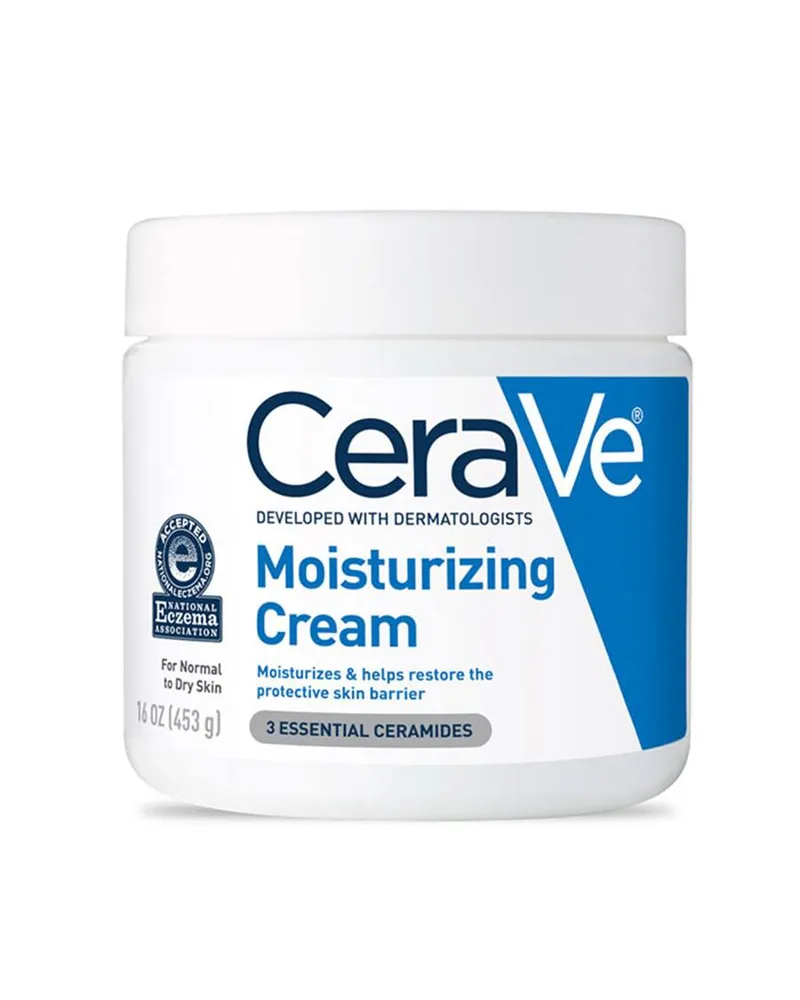
CeraVe Moisturizing Cream
CeraVe
$19
★★★★½
What Colloidal Oatmeal Won’t Do
Being honest about this is part of using it well.
Colloidal oatmeal manages symptoms — itch, irritation, dryness, mild inflammation. It is not a treatment for the underlying immune dysregulation in atopic dermatitis. Moderate-to-severe eczema needs prescription intervention: topical calcineurin inhibitors, JAK inhibitors, or dupilumab depending on severity. Colloidal oatmeal can absolutely be used alongside prescription treatment, and it can reduce the frequency of flares when used consistently, but it’s not going to replace medical care for serious cases.
It also doesn’t do much for acne, brightening, or anti-aging. If your skin concern is something other than irritation, barrier compromise, or eczema, there are more targeted ingredients to look at. For brightening, alpha arbutin or niacinamide are better starting points. For barrier support specifically in the context of retinoid use, ceramides remain the more evidence-heavy choice (our ceramides guide covers the mechanism in detail).
And finally: oat allergy is real. Rare, but real. People with diagnosed wheat or oat sensitivities should patch-test before using colloidal oatmeal products on broken or inflamed skin. Contact dermatitis from topical oat has been documented, particularly in people with food-related oat sensitization. It’s not common, but it’s worth flagging.
Putting It Together
Most “natural” ingredients in skincare exist in a grey zone: plausible mechanism, limited human data, enthusiastic marketing. Colloidal oatmeal is not in that grey zone. It has an FDA-recognized therapeutic use, a well-characterized mechanism via avenanthramides, and clinical trial data in the specific populations most likely to benefit from it.
For eczema-prone skin, it belongs in a routine the way ceramides and panthenol do — as a non-negotiable barrier support ingredient, not an optional add-on. For sensitive skin generally, it’s one of the safest things you can put on your face or body.
The honest summary: it’s an oat. It’s been tested properly. It works. That combination is rarer than it sounds.