
Ingredients
Alpha Arbutin: The Gentle Brightener, Explained
Alpha arbutin fades dark spots without the risks of hydroquinone. Here's how it works, the right dose, and realistic timelines.
Disclosure — This article may contain affiliate links. We earn a small commission at no extra cost to you when you purchase through our links. This supports our ability to create independent, evidence-based skincare content.
Alpha arbutin is one of the most consistently recommended brightening ingredients in skincare — and also one of the least explained. It shows up in serums marketed for dark spots, post-acne marks, and uneven tone. Dermatologists mention it alongside niacinamide and vitamin C. And yet there’s almost no dedicated guide explaining what it actually does, how much you need, and what to expect.
This is that guide.
What Alpha Arbutin Actually Is
Alpha arbutin is a glycosylated hydroquinone. Which sounds alarming if you know that hydroquinone is a prescription-strength bleaching agent with a complicated safety profile. But the relationship is more distant than that phrase suggests.
Hydroquinone works by directly inhibiting tyrosinase, the enzyme your skin uses to produce melanin. It’s effective. It’s also potentially irritating, linked to ochronosis (a bluish-gray discoloration) with long-term misuse, and restricted or banned outright in several countries.
Alpha arbutin does something similar, but slower and gentler. It hydrolyzes in the skin into hydroquinone, but at such a gradual, low rate that it sidesteps most of the risks. Think of it less as a milder version of hydroquinone and more as a slow-release delivery system — the active never reaches the concentrations that cause problems. Studies support this: alpha arbutin inhibits tyrosinase without triggering the cytotoxic effects associated with its parent compound.
The result is an ingredient that addresses melanin production at the source, without the prescription requirement or the risk ceiling.
Alpha vs. Beta: Does It Matter?
Yes, but not enough to stress over.
Both are arbutin isomers. Beta arbutin is the naturally occurring form, found in bearberry leaves, pear skin, and a few other plants. Alpha arbutin is synthesized — it’s derived from hydroquinone and hydroquinone acetate through an enzymatic process. The key difference is stability and potency: alpha arbutin is more stable in cosmetic formulations and requires a lower concentration to get the same effect.
Beta arbutin shows up in natural and botanical products. It works, but you typically need higher concentrations to see comparable results, and it’s less stable over a product’s shelf life. If you’re reading ingredient labels and wondering why some products say “arbutin” without specifying — that’s usually beta.
For practical purposes: if you’re shopping for a targeted brightening treatment, alpha arbutin is the more reliable choice. If you’re using a product that contains beta arbutin as part of a broader formula, it’s still contributing something. Just don’t expect the same efficiency per milligram.
The 2% Ceiling (and Why It Exists)
Alpha arbutin is most commonly formulated at 1–2%. That’s not arbitrary.
Research shows measurable tyrosinase inhibition in that range. Above 2%, the evidence for incremental benefit gets thin, and the theoretical risk of irritation increases. Some markets — particularly the EU — have regulatory guidance suggesting 2% as an appropriate ceiling for leave-on products.
The Ordinary’s Alpha Arbutin 2% + HA is probably the reference point most people reach for. It’s formulated at exactly that ceiling, combined with hyaluronic acid to keep the delivery medium hydrating rather than stripping. It works, it’s inexpensive, and the formula is simple enough that you can layer it without worrying about ingredient conflicts.
Alpha Arbutin 2% + HA
The Ordinary
$10
★★★★☆
If you’re using a product with less than 1%, it may still contribute to an overall brightening routine — but as a supporting player, not the lead.
How to Use It
Alpha arbutin is water-soluble and typically comes in serum or toner form. Application is straightforward.
Where it fits in your routine: After cleansing and toning, before heavier serums and moisturizers. It layers well under most actives.
Compatibility: Alpha arbutin is friendly. It pairs well with niacinamide, vitamin C, hyaluronic acid, and most peptide formulas. There’s no compelling reason to avoid it alongside exfoliants, though if your skin is already compromised or reactive, keep things simple.
One thing to be careful about: Acids. Not because alpha arbutin reacts badly with them, but because low-pH environments can accelerate hydrolysis — converting it to hydroquinone faster than intended. This isn’t dangerous in a standard skincare routine, but it’s a reason not to mix your alpha arbutin serum directly with a pH-2 vitamin C or high-percentage AHA. Use them at different times, or give them separate steps.
Speaking of exfoliants: gentle chemical exfoliation can amplify brightening results by increasing cell turnover. If you’re using something like mandelic acid or a mild glycolide, alpha arbutin fits naturally into that kind of routine.
Realistic Timelines
This is where most conversations about alpha arbutin get too optimistic.
Tyrosinase inhibitors work upstream. They slow down the production of new melanin. They don’t bleach existing pigmentation that’s already sitting in your skin. That means the skin has to shed those pigmented cells through its normal turnover cycle before you see results.
For most people, that takes eight to twelve weeks of consistent use before meaningful fading is visible. Some people see early changes around the six-week mark. If you’re dealing with deep, established hyperpigmentation — old acne scars, longstanding melasma — the timeline extends further.
Three months of daily use is the honest minimum before drawing conclusions. And results plateau. Alpha arbutin isn’t going to achieve what a course of prescription tretinoin or a professional peel can. It’s a maintenance and prevention ingredient as much as a treatment one.
For a broader look at how different actives fit into realistic pigmentation timelines, the hyperpigmentation treatment guide is worth reading alongside this one.
Who It’s For
Alpha arbutin is well-suited to a wide range of skin types and tones. Unlike some brightening actives — kojic acid, for example, which can irritate — alpha arbutin has a strong tolerability profile. Sensitive skin types can generally use it without issue.
It’s particularly useful for:
- Post-inflammatory hyperpigmentation (PIH) after acne or eczema
- Sun spots and general uneven tone
- People who want a brightening active that isn’t vitamin C (useful for those who find ascorbic acid too irritating — see vitamin C burn and sensitive skin)
- Pregnant people looking for safer actives — alpha arbutin is generally considered pregnancy-compatible, though always confirm with a doctor
For melasma specifically, alpha arbutin is a supporting ingredient, not a primary treatment. Melasma is hormonally driven, and managing it well usually requires sunscreen discipline above all else, often with prescription support. It’s covered in detail in the melasma treatment guide.
Building a Brightening Routine Around Alpha Arbutin
Alpha arbutin works best when it’s not doing the job alone. The most effective brightening routines pair a tyrosinase inhibitor with something that accelerates cell turnover and something that prevents new pigmentation from forming.
A practical structure:
- Morning: Vitamin C or alpha arbutin serum → moisturizer → SPF (non-negotiable — sun exposure re-triggers the melanin pathway you’re trying to slow down)
- Evening: Gentle exfoliant 2-3x per week → alpha arbutin serum → moisturizer
If you want to introduce a vitamin C option that works in an oil format rather than a standard serum, the Kerala Botanics Ayurvedic Vitamin C Face Oil is worth knowing about. It uses a stabilized form of vitamin C claimed to stay active in skin cells significantly longer than standard L-ascorbic acid, combined with bakuchiol as a plant-based retinol alternative. It’s a different format from most vitamin C serums — it replaces serum, oil, and moisturizer in one step, which appeals to anyone running a simplified routine. It does feel richer than a water-based serum, so it suits drier skin types better than oily ones, and it’s not a clinical-grade brightening treatment. But as part of a brightening stack that already includes alpha arbutin and good SPF habits, it’s a coherent addition.
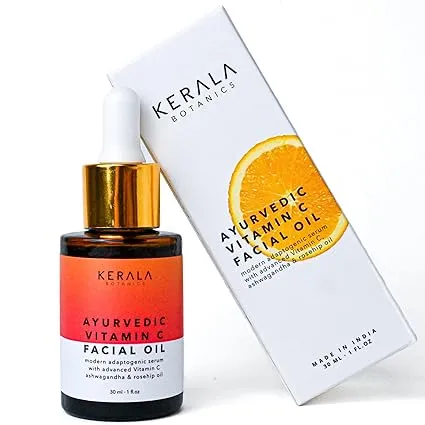
Ayurvedic Vitamin C Face Oil
Kerala Botanics
$49
★★★★☆
For a more comprehensive look at how brightening ingredients combine, the best brightening serums guide covers the full spectrum.
Alpha Arbutin vs. the Alternatives
It helps to know where alpha arbutin sits relative to the other common brighteners.
Versus kojic acid: Kojic acid is similarly derived (fungal fermentation) and inhibits tyrosinase through a different mechanism. It’s effective but more likely to cause irritation and instability in formulas. Alpha arbutin is the gentler choice for most skin types. The kojic acid guide goes into the specifics.
Versus niacinamide: These work differently. Niacinamide doesn’t inhibit melanin production — it blocks the transfer of melanin from melanocytes to skin cells. They complement each other well and can be used in the same routine.
Versus tranexamic acid: Tranexamic acid interrupts a separate pathway in melanin synthesis and is particularly useful for melasma. Pairing it with alpha arbutin is reasonable. The tranexamic acid guide covers that ingredient in depth.
Versus vitamin C: Vitamin C inhibits tyrosinase and provides antioxidant protection against UV-triggered pigmentation. It’s arguably more multifunctional but also more finicky — oxidation, pH sensitivity, and irritation potential are real concerns. Alpha arbutin is simpler to work with.
Versus licorice root / glabridin: Glabridin inhibits tyrosinase too, with additional anti-inflammatory effects. Both are gentle options. Licorice root and glabridin is a useful companion read.
Putting It Together
Alpha arbutin is a well-tolerated, evidence-backed tyrosinase inhibitor. It’s not as potent as prescription hydroquinone and not as flashy as high-dose vitamin C, but that’s not what it’s trying to be. It’s the kind of ingredient that works steadily in the background — slowing down new pigmentation, supporting a brighter baseline over time.
The practical takeaways:
- Look for 1–2% in leave-on formulas. Anything significantly below that is more marketing than treatment.
- Give it a genuine twelve weeks before evaluating results.
- Pair it with SPF every morning, or it’s mostly wasted effort.
- It plays well with most other actives. No major conflicts, no complicated scheduling.
Brightening routines fail most often not because the ingredients don’t work, but because expectations are set wrong, or sunscreen is skipped, or the routine changes every three weeks before anything has time to prove itself. Alpha arbutin rewards patience and consistency more than anything else.