
Ingredients
Kojic Acid: The Brightener Worth Knowing in 2026
Kojic acid is one of the most evidence-backed brighteners available. Here's what it does, what to watch for, and how to use it well.
Disclosure — This article may contain affiliate links. We earn a small commission at no extra cost to you when you purchase through our links. This supports our ability to create independent, evidence-based skincare content.
Kojic acid has been showing up on every 2026 ingredient trend list, and for once, the buzz is actually justified. It’s not new — it’s been used in Japanese skincare since the 1980s — but formulators have finally figured out how to work with its awkward chemistry, and the results are genuinely impressive. If you’re dealing with dark spots, post-inflammatory hyperpigmentation, or uneven tone that vitamin C hasn’t quite cracked, this is the ingredient to know.
Here’s what it does, why it’s tricky to formulate, and exactly how to fit it into your routine.
What Kojic Acid Actually Is
Kojic acid is a byproduct of fermentation. Specifically, it comes from fungi — most commonly Aspergillus oryzae, the same mold used to make sake, miso, and soy sauce. That’s not a marketing angle; it’s just how it’s produced. The fermented skincare connection is real. (If you’re interested in how fermentation benefits skin more broadly, the fermented skincare guide is worth a read.)
What makes kojic acid useful for skin is its ability to inhibit tyrosinase, the enzyme that kicks off melanin production. Block tyrosinase, and you interrupt the chain reaction that leads to dark spots. That mechanism is well-established. Studies going back to the 1990s confirm it works, and more recent clinical trials show measurable improvement in melasma and PIH with consistent use over 4–12 weeks.
It’s in the same family of brighteners as vitamin C, niacinamide, and tranexamic acid — they all target hyperpigmentation, but through different pathways. The fact that kojic acid works on tyrosinase directly makes it a strong standalone and an even stronger ingredient when stacked.
The Stability Problem (and How Kojic Dipalmitate Fixes It)
Here’s the thing about kojic acid that most product descriptions skip over. Pure kojic acid is unstable. It oxidizes on contact with air and light, turning formulas pink or brown and losing efficacy in the process. It also has a relatively low sensitization threshold — at concentrations above 1%, some people develop contact dermatitis. Not everyone. But enough that it’s worth flagging.
Enter kojic dipalmitate, the esterified, oil-soluble version. It’s more stable, less irritating, and penetrates skin differently — more slowly, which is actually an advantage when the alternative is a reactive molecule sitting on the surface causing inflammation. The tradeoff is that kojic dipalmitate is technically a prodrug: your skin has to convert it to active kojic acid after absorption. The conversion is real, but it happens at lower concentrations than pure kojic acid would deliver in one hit. For most people, that’s a worthwhile trade. Stable formula, lower irritation risk, still effective.
The EU currently caps kojic acid at 1% in leave-on products and has reviewed the sensitization data multiple times. If you see a serum with 2% kojic acid marketed in Europe, look more closely — it’s likely kojic dipalmitate, which has a different regulatory classification. That’s not a workaround; it’s genuinely a different (and often better-tolerated) ingredient.
Who It’s Best For
The honest answer: almost anyone dealing with discoloration. Kojic acid has shown efficacy across a range of skin tones, including deeper ones, which matters. Some brighteners — especially high-strength L-ascorbic acid — can cause irritation or paradoxical darkening in melanin-rich skin if misused. Kojic acid, particularly in its dipalmitate form, has a softer profile.
Specifically good candidates:
- Post-inflammatory hyperpigmentation left over from acne or eczema
- Melasma — it’s not a standalone fix, but it works well in a multi-pronged protocol (our melasma treatment guide covers the full picture)
- Sun spots and age spots on the face, hands, or neck
- Anyone who has found vitamin C too irritating and wants a different tyrosinase-inhibiting option
Not the best fit: active, inflamed acne (you’d be treating the cause of PIH before the PIH exists — sort that out first) and extremely sensitive skin that reacts to most actives. If your barrier is compromised, hold off. Kojic acid on a damaged barrier is a recipe for irritation, even at low concentrations.
Stacking Kojic Acid With Tranexamic Acid
This is where things get interesting. Kojic acid and tranexamic acid work through different mechanisms — kojic acid blocks tyrosinase, while tranexamic acid interrupts the UV-triggered signal that tells melanocytes to produce pigment in the first place. Different parts of the same process. Stack them and you’re hitting hyperpigmentation from two angles simultaneously.
The combination has real clinical backing. A 2022 study found that a kojic acid + tranexamic acid combination outperformed either ingredient alone in treating melasma over 12 weeks. Several brands have now formulated the two together, which is the simplest way to get both.
If you’re using separate products, the layering order is straightforward: apply your tranexamic acid serum first (it’s usually water-based), let it absorb for 30 seconds or so, then follow with your kojic acid product. If you want to understand tranexamic acid in more depth before stacking, the tranexamic acid for melasma guide covers the mechanism and evidence well.

Kojic Acid + 5% Tranexamic Acid Serum
Naturium
$25
★★★★½
What to Actually Buy
A few products worth knowing about, depending on what you’re looking for.
The Budget Entry Point
TruSkin’s Kojic Acid Brightening Serum is a simple, no-frills option with a transparent ingredient list. It uses kojic acid alongside vitamin C and niacinamide — a sensible combination, even if it’s not the most sophisticated formula on the market. At $20, it’s an easy place to start if you’ve never used kojic acid and want to test your tolerance before committing to anything fancier.
Kojic Acid Skin Brightening Serum
TruSkin
$20
★★★★☆
The Mid-Range Multitasker
Topicals’ Even Tone Correcting Serum combines kojic acid with other brighteners in a formula that’s been specifically tested on darker skin tones — which is not something every brand can claim. The texture is light, the packaging is dark (which matters; kojic acid destabilizes in clear bottles), and it’s one of the few options at this price point that takes the formulation seriously.
Even Tone Correcting Serum
Topicals
$38
★★★★☆
The Oil-Based Alternative
If serums aren’t working for your skin type or you’d rather consolidate steps, the Kerala Botanics Ayurvedic Vitamin C Face Oil takes a different angle entirely. It doesn’t use kojic acid specifically — its brightening comes from a more stable, longer-lasting vitamin C derivative plus bakuchiol, which acts as a retinol alternative — but it addresses the same goals: even tone, reduced discoloration, a simplified routine. The oil format means it doubles as your moisturizer and treatment in one step, which some people love and others (especially oily skin types) may find heavy. Worth knowing it exists as an option, particularly if you’re leaning toward a more natural, Ayurvedic-influenced approach. There’s also a detailed review of the Kerala Botanics oil if you want to get into the specifics.
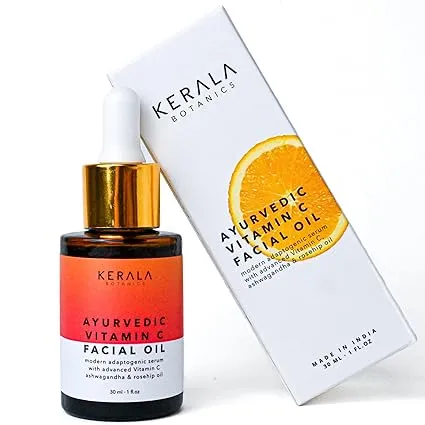
Ayurvedic Vitamin C Face Oil
Kerala Botanics
$49
★★★★☆
How to Use Kojic Acid (Without Irritating Yourself)
Start at the lowest concentration available and use it every other night for the first two weeks. Not because kojic acid is inherently harsh, but because your skin needs time to adjust to any new active — and because if something goes wrong, you want to know exactly what caused it.
A few practical rules:
Use it in your PM routine. Kojic acid isn’t photosensitizing in the way that, say, citrus essential oils are, but melanin-targeting ingredients in general work better when you’re not simultaneously triggering UV-related pigmentation. Evening use is just smarter.
Don’t skip SPF. If there’s one thing that will undercut every brightening ingredient you use, it’s sun exposure without protection. All the kojic acid in the world won’t fade a dark spot if you’re reactivating it every morning. How much sunscreen to actually apply is worth checking if you’ve been eyeballing it.
Watch for redness. A little tingling on first use can be normal. Actual redness, itching, or swelling that persists after 20 minutes? That’s a contact reaction, and you should stop. Patch test first if your skin is reactive — inside of the forearm, 24 hours, simple.
Store it properly. Dark bottle, cool place, lid on. Kojic acid that’s turned pink or orange has already oxidized and won’t do much. This applies to the pure kojic acid formulas; kojic dipalmitate is more forgiving.
Don’t layer too many actives at once. Kojic acid plays nicely with tranexamic acid, niacinamide, and vitamin C in well-formulated products. It doesn’t need to be paired with AHAs, retinol, and a peptide serum in the same routine. Pick your angle and work with it. If you need a framework for building a brightening routine that makes sense, the hyperpigmentation treatment guide has a solid step-by-step.
What to Realistically Expect
Kojic acid is not a quick fix. Let’s be direct about that. Most studies show meaningful results at the 8–12 week mark with consistent use. You’ll probably notice your skin looking generally more even before you notice specific dark spots fading — that’s normal, and it’s a sign the ingredient is working.
If you’re four weeks in and seeing nothing at all, check your formula. Unstable product, inadequate concentration, or packaging that doesn’t protect the ingredient are all common culprits. If you bought a clear glass bottle of “kojic acid serum” for $8, there’s a fair chance you’re applying oxidized product and getting very little benefit.
Realistically, for most people with mild to moderate hyperpigmentation: 2–3 months of consistent use, good SPF, and a complementary approach (tranexamic acid, niacinamide, or a vitamin C serum alongside it) gets you somewhere meaningful. Melasma is more stubborn and usually needs a more aggressive protocol — topical treatment is one component, not the whole solution.
Putting It All Together
Kojic acid is one of the better-supported brightening ingredients available without a prescription. The mechanism is solid, the clinical data is real, and the newer formulations — especially kojic dipalmitate — have fixed most of the stability and irritation issues that gave it a complicated reputation.
The short version of everything above: look for it at 1% or lower in leave-on products, or look for kojic dipalmitate if you want better stability and gentler delivery. Stack it with tranexamic acid if you’re treating melasma or stubborn PIH. Use it at night. Wear SPF during the day. Be patient.
It won’t replace a prescription-strength treatment for severe melasma, and it’s not magic. But for consistent, evidence-backed brightening that fits into a regular routine without requiring a derm visit or a $185 serum? Kojic acid in 2026 is genuinely worth your attention.