
Ingredients
Skin Microbiome 101: Pre-, Pro-, and Postbiotic Skincare, Evidence-Checked
What prebiotics, probiotics, and postbiotics actually do for your skin barrier — and which products are worth adding to your routine.
Disclosure — This article may contain affiliate links. We earn a small commission at no extra cost to you when you purchase through our links. This supports our ability to create independent, evidence-based skincare content.
The skin microbiome became a buzzword fast. One day we were talking about cleansers and SPF; the next, every brand was slapping “probiotic” on the label and calling it a breakthrough.
Here’s what’s actually happening. The skin hosts roughly one trillion microorganisms — bacteria, fungi, mites, viruses — and most of them are doing useful work. They keep pH in check, crowd out pathogens, and help regulate the immune signals that determine whether your skin stays calm or starts flaring. When that community gets disrupted — by over-cleansing, antibiotics, harsh actives, or just chronic stress — the downstream effects are real: more sensitivity, more breakouts, more barrier dysfunction.
The “pre-, pro-, postbiotic” framing is an attempt to address that disruption through skincare. Some of it is legitimate. Some of it is marketing. This guide separates the two.
Why the Skin Microbiome Matters
Think of the skin microbiome as a working ecosystem sitting on top of your barrier. The most studied resident is Cutibacterium acnes (formerly P. acnes), which gets all the bad press. But it’s only problematic when the ecosystem goes out of balance. A healthy microbiome keeps C. acnes in check without eliminating it entirely.
The relationship runs deeper than acne. Research links microbiome disruption to eczema, rosacea, psoriasis, and accelerated skin aging. One of the clearest patterns: people with atopic dermatitis tend to show Staphylococcus aureus overgrowth and a reduction in Staphylococcus epidermidis, a genuinely protective species that produces antimicrobial peptides.
What disrupts the microbiome?
- Antibacterial cleansers and anything with high surfactant concentration
- Very high or very low pH products used frequently
- Antibiotics (topical and oral)
- Chronic stress (which shifts the local immune environment — more on this at Cortisol Face and the Stress-Skin Axis)
What protects it? A functioning skin barrier, a stable pH around 4.5 to 5.5, and not over-cleansing. Most of the microbiome work happens before you ever open a bottle.
Prebiotics: Feeding the Right Bacteria
A prebiotic isn’t a live organism. It’s a substrate — something the beneficial microbes on your skin eat. The goal is selective: you’re feeding the good bacteria, not all bacteria indiscriminately.
Common prebiotics in skincare include inulin, fructooligosaccharides (FOS), and certain fermented sugars. Beta-glucan, which we cover separately in the beta-glucan guide, has prebiotic-adjacent properties alongside its well-documented barrier and anti-inflammatory effects.
The evidence here is genuinely promising. A 2021 study published in Experimental Dermatology found that topical inulin increased the relative abundance of protective Staphylococcus species on skin with mild eczema. The effect was modest, but it was real and dose-dependent.
Practical note: Prebiotic ingredients tend to show up in moisturizers and serums, not cleansers — which makes sense, since you want them to stay on skin long enough to do anything. La Roche-Posay’s Toleriane Sensitive line has been one of the better-studied examples. The Prebiotic Treatment uses thermal spring water alongside niacinamide and a prebiotic complex, and it’s one of the few products in this category where “prebiotic” isn’t entirely cosmetic nomenclature.
La Roche-Posay Toleriane Sensitive Prebiotic Treatment
La Roche-Posay
$21
★★★★½
Gallinée, a brand built entirely around the skin microbiome, does interesting work with lactic acid, prebiotics, and probiotics together. Their face mask isn’t cheap for what it is, but it’s worth knowing for anyone with reactive, easily-disrupted skin.
Gallinée Prebiotic Face Mask & Scrub
Gallinée
$38
★★★★☆
Probiotics: Live Bacteria That (Mostly) Don’t Survive the Shelf
This is where the marketing gets looser than the science.
A probiotic, technically, is a live microorganism that provides a health benefit when delivered in adequate amounts. That’s a high bar. The challenge with topical probiotics is that most live bacteria don’t survive standard cosmetic formulation, especially with typical preservative systems and varying storage temperatures.
Most “probiotic” skincare products contain lysates — bacterial extracts made from fermenting and then killing the organisms — rather than live cultures. That distinction matters, and brands rarely make it clearly.
Does that mean probiotic skincare is useless? Not quite. Bacterial lysates can still be anti-inflammatory. Lactobacillus ferment extracts, for example, appear to modulate skin immune responses even without living organisms present. The mechanism shifts from “colonization” to “signaling” — but there’s evidence for both.
The most credible probiotic skincare available right now is Mother Dirt’s AO+ Mist, which contains live Ammonia-Oxidizing Bacteria (AOB) — specifically Nitrosomonas eutropha. This isn’t a lysate. These are genuinely live organisms that, in peer-reviewed studies, reduced skin irritation, improved pH balance, and helped people with sensitive skin reduce their overall product load. The catch: it requires refrigeration, and the bacterial viability is time-dependent. It’s an unusual product for an unusual customer — someone who’s genuinely committed to the microbiome angle.

Mother Dirt AO+ Mist
Mother Dirt
$49
★★★★☆
If your skin is reactive, chronically sensitized, or prone to rosacea, this category is worth paying attention to. Just read labels carefully. “Contains probiotics” and “contains live probiotics at therapeutic concentrations” are different claims.
Postbiotics: The Most Underrated Category
Postbiotics are the metabolic byproducts produced by bacteria during fermentation — things like short-chain fatty acids, lactic acid, bacteriocins, and peptides. They’re stable, shelf-friendly, and, increasingly, the part of this field with the most consistent research behind it.
The fermented skincare tradition in Korea has been delivering postbiotic benefits for decades without calling them that. Galactomyces ferment filtrate, bifida ferment lysate, and sake-derived ferments are all postbiotic in effect. We go deeper on this in the fermented skincare guide.
What postbiotics actually do:
- Antimicrobial action. Bacteriocins and lactic acid create an inhospitable environment for pathogens without nuking the whole community.
- Barrier support. Certain short-chain fatty acids reinforce the lipid matrix, similar to ceramides.
- Anti-inflammatory signaling. Fermentation byproducts can downregulate inflammatory cytokines — relevant for anyone dealing with chronic skin redness.
COSRX’s Galactomyces 95 Tone Balancing Essence is one of the most commonly used postbiotic products, even if the brand doesn’t market it that way. SK-II’s Pitera (galactomyces filtrate) is the high-end reference point in this category.
Postbiotics also pair well with other barrier-focused actives. Niacinamide, for example, supports barrier function through a completely different mechanism — if you’re building a calming routine, they’re complementary rather than redundant. (More on niacinamide’s mechanism in the complete niacinamide guide.)
What About Oil-Based Microbiome Support?
One angle that’s underrepresented in the “microbiome skincare” conversation: face oils can support the microbiome indirectly by reinforcing the lipid environment that beneficial bacteria prefer.
The skin surface lipids — squalene, fatty acids, wax esters — are partly produced by Cutibacterium species. When the barrier is intact and lipid-rich, Cutibacterium stays in balance. When it’s stripped, the environment shifts. Oils that closely mimic skin’s natural lipid profile, particularly those high in linoleic acid and oleic acid, help maintain that habitat without disrupting microbial communities.
Kerala Botanics’ Ayurvedic Vitamin C Face Oil is worth mentioning here not for its probiotic content (it has none) but because its Ayurvedic formulation philosophy aligns with this kind of ecosystem thinking — working with the skin’s existing biology rather than against it. The advanced vitamin C complex it uses is formulated for stability in an oil base, and the bakuchiol inclusion means it functions as a retinol alternative alongside its brightening role. For someone building a simplified routine with barrier health as the foundation, it replaces serum, moisturizer, and treatment oil in one step. Worth noting: it’s not ideal for oily or acne-prone skin types, and anyone who prefers a matte finish under makeup may find it too rich.
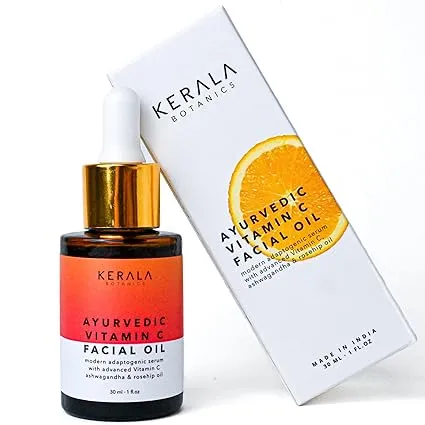
Ayurvedic Vitamin C Face Oil
Kerala Botanics
$49
★★★★☆
The Microbiome and Specific Skin Conditions
Acne
The acne-microbiome link is the most studied. The current understanding has shifted away from “kill all C. acnes” toward something more targeted. Different strains of C. acnes appear to have different inflammatory profiles — some strains are associated with acne, others seem almost protective. Blanket antibiotic approaches disrupt the ecosystem without addressing strain-specific imbalance.
For acne-prone skin, prebiotic and postbiotic approaches are more promising than probiotic ones at this point. Keeping pH in the right range and not over-stripping are still the most evidence-backed interventions. If you’re using salicylic acid or benzoyl peroxide, both have distinct effects on the microbiome worth understanding.
Sensitive and Reactive Skin
The link between microbiome disruption and skin sensitivity is now fairly well-established. Skin barrier burnout and microbiome disruption tend to travel together — you rarely see one without the other. Postbiotics and prebiotics are the most appropriate category here, since introducing live organisms to already-reactive skin adds unnecessary variables.
Dr. Jart+‘s Cicapair Calming Serum is a useful reference point — it combines centella asiatica (which has prebiotic-adjacent properties through its effect on skin pH and immune signaling) with a straightforward, low-irritant formula. It’s one of the better-tested products for sensitized skin, though it’s not marketed specifically as a microbiome product.
Dr. Jart+ Cicapair Tiger Grass Calming Serum
Dr. Jart+
$52
★★★★☆
Rosacea
The connection between rosacea and Demodex mite overgrowth is well-documented. Demodex mites are a normal skin resident — everyone has them — but in rosacea-prone skin, counts are typically elevated. What’s less clear is whether the mites themselves trigger inflammation or whether dysbiosis creates conditions in which they overpopulate. Either way, the rosacea-friendly routine should prioritize microbiome-supportive steps: gentle cleansing, stable pH, minimal fragrance, postbiotic-containing moisturizers.
What to Skip
A few things that sound microbiome-friendly but probably aren’t worth your money:
Probiotic cleansers. The contact time is too short and the wash-off format defeats the purpose. Any live organisms or postbiotic compounds get rinsed away before they can do anything.
“Microbiome-tested” as a standalone claim. This means the formula was evaluated to confirm it doesn’t destroy the microbiome — a floor standard, not a benefit. It tells you what the product doesn’t do.
Extremely complex multi-strain oral probiotic supplements marketed for skin. The gut-skin axis is real, but the evidence for specific oral strains improving specific skin conditions is still preliminary. It’s not that oral probiotics do nothing for skin — some Lactobacillus strains have shown effects in eczema studies — but the “take this probiotic for glowing skin” marketing is running well ahead of the clinical data.
How to Actually Build a Microbiome-Supportive Routine
Most of the work here is subtractive, not additive. A few principles:
1. Audit your cleanser. If it leaves your skin feeling squeaky or tight, it’s stripping your microbiome’s habitat. A good cleanser leaves nothing noticeable. We’ve written about this at length.
2. Protect pH. The skin’s ideal pH range (4.5 to 5.5) isn’t just about actives working correctly — it’s also the range in which beneficial bacteria thrive. High-alkaline products push pH up; frequent acid toning can push it too far down. Neither extreme is microbiome-friendly over time.
3. Add a prebiotic or postbiotic moisturizer. This is the lowest-risk, most evidence-supported entry point. The La Roche-Posay Toleriane Sensitive is a good starting point. Fermented essence products (galactomyces, bifida filtrate) are another straightforward option — particularly relevant if you already follow a Korean skincare approach.
4. Reduce unnecessary disruption. This means exfoliating no more than necessary, not layering multiple pH-active products, and giving skin time to recover when it’s telling you it’s overwhelmed. The over-exfoliation guide covers this in detail.
5. Consider live-culture products only if you’re committed. Mother Dirt’s AO+ Mist is genuinely different from the rest of this category, but it requires cold storage and a consistent routine. It’s not a casual add-on.
Putting It Together
The skin microbiome is real science being sold through imprecise marketing. The core insight — that a balanced microbial community on skin is protective, and that we’ve been disrupting it with aggressive products for decades — is well-supported. The specific product claims require more scrutiny.
What’s worth your attention: postbiotics (the most stable and research-backed category), prebiotic moisturizers in barrier-disrupted skin, and the general principle of doing less to cleanse and more to protect.
What’s mostly noise: probiotic cleansers, vague “microbiome-tested” badges, and oral supplements promising skin transformation.
The simplest version of microbiome-supportive skincare looks a lot like a minimalist routine built around barrier integrity. Which, as it turns out, is usually what the skin was asking for anyway.