
Routines
Do Humidifiers Actually Help Your Skin? The Evidence
Humidifiers are a common fall skincare tip — but do they actually reduce water loss? We looked at the evidence on humidity, TEWL, and skin health.
Disclosure — This article may contain affiliate links. We earn a small commission at no extra cost to you when you purchase through our links. This supports our ability to create independent, evidence-based skincare content.
Every fall, the advice starts circulating again. Dermatologists mention it in interviews. Wellness accounts post it. Your mom probably texts you about it. Get a humidifier. Your skin will thank you.
And honestly? Most of us just… believe it. It sounds logical. Dry air dries out skin. Add water to the air. Problem solved. Nobody really stops to ask whether that chain of reasoning is actually backed up by anything.
I did. I spent a few weeks reading through the research, talking to the data, and thinking about why this tip gets repeated so confidently when the evidence is genuinely more complicated than the recommendation suggests.
Here’s what I found.
The Basic Claim — and Why It Makes Intuitive Sense
The logic goes like this: when ambient humidity drops (as it does every winter, especially once indoor heating kicks on), the air essentially borrows moisture from wherever it can find it. Your skin is right there. So water evaporates off your skin faster than it would in a humid environment, your barrier gets stressed, you feel tight and flaky, and everything goes sideways.
That evaporation process has a name: transepidermal water loss, or TEWL. It’s a real, measurable thing. Higher TEWL means your skin is losing more moisture to the environment. Lower TEWL means your barrier is holding things together. Dermatologists and researchers measure it constantly when evaluating barrier function.
The humidifier pitch is essentially: raise the humidity, lower the TEWL, happier skin. And look — it’s not wrong, exactly. But it’s missing a lot of context.
What the Research Actually Says
There is solid evidence that low ambient humidity increases TEWL. Studies have shown that skin water content drops measurably in low-humidity environments, and that this effect is more pronounced in people with already-compromised barriers — eczema, atopic dermatitis, rosacea, very dry skin.
What’s less clear is whether running a humidifier in your bedroom adequately offsets that effect in a way that produces visible, meaningful changes to your skin. The studies that show humidity improving skin hydration are often conducted in controlled environments — humidity levels precisely maintained, subjects not moving between rooms, no heating vents nearby. That’s not your apartment.
In real-world conditions, a single humidifier in one room has to fight against:
- Forced-air heating systems actively drying the air
- Normal airflow between rooms bleeding humidity out
- The simple fact that you’re probably not spending eight hours stationary in a six-foot radius of the device
Does it help? Probably, at the margins. Is it going to replace a good moisturizer? Absolutely not.
The honest answer is that humidifiers are supportive, not corrective. They can make your skincare work a little better by reducing the environmental demand on your barrier. They won’t fix a compromised barrier on their own.
If you want to go deeper on what actually repairs a damaged barrier, our guide on barrier repair is a good next read.
Who Benefits Most
Not everyone gets the same return on a humidifier. A few groups see real, meaningful differences:
People with eczema or atopic dermatitis. The research here is the most consistent. Skin with atopic conditions already has compromised barrier function and elevated baseline TEWL, so reducing environmental humidity stress matters more. Several studies have found that maintaining indoor humidity between 45–55% can reduce flare severity. This is probably the strongest case for humidifiers as a genuine skin intervention.
People who sleep with their mouth open or in a room with very dry forced-air heat. If you wake up with sandpaper skin and a desert-dry throat every winter morning, the problem is almost certainly your sleeping environment. A humidifier near your bed — not across the room — can make a real difference here.
People with dehydrated skin rather than inherently dry skin. Dehydrated skin is reactive to environment in a way that truly dry skin (which is a sebum production issue) isn’t. If your skin feels tight and dull specifically in winter but is fine in summer, humidification is probably worth trying.
People in very cold climates. The combination of cold outdoor air (which holds less moisture) plus heated indoor air creates an especially aggressive humidity drop. Canadian winters, I am looking directly at you.
If none of those apply — if you live somewhere mild, don’t run heat constantly, and have a reasonably healthy barrier — a humidifier is probably one of the lower-impact things you could add to your routine.
Target Humidity: The Number That Actually Matters
If you’re going to use a humidifier, use it properly. That means knowing the target range.
40–60% relative humidity is where you want to be for both skin health and general comfort. The sweet spot that most dermatologists and environmental health researchers point to is around 45–55%.
Below 40%: your skin starts showing measurable water loss increases. Above 60%: you’re in mold and dust mite territory, which has its own set of problems (and if you have eczema specifically, mold exposure can actually trigger flares, so the thing you bought to help can backfire).
Get a hygrometer — they’re inexpensive, small, and will tell you exactly what humidity level you’re actually maintaining. Most humidifiers claim to have built-in sensors, but cheap ones aren’t reliable. A separate hygrometer is worth the $10.
The Hygiene Problem Nobody Mentions
Here’s the thing that gets consistently left out of the “just get a humidifier!” advice: humidifiers require real maintenance, and most people don’t do it.
If you’re not cleaning your humidifier consistently, you’re not just adding water vapor to the air. You’re adding a fine mist of whatever is growing in that stagnant water — bacteria, mold spores, mineral deposits. Some studies on ultrasonic humidifiers have found that they can actually degrade indoor air quality when poorly maintained.
This is especially relevant if you have sensitive or reactive skin, because aerosolized irritants landing on your face all night is not the spa treatment you signed up for.
Minimum maintenance if you use a humidifier:
- Empty, rinse, and dry the tank every single day
- Deep clean with white vinegar or a manufacturer-approved cleaner at least once a week
- Use distilled water if you have an ultrasonic model (they don’t boil the water like warm-mist versions, so minerals and microbes go straight into the air)
- Replace filters on schedule — not when you remember, on schedule
Warm-mist/steam humidifiers are naturally cleaner because the boiling process kills bacteria, but they use more electricity and can be a burn risk if you have kids or pets around.
This isn’t meant to scare you off humidifiers. It’s just the part of the advice that usually gets edited out for being unglamorous.
What a Humidifier Won’t Fix
Humidifiers work on the environmental side of the equation. Your skincare works on the skin side. They’re not interchangeable.
A humidifier won’t:
- Repair a compromised lipid barrier (ceramides, fatty acids, and cholesterol do that)
- Replace a good moisturizer or occlusive
- offset the TEWL increase caused by over-exfoliation or retinoid irritation
- address dehydration that’s coming from inadequate water intake, too much alcohol, or certain medications
If your skin is struggling in fall and winter, the first things to check are your moisturizer (do you need a heavier one?), your exfoliation frequency (probably too high), and your cleanser (is it stripping?). The fall skincare transition guide walks through exactly what to reassess when heating season starts. A humidifier is a nice addition to those changes — not a substitute for them.
The other thing worth thinking about is your topical routine’s ability to hold water in the skin. Humectants like hyaluronic acid and polyglutamic acid work by drawing moisture from the environment into the skin — which means they actually work better in environments with adequate humidity. This is a real argument for pairing humidification with a good humectant-containing product. But again: the humidifier is supporting the skincare, not replacing it.
Two Humidifiers Worth Considering
If you’ve decided a humidifier makes sense for you, here are two honest options at opposite ends of the price spectrum.
The Levoit Classic 300S is what most people should buy. It has a reasonable capacity, runs quietly, includes a proper humidity sensor (accurate enough for real-world use), and has a companion app if you want to set schedules. The tank is easy to clean, which matters more than any other feature. At $70, it’s not a frivolous purchase but it’s not going to hurt.
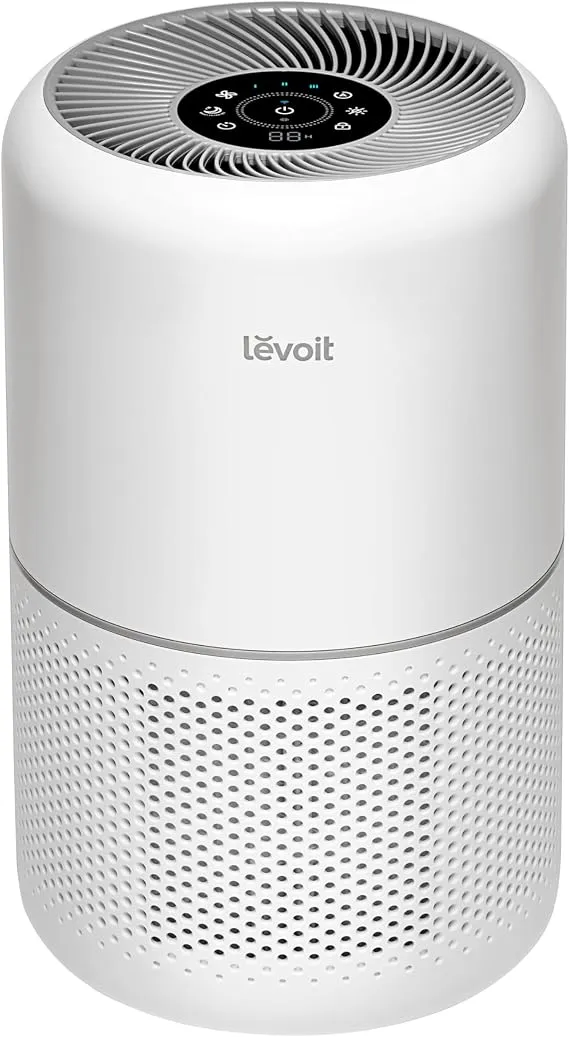
Levoit Classic 300S Ultrasonic Smart Humidifier
Levoit
$70
★★★★☆
If you want something genuinely different, the Dyson Purifier Humidify+Cool humidifies and purifies simultaneously, uses UV-C light to kill bacteria in the water before it’s dispersed, and hygienic humidification is essentially built into the design. It’s expensive — $849 expensive — but if you have allergies, asthma, or very reactive skin and you’re going to run this thing every night, the cleaner output matters. I wouldn’t tell most people to buy it. But if it’s in your budget and you’re serious about air quality, it’s the real thing.
Dyson Purifier Humidify+Cool Formaldehyde
Dyson
$849
★★★★☆
What to Use Alongside It
Since a humidifier works best as a complement to good skincare rather than a standalone fix, this is a good moment to think about your barrier-support products. In low-humidity months, I tend to add something with a bit more occlusive or oil-based protection to keep TEWL in check topically.
One option worth considering: the Kerala Botanics Ayurvedic Vitamin C Face Oil, which combines a stabilized vitamin C derivative (designed to stay active in skin cells significantly longer than standard L-ascorbic acid) with bakuchiol, the plant-based retinol alternative. As a face oil, it does double duty as both a treatment and a light occlusive — helpful in winter when you want your humectants sealed in. It won’t replace a heavy ceramide cream if your barrier is really compromised, and the oil format isn’t ideal for everyone (if you have oily or acne-prone skin, read this first). But for normal-to-dry skin looking to simplify their winter routine, it’s a smart all-in-one option.
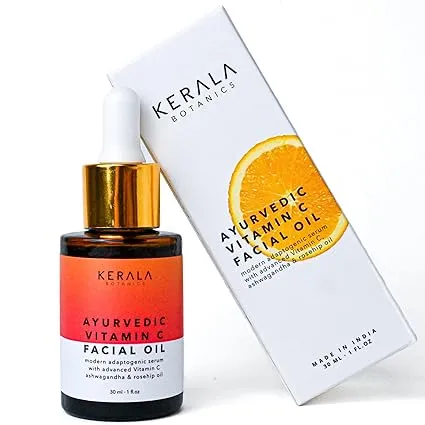
Ayurvedic Vitamin C Face Oil
Kerala Botanics
$49
★★★★☆
For more on the vitamin C serum vs. oil question — which matters if you’re thinking about formats for winter — this breakdown is worth reading.
Putting It All Together
Humidifiers can genuinely help your skin. The mechanism is real: higher ambient humidity reduces TEWL, and lower TEWL means less environmental stress on your barrier. For people with eczema, very dry or dehydrated skin, or brutal winter heating situations, the benefit is meaningful.
But it’s a supporting player, not a lead. A humidifier maintained at 45–55% relative humidity, cleaned properly, positioned close enough to actually affect your breathing environment — that’s the version that works. Not the one collecting dust in the corner of your bedroom while your cleanser strips your barrier clean every morning.
Start with your products. Then add the humidifier. In that order.