
Routines
Vanicream Moisturizing Cream Review
Vanicream Moisturizing Cream review: we test the dermatologist-default tub against CeraVe. No ceramides, no actives, no fragrance, and why that's the point.
Disclosure — This article may contain affiliate links. We earn a small commission at no extra cost to you when you purchase through our links. This supports our ability to create independent, evidence-based skincare content.
Quick Verdict: 4.5 out of 5
Vanicream Moisturizing Cream is a plain, thick, fragrance-free cream that hydrates and gets out of the way. It has no ceramides, no peptides, and no actives, which is exactly why dermatologists hand it to people whose skin reacts to everything else.
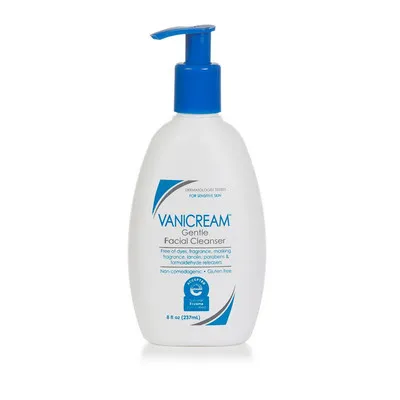
Moisturizing Cream
Vanicream
$16
★★★★½
What we liked
- + Fragrance-free, dye-free, lanolin-free, paraben-free
- + Very short list of things your skin can react to
- + Costs about $1 per ounce
Worth noting
- - No ceramides, no actives, no extras
- - Thick, slightly tacky finish under makeup
- - Contains propylene glycol, a rare irritant
The best default moisturizer for reactive skin because it does almost nothing except moisturize.
What Vanicream Moisturizing Cream Actually Is
Most moisturizer reviews start with what a product adds. This one starts with what it leaves out.
Vanicream is made by Pharmaceutical Specialties, a Minnesota company that has been formulating for sensitive skin for decades. The brand’s selling point isn’t a hero ingredient. It’s a “free of” list: no dyes, fragrance, masking fragrance, lanolin, parabens, or formaldehyde. The cream also carries the National Eczema Association’s Seal of Acceptance, which means a panel reviewed the ingredient list for known irritants.
The formula itself is old-school and effective. Petrolatum (the occlusive that seals water in) does the heavy lifting. Sorbitol, a sugar alcohol, adds a bit of humectant pull. Cetearyl alcohol, a fatty alcohol that’s nothing like drying rubbing alcohol, gives the cream its body. Propylene glycol rounds it out as a humectant and solvent.
That’s the whole idea. A short list, familiar ingredients, and very few chances for your skin to take offense.
It comes in a 16-ounce tub and a pump bottle. We’d take the pump. Dipping fingers into a tub for months is how a cheap moisturizer gets contaminated.
Texture and Application
It’s a thick, white, unscented cream. If you’ve used a classic hospital-style moisturizer, you know the type.
It spreads easily despite the density, and a pea-sized amount covers the face. The first minute is slightly tacky. Give it a couple of minutes and it settles into a soft, faintly cushioned finish rather than a greasy one. It doesn’t sink in the way a lightweight gel-cream does, and it isn’t trying to.
There’s no smell. Not “unscented” in the way some products smell faintly of masking agents, but actually nothing. If you’ve been sensitized by fragrance, this is a relief. If you like a moisturizer that feels like a small luxury, it isn’t that.
One practical note: layering matters. Applied over damp skin, it traps water and feels cushioned. Applied to dry skin, it can feel heavier than it needs to. Slather it on right after cleansing or after a hydrating toner or essence, and use less than you think.
Performance: Boring in the Best Way
Moisturizers have one job. They reduce water loss from the skin and soften the surface while the barrier does its repair work. Vanicream does this well.
On dry, tight winter skin, it takes the edge off within minutes and holds for most of the day. On skin that’s flaring, whether from over-exfoliation, a new retinoid, or just a bad week, it doesn’t sting. That sounds like a low bar. It isn’t. Plenty of “soothing” creams contain botanical extracts or fragrance that make irritated skin worse.
The cream won’t fix anything on its own. It supports the barrier by sealing water in and keeping other irritants out, which is how a damaged skin barrier actually repairs itself. The skin does the rebuilding. The cream just stops you from making it harder.
Where it falls short is in the finish under makeup. The tackiness can make foundation slide or pill if you don’t give it time. For nighttime use, no issue. For mornings, we found it works best as a base layer with at least five minutes before anything else goes on, and some people will find it too heavy for daytime.
It’s also not a great pick for oily or acne-prone skin that needs a lighter touch. The ingredients aren’t a problem, but the weight is.
Vanicream vs CeraVe Moisturizing Cream
This is the comparison everyone wants. Both are cheap, fragrance-free, and dermatologist-recommended. We’ve also reviewed the CeraVe Moisturizing Cream separately, so here’s the direct matchup.
CeraVe’s pitch is barrier-lipid replacement. The formula includes three ceramides, cholesterol, phytosphingosine, hyaluronic acid, and a time-release delivery system. On a label, it reads like a barrier-repair toolkit.
Vanicream’s pitch is that you don’t need any of that. Petrolatum seals water in, a humectant draws a little in, and nothing else is there to cause trouble.
Which one is better? Here’s the honest version.
The evidence that ceramide-containing moisturizers outperform simple emollients is thinner than the marketing suggests. Ceramide creams do help in eczema trials. But so do plain petrolatum-based moisturizers, and head-to-head data showing ceramides winning is limited. If you want the full story on what these lipids do and don’t do, we broke it down in Ceramides Explained.
Where CeraVe pulls ahead is feel. It’s lighter, absorbs faster, and wears better under makeup. Many people simply enjoy using it more, and a moisturizer you actually apply beats a better one that stays in the drawer.
Where Vanicream pulls ahead is risk. CeraVe uses phenoxyethanol as a preservative, along with a longer list of emulsifiers and extras. These are safe for almost everyone, but “almost” matters if your skin is reactive enough that a dermatologist has told you to simplify. Fewer ingredients means fewer suspects. If a product ever does cause a reaction, a short list makes it far easier to work out why.
Our take: for healthy or mildly dry skin, CeraVe is the nicer daily cream. For skin that’s actively reactive, eczema-prone, or recovering from damage, Vanicream is the safer first move. Many people will end up using both, depending on the season and what their skin is doing.
What It Lacks (and Why That’s the Point)
Let’s be direct. Vanicream has:
- No ceramides. It doesn’t replenish barrier lipids. It protects the barrier while your skin makes its own.
- No actives. No niacinamide, no peptides, no vitamin C, no retinoids, no acids.
- No anti-aging claims. It won’t smooth fine lines or fade spots.
- No sensorial extras. No scent, no glow, no “silky” feel.
If that list reads like a disappointment, you’re probably not the target audience. And that’s fine. If you want a multitasking product, plenty exist.
But here’s what “no actives” really buys you: predictability. When your skin is reacting, every extra ingredient is a variable. Strip the routine down to a gentle cleanser, a plain moisturizer, and sunscreen, and you can actually tell what’s helping and what’s hurting. Dermatologists use this approach constantly because it works. It’s also the logic behind telling sensitive skin from sensitized skin, a distinction that changes what you should put on your face.
A caution on propylene glycol: it’s a humectant that’s fine for the vast majority of people, but it’s an uncommon contact allergen. If you’ve reacted to it before, check the label and patch test. If you haven’t, it’s not a concern.
Who Should Buy It
Vanicream is a strong fit if you:
- Have eczema, rosacea, or generally reactive skin
- Are recovering from over-exfoliation or a retinoid that went too far
- Want a rock-solid base layer while you rebuild a routine
- Need a body-and-face moisturizer that won’t sting
- Care more about avoiding irritation than getting a “treatment” from your cream
If you’re managing facial eczema specifically, our routine for adult facial eczema pairs well with this cream.
Who Should Skip It
Pass on Vanicream if you have oily or acne-prone skin and prefer a light gel. You’ll want something thinner. Skip it too if you’re looking for a moisturizer that doubles as a treatment. And if you wear makeup daily and dislike any tackiness, you’ll probably prefer CeraVe or a lighter fragrance-free option from our roundup of fragrance-free moisturizers.
Value
About $16 for 16 ounces. That’s roughly a dollar an ounce, and a single tub lasts a long time on the face alone.
CeraVe runs a few dollars more for the same size. The difference isn’t dramatic, but across a year of use it adds up, and Vanicream is the cheaper of two already-cheap options. Compared with Cicaplast Baume B5, which costs around $20 for a tiny 1.35-ounce tube, Vanicream is a wildly better deal per ounce.
Price is the easiest part of this review. Nothing here needs justifying.
How It Compares
| Vanicream Moisturizing Cream | CeraVe Moisturizing Cream | La Roche-Posay Cicaplast Baume B5 | |
|---|---|---|---|
| Price | ~$16 for 16 oz | ~$19 for 16 oz | ~$20 for 1.35 oz |
| Fragrance-free | Yes | Yes | Yes |
| Ceramides | No | Yes (three) | No |
| Key extras | None | Hyaluronic acid, cholesterol | Panthenol, madecassoside |
| Texture | Thick, slightly tacky | Medium, fast-absorbing | Dense balm |
| Best for | Reactive, eczema-prone skin | Everyday dry skin, makeup wearers | Spot repair on compromised skin |
| Ingredient list length | Very short | Long | Moderate |
We covered the third option in our Cicaplast Baume B5 review. It’s good, but it’s a spot-repair product more than an all-over moisturizer, and the price per ounce reflects that.
For a primer on why simple occlusives do so much work in all of these formulas, see our guide to petrolatum and occlusives.
Final Ratings
| Category | Score |
|---|---|
| Gentleness | 5/5 |
| Hydration | 4.5/5 |
| Texture and finish | 3.5/5 |
| Under makeup | 3/5 |
| Ingredient simplicity | 5/5 |
| Value | 5/5 |
| Overall | 4.5/5 |
The Recommendation
Buy it. If your skin is reactive, this should probably be your first moisturizer, and if it works, there’s no reason to move on to anything fancier until you actually need a treatment.
It isn’t exciting. It won’t make a good shelfie, and it won’t earn a skincare-influencer rave. It will keep your skin calm, your routine simple, and your wallet mostly intact.
For everyone else, treat it as a reset button. When your skin starts acting up and you can’t work out why, strip back to Vanicream, a gentle cleanser, and sunscreen for a couple of weeks. Most of the time, that’s the answer.
Plain works. It’s allowed to.