
Routines
Do You Actually Need an Eye Cream?
Do you actually need an eye cream? Usually not. Here's when your face moisturizer works fine, when a dedicated eye cream earns its place, and what to look for.
Disclosure — This article may contain affiliate links. We earn a small commission at no extra cost to you when you purchase through our links. This supports our ability to create independent, evidence-based skincare content.
Most people don’t need an eye cream. A gentle, fragrance-free moisturizer and a daily sunscreen cover almost everything an eye cream promises. There are real exceptions, and we’ll get to them, but the default answer is no.
That’s worth saying plainly, because eye creams are among the easiest products to overbuy. They’re small, expensive per ounce, and sold with a lot of anxiety attached.
Why the Eye Area Is Different (and Why That Doesn’t Mean a Separate Product)
The skin on your eyelids is thin. Estimates put it around 0.5 millimeters, compared with roughly 2 millimeters on much of the rest of the face. It also has fewer oil glands, so it can look dry and crinkly sooner than your cheeks do.
That part of the pitch is true. The leap from “this skin is delicate” to “this skin needs its own product” is where it falls apart.
Thin skin is a reason to be more careful about what goes near it. It isn’t proof you need a special formula. Many eye creams contain the same base ingredients as face moisturizers: glycerin, a few emollients, maybe a peptide or two, a thickener, a preservative. Some are literally the same formula in a smaller jar at a higher price.
What matters more is what the product leaves out. Which brings us to the real reason to think twice.
Fragrance, Preservatives, and Why Eyelids React First
Thin skin lets irritants through more easily. Eyelids are also touched constantly, and anything on your forehead or cheeks tends to migrate there overnight. So the eyelids are often the first place a reaction shows up: puffy, itchy, flaky, sometimes red.
Fragrance is the most common culprit. Essential oils count here too, even the ones that smell like nothing but “natural.” If you’ve ever had a product sting your eyes or swell your lids, that’s your answer about which products to avoid. It doesn’t mean you need an eye-specific one.
A few observations that hold up well:
- A product labeled “for eyes” isn’t automatically safer. Check the ingredient list for fragrance, parfum, and common essential oils.
- A fragrance-free face moisturizer is often gentler than a fancy eye cream with a floral scent.
- If your eyelids react to several products, an allergist or dermatologist can patch test. It’s more useful than guessing.
Labeling rules around fragrance allergens are changing, which will make this easier to check. We covered that in The Fragrance Loophole Is Closing.
What Eye Creams Can and Can’t Do
Let’s be fair to the category. Here’s what the claims look like against the evidence.
Hydration and fine lines
This is the one thing an eye cream reliably does. Dry skin shows fine lines more clearly, and a good moisturizer plumps them up temporarily. The effect is real, and it’s the same effect your face moisturizer gives you.
Puffiness
Caffeine-containing creams can shrink puffiness slightly and briefly, mostly by tightening blood vessels. A cold spoon does a similar job for free. Morning puffiness often comes from sleep position, salt, or allergies, and no cream fixes those.
Dark circles
This is where eye creams overpromise most. Dark circles have different causes: pigment, visible blood vessels, shadowing from structure, and sometimes just thin skin. A single cream can’t address all four. If you’re not sure which type you have, read Dark Circles: Four Causes, Four Different Fixes before spending anything.
Wrinkles
Over time, ingredients like retinoids and peptides can soften fine lines. But those same ingredients work on your whole face, and your face cream or serum can often be gently applied to the orbital bone. You don’t need a second jar.
When a Cheaper Moisturizer Does the Job
For most of us, this is the situation. Your skin isn’t reacting, your moisturizer isn’t stinging, and the under-eye area looks about as hydrated as the rest of your face.
In that case, skip the eye cream. Use a few things well instead:
- A gentle cleanser that doesn’t leave skin tight.
- A fragrance-free moisturizer, patted lightly along the orbital bone (the bony ridge, not the lid or lash line).
- Sunscreen, every morning. Sun damage is the biggest preventable cause of the creasing and discoloration people blame on “not using eye cream.”
If that sounds like our minimalist three-step routine, it is. The eye area just gets a small share of the same products.
For the moisturizer itself, price doesn’t track performance. CeraVe Moisturizing Cream is a good example. It’s fragrance-free, built around ceramides and humectants, and costs a fraction of most eye creams. We reviewed it in detail in our CeraVe Moisturizing Cream review.
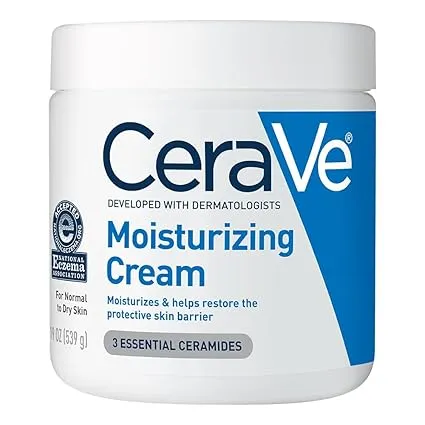
Moisturizing Cream
CeraVe
$19
★★★★½
One caveat. It’s a thick cream. Some people find it too rich right under the eyes, where it can contribute to tiny white bumps (milia). If that’s you, use a lighter lotion there or dab less. Vanicream’s moisturizing cream is another fragrance-free option worth a look, and our roundup of the best fragrance-free moisturizers has more.
One Bottle for the Whole Face: Where Face Oils Fit
Some people prefer to keep things even simpler and use one product for everything. A face oil can do that, and a few formulas combine vitamin C with a retinol alternative so one step covers brightening and early-aging concerns.
Kerala Botanics’ Ayurvedic Vitamin C Face Oil is one we’ve written about before. It pairs a stabilized vitamin C with bakuchiol, a plant-derived retinol alternative, in an oil base that stands in for serum and moisturizer. For someone who wants fewer bottles, that’s appealing. If you’re curious how bakuchiol compares with the real thing, see Bakuchiol vs Retinol.
Be honest about the trade-offs near the eyes, though.
- Pros: One product replaces several. The vitamin C and bakuchiol combination suits people avoiding retinol. It’s a pleasant texture on dry skin.
- Cons: Oil isn’t for everyone, and oily or breakout-prone skin may not love it. It has less clinical data behind it than something like SkinCeuticals C E Ferulic. It can feel heavy under makeup. And because it contains essential oils, it deserves a cautious patch test before it goes anywhere near the eye area.
If you try it around the eyes, keep it on the orbital bone, stay off the lash line, and stop if anything stings. Our piece on the essential oils in Kerala Botanics explains who should be careful.
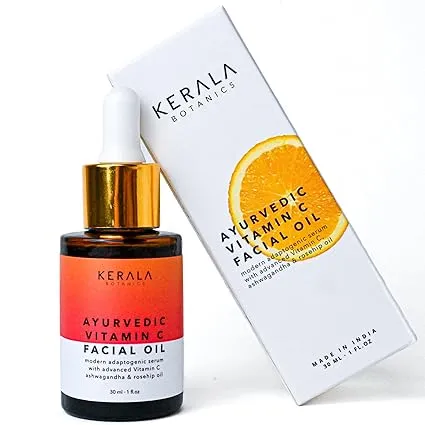
Ayurvedic Vitamin C Face Oil
Kerala Botanics
$49
★★★★☆
If you have reactive eyelids, the safer move is to leave the eye area out entirely and use a plain, fragrance-free cream there.
The Real Exceptions: When an Eye Cream Makes Sense
We said mostly no, so here’s the “mostly.” There are a few cases where a dedicated eye product earns its spot.
You use a retinoid or tretinoin on your face
Retinoids are effective, and they’re also irritating, especially on thin skin. Many people tolerate their retinoid on the cheeks and forehead but find the under-eye area gets flaky or red.
A gentler eye product can help in two ways. It acts as a buffer layer on the skin near the eyes, and it gives you a place to put a lower-strength active, such as a mild retinol or retinaldehyde, without overdoing it. If you’re starting out, our tretinoin beginner’s guide covers how to ease in.
Your face moisturizer stings or migrates
Some face creams creep toward the eyes and burn, especially ones with acids, vitamin C, or fragrance. If that happens, a bland, thicker eye product placed along the orbital bone can act as a barrier. A plain petrolatum-based product can do the same job for a few dollars.
Your under-eye skin is truly dry
Some people really do have much drier skin around the eyes than elsewhere. If you see crepey lines that fill in after moisturizing, a richer product there makes sense. This becomes more common after 50, and it’s covered more in Skincare After 60.
You like the ritual
This is a legitimate reason, as long as it’s chosen consciously. If patting something cool and creamy around your eyes at night makes your routine feel finished, that’s fine. Just don’t expect a cure for dark circles or deep wrinkles.
How to Pick One If You Want One
If you fall into one of the camps above, a few criteria narrow the choices quickly.
- Fragrance-free. Non-negotiable for most people, and especially anyone with eyelid reactions.
- Short ingredient list. Fewer ingredients means fewer chances for irritation.
- A texture that suits you. Gel for puffiness and oily skin, cream for dryness.
- Packaging that protects it. A tube or pump beats an open jar, especially for anything with actives.
And a few things to ignore: “clinically proven” without numbers, big claims about wrinkles disappearing, and a price tag as a signal of quality.
If you’d rather browse than build your own shortlist, our best eye creams for fine lines roundup ranks tested options at several price points.
How to Apply (Briefly)
Technique matters more than the product. A few steps:
- Use a rice-grain amount for both eyes together. More doesn’t help.
- Dab with your ring finger along the orbital bone, from the outer corner inward.
- Stay off the lash line and the eyelid itself unless the product is labeled safe for lids.
- Apply before heavier creams, after any thin serum.
That’s all there is to it. No special tools, no tapping routines.
Putting It All Together
Eye cream is optional. For most people, a fragrance-free moisturizer used gently around the eyes and sunscreen every morning does the work. The skin there is thin, but thin skin calls for gentler products, not extra ones.
A dedicated eye product makes sense in a few cases: you’re using a retinoid and need a buffer, your face products sting near your eyes, or your under-eye skin is genuinely drier. Otherwise, save the money.
And if the jar on your shelf is working and your eyes feel fine, there’s no reason to stop. But there’s also no reason to buy another.