
Anti-Aging
Skincare After 60: Thin Skin, Slow Healing, Real Options
Post-60 skin needs a different approach. Here's what actually changes after menopause — and which ingredients and routines are worth your time.
Disclosure — This article may contain affiliate links. We earn a small commission at no extra cost to you when you purchase through our links. This supports our ability to create independent, evidence-based skincare content.
The menopause skincare conversation tends to stop around 55. Hot flashes, estrogen drops, collagen loss — all covered. Then the guides go quiet, as if the skin just… stabilizes. It doesn’t.
Skin in the post-60 decade is operating under a genuinely different set of rules. Dermal thinning accelerates. Wound healing slows measurably. Xerosis (chronic dryness, the clinical kind) becomes the baseline for many people. And a growing percentage of this age group is on medications — antihypertensives, diuretics, statins, anticoagulants — that interact with skin in ways most skincare writing never mentions.
This guide covers what’s actually happening to skin after 60, and what the evidence suggests is worth doing about it.
What’s Actually Happening to Skin After 60
The Structural Changes
Estrogen withdrawal doesn’t just cause a one-time collagen dip. After menopause, collagen continues to decline at roughly 2% per year. By the time someone is in their mid-60s, the cumulative loss is significant — skin loses both tensile strength and the cushioning effect of the dermis below it.
The epidermis (the outer layer) gets thinner too. Stratum corneum turnover slows. Sebaceous gland activity drops. The result is skin that looks and feels different from what it was ten years earlier: more translucent, more fragile, prone to tearing from minor friction, and slower to bounce back from any kind of insult.
This is also why bruising becomes so common. The dermal layer supporting capillaries is thinner. A knock that would have caused nothing at 40 leaves a visible bruise at 65.
Xerosis: Beyond Normal Dryness
Xerosis isn’t just “dry skin.” It’s a chronic barrier dysfunction where the skin’s lipid matrix is depleted enough that water evaporates faster than the skin can compensate. It itches. It can crack. In severe cases, it causes fissures at the heels and fingers that take weeks to heal.
Post-60 skin makes less of everything that keeps it from drying out: less sebum, fewer natural moisturizing factors (NMFs like urocanic acid and pyrrolidone carboxylic acid), and a less organized lipid lamellar structure. You can’t fully reverse this. But you can meaningfully manage it.
Slow Healing: Why This Actually Matters for Skincare
Wound healing after 60 is slower for several reasons — reduced fibroblast activity, lower growth factor signaling, decreased vascular density in the skin. This isn’t just a medical concern. It’s relevant to every skincare decision you make.
It means that aggressive exfoliation, strong actives without adequate buffer time, and barrier-disrupting routines carry more real risk here than they do at 35. A compromised barrier at 65 takes longer to repair. An over-exfoliated cheek that heals in four days at 40 might take two weeks at 68. The margin for error is smaller.
The Medication Factor Nobody Talks About
This is the piece that most skincare guides skip entirely.
A significant portion of people over 60 are on medications that directly affect skin. Some common interactions worth knowing:
Diuretics (furosemide, hydrochlorothiazide) accelerate fluid loss and can worsen xerosis. If your skin got dramatically drier after starting a blood pressure medication, this is a plausible reason.
Anticoagulants (warfarin, apixaban) increase bruising and skin fragility. Physical exfoliation — including washcloths and scrubs — should probably be retired entirely if you’re on these.
Statins have been associated in some studies with muscle-related side effects that extend to skin texture changes, though the evidence here is less consistent.
Topical corticosteroids, often used for eczema or dermatitis, thin the skin with long-term use. If you’ve been using a prescription hydrocortisone on and off for years, that cumulative effect is real.
Certain antibiotics and diuretics increase photosensitivity. Daily SPF isn’t optional in this context — it’s genuinely protective.
None of this means you should stop your medications. It means that if your skin changed significantly after a prescription change, there’s often a real explanation. And it means your skincare choices should account for your actual biology, not a theoretical 60-year-old with no prescriptions.
Building a Routine That Fits This Skin
Step One: Wash Gently, Then Stop
Cleansing is where a lot of damage happens. Foaming cleansers with surfactants strip the lipid layer that’s already depleted. Water that’s too hot does the same. For post-60 skin, a gentle, non-foaming cleanser — cream or milk texture, no fragrance — applied to dry or damp skin and rinsed briefly is enough for most people’s morning routine.
At night, the same logic applies. If you wear sunscreen and light makeup, a balm or oil cleanser removes both without disrupting the barrier. Double cleansing is an option here, but the second cleanse should be minimal.
Step Two: Moisturize Immediately, Occlude When Needed
The “damp skin” rule matters more here than at any other age. Water evaporates from the stratum corneum fast. Applying moisturizer within 60 seconds of washing locks in what’s there.
For xerosis specifically, you want a moisturizer that does three things: provides humectants (glycerin, hyaluronic acid) to draw water in, emollients (ceramides, fatty acids) to fill the cracks in the lipid matrix, and occlusives (petrolatum, squalane) to slow evaporation. Ceramides are particularly worth prioritizing here — they’re the lipid that holds the stratum corneum together, and production declines significantly with age.
CeraVe Moisturizing Cream hits all three categories at a price that doesn’t require a second thought.
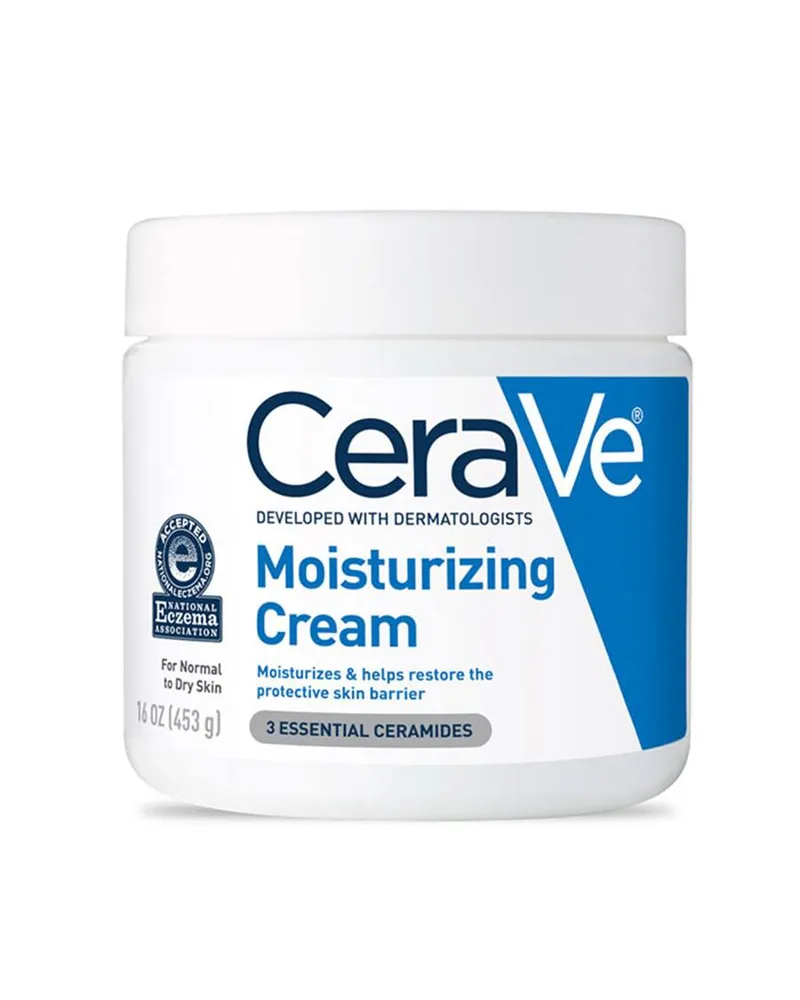
CeraVe Moisturizing Cream
CeraVe
$19
★★★★½
For severe xerosis — especially on the legs, where dryness tends to concentrate — urea deserves a mention. Urea at 10–20% concentration is both a humectant and a mild keratolytic (it breaks down the rough, built-up surface layer). It’s one of the most evidence-backed options for dry skin management and it costs very little.
Urea 10% Cream
Eucerin
$14
★★★★½
Step Three: Actives, Thoughtfully
This is where the nuance lives.
Retinoids remain the most evidence-supported topical for collagen stimulation and epidermal turnover. The problem is that tretinoin (the prescription form) can be too aggressive for fragile, thin skin — initial irritation is common, and at this age the barrier takes longer to recover. Retinol (the over-the-counter form, which your skin converts to retinoic acid) is gentler. Retinaldehyde sits between them.
Starting low and slow still applies here, maybe more so than at any other age. Consider skin cycling — alternating retinoid nights with recovery nights — to give the barrier time between active applications.
Medik8 Crystal Retinal 3 is a retinaldehyde formula worth considering for this age group. It’s more stable than retinol, more effective gram-for-gram, and the 3 concentration (on a scale that goes up to 10) is genuinely appropriate for sensitive or mature skin starting out.
Crystal Retinal 3
Medik8
$55
★★★★½
If retinoids are still causing issues — or if you’re on anticoagulants and your skin just doesn’t tolerate anything with an irritation profile — bakuchiol is worth serious consideration. It’s not identical to retinol in mechanism, but it does upregulate similar genes, and a 2019 randomized controlled trial in the British Journal of Dermatology found comparable improvements in lines and pigmentation at 12 weeks with significantly less irritation. It’s a real option, not a marketing pivot.
Vitamin C is useful here for two reasons: antioxidant protection against UV-induced oxidative stress, and modest support for collagen synthesis. The challenge with standard L-ascorbic acid serums is that they’re acidic and can be irritating, and they oxidize quickly — often before the bottle is finished.
Oil-based vitamin C formats sidestep both problems. The Kerala Botanics Ayurvedic Vitamin C Face Oil uses a stabilized form of vitamin C designed to stay active in cells significantly longer than standard L-ascorbic acid. It also includes bakuchiol, which makes it a reasonable two-in-one if you want to simplify. For post-60 skin that tends toward dryness, the oil base is a practical advantage rather than a liability. One honest caveat: the clinical data on this specific formula isn’t as extensive as what exists for CE Ferulic, and if you run dry-to-very-dry, a face oil under a separate moisturizer can feel heavy. Test it before committing.
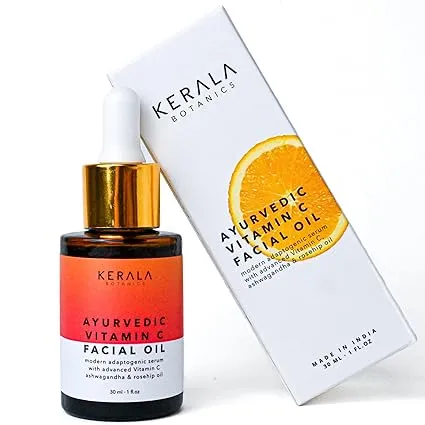
Ayurvedic Vitamin C Face Oil
Kerala Botanics
$49
★★★★☆
Peptides are a reasonable supporting player here. They’re not irritating, work well layered, and some (particularly copper peptides like GHK-Cu and matrikine peptides) have reasonable mechanistic evidence for stimulating collagen and elastin. They won’t replace a retinoid, but for someone who can’t tolerate retinoids, a peptide serum is a defensible alternative rather than a waste of money.
Exfoliation: proceed carefully. Chemical exfoliation (AHAs, PHAs) can help with surface texture and allow other actives to penetrate better, but frequency should be low — once a week at most for most people in this age group. Lactic acid is gentler than glycolic and better suited here; PHAs like gluconolactone are gentler still and appropriate for reactive skin. Physical exfoliation — scrubs, gritty cleansers, rough washcloths — is largely not appropriate for fragile skin. Retire those.
Step Four: Sunscreen, Every Day, Full Stop
UV damage compounds with age. Photoaging that accumulated over decades continues to progress, and new UV exposure accelerates it. Older skin is also more susceptible to UV-induced immunosuppression and has a higher baseline risk for skin cancer.
Mineral filters (zinc oxide, titanium dioxide) are well-tolerated by sensitive and mature skin. Chemical filters are fine too, but some — particularly those that can cause contact sensitization — are worth monitoring if you’ve noticed increased reactivity with age.
La Roche-Posay Anthelios SPF 60 is a consistent recommendation for this age group: broad-spectrum, fragrance-free, and it works under makeup without emphasizing texture. On how much to apply: a full quarter-teaspoon for the face alone. Most people use about 25% of the effective amount.
Anthelios Melt-In Sunscreen SPF 60
La Roche-Posay
$38
★★★★½
What to Skip
Some things popular in younger-skewing skincare content are worth actively avoiding here.
High-concentration acids — glycolic at 10%+, strong peels, enzyme powders used daily. Too much barrier disruption for skin that can’t recover quickly.
Alcohol-forward toners (ethanol high on the ingredients list). Already-depleted lipid matrix doesn’t need help stripping.
Fragrance, particularly in leave-on products. Sensitization rates increase with age. The fragrance allergen labeling changes coming in 2026 may help identify problem formulas, but fragrance-free is still the safer default.
At-home microneedling devices, particularly rollers. The risk-to-benefit calculation changes when healing is slower and the barrier is thinner. Professionally administered treatments with proper depth control and sterile conditions are a different conversation.
Putting It All Together
Post-60 skin isn’t broken. It’s operating under real physiological constraints — thinner dermis, slower turnover, impaired barrier, possible medication effects — that require adjustments in what you use and how aggressively you use it.
The routine that makes sense here is simpler than most skincare content suggests: a gentle cleanser, a ceramide-rich moisturizer applied immediately after washing, a retinoid (or bakuchiol if retinoids don’t work for your skin) used cautiously a few nights per week, a vitamin C or antioxidant treatment in the morning, and daily broad-spectrum SPF. That’s it. Everything else is optional.
The high-irritation actives, the daily acids, the layered six-product AM routine — those are for a different skin type and a different healing speed. They’re not necessary and they’re not without cost.
For deeper reading: the menopause skincare guide covers the estrogen-collagen connection in more detail. The damaged barrier repair piece is worth reviewing if your skin is already showing signs of chronic dryness and reactivity. And for anyone navigating skincare alongside a health condition or treatment protocol, the cancer treatment skincare guide uses a similar barrier-first framework that applies here.
The evidence for what works in this age group is thinner than it should be — most dermatology trials skew younger. But the mechanisms are well understood. Protect the barrier. Support collagen where you can. Don’t irritate a skin type that heals slowly. That’s not settling. That’s the actual answer.