
Anti-Aging
At-Home Microneedling: Rollers, Stamps, and What's Safe
Derma rollers look harmless. They're not always. A science-first guide to safe needle depths, sterility, and what never to apply after.
Disclosure — This article may contain affiliate links. We earn a small commission at no extra cost to you when you purchase through our links. This supports our ability to create independent, evidence-based skincare content.
At-home microneedling gets sold as a simple upgrade — buy a $20 roller, glide it over your face a few times a week, wake up with baby skin. The reality is messier, and occasionally infectious. Before we get into what actually works, let’s be clear about what we’re discussing: devices that puncture your skin barrier on purpose. That’s not a reason to avoid them, but it is a reason to understand them.
Done correctly, with the right needle depth and clean technique, derma rollers and stamps can meaningfully improve skin texture and help actives absorb more efficiently. Done the way most people do it after watching a 60-second tutorial, they’re a reliable way to introduce bacteria into your dermis.
This guide covers what the evidence shows, where the risk actually lives, and which scenarios are genuinely not safe for at-home use.
What Microneedling Is Actually Doing
Needles create micro-injuries in the skin. The body responds to those injuries by ramping up collagen and elastin production — the same repair process that makes professional treatments like RF microneedling effective. At the depths accessible in a clinical setting (1.5–3mm), that collagen remodeling is measurable and clinically documented.
At-home devices work differently. Consumer rollers and stamps are capped, by most regulatory guidance, at around 0.5mm. A few products push to 0.7mm, but that’s the outer edge of what’s considered safe for unsupervised use. At these depths, you’re not reaching the dermis in any meaningful way — you’re creating microchannels in the epidermis that temporarily increase permeability.
That’s not nothing. Enhanced penetration of certain actives is real. A 2014 study in the Journal of Drugs in Dermatology showed that 0.5mm needling increased topical vitamin C absorption significantly compared to application without rolling. But collagen remodeling at 0.2–0.5mm? The evidence there is thin. You’re mostly in the absorption-enhancement business, not the structural-change business.
Know what you’re getting.
Rollers vs. Stamps: The Practical Difference
Both work on the same principle. The differences are mechanical.
Rollers cover surface area quickly. The drum-style design means you can do your whole face in a few minutes. The downside: because you’re rolling, needles enter the skin at an angle, then drag slightly as the drum rotates. That angled entry creates more lateral tissue damage than a straight puncture. It’s minor at 0.2mm. At 0.5mm, it’s worth thinking about.
Stamps puncture vertically — straight in, straight out. Less drag, more controlled. They’re slower to use and cover less area per pass, but the wound geometry is cleaner. For anyone prone to sensitivity or redness, a stamp is often the better starting tool.
Neither is inherently superior for everyone. Rollers are more practical for consistent, large-area use. Stamps are better for targeted work around the nose or lip border where a roller is awkward.
What neither of them is: interchangeable with a clinical microneedling pen. Professional devices reach depths that consumer tools don’t, use sterile single-use cartridges, and are operated by someone who can identify when to stop. The gap between a $25 Amazon roller and a clinical RF microneedling session is not just price. It’s a different category of treatment. (For a head-to-head of at-home device types, the device face-off covers this well.)
The Depth Rules
This is the part people skip. Needle depth determines both efficacy and risk, and the two move in opposite directions.
0.2mm — Epidermis only. Minimal risk. Useful mainly for product absorption. Good starting point for anyone new to rolling. Little chance of infection or damage if technique is reasonable.
0.3–0.5mm — Approaches the dermal-epidermal junction. Some mild collagen signaling is plausible here, though the evidence at home-use depths is weaker than the marketing suggests. Appropriate for experienced users with intact barriers, used infrequently (once a week at most).
0.5mm+ — Not recommended for unsupervised at-home use. At this depth, without controlled conditions, sterile cartridges, and training, you’re introducing real infection risk. Some consumer devices are sold at these depths anyway. That doesn’t make it safe.
One thing the depth conversation often misses: skin thickness varies by location. The skin on your cheek is thicker than the skin around your eyes. A 0.5mm roller is doing something very different on your forehead versus your under-eye. Never roll the orbital bone area. Never.
The Sterility Problem — This Is the Part That Actually Matters
Here’s what the viral microneedling content doesn’t tell you: you’re creating hundreds of tiny open wounds in your skin barrier. What you put on immediately before or after goes directly into those channels.
Cleaning your roller matters more than almost anything else.
Most people rinse their roller under warm water and call it done. That’s not sterile. Bacteria, skin cells, and sebum accumulate between the needle columns after every use. Isopropyl alcohol (70%) is the standard for sanitizing between uses — soak for 10 minutes, let dry completely before use. And rollers are not indefinitely reusable. Needles dull after approximately 10–15 uses. Dull needles tear rather than puncture, which increases inflammation without improving results.
Single-use stamps are worth the cost for exactly this reason. No cleaning, no degradation, no guesswork.
Active infections, acne lesions, open wounds, cold sores, eczema flares, rosacea, or any compromised barrier is a hard stop. Rolling over active acne spreads bacteria mechanically across the face. It’s not a theory — it’s basic biology. If your skin barrier is already struggling, check our guide on damaged skin barrier repair before adding any device use to your routine.
What Never to Apply Immediately After
This is the question that consistently gets dangerous answers online.
The logic goes: microchannels are open, so this is the perfect time to push actives deeper. That logic is correct, and that’s exactly why what you apply matters enormously.
Do not apply immediately after rolling:
- Retinol or tretinoin. At normal absorption rates, these are already potent. Pushing them through a disrupted barrier significantly increases irritation risk — burning, peeling, and potential sensitization. If you’re using tretinoin, keep it off the roller schedule entirely or wait a minimum of 24 hours after rolling before applying.
- Vitamin C (L-ascorbic acid at standard pH). L-ascorbic acid is formulated at low pH (around 2.5–3.5). That acidic pH on an open wound is not a delivery upgrade — it’s chemical irritation. The absorption-enhancement benefit doesn’t outweigh the damage at these concentrations.
- AHAs and BHAs. Same principle. Glycolic acid on a freshly needled face can cause chemical burns.
- Anything with fragrance or essential oils. Potential allergens and irritants moving past a compromised barrier is a fast route to sensitization. Even products you’ve tolerated for years should be suspect immediately after rolling.
- Niacinamide-heavy formulas at high concentrations (10%+). Niacinamide is well-tolerated topically, but high concentrations through open channels are an unnecessary variable when you don’t know exactly how much is now absorbing.
What is generally appropriate after rolling:
Hyaluronic acid serum (fragrance-free, plain). Centella asiatica-based calming formulas. Peptide serums without fragrance or harsh actives. A plain, barrier-supporting moisturizer. The goal post-rolling is calm and hydrate — not treat.
For more on how ingredient layering interacts with barrier status, how to layer skincare covers the sequencing logic in detail.
Who Should Skip At-Home Microneedling Entirely
Most people can use a 0.2–0.3mm roller safely. These groups should not:
- Active acne (any kind)
- Rosacea or perioral dermatitis (rolling causes flushing and spread of inflammation)
- Eczema or psoriasis, especially during flares
- Anyone on isotretinoin (Accutane), currently or within 6 months of finishing
- Anyone using prescription retinoids without confirming timing with their prescriber
- People with a history of keloid scarring — injury-triggered collagen overproduction is a real concern
- Pregnant individuals — not because there’s evidence of harm, but because there’s no evidence of safety and no reason to add the variable
Conditions like melasma are a specific caution. Inflammation can trigger post-inflammatory hyperpigmentation in melasma-prone skin, and microneedling creates controlled inflammation. The evidence on needling for melasma is mixed — some protocols show benefit, others show worsening. The melasma treatment guide has more on this.
What to Actually Use: Two Devices Worth Recommending
Most of the microneedling devices on Amazon are low-quality metal pressed into a plastic handle. Needle spacing, coating, and gauge matter — and most budget rollers disclose none of it. We’ve narrowed it to two tools that are transparent about their specs and consistent in quality.
Sdara 0.2mm Roller — For beginners or those using microneedling primarily for product absorption, the Sdara roller is one of the few at this price point that states its needle diameter (0.25mm titanium) and is clear that it’s not a treatment depth device. At this depth, the risk profile is low. Replace every 2–3 months with regular use.
Dermaroller 0.2mm Titanium Micro Needle Roller
Sdara Skincare
$25
★★★★☆
Dr. Pen Ultima A6S — For more experienced users comfortable with adjustable depth, the Dr. Pen stamp-style device allows depth selection from 0.25mm to 2.5mm. At home, keep it at 0.5mm or below. The single-use cartridge system is the key differentiator — sterility isn’t a guessing game. More expensive, but the cartridge model addresses the biggest safety concern outright.
Dr. Pen Ultima A6S Microneedling Pen
Dr. Pen
$89
★★★★☆
What to Apply After Rolling (a Note on Format)
For people who microneedle for absorption enhancement rather than injury-response collagen signaling, the product you apply afterward matters more than the device. Oil-based actives are worth considering here — they don’t carry the pH-related irritation risk of L-ascorbic acid, and they can sit on the disrupted barrier without the burning that a low-pH serum causes.
One option worth knowing: Kerala Botanics’ Ayurvedic Vitamin C Face Oil uses a stabilized, oil-soluble form of vitamin C alongside bakuchiol (a plant-based retinol alternative), which means neither the pH issue with L-ascorbic acid nor the irritation risk of retinoids applies in the same way. It’s not a post-needling prescription, and the clinical data on enhanced oil penetration post-rolling is still thin. But for those simplifying their routine around a rolling protocol, the format has logic to it. The oil texture won’t be right for everyone, and anyone with oily or acne-prone skin should approach any oil post-rolling cautiously.
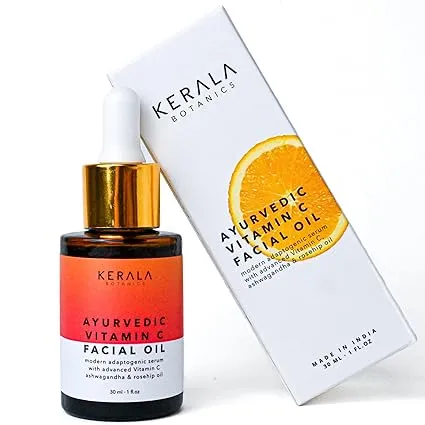
Ayurvedic Vitamin C Face Oil
Kerala Botanics
$49
★★★★☆
For more on how vitamin C delivery formats differ, vitamin C serum vs vitamin C oil breaks down the formulation science.
Putting It All Together
The viral version of at-home microneedling — daily rolling at whatever depth the device came with, followed immediately by your full serum lineup — is not safe practice. But at 0.2–0.3mm, once or twice a week, with proper sanitation and appropriate post-roll products, the risk profile is manageable and the absorption benefits are real.
The short version of the safety rules:
- Max depth: 0.5mm for at-home use, and only if you’re experienced and confident in your technique
- Sanitize properly — 70% isopropyl alcohol, 10 minutes, let dry
- Replace your device — dull needles are worse than no needles
- Nothing harsh on an open barrier — no retinoids, low-pH acids, or fragrance
- Skip rolling entirely if your skin is compromised, inflamed, or actively broken out
The people who get the most out of at-home microneedling are the ones treating it with the same attention they’d give any other active in their routine. It’s a tool, not a hack. And like most tools, it does more damage in the wrong hands.