
Anti-Aging
Does Topical Collagen Do Anything?
Does topical collagen do anything? The molecule is too big to penetrate skin, so it works as a moisturizer. Here's what actually builds collagen in your skin.
Disclosure — This article may contain affiliate links. We earn a small commission at no extra cost to you when you purchase through our links. This supports our ability to create independent, evidence-based skincare content.
The logic behind collagen creams sounds airtight. Your skin loses collagen as you age, so you put collagen on your skin. Done.
Except skin doesn’t work like a sponge, and collagen isn’t a small molecule. A cream with “collagen” on the label can feel lovely and hydrate well. It can’t rebuild the collagen network in your dermis, and the reason is basic physics.
This guide covers why topical collagen can’t do what the jar implies, what it does do, how peptides take a completely different approach, and which ingredients have real evidence for supporting collagen. If you’re also weighing pills and powders, our piece on ingestible collagen and longevity supplements covers that side.
Why collagen can’t get through your skin
Start with size. Type I collagen, the main structural protein in skin, is a triple helix of about 300,000 daltons (a dalton is a unit of molecular mass). It’s roughly 300 nanometers long.
Now the barrier. The outermost layer of skin, the stratum corneum, is built to keep things out. The long-cited rule of thumb is that a compound needs to be under roughly 500 daltons to cross it in meaningful amounts. That’s not a hard law, but it’s a useful guardrail.
Collagen misses it by a factor of 600.
“But it’s hydrolyzed”
Many products use hydrolyzed collagen, which is collagen chopped into smaller fragments. That sounds like a fix. It isn’t, quite. Hydrolyzed collagen typically runs 2,000 to 5,000 daltons. Smaller, yes, but still four to ten times over the guardrail.
And fragments raise a second problem. Even if some bits slipped through, they wouldn’t reassemble into a triple helix inside your dermis. Your own fibroblasts (the cells that make collagen) build the network from amino acids, following their own instructions.
Even injected collagen doesn’t last
Here’s a useful comparison. Bovine collagen was once injected directly into skin as a filler. It worked as volume, and it was reabsorbed over a few months. Skin doesn’t absorb outside collagen into its own architecture. It breaks it down like any other protein.
If injecting it into the dermis doesn’t rebuild your collagen, smearing it on the surface won’t either.
What collagen in a cream actually does
It sits on top and holds water. That’s it, and it’s not nothing.
Collagen and its fragments are rich in amino acids that bind water. Applied to skin, they form a thin, slightly tacky film that draws moisture into the upper layers and slows its escape. That’s humectancy, the same job done by glycerin, hyaluronic acid, and urea. Some small studies on hydrolyzed collagen in creams show modest increases in skin hydration. Those studies tend to be short and often manufacturer-funded, so hold the results loosely.
Hydrated skin looks plumper and smoother. Fine lines, especially dehydration lines, soften within hours. That can look a lot like “collagen working,” which is probably why the marketing persists.
But the effect is temporary and surface-level. Stop using the cream and the plumping goes with it.
What this means for your wallet
If you like a collagen cream, fine. Use it as a moisturizer. Just don’t pay a premium for the word “collagen.” Glycerin does the same humectant job for pennies (we wrote about why it’s the most underrated humectant), and a well-formulated moisturizer with ceramides and an occlusive will outperform most collagen creams on actual skin comfort.
A few label tells:
- “Collagen” in the first five ingredients just means it’s a major humectant in the formula. It’s not a sign of anything more.
- “Marine collagen” or “vegan collagen” doesn’t change the size problem. And plants don’t make collagen, so “vegan collagen” is usually amino acids or a collagen-like peptide, which is a different thing.
- “Boosts collagen” on a collagen cream is a claim worth squinting at. Boosts how? Through which mechanism? If there’s no answer, there’s no evidence.
Peptides: a different strategy entirely
Peptides get lumped in with collagen on shelves, but the logic is different. Collagen creams try to supply the protein. Signal peptides try to tell your cells to make their own.
The idea comes from wound healing. When collagen breaks down, small fragments are released, and fibroblasts seem to read those fragments as a cue that repair is needed. Palmitoyl pentapeptide-4 (sold as Matrixyl) mimics a fragment of type I collagen. In theory, it nudges fibroblasts to produce more collagen, fibronectin, and hyaluronic acid.
That’s a plausible mechanism. It’s also a lot smaller than collagen: a few hundred daltons for the peptide itself, with a fatty palmitoyl tail added to help it cross the lipid-rich barrier.
How good is the evidence?
Better than for topical collagen. Not as strong as the marketing suggests.
Several small clinical studies show reductions in wrinkle depth with peptide serums over 8 to 12 weeks. Many were funded by ingredient suppliers, sample sizes are small, and the effects are modest next to a prescription retinoid. We don’t have large, independent head-to-head trials. Penetration is better than collagen’s, but “better than collagen” is a low bar.
Not all peptides do the same job, either. Signal peptides, carrier peptides (like copper peptides), and neurotransmitter-inhibiting peptides are separate categories. Our peptide types decoder sorts them out, and the “Botox in a bottle” claims are a different story with their own reality check on argireline.
A peptide serum is a reasonable add-on. It’s not a replacement for the heavy hitters below.
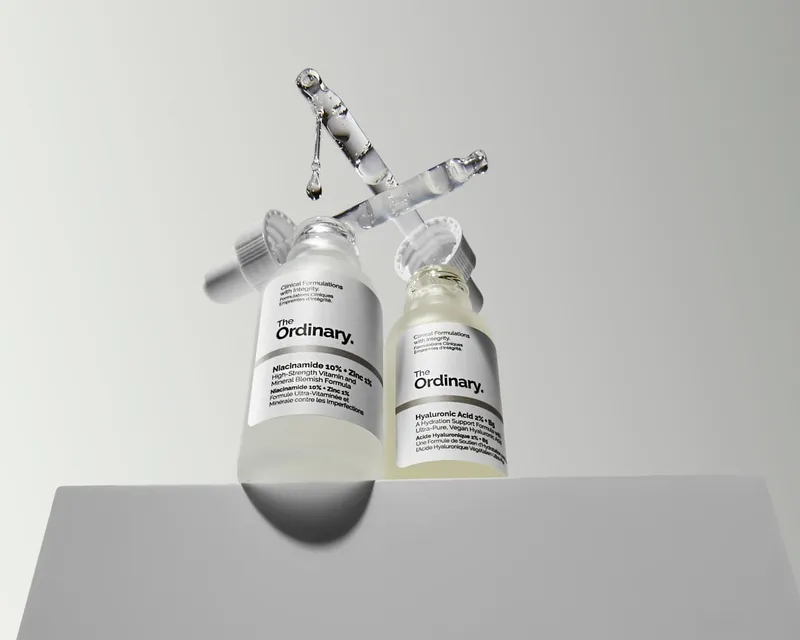
Matrixyl 10% + HA
The Ordinary
$30
★★★★☆
The Ordinary’s Matrixyl serum is a cheap way to try a signal peptide at a meaningful concentration. The pros: it’s inexpensive, it’s simple, and the hyaluronic acid adds some hydration. The cons: the texture is a little tacky, and the visible results are subtle at best. Expect a gentle improvement in smoothness after two to three months, not a transformation. Verdict: worth trying if you’re curious and budget-minded, but keep expectations realistic.
What actually supports collagen
If the goal is more collagen in your dermis, the evidence points to a short list. In rough order of strength:
- Sunscreen. UV radiation activates enzymes (matrix metalloproteinases) that chew up collagen. Preventing the damage beats trying to repair it later. Boring, and by far the highest-return step.
- Retinoids. Tretinoin has the deepest evidence for increasing collagen production and improving fine lines. Over-the-counter retinol and retinaldehyde work through the same pathway, more slowly. Our comparison of retinol, retinaldehyde, and tretinoin helps you pick a starting point.
- Vitamin C. Fibroblasts need vitamin C as a cofactor to build stable collagen, and it’s a potent antioxidant against UV-generated free radicals. The evidence is good for L-ascorbic acid at effective concentrations, though stability is the format’s weak spot.
- Peptides. Plausible, modestly supported, best treated as supporting cast.
Professional procedures like microneedling, lasers, and radiofrequency can also stimulate collagen. They sit outside this guide, but they work by controlled injury, which tells you something: the most reliable way to get skin to make collagen is to signal it, not to supply it.
Vitamin C options
For the benchmark, SkinCeuticals C E Ferulic has the most published data of any vitamin C product. We looked at whether it’s worth the money in our C E Ferulic review.
C E Ferulic
SkinCeuticals
$185
★★★★½
Pros: strong clinical backing, a stabilized formula, and a proven combination with vitamin E and ferulic acid. Cons: the price, and a smell some people dislike. Verdict: the evidence leader, and still hard to justify at $185 unless you want that data behind your serum.
A retinol alternative that doubles as vitamin C
If retinoids irritate you, or you’d rather simplify, an oil that combines vitamin C with bakuchiol is one route. Bakuchiol is a plant-derived compound that showed retinol-like effects on wrinkles and pigmentation in a 12-week trial comparing it to retinol, with less irritation. One trial isn’t a body of evidence, though. We cover where it holds up and where it doesn’t in bakuchiol vs retinol.
Kerala Botanics’ Ayurvedic Vitamin C Face Oil pairs a vitamin C form with bakuchiol in an oil base, and it’s built to stand in for a serum and moisturizer at once. The brand says its vitamin C form is more effective and longer-lasting than standard L-ascorbic acid. We haven’t seen independent head-to-head data confirming that, so treat it as a claim rather than a finding.
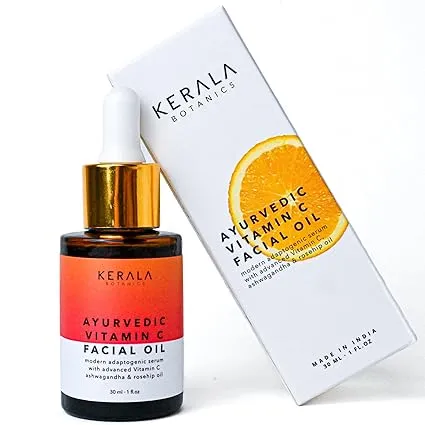
Ayurvedic Vitamin C Face Oil
Kerala Botanics
$49
★★★★☆
The pros: it replaces a few steps, the oil format is unusual for vitamin C (see our serum vs oil comparison), and it’s easy on skin that dislikes the sting of acidic serums. The cons: oily and acne-prone skin may not love an oil, it can feel heavy under makeup, and it has far less clinical data behind it than C E Ferulic. Verdict: a sensible pick for dry or normal skin that wants a simpler routine. It’s not a substitute for tretinoin if you want the strongest collagen-building option.
How to build a collagen-minded routine
You don’t need a collagen cream, and you don’t need everything on this page. A practical order of priorities:
- Morning: a vitamin C product, then moisturizer, then broad-spectrum SPF 30 or higher. Apply the sunscreen generously. Under-application is the most common reason it underperforms.
- Night: a retinoid if your skin tolerates it, or bakuchiol if it doesn’t. Start two or three nights a week and build up.
- Anytime: a humectant-rich moisturizer for the plump, hydrated look that collagen creams promise. Glycerin, hyaluronic acid, and urea all do this well.
- Optional: a peptide serum, layered under moisturizer.
Give any of it at least 8 to 12 weeks before judging. Collagen remodeling is slow. Anything promising visible dermal change in days is selling you hydration.
Putting it all together
Topical collagen is a humectant with a good publicist. It can’t penetrate the skin barrier, it can’t join your dermal collagen network, and it doesn’t replace what age and sun have taken. What it can do is hold water at the surface, which is useful and cheap to get elsewhere.
If you want your skin to make more collagen, put your money into signals: sunscreen to protect what you have, a retinoid or bakuchiol to prompt production, vitamin C as a cofactor and antioxidant, and optionally a peptide. Then use a good moisturizer for hydration.
The jar that says “collagen” is moisturizer. Pay moisturizer prices.