
Anti-Aging
'Botox in a Bottle': Does Argireline Do Anything?
Argireline is the peptide everyone calls 'Botox in a bottle.' Here's what the science actually says — and what to realistically expect.
Disclosure — This article may contain affiliate links. We earn a small commission at no extra cost to you when you purchase through our links. This supports our ability to create independent, evidence-based skincare content.
Let me tell you about the last time someone DMed me asking if a serum would replace their Botox. It was the Argireline one. It’s always the Argireline one.
The pitch is genuinely irresistible: a peptide that supposedly mimics how Botox works, available in a $10 bottle from The Ordinary, no needles required. I get why people want it to be true. I wanted it to be true. So I went down the research rabbit hole — actual studies, not brand marketing PDFs — and came back with an answer that’s more complicated than “yes” or “no.”
Short version: it does something. Just not that.
Here’s everything you need to know before you add it to your cart.
What Argireline Actually Is
Argireline is the trade name for acetyl hexapeptide-8 (you’ll also see it called acetyl hexapeptide-3 on older labels — same molecule, updated INCI name). It’s a synthetic peptide — a short chain of six amino acids — and it was developed by a Spanish company called Lipotec in the early 2000s.
The ingredient shows up in products everywhere now: eye creams, serums, anti-aging moisturizers. Peptides as a category are having a serious moment — if you want to understand how they’re classified and what the different types actually do, our peptide types decoder breaks it down properly.
Argireline falls into a specific category called signal peptides or, depending on who you ask, neurotransmitter-inhibiting peptides. That second label is where the Botox comparison comes from. And also where most of the confusion starts.
The SNARE-Inhibition Claim, Explained Plainly
Here’s the mechanism the marketing loves to cite.
When your face moves — squinting, smiling, frowning — nerves send signals to muscles telling them to contract. That signal gets passed via neurotransmitters, specifically acetylcholine, which is released through a process involving something called the SNARE complex (a protein assembly that docks and fuses the vesicles carrying neurotransmitters).
Botulinum toxin (Botox) works by cleaving one of the key SNARE proteins — SNAP-25 — which blocks neurotransmitter release entirely. Muscle doesn’t get the signal. Muscle doesn’t move. Wrinkle doesn’t form. This happens at the neuromuscular junction, deep in tissue, delivered by injection.
Argireline is said to work by a similar — and I want to stress similar, not identical — pathway. It’s a peptide that mimics part of SNAP-25 and may competitively interfere with SNARE complex formation, potentially reducing acetylcholine release and, therefore, muscle contraction.
In theory. On paper. In a lab dish.
The practical reality is that Argireline is applied topically. It’s a peptide sitting on the surface of your skin, trying to reach nerve terminals that sit far below the epidermis, without a needle to get it there. That’s not a small gap to close.
What the Studies Actually Show
Here’s where I’m going to be annoyingly honest with you: the evidence is thin, manufacturer-funded, and a long way from convincing.
The most-cited study on Argireline — the one that launched a thousand product claims — was published in 2002 by Lipotec, the company that invented and sells the ingredient. It showed a reduction in wrinkle depth in a small group of participants using a 10% concentration over 30 days. The results were real enough to photograph. But a manufacturer-funded trial with no control group and no peer review is the lowest tier of evidence you can cite. It doesn’t mean it’s wrong. It means we can’t fully trust it.
There’s a 2013 in-vitro study showing Argireline reduces SNAP-25 mimicry under certain conditions. A couple of in-vivo studies since then have shown modest wrinkle reduction, mostly around the eye area, at concentrations of 5–10%. The word “modest” is doing real work in that sentence. We’re talking about small improvements in fine, surface-level lines — the kind that form more from repetitive movement — not deep wrinkles, not volume loss, not anything that falls into “injectable territory.”
No independent, large-scale, placebo-controlled clinical trial has been published that establishes Argireline as clinically equivalent to Botox. Not one.
What It Can Realistically Do for Your Skin
So the Botox comparison is overhyped. What does that leave us with?
Probably more than nothing, which is more than you can say for a lot of trending ingredients.
At concentrations of 5–10%, used consistently around areas with fine, movement-related lines — think forehead lines, crow’s feet, the ”11s” between the brows — Argireline may:
- Mildly reduce the appearance of surface wrinkles over weeks of use
- Temporarily relax tension in areas where it penetrates even modestly
- Work additively with other peptides and actives in a formula
The key word throughout all of that is “mildly.” You’re not going to see the kind of change you’d see from three units of Botox. You’re not going to freeze your forehead. What you might see, after a solid month of consistent use, is that certain fine lines look a bit softer — particularly the ones that form from squinting or smiling repeatedly.
For that to mean anything in practice, concentration and formulation matter a lot. A serum with 10% Argireline that also includes penetration-enhancing ingredients is doing more work than a moisturizer with Argireline fourth from the bottom of the label.
Products Worth Considering
The Budget Entry Point
The Ordinary’s Argireline Solution 10% is the most obvious place to start if you want to test the ingredient. It’s 10% concentration, it’s $10, and it layers fine under moisturizer or SPF. The formula is minimal — mostly water and the peptide — which is actually a feature. No fragrance, no actives competing for skin real estate.
Realistic expectation: if you use this consistently for six weeks around your eye area or forehead, you may notice your fine lines look slightly less pronounced. Don’t expect a dramatic before-and-after. Do expect your bank account to stay intact.
The Ordinary Argireline Solution 10%
The Ordinary
$10
★★★½☆
A More Sophisticated Formula
If you want Argireline in a proper multi-peptide formulation alongside ingredients that actually support long-term collagen, the Revision Skincare DEJ Eye Cream is worth knowing. It combines Argireline with several other peptides plus hyaluronic acid and niacinamide. The eye area is where Argireline tends to be most studied and most cited — thinner skin, more repetitive movement. The price is a jump, but the formula is serious.
Revision Skincare DEJ Eye Cream
Revision Skincare
$100
★★★★☆
If You Want a Different Approach Entirely
Not everyone wants to add another serum. If your goal is simplifying your routine while still hitting the anti-aging angle — vitamin C for brightness and collagen support, plus a retinol alternative — the Kerala Botanics Ayurvedic Vitamin C Face Oil takes a different route entirely. It combines an advanced, oil-stable form of vitamin C (said to stay active in skin cells significantly longer than standard L-ascorbic acid) with bakuchiol, a plant-derived retinol alternative that’s become a legitimate ingredient in its own right. It replaces serum, moisturizer, and facial oil in a single step, and it’s rooted in Ayurvedic formulation traditions.
Honest caveat: if you have oily skin, a face oil may not be your friend here. And it won’t target the SNARE pathway or do anything Argireline-adjacent — it’s a different mechanism entirely, focused on antioxidant protection and collagen support rather than muscle-relaxation mimicry. But if your anti-aging priority is overall skin quality rather than targeting expression lines specifically, it’s a genuinely good option. More on bakuchiol specifically in our Bakuchiol vs Retinol deep dive.
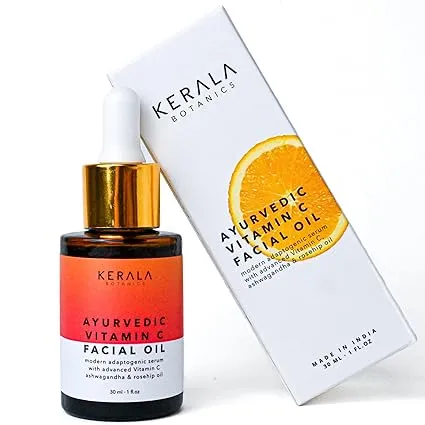
Ayurvedic Vitamin C Face Oil
Kerala Botanics
$49
★★★★☆
How to Use Argireline If You Decide to Try It
A few things that will actually affect your results:
Concentration matters. Below 5% you’re probably wasting your time. Most studies use 5–10%. Check the label — if it doesn’t list the percentage, the brand likely isn’t proud of it.
Apply it to expression-prone zones. Crow’s feet, forehead, the glabellar area between your brows. These are the spots where repetitive movement creates fine lines, which is the only type of wrinkle Argireline has a plausible mechanism to affect. It’s not going to do anything for deep folds or volume loss.
Layer it under your moisturizer or SPF, not on top. Water-based serums go on before heavier textures. If you’re confused about the order, how to layer skincare walks through the logic.
Give it eight weeks. One month is the minimum timeframe in the studies; most showed continued improvement at 60 days. If you’re not patient enough to commit to that, the ingredient probably isn’t worth your money.
Don’t expect it to replace anything professional. Argireline and injectables are not in competition. One is a topical cosmetic ingredient with modest, surface-level effects. The other is a medical procedure. If you’re considering actual Botox, this serum is not a substitute — and pretending otherwise will just leave you disappointed.
The Bigger Picture on Peptides
Argireline isn’t the only peptide worth knowing. Matrixyl (palmitoyl pentapeptide-4) has better long-term collagen data. Copper peptides (GHK-Cu) have some genuinely interesting research behind them — our Copper Peptides guide goes deep on that. Leuphasyl, Syn-Ake, and GABA-related peptides all make similar neuromuscular claims to Argireline with similarly limited independent evidence.
What all these ingredients have in common: they work slowly, subtly, and only if you use them consistently. None of them are injectables. Calling any of them “Botox in a bottle” is marketing shorthand that sets expectations the ingredients can’t meet.
That’s not a reason to skip them. It’s a reason to go in with realistic expectations — which is genuinely more useful than hype.
If you want to understand what separates a peptide that has decent evidence from one that’s just a claims vehicle, start with how to read skincare ingredient labels and cross-reference with the peptide types decoder.
Putting It All Together
Argireline is a legitimate ingredient with a plausible mechanism and modest, manufacturer-funded evidence behind it. It is not Botox. It will not freeze your forehead or replace a single unit of neurotoxin. What it might do, at 5–10% concentration used consistently for six to eight weeks, is slightly soften fine, repetitive-movement lines — particularly around the eyes.
At $10 for a 10% formula, the risk is basically zero. If you’re curious, try it. Just don’t tell anyone it’s Botox in a bottle, because it really, genuinely isn’t.
And if your wrinkle concerns are significant enough that you’re seriously comparing a serum to an injectable, that’s a conversation worth having with a dermatologist — not a product to shop. For a broader look at how the anti-aging ingredient space actually works (and what’s genuinely worth the money versus what’s noise), the skin longevity guide is a good place to start.