
Anti-Aging
Peptides vs Retinol: Which Should You Use?
Peptides vs retinol: retinoids have the stronger evidence, but peptides win on comfort. Here's how to choose, use both, and which peptides have real data.
Disclosure — This article may contain affiliate links. We earn a small commission at no extra cost to you when you purchase through our links. This supports our ability to create independent, evidence-based skincare content.
If you want the short version: retinoids have the stronger evidence, and it isn’t close. Peptides are the friendlier option, and they’re worth adding. For most people the best answer is both, used on a sensible schedule.
Below we cover what the research supports, where peptides actually beat retinol, which peptide types have real data, and how to run the two together without wrecking your face.
Retinoids Have the Stronger Evidence
Retinoids are the vitamin A family. That includes prescription tretinoin, over-the-counter adapalene, retinaldehyde, and retinol. They’ve been studied for decades, and tretinoin is FDA-approved for treating photoaging. That’s a regulatory stamp most anti-aging ingredients will never get.
What the trials show is consistent. Over months of use, retinoids smooth fine lines, improve rough texture, and fade some sun-related pigmentation. They also increase collagen production in the dermis, which is the deeper layer that gives skin its bounce.
Think of it like exercise. Retinoids are the gym membership with decades of data behind it. You pay for the results in sweat, and in this case a bit of dryness and peeling.
Not all retinoids are equal
Strength matters. Tretinoin is the real deal and works on its own. Adapalene is a gentler cousin with strong acne data and smaller but real photoaging evidence. Retinol and retinaldehyde are the over-the-counter options that your skin has to convert before they work, so they’re milder and slower.
If you’re deciding between them, our guide to retinol vs retinaldehyde vs tretinoin breaks it down. And if prescription tretinoin is on your radar, Tretinoin for Beginners walks you through the first few months.
The catch
Retinoids irritate. Redness, flaking, stinging, and a tight, raw feeling are all common in the first weeks. Most people adapt, but some don’t, and some skin conditions make retinoids a bad idea. They’re also not recommended during pregnancy, so check with your doctor if that applies to you.
Then there’s the sun. Retinoids make daytime sunscreen non-negotiable. Skip it and you’re undoing the work.
Here’s a budget-friendly way in. Adapalene is sold over the counter, and it’s the easiest retinoid to get your hands on without a prescription.
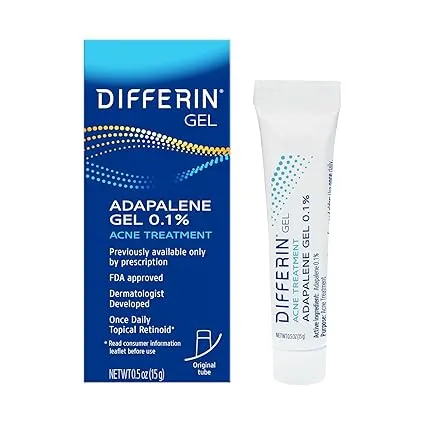
Differin Adapalene Gel 0.1%
Differin
$16
★★★★½
It was designed for acne, so it can feel drying on mature skin, and the gel texture isn’t luxurious. But the price is hard to argue with, and the evidence for adapalene is solid. Start two nights a week with a pea-sized amount for your whole face.
Where Peptides Win: Tolerability
Peptides are short chains of amino acids, the building blocks of proteins. In skincare, the pitch is that they act like messages, telling skin cells to behave a bit more youthfully.
The evidence for that pitch is thinner than the marketing. We’ll get to specifics below. But here’s what peptides genuinely have going for them: they’re gentle. Really gentle.
Most peptide serums don’t sting, peel, or turn you into a flaking mess. You can use them in the morning or at night, in any season, and on skin that already hates everything. If retinoids are a gym membership, peptides are a daily walk. Less dramatic results, almost zero downside.
That matters more than people admit. A retinoid you can’t tolerate is a retinoid you stop using. A peptide you enjoy using for two years can quietly add up.
Who should lean on peptides
- You’ve tried retinol three times and quit each time.
- Your skin is sensitive, or you have rosacea or eczema (check with your dermatologist first).
- You’re pregnant or nursing and want to keep an anti-aging step.
- You’re in a barrier-repair phase and need to pause actives.
Peptides also tend to be hydrating by design, since most formulas pair them with humectants. That alone can plump the look of fine lines for a few hours. It’s not the same as remodeling collagen, but it’s something you can see by lunchtime.
Which Peptides Have Real Data
“Peptides” is a huge category. Treating it as one ingredient is like treating all fats as the same. For the full breakdown, our peptide types decoder sorts them by job. Here’s the quick version of where the evidence stands.
Signal peptides: the most promising
These are designed to nudge skin into making more collagen and other structural proteins. The best-studied is palmitoyl pentapeptide-4, sold as Matrixyl. Small studies show modest improvements in wrinkle depth and texture over a few months.
The honest caveat: many of these studies are small, short, and funded by the ingredient makers. The results look real, but they’re nowhere near retinoid-level proof.
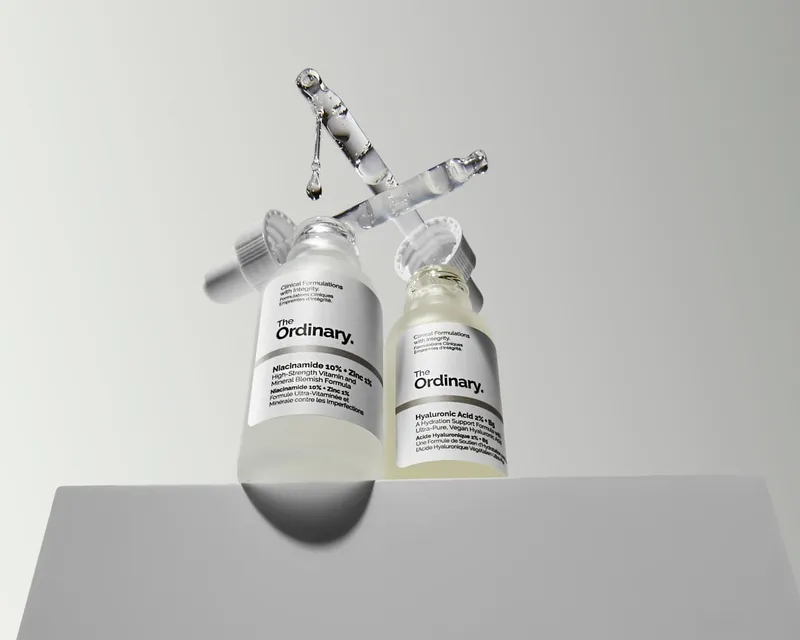
Matrixyl 10% + HA
The Ordinary
$30
★★★★☆
It’s an affordable way to try a signal peptide at a meaningful concentration. The texture is slightly tacky until it settles. It also won’t do anything dramatic in a month, so give it at least eight to twelve weeks before you judge it.
Carrier peptides: copper is the headliner
Carrier peptides deliver trace minerals, mainly copper, to skin. GHK-Cu is the famous one. There’s real lab and some clinical data on wound healing and skin firmness, though human studies on aging skin are modest. We cover it in depth in Copper Peptides (GHK-Cu): Hype vs Evidence.
Neurotransmitter-inhibiting peptides: oversold
These are the “Botox in a bottle” peptides, with acetyl hexapeptide-8 (Argireline) as the best-known example. The theory is that they relax expression lines. The reality is much weaker than the claim. We looked at the data in our piece on Argireline, and the short version is that effects are small and hard to see.
Enzyme-inhibiting peptides
These aim to slow the breakdown of collagen rather than boost production. The research is early. They’re plausible and harmless, but we wouldn’t build a routine around them.
Peptides vs Retinol: Quick Comparison
| Retinoids | Peptides | |
|---|---|---|
| Strength of evidence | Strong, decades of trials | Modest, mostly small studies |
| Fine lines and texture | Clear improvement | Mild improvement (best data: signal peptides) |
| Irritation risk | Common at first | Rare |
| Sun sensitivity | Yes, sunscreen essential | No |
| Pregnancy | Avoid | Generally considered low-risk, but data are limited |
| Time to see results | 8-12 weeks, often longer | 8-12 weeks, subtle |
| Cost | $16 to prescription pricing | $20 to $100+ |
What About Bakuchiol?
If retinoids aren’t an option and you want something with a bit more data than a typical “natural” serum, bakuchiol sits in the middle. It’s a plant-derived compound that has been compared directly with retinol in a small, short trial, with similar results on wrinkles and less irritation. It’s still one trial, not a body of evidence. Our bakuchiol vs retinol article covers it in detail.
One product that pairs bakuchiol with a vitamin C in a face oil is Kerala Botanics’ Ayurvedic Vitamin C Face Oil. To be clear, it’s a retinol alternative, not a peptide product. The brand says its vitamin C form is more effective and stays in skin longer than standard L-ascorbic acid, but we’d treat those as brand claims rather than settled science.
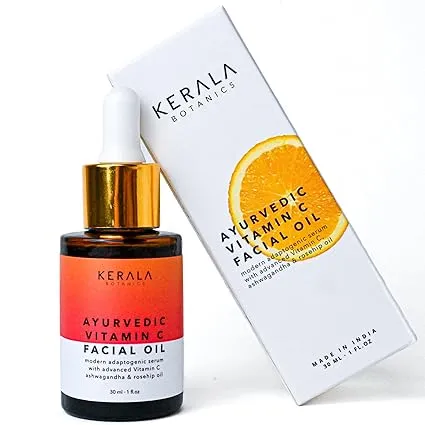
Ayurvedic Vitamin C Face Oil
Kerala Botanics
$49
★★★★☆
Who it suits: people who want a simpler routine, since it works as a treatment and a moisturizer in one step. It’s also a reasonable pick if you can’t use retinoids and like the Ayurvedic, plant-based approach.
Who should think twice: anyone with oily or breakout-prone skin may find an oil too rich. It can also feel heavy under makeup. And it has far less clinical backing than the classic vitamin C serums, so don’t expect it to match tretinoin’s track record. Bakuchiol is a gentler cousin, not a clone.
How to Use Both
Good news: peptides and retinoids get along fine. There’s no known conflict, and combining them makes sense. The retinoid does the heavy lifting, and the peptide serum adds comfort and hydration around it. Here’s a setup that works for most people.
A simple schedule
Morning:
- Gentle cleanser (or just a water rinse)
- Peptide serum
- Moisturizer
- Sunscreen, every single day
Night, retinoid nights (start with two a week):
- Cleanser
- Retinoid, pea-sized amount
- Moisturizer
Night, off nights:
- Cleanser
- Peptide serum
- Moisturizer
This keeps the peptide serum in the morning where it’s easy to tolerate, and lets your skin recover between retinoid nights. As your skin adapts, move to every other night, then more often if you want to.
If you want to layer them at night
You can. Apply the peptide serum first on clean skin, let it sink in for a minute, then apply your retinoid. Some people also buffer by putting moisturizer first, then retinoid. This is called the sandwich method, and it cuts irritation at the cost of a slightly weaker effect.
A few ground rules
- Add one new thing at a time. If you start a retinoid and a new peptide serum in the same week and your face revolts, you won’t know who to blame.
- Patch test. Especially with copper peptides or anything with fragrance.
- Be patient. Plan on three months before judging either one.
- Watch your acids. If you’re layering exfoliating acids on top of a retinoid, dial one of them down. Using everything at once is how people end up with a damaged barrier.
- Copper peptides and strong vitamin C: the interaction is debated, so a simple fix is to use them at opposite times of day.
So Which One Should You Choose?
Pick based on your situation, not on hype.
Choose a retinoid first if: you want the most proven way to improve fine lines, texture, and sun damage, and your skin can handle some adjustment time.
Choose peptides first if: your skin is reactive, you’re pregnant or nursing, or you’ve repeatedly quit retinoids. You’ll get a subtler result, but you’ll actually stick with it.
Choose both if: your skin tolerates a retinoid and you’d like extra hydration and support. It’s the strongest combination, and the cost of adding a peptide serum is low.
Consider a bakuchiol-based option if: retinoids aren’t working for you at all and you want a plant-based alternative with at least some head-to-head data.
Putting It All Together
Retinoids are the proven anti-aging heavyweight. Peptides are the gentle supporting player, with the best evidence for signal and carrier types and the weakest for the “Botox in a bottle” kind.
If you only have room for one step, make it a retinoid and wear sunscreen. If you can’t tolerate one, peptides are a sensible fallback, and bakuchiol is worth a look. And if you can do both, use the peptide serum in the morning, the retinoid at night, and build up slowly.
Skip the dramatic claims, pick the one you’ll actually use, and give it three months. That’s the whole plan.