
Ingredients
SkinCeuticals C E Ferulic: Is It Worth $185?
CE Ferulic is the gold standard vitamin C serum — but at $185, it deserves real scrutiny. Here's what you're actually paying for.
Disclosure — This article may contain affiliate links. We earn a small commission at no extra cost to you when you purchase through our links. This supports our ability to create independent, evidence-based skincare content.
CE Ferulic is the most studied, most referenced vitamin C serum in dermatology. At $185 for 30ml, it’s also one of the most expensive mass-market serums you can buy. The question isn’t whether it works — it does. The question is whether it works enough to justify the price for your particular routine.
That’s what we’re going to settle here.
This isn’t a hype piece. We’ll go through the actual science, the real limitations, and the specific situations where $185 makes sense versus where it absolutely doesn’t. If you’re looking for permission to buy it, you might find it here. If you’re looking for permission to skip it, you’ll find that too.
What CE Ferulic Actually Is
SkinCeuticals C E Ferulic is a 15% L-ascorbic acid serum combined with 1% alpha-tocopherol (vitamin E) and 0.5% ferulic acid, formulated at a pH of approximately 2.5 to 3.5. That pH is low enough to allow L-ascorbic acid — the pure, active form of vitamin C — to penetrate the skin before it can oxidize.
The ferulic acid isn’t filler. It doubles the photoprotection offered by vitamins C and E when combined, according to research published by Duke University dermatologists — including Dr. Sheldon Pinnell, who developed the Duke Antioxidant patent that SkinCeuticals later licensed. This combination has more peer-reviewed research behind it than almost any other topical antioxidant formula.
So when people call it the gold standard, that’s not marketing. It’s a fair description of where the clinical evidence sits.
What It Does (and Doesn’t) Do
It protects skin from UV-induced free radical damage. That’s the main thing. Daily antioxidant protection helps reduce the cumulative photodamage that drives fine lines, uneven tone, and dullness over time. It also brightens — slowly, consistently, over months.
What it doesn’t do: it’s not a spot treatment, it’s not a moisturizer, and it won’t give you a dramatic overnight result. This is a long game product. If you’re expecting visible change in two weeks, you’ll be disappointed.
The Real Cost of Ownership
$185 per bottle is the sticker price. The real cost depends on how fast you go through it.
A 30ml bottle, used daily at the right amount (3–4 drops), lasts roughly 2–3 months for most people. That puts annual spend at $740–$1,110. For a serum.
That’s not a small number. And it becomes a worse deal if you factor in one of CE Ferulic’s most persistent problems: oxidation.
The Oxidation Problem
L-ascorbic acid is notoriously unstable. It oxidizes on contact with air, light, and heat — turning from clear to yellow to amber to brown. Once it’s turned amber, it’s still doing something, but the effective concentration has dropped significantly. Dark brown? It’s largely inactive, and some oxidized ascorbic acid can actually generate free radicals rather than neutralize them.
We have a full breakdown of why vitamin C serums turn orange if you want to understand the chemistry. The short version: even well-formulated L-ascorbic acid serums have a shelf life problem, and $185 doesn’t make you immune to it.
SkinCeuticals ships CE Ferulic in a sealed, dark bottle. The formula is acidic enough to slow oxidation. But once you open it and use it daily, you have a window — typically 3 months from opening — before degradation becomes meaningful. If you travel, store it in a warm bathroom, or leave it near a window, that window shortens.
The practical implication: don’t buy two bottles at once to “save on shipping.” Use one, finish it promptly, store it correctly (cool, dark, away from direct light), and replace it when it starts yellowing noticeably past its original pale straw color.
Who It’s Actually For
CE Ferulic earns its price in specific circumstances. Here’s where it makes the most sense.
Photoaging is your primary concern
If fine lines, sun damage, and loss of firmness are your main issues, daily L-ascorbic acid plus photoprotection is one of the most evidence-backed approaches available. CE Ferulic is the version of that approach with the most clinical data behind it. If this is your priority and budget isn’t the constraint, it’s a reasonable choice.
You’ve tried cheaper vitamin C serums and found them irritating
Counter-intuitive, but true. Lower-quality L-ascorbic acid serums often use unstable, impure forms that cause more stinging. CE Ferulic’s formulation is tight — the pH is calibrated, the ingredients are high-purity, and the delivery is consistent. Some people who struggled with cheaper serums do better here. Not everyone, but enough that it’s worth mentioning. (If you have genuinely sensitive skin, our guide to vitamin C and sensitive skin is worth reading first.)
You’re consistent and methodical
This product rewards people who use it daily, store it correctly, and apply it before sunscreen without skipping. If your routine is inconsistent, you’ll waste half the bottle and most of the benefit. A simpler, cheaper option applied reliably will beat an expensive one used sporadically every time.
Who Should Skip It
Honestly, most people.
The vitamin C serum market has gotten genuinely competitive. There are stable derivative forms — ascorbyl glucoside, sodium ascorbyl phosphate, ethylated ascorbic acid — that are gentler, more shelf-stable, and effective at a fraction of the cost. They don’t have the same clinical depth as L-ascorbic acid at 15%, but for brightening and general antioxidant support, many people won’t feel a meaningful difference.
If budget is any kind of factor in your decision, the alternatives to CE Ferulic guide covers the strongest options at every price point. The gap is real but not infinite.
There’s also a format question worth asking. L-ascorbic acid serums are water-based, acidic, and can sting — especially on dry, sensitized, or compromised skin. If your skin barrier is already struggling, layering a pH 2.5–3.5 serum into your routine can do more harm than good. Fix the barrier first. Then add actives.
The Irritation Question
CE Ferulic can sting. That initial tingle is common and usually harmless. Full stinging, redness, or burning that lingers past a minute or two is not normal and means either the product isn’t right for your skin, or your skin isn’t ready for it.
The 15% L-ascorbic acid concentration is on the higher end of what’s typically well-tolerated. Some people start at 10% and work up. CE Ferulic doesn’t offer a lower-concentration option — that’s just what it is. If you find high-concentration L-ascorbic acid consistently uncomfortable, no amount of brand prestige changes the answer. You need a different form of vitamin C.
Our guide to layering skincare correctly covers where a vitamin C serum like CE Ferulic fits into a routine — after cleansing, before moisturizer, always before sunscreen. Don’t apply it to wet skin; let your face dry fully first. That small step reduces stinging for a lot of people.
The Alternatives Worth Knowing
C E Ferulic
SkinCeuticals
$185
★★★★½
The case against: $185, oxidation timeline, irritation potential, no lower-concentration version. The case for: The most clinically supported vitamin C serum available without a prescription.
If the oil format appeals — or if you want vitamin C and a bakuchiol component in one step — the Kerala Botanics Ayurvedic Vitamin C Face Oil takes a fundamentally different approach. It uses a stabilized, advanced vitamin C derivative formulated to stay active in skin cells significantly longer than standard L-ascorbic acid, combined with bakuchiol for a retinol-like effect without the irritation. It’s an oil, which means it doubles as a moisturizer for drier skin types. The tradeoff: less clinical data than CE Ferulic, and the oil texture won’t suit everyone — particularly oily skin or anyone who wears heavy makeup. For someone building a simplified routine, or who wants to reduce the number of steps, it’s worth a serious look.
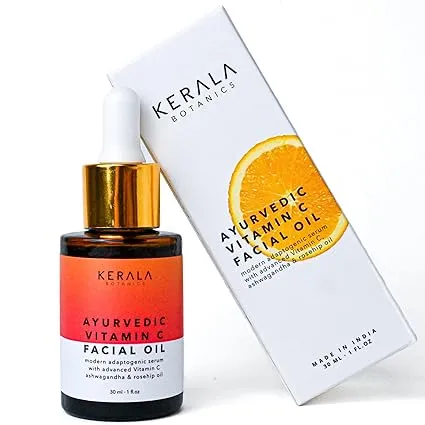
Ayurvedic Vitamin C Face Oil
Kerala Botanics
$49
★★★★☆
The case against: Oil format isn’t universal, less clinical backing than CE Ferulic, may feel heavy under makeup. The case for: Combines vitamin C treatment, moisturizer, and facial oil in one step; bakuchiol makes it useful for anyone also managing fine lines without wanting to add a retinol.
If you want straight L-ascorbic acid at a fraction of the price to see whether your skin tolerates the form at all, TruSkin’s vitamin C serum is a reasonable starting point. It’s not a CE Ferulic replacement — the formulation isn’t as sophisticated — but for $20, it lets you test the format before committing to $185.
Vitamin C Serum
TruSkin
$20
★★★★☆
What the $185 Is Actually Buying You
It helps to be precise about this. The premium covers:
- The patent-backed formula. The specific 15% L-ascorbic acid + 1% vitamin E + 0.5% ferulic acid combination at this pH is the one with peer-reviewed backing. Copying it requires either licensing or reformulating, which most brands don’t do exactly.
- Manufacturing consistency. Pharmaceutical-grade vitamin C synthesis. Tight quality control on pH and purity. This matters more for L-ascorbic acid than for most ingredients because purity directly affects stability.
- The clinical literature. CE Ferulic appears in actual dermatology research. If your dermatologist recommends it specifically, they’re likely referencing that body of work.
What the $185 does not buy you: immunity from oxidation, guaranteed tolerance, or results proportionally better than a $60 alternative. The gap between CE Ferulic and well-formulated competitors is real but narrower than the price difference suggests.
Putting It All Together
CE Ferulic is a genuinely excellent product with more research behind it than anything else in its category. If budget isn’t a concern, you have aging skin you’re actively treating, you’re consistent, and you store and use it correctly — it earns the recommendation.
But for most people, the math doesn’t add up. You’re paying for clinical credibility and manufacturing precision. Those things matter, but they don’t matter $130 more than a well-formulated alternative for the average routine.
The honest answer to “is it worth it?” is: it depends on what you’re comparing it to and how much you’ll use it.
If you’ve never tried a vitamin C serum, start somewhere cheaper. Learn whether your skin tolerates L-ascorbic acid, whether you’ll actually apply it daily, whether the format works for your routine. Then revisit the question of CE Ferulic with real information rather than theoretical interest.
If you’ve tried the cheaper options and found them lacking — inconsistent results, more irritation, faster oxidation — CE Ferulic becomes easier to justify. You’ll know you’re paying for an upgrade, not just a brand name.
And if you’re drawn to a different format entirely, whether that’s a derivative-based serum, an oil-based approach, or something rooted in a different tradition, the vitamin C serum landscape has more genuinely good options than it did five years ago. The monopoly on efficacy is gone. What remains is a question of priorities.
Spend accordingly.
For more on related topics: Niacinamide vs Vitamin C: Can You Use Them Together? · Antioxidants in Skincare: Beyond Vitamin C · The Best Alternatives to SkinCeuticals C E Ferulic · Oil-Soluble vs Water-Soluble Vitamin C