
Anti-Aging
Algae-Derived Retinol Alternatives vs Bakuchiol vs Retinol: A 2026 Three-Way Comparison
Algae-derived retinol alternatives are the newest entrant in anti-aging. Here's how they stack up against bakuchiol and classic retinol.
Disclosure — This article may contain affiliate links. We earn a small commission at no extra cost to you when you purchase through our links. This supports our ability to create independent, evidence-based skincare content.
The term “retinol alternative” has been doing a lot of heavy lifting lately. First it was bakuchiol, which earned real clinical attention around 2018. Now algae-derived retinol alternatives are arriving — a newer category built on 2025–2026 research into marine and freshwater algae compounds that appear to mimic retinol’s signaling pathways without the vitamin A chemistry.
Three-way comparisons like this one are useful only if they’re honest about what we know versus what we’re guessing. So here’s the thesis upfront: retinol still has the deepest evidence base. Bakuchiol has enough solid data to recommend with confidence. Algae derivatives are genuinely interesting and probably effective — but the clinical picture is thin and will look different in two years. Your job is to understand where each one sits and pick accordingly.
What Retinol Actually Does (The Mechanism Matters)
Before comparing alternatives, it’s worth being precise about what retinol does. Retinol (the OTC version of tretinoin) is a vitamin A derivative. It converts in skin to retinaldehyde, then to retinoic acid, which binds to retinoic acid receptors (RARs) in cell nuclei and triggers gene expression changes. That’s what drives collagen synthesis, cell turnover, and the gradual thickening of the dermis.
The irritation isn’t a side effect people invented. It’s a direct consequence of that receptor activity. Retinoic acid is biologically aggressive. The retinoid ladder — from retinyl palmitate at the mild end, up through retinol, retinaldehyde, and prescription tretinoin — reflects increasing potency and increasing irritation potential.
If you want the full breakdown of how these forms compare, our guide on retinol vs retinaldehyde vs tretinoin covers the conversion steps in detail.
Why “Alternative” Usually Means “Different Mechanism”
Here’s the thing about alternatives: most of them don’t work like retinol. They work alongside pathways that happen to produce some similar downstream effects — increased collagen expression, improved cell turnover, antioxidant protection. That’s not a knock. It just means the word “alternative” is doing PR work that the biology doesn’t fully support.
Bakuchiol activates some of the same RAR pathways as retinoic acid. That’s not a coincidence — it’s the basis of its comparison studies. Algae derivatives appear to work differently still. Understanding those distinctions changes how you use each one.
Retinol: Still the Standard
Decades of peer-reviewed research. Multiple randomized controlled trials. Prescription-strength tretinoin is one of the most studied topical compounds in dermatology.
That track record is real. A 2022 Cochrane-adjacent review on topical retinoids for photoaging confirmed statistically significant improvements in fine lines, texture, and pigmentation across multiple trial designs. No plant-based alternative has that volume of evidence yet.
The practical downsides are also real. Dryness, peeling, and the retinoid purge are common during the adjustment period. The tretinoin purge is well-documented and genuinely unpleasant for some people. Retinol is also contraindicated in pregnancy, which matters.
Best for: People who want maximum efficacy and are willing to manage the adjustment period. Also anyone under a dermatologist’s care who can escalate to prescription tretinoin if OTC retinol stalls.
Paula's Choice Clinical 1% Retinol Treatment
Paula's Choice
$62
★★★★½
Adapalene (the synthetic retinoid in Differin) deserves a mention here. It’s gentler than tretinoin, cheaper than most retinol serums, and OTC. For people who want retinoid results without a prescription, it’s a legitimate starting point. Our comparison of tretinoin vs adapalene covers the tradeoffs.
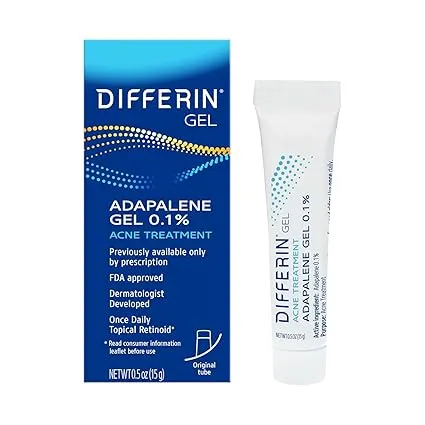
Differin Adapalene Gel 0.1%
Differin
$15
★★★★½
Bakuchiol: The Best-Studied Alternative
Bakuchiol is extracted from the seeds and leaves of Psoralea corylifolia, a plant used in Ayurvedic and traditional Chinese medicine. The modern skincare version has been studied properly — not just in-house by brands.
The most-cited study is Dhaliwal et al. (2019, British Journal of Dermatology), a 12-week split-face randomized trial comparing 0.5% bakuchiol twice daily to 0.5% retinol once daily. Both groups showed significant improvements in fine lines and pigmentation. Bakuchiol users reported significantly less scaling and stinging. That study doesn’t prove bakuchiol equals tretinoin — it compares it to a relatively modest retinol concentration. But it’s real data, peer-reviewed, in a credible journal.
Mechanistically, bakuchiol appears to activate RARα, RARβ, and RARγ — the same nuclear receptors that retinoic acid hits. This is likely why the clinical results overlap. The difference is that bakuchiol’s binding is gentler and it doesn’t require the same enzymatic conversion steps, which probably explains the lower irritation rate.
Bakuchiol is also pregnancy-safe (unlike retinol), photostable, and works well in oil-based formulations. Our full bakuchiol vs retinol breakdown goes deeper if you want it.
Best for: Sensitive skin, pregnancy (confirm with your OB), people who’ve tried retinol and found it consistently irritating, or anyone who prefers plant-derived ingredients.
The Kerala Botanics Ayurvedic Vitamin C Face Oil pairs bakuchiol with an advanced, stabilized vitamin C in an oil base — which is a legitimately useful format if your routine benefits from an oil step. The bakuchiol here is doing real work, not just riding the label. The oil format won’t suit everyone, particularly if you’re oily-combination and don’t want the extra occlusion. Under makeup, it can feel heavy. And the clinical data behind this specific formula is thinner than standalone bakuchiol serums. But as a multi-step simplifier for dry or dry-combination skin, it’s efficient.
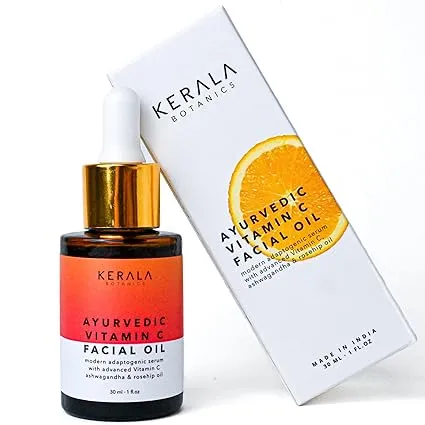
Ayurvedic Vitamin C Face Oil
Kerala Botanics
$49
★★★★☆
Algae-Derived Retinol Alternatives: The New Category
This is where the science gets genuinely interesting — and genuinely thin. The 2025–2026 research wave has focused on specific algae-derived compounds, primarily:
- Phytol and phytyl derivatives from green algae (Chlorella, Ulva species)
- Fucoxanthin from brown algae (Laminaria, Undaria)
- Astaxanthin from microalgae (Haematococcus pluvialis) — though this one has been in formulations longer
- Algae-derived retinol analogues — compounds isolated from red and brown algae that share structural similarity with retinoids without being vitamin A
The proposed mechanisms vary by compound. Fucoxanthin has shown activity in stimulating type I collagen synthesis and inhibiting MMP-1 (the enzyme that degrades collagen) in keratinocyte cell studies. Phytol derivatives appear to modulate RAR activity similarly to bakuchiol, though the binding affinity data is preliminary. Astaxanthin is primarily an antioxidant story — powerful singlet oxygen quenching, some collagen-protective effects, but not a direct retinol mimic.
The honest assessment: Most published research is in vitro (cell culture) or in small pilot studies without the randomized controls that bakuchiol now has. Brands are moving faster than the science, which is normal for new ingredients. It doesn’t mean the compounds don’t work — it means we don’t yet have the study designs to say how well or for whom.
What we can say: algae-derived actives are generally well-tolerated, often come with meaningful antioxidant activity as a secondary benefit, and are showing up in serious formulations from brands that do their homework. They’re worth watching.
Best for: People who want to stay ahead of the ingredient curve, anyone with very reactive skin who hasn’t tolerated anything else, or as a complement to an existing routine rather than a retinol replacement.
Biossance’s Squalane + Phyto-Retinol Serum is one of the cleaner formulations in this new category. It uses a bakuchiol-algae complex alongside squalane, keeps the ingredient list tight, and the squalane base reduces the irritation risk further. It’s not cheap. The evidence behind the proprietary complex is mostly brand-generated at this stage, which is a limitation worth naming. But the formula itself is well-constructed.
Biossance Squalane + Phyto-Retinol Serum
Biossance
$72
★★★★☆
Head-to-Head: What the Differences Actually Mean
| Retinol | Bakuchiol | Algae-Derived | |
|---|---|---|---|
| Evidence base | Extensive | Solid (growing) | Early-stage |
| Mechanism | RAR activation via retinoic acid | Direct RAR activation | Varies by compound |
| Irritation risk | Moderate to high | Low | Low |
| Pregnancy safe | No | Generally yes* | Generally yes* |
| Photostability | Degrades in light | Stable | Stable |
| Best format | Serum, cream | Serum, oil | Serum, oil |
*Confirm with your doctor.
The table above is useful, but it flattens some nuance. Retinol at 0.025% is not the same beast as tretinoin 0.1%. Bakuchiol at 0.5% in a well-formulated serum outperforms bakuchiol at 0.1% in a moisturizer that buried it below the emollients. Algae compound quality varies enormously by extraction method and concentration. Formulation matters as much as ingredient selection, sometimes more.
How to Choose (And How to Combine)
Start with your tolerance history. If you’ve used retinol before and handled it fine, there’s no strong reason to switch unless you’re pregnant, simplifying your routine, or genuinely curious about newer compounds.
If you’ve tried retinol and consistently hit a wall — persistent dryness, barrier disruption, irritation that didn’t resolve after the standard adjustment period — bakuchiol is the logical next step. The evidence supports it. Skin barrier burnout is real, and repeatedly stressing an already-reactive barrier doesn’t eventually toughen it.
If you’re newer to actives entirely, starting with bakuchiol or an algae-based serum before working up to retinol is a reasonable approach. Our guide for first skincare routines covers the sequencing logic.
Can You Use Them Together?
Yes, with some nuance. Bakuchiol and retinol have been combined in formulations specifically because bakuchiol appears to reduce retinoid-induced irritation while adding its own collagen-stimulating activity. That’s a legitimate use case.
Layering an algae serum with retinol is less studied but unlikely to cause problems if both formulations are sensible. The usual layering rules apply — thinner textures first, give actives time to absorb, don’t pile multiple high-dose actives in the same application if your barrier is compromised. How to layer skincare correctly has the full framework.
What you don’t need to do is use all three simultaneously. More actives don’t mean faster results. They usually mean more variables when something goes wrong.
Putting It All Together
Retinol remains the most evidence-backed option for visible anti-aging results. If your skin tolerates it, the case for switching is mostly about preference, not performance.
Bakuchiol is no longer an unproven alternative. It has peer-reviewed clinical data, a known mechanism, and a strong safety profile. It’s a genuine option — not a compromise.
Algae-derived retinol alternatives are the most interesting development in this space in years. The early science is plausible and some compounds have real mechanism data behind them. But we’re in the 2026 equivalent of 2018 bakuchiol territory. The evidence will catch up. For now, approach them as promising additions rather than proven replacements.
The best routine is the one you’ll actually use consistently. For some people that’s tretinoin on a skin cycling schedule. For others it’s a bakuchiol oil they don’t dread applying. The goal isn’t using the most aggressive ingredient — it’s keeping your skin healthy over time. Skin longevity is a longer game than most product marketing suggests.
Pick the option that fits your skin, your tolerance, and your patience for uncertainty. Then give it 12 weeks before drawing conclusions.