
Anti-Aging
Neck and Décolletage: The Most-Neglected Aging Zone
Your neck and chest age faster than your face — and most routines ignore them. Here's how to fix that, with the right ingredients and products.
Disclosure — This article may contain affiliate links. We earn a small commission at no extra cost to you when you purchase through our links. This supports our ability to create independent, evidence-based skincare content.
Most people stop their skincare routine at the jaw. Cleanser, serum, moisturizer, SPF — all applied carefully to the face, then the hands rinse off and everything below the chin gets nothing. For years. Sometimes decades.
This is how you end up with a face that looks reasonably maintained and a neck that tells a completely different story.
Dermatologists flag it constantly: the neck and décolletage are among the earliest and most obvious sites of visible aging, and they’re almost always under-treated. The skin there is structurally thinner than facial skin, produces less sebum, and gets consistent UV exposure while being consistently ignored in routine planning. The result is crepey texture, horizontal banding (sometimes called “tech neck”), chest spots, and that particular loss of definition along the jawline that no amount of face treatment will address.
The fix isn’t complicated. It mostly involves moving your hands a few inches further south.
Why the Neck Ages the Way It Does
Understanding the mechanism helps you pick the right approach.
The structural reality
Neck skin has fewer sebaceous glands than facial skin, which means it runs drier as a baseline. It also has less subcutaneous fat, so volume loss from collagen degradation shows up faster and more dramatically. The platysma — the broad, thin muscle running from chest to jaw — loses tone over time, contributing to banding and sagging that no topical ingredient can fully reverse.
Collagen and elastin decline everywhere with age, but the neck loses them faster in relative terms because it starts with less structural support. Sun damage compounds this: the chest and upper neck are nearly always exposed, rarely shaded by hair or hats, and even people who are diligent about face SPF often forget to apply it below the jawline. Add repetitive downward neck flexion (yes, phone use accelerates this) and you have a zone that’s aging from multiple directions at once.
Hormonal acceleration
If you’re in perimenopause or post-menopause, the neck and décolletage are hit particularly hard. Estrogen supports collagen synthesis and skin thickness, so its decline accelerates the thinning and laxity that’s already happening from UV and chronological aging. We cover this in more depth in our perimenopause and menopause skincare guide — it’s worth reading if you’re navigating that transition, because the neck is one of the first places the change shows up.
Sun damage and pigmentation
The chest is especially prone to mottled pigmentation — irregular patches of brown and white that result from years of cumulative UV exposure. This kind of photodamage responds to the same ingredients that work on facial dark spots (vitamin C, niacinamide, azelaic acid), but it takes longer because the skin turnover rate on the chest is slower than on the face. Patience is non-negotiable here.
The Ingredients That Actually Help
Not everything that works on the face translates directly. The neck and chest are more reactive, thinner, and less resilient. Start lower and slower than you would on your face.
Retinoids
Retinoids (retinol, retinaldehyde, tretinoin) are the most evidence-backed option for collagen stimulation and skin turnover. They work on the neck, but the skin there is more sensitive and irritation is common if you start too aggressively. If you’re already using a retinoid on your face, extend it down the neck and chest — just use less. A pea-sized amount for the face should have enough residue to cover the neck. If you’re new to retinoids, start once a week and build slowly. The full breakdown of which form is right for where you’re starting is in our retinol vs retinaldehyde vs tretinoin guide.
For those who can’t tolerate retinol (or who prefer to avoid it), bakuchiol is a reasonable alternative. It works by a different mechanism but has shown comparable results for fine lines in a small number of controlled trials — the evidence is more modest than for retinoids, but the tolerance profile is significantly better. We’ve compared the two directly in bakuchiol vs retinol if you want the full picture.
Vitamin C
On the chest especially, vitamin C serves two functions: antioxidant protection (reducing ongoing UV-induced oxidative damage) and brightening (reducing the appearance of existing pigmentation by inhibiting tyrosinase). L-ascorbic acid is the most studied form, but it’s also the most unstable — a serum that’s turned orange has largely lost its potency. The oil-soluble vs water-soluble vitamin C comparison is useful here, because some formats hold up better on body skin where you’re covering a larger surface area and want something that doesn’t evaporate before it absorbs.
Peptides
Peptides signal fibroblasts to produce collagen. The clinical evidence isn’t as strong as for retinoids, but they’re well-tolerated, non-irritating, and pair well with everything. For the neck and chest — where you want to support collagen without risking irritation — they’re a solid supporting ingredient. Look for palmitoyl tripeptide-1, palmitoyl tetrapeptide-7, or matrixyl 3000 on ingredient labels. Check out our best peptide serums roundup for formulas worth considering.
Niacinamide
Niacinamide (vitamin B3) reduces pigmentation transfer between melanocytes and keratinocytes, which makes it useful for the mottled chest spots that come with sun damage. It also supports the skin barrier, which tends to be compromised in this zone. Gentle, non-irritating, and can be layered under most things. Our complete niacinamide guide covers concentrations and formulation details.
SPF — and this one is non-negotiable
If you do nothing else from this article, do this: apply SPF to your neck and chest every single morning. The majority of the visible aging in this zone is photoaging. You cannot antioxidant or retinol your way out of ongoing sun damage. Whatever sunscreen you use on your face, bring it down. Our how much sunscreen to apply guide has the coverage math — you need more than you think.
How to Actually Build a Neck and Décolletage Routine
The approach is simpler than it sounds. You’re mostly extending what you already do — not building a separate routine from scratch.
Morning routine
- Cleanse lightly. You don’t need to aggressively cleanse your neck and chest every morning unless you’re using heavy occlusives at night. Rinse water is fine, or extend your facial cleanser gently downward.
- Vitamin C serum. Apply to face, neck, and upper chest. This is the step most people are already doing on their face and stopping at the chin.
- Moisturizer. The neck needs hydration; it runs dry. Ceramide-based formulas are particularly useful here for barrier support — our ceramides guide explains why the lipid composition matters.
- SPF. The whole zone. Every day.
Evening routine
- Gentle cleanse if needed.
- Retinoid or bakuchiol. Extend it down. Use less product per square inch than you would on your face, especially when you’re starting out. If you’re using tretinoin, be careful — the neck and décolletage can react strongly, and dryness and flaking are common when people first extend it.
- Moisturizer. A richer formula works well at night here. Barrier-focused ingredients — ceramides, fatty acids, squalane — are your friends.
Product recommendations for this zone
For a retinol option at an accessible price point, RoC Retinol Correxion Line Smoothing Serum has been around long enough to have real-world validation. It’s not the highest concentration available, which actually makes it more appropriate for the neck where starting gently matters.

RoC Retinol Correxion Line Smoothing Serum
RoC
$25
★★★★☆
For a dedicated neck formula, StriVectin TL Advanced Tightening Neck Cream Plus contains a peptide complex specifically researched for neck laxity. It’s not magic — nothing topical will replicate a surgical result — but the formula is genuinely well-constructed and the texture works for this zone.
StriVectin TL Advanced Tightening Neck Cream Plus
StriVectin
$89
★★★★☆
If you want to simplify the evening vitamin C and moisture step into one product, Kerala Botanics’ Ayurvedic Vitamin C Face Oil is worth considering here. It combines a stabilized, oil-soluble form of vitamin C (formulated for longer retention in skin cells than standard L-ascorbic acid) with bakuchiol, so you get antioxidant activity and a retinol alternative in one step. The oil format absorbs well on the chest and neck without pilling or dragging, and the multi-step replacement angle is genuinely useful when you’re covering a larger surface area. The honest caveats: it’s not for oily skin types, it may feel heavy under clothing if you apply it and dress immediately, and the clinical data behind it doesn’t match what exists for L-ascorbic acid serums or prescription retinoids. But as an evening treatment for dry-to-normal skin on the neck and décolletage, it does the job without requiring three separate products.
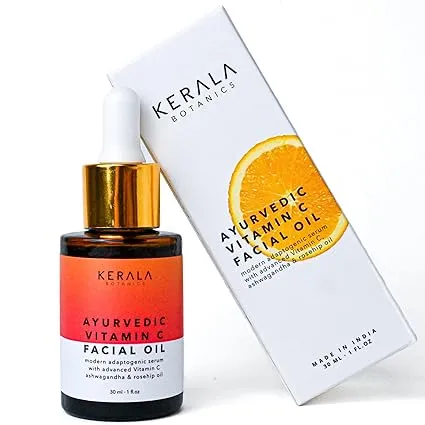
Ayurvedic Vitamin C Face Oil
Kerala Botanics
$49
★★★★☆
For SPF, EltaMD UV Clear is a consistent recommendation on this site for a reason: it’s reef-safe, non-comedogenic, and sits well on skin without the chalky finish that makes some people skip sunscreen altogether. Use it on your neck and chest, not just your face.
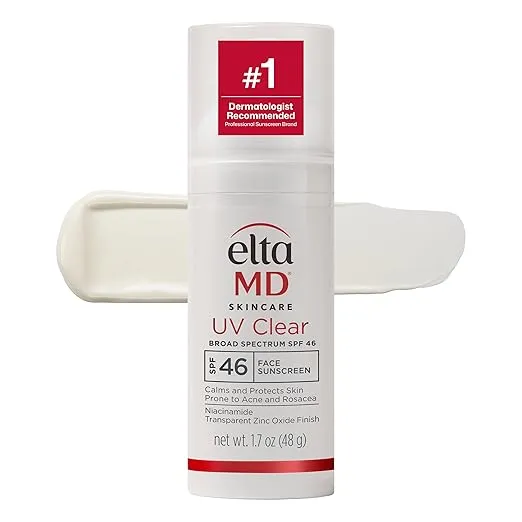
EltaMD UV Clear Broad-Spectrum SPF 46
EltaMD
$41
★★★★½
What to Avoid — and Why
Heavy exfoliation
The chest and neck tolerate exfoliation, but they’re more sensitive than the face. Aggressive AHA use here can cause irritation or post-inflammatory hyperpigmentation, which is counterproductive if you’re trying to fade chest spots. If you want to incorporate chemical exfoliation, keep concentrations low and frequency to once or twice a week. The chemical vs physical exfoliation guide covers the tradeoffs if you’re weighing your options.
Highly fragranced formulas
Neck and chest skin is often reactive. Fragrance is a common sensitizer, and products formulated for body use (which often contain higher fragrance loads) can cause contact dermatitis in this zone, especially on the upper chest. Stick with facial-grade products extended downward, or fragrance-free body formulas.
Stretching and pulling
Application technique matters more here than people realize. The neck skin has less structural support, and repeated tugging during product application can contribute to sagging over time. Apply products in upward strokes on the neck, and use gentle pressing motions on the chest. It sounds minor. It isn’t.
Managing Expectations
Topical skincare can do real work here, but it has limits. Significant laxity, deep banding, and advanced crepiness respond less to ingredients and more to procedures — radiofrequency, microneedling, and in-office treatments. Those are valid options and worth a conversation with a dermatologist if topicals alone aren’t meeting your goals.
What skincare can do: slow ongoing damage, improve texture and hydration, reduce pigmentation, and support collagen synthesis enough to see a genuine difference over months of consistent use. Six weeks won’t show you much. Six months of daily SPF plus a retinoid will.
The bigger lever is prevention. If you’re in your 20s or 30s and reading this, the most impactful thing you can do is start the SPF habit now. If you’re in your 40s or 50s, it’s not too late — sun damage accumulation slows when you stop adding to it, and your skin’s repair capacity is better than the marketing around aging would have you believe. Our skincare in your 40s and 50s guide gets into the decade-specific priorities.
Putting It All Together
The core idea here is simple: stop treating your chin as a finish line.
The neck and décolletage age for the same reasons the face does — UV exposure, collagen decline, and time — and they respond to the same ingredients. Retinoids, vitamin C, niacinamide, peptides, SPF. None of this requires buying new products. It requires applying the ones you already own a few inches further down.
Start in the morning: extend your vitamin C serum and SPF down the neck and onto the upper chest. In the evening, bring your retinoid or bakuchiol treatment the same distance. Add a richer moisturizer at night if this zone runs dry, which it usually does. Do that consistently, and you’ll see a difference. Not overnight. But you will see it.
The neck has been waiting.