
Anti-Aging
Skincare in Your 40s and 50s: What to Add, What to Drop, Decade by Decade
Your skin changes significantly in your 40s and 50s. Here's what the science says to add, swap, and skip — decade by decade.
Disclosure — This article may contain affiliate links. We earn a small commission at no extra cost to you when you purchase through our links. This supports our ability to create independent, evidence-based skincare content.
Your 20s skincare piece covers the basics: sunscreen, a gentle cleanser, maybe a vitamin C. It’s a solid foundation. But if you’re in your 40s or 50s and still running that same routine, you’re working with a plan that was never designed for what your skin is doing now.
This isn’t about chasing youth. It’s about understanding what’s actually changing at the cellular level — collagen production, barrier function, estrogen, cell turnover rate — and adjusting your routine to meet your skin where it is. Some of what you’ve been doing still works. Some of it needs upgrading. And a few things you might be skipping are now non-negotiable.
Let’s go decade by decade.
What’s Actually Happening to Your Skin After 40
Before getting into products, it helps to know what you’re working with.
Collagen production starts declining around age 25, but the effects become visible in your 40s. You’re looking at roughly 1% loss per year, and by your mid-40s, that math adds up. The structural scaffolding that kept skin plump and firm is thinner. Lines that used to disappear overnight stop doing that.
Cell turnover slows too. In your 20s, skin renews roughly every 28 days. By your 50s, that cycle can stretch to 45–60 days. Dead skin cells sit on the surface longer, which means dullness, uneven texture, and ingredients that used to absorb quickly suddenly feel like they’re not doing much.
Then there’s the barrier. Sebum production drops, particularly after menopause. Skin that was once oily or combination often becomes drier, more reactive, and more easily irritated. A routine that worked fine at 35 can start causing redness and tightness at 45.
Hormones play a significant role here — especially for women. The drop in estrogen that accompanies perimenopause and menopause affects collagen, skin thickness, moisture retention, and wound healing. We have a full breakdown in the perimenopause and menopause skincare guide if you want to go deep on that.
Skincare in Your 40s: The Decade of Upgrading
Your 40s are less about adding a dozen new products and more about upgrading the ones that matter. The core routine stays intact. The actives get stronger.
Retinoids: If You Haven’t Started, Now Is the Time
Retinoids (vitamin A derivatives) are the most clinically supported anti-aging ingredient in existence. They work by binding to nuclear receptors in skin cells, which drives collagen synthesis and speeds up cell turnover. This isn’t marketing language — it’s the mechanism, and it’s been replicated in studies for decades.
If you’re still using a low-percentage over-the-counter retinol, your 40s are a reasonable time to consider upgrading. Retinol converts to retinoic acid (the active form) through two enzymatic steps. You lose potency at each step. Retinaldehyde (retinal) requires only one conversion, which makes it more efficient. Tretinoin — the prescription form — is retinoic acid already. No conversion needed.
Retinol vs. Retinaldehyde vs. Tretinoin covers the tradeoffs in full. Short version: if you can access tretinoin through a dermatologist or telehealth prescription, it’s the upgrade worth making in your 40s.
If prescription isn’t accessible or you want to start slower, retinaldehyde is the next best option. Medik8’s Crystal Retinal line is one of the better-formulated options on the market — the encapsulated delivery helps with stability and tolerability.
Crystal Retinal 6
Medik8
$59
★★★★½
If irritation is a concern — or you’re pregnant, or you want to avoid retinoids entirely — bakuchiol is worth considering. The evidence isn’t as strong as tretinoin, but a 2019 randomized trial in the British Journal of Dermatology found comparable improvements in fine lines and skin texture at 12 weeks. It doesn’t work through the same receptor mechanism, but it does work. See the full comparison in Bakuchiol vs Retinol: Does the Plant-Based Alternative Actually Work?
Vitamin C: Upgrade Your Formula
If you’re using vitamin C in your 40s, the format matters more than it did before. L-ascorbic acid (the standard form in most serums) is effective at concentrations of 10–20%, but shelf stability is a real issue. An oxidized serum isn’t doing much for you. We covered this extensively in why vitamin C turns orange.
SkinCeuticals C E Ferulic remains the benchmark. The pH, the concentration, the ferulic acid stabilizer — it’s a formula with actual published data behind it. It’s also $185.
C E Ferulic
SkinCeuticals
$185
★★★★½
For those who want an oil-based alternative — or who find that traditional serums are now too drying or irritating on a more mature barrier — Kerala Botanics’ Ayurvedic Vitamin C Face Oil takes a different approach. It uses a more stable, encapsulated form of vitamin C that the brand claims stays active in skin cells significantly longer than standard L-ascorbic acid, combined with bakuchiol. The oil format doubles as a moisturizer, which suits the drier profile that often develops in your 40s. It’s not a like-for-like swap for CE Ferulic — the clinical data is thinner and the delivery mechanism is different — but for a simplified routine or for anyone moving away from water-based serums, it’s worth trying.
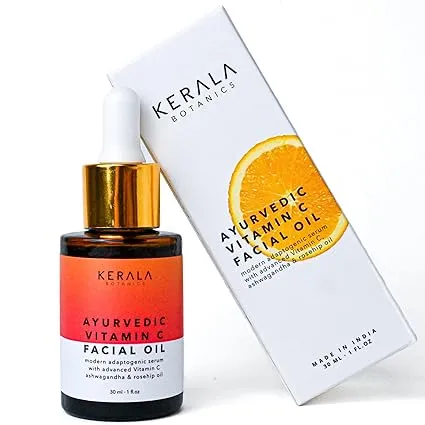
Ayurvedic Vitamin C Face Oil
Kerala Botanics
$49
★★★★☆
Budget-conscious? The best vitamin C serum alternatives to CE Ferulic are worth reading.
Add Peptides
Peptides are short chains of amino acids that signal skin cells to produce collagen. The mechanism is indirect — they don’t force collagen synthesis the way retinoids do — but the supporting evidence is solid enough to justify their place in a 40s routine. They’re also well-tolerated, which makes them easy to stack with more aggressive actives.
Palmitoyl tripeptide-1 and palmitoyl tripeptide-7 (the actives in Matrixyl) are the most studied. The Ordinary’s Matrixyl 10% + HA gives you a useful concentration at a price that doesn’t require much deliberation.
Matrixyl 10% + HA
The Ordinary
$14
★★★★☆
For a broader look at the peptide category, the best peptide serums of 2026 roundup covers the field.
Rethink Your Moisturizer
As sebum production drops, a moisturizer that was “fine” in your 30s may not be cutting it. Look for formulas that contain ceramides (the lipids that make up 50% of your skin barrier), fatty acids, and humectants like hyaluronic acid or glycerin. The barrier isn’t just about hydration — it’s your skin’s primary defense against environmental stress.
Ceramides Explained is a useful read if you want to understand what you’re actually looking for on the label.
What to Drop in Your 40s
Physical scrubs and over-exfoliation. Your barrier is more vulnerable than it was. Regular use of harsh physical exfoliants — the kind with walnut shell powder or large sugar crystals — can compromise barrier function without delivering the cellular renewal you’re hoping for. If you want to exfoliate, a low-percentage chemical exfoliant used 1–2x per week is more controlled and less damaging. Signs you’ve gone too far are covered in over-exfoliation: signs and recovery.
Also: toners with high alcohol content. If yours stings or feels “refreshing” in the way that means your skin is drying out, replace it.
Skincare in Your 50s: The Decade of Supporting Your Barrier
The shift between your 40s and 50s is partly about degree — the same processes, accelerated. But there are a few meaningful additions worth making.
Barrier Support Becomes the Priority
Post-menopause, estrogen is low and stays low. The downstream effects on skin are real: reduced ceramide production, slower wound healing, more pronounced dryness, and increased sensitivity. A good skincare routine in your 50s is built around the barrier first, actives second.
This doesn’t mean dropping retinoids — quite the opposite. Retinoids help counteract some of the structural collagen loss that accelerates around menopause. But you may need to reduce frequency (every other night or even twice weekly) and prioritize recovery. Skin cycling — the framework of rotating retinoid nights with barrier-support nights — makes more sense in your 50s than it did at 40.
Paula’s Choice RESIST Barrier Repair Moisturizer is a solid choice here: it combines niacinamide, ceramides, and a low dose of retinol in a rich formula. Not a replacement for a dedicated retinoid if you need more strength, but a good middle-ground moisturizer that does several things well.
RESIST Barrier Repair Moisturizer with Retinol
Paula's Choice
$42
★★★★½
SPF: The Non-Negotiable That Compounds
This applies at every age, but it’s worth saying directly: the cumulative UV exposure you’ve had over 50+ years is still generating damage. Photoaging doesn’t pause because you’ve started using retinol. Daily SPF 30 or higher is the single highest-leverage thing you can do for skin in your 50s, because it prevents new damage while your actives address old damage.
If you’re not sure you’re using enough, how much sunscreen to apply covers the practical details. And if you’re struggling to reapply over makeup, how to reapply sunscreen over makeup solves that problem.
Address Hyperpigmentation Directly
Decades of sun exposure tend to show up as uneven tone, dark spots, and patches in your 50s. These don’t resolve on their own, and most brightening ingredients take months to show meaningful results. Niacinamide, azelaic acid, tranexamic acid, and vitamin C all have supporting evidence — the hyperpigmentation treatment guide walks through how to use each one and what realistic timelines look like.
Melasma — a hormonal-driven pattern of pigmentation that can worsen around menopause — requires a specific approach. Sun avoidance is more critical than any topical. See the melasma treatment guide for the full picture.
The Eye Area
Fine lines around the eyes become more pronounced in your 50s because the skin there is thin and gets thinner with age. Dedicated eye creams aren’t magic, but a retinoid formulated for the eye area or a well-formulated peptide eye cream can help. Be realistic about expectations — topicals can improve texture and hydration, but they don’t address structural changes. The best eye creams for fine lines roundup covers what actually moves the needle.
What to Keep, What to Drop
Keep: SPF, vitamin C, retinoids (at an adjusted frequency), ceramide-rich moisturizer, peptides.
Reconsider: very high-strength acid exfoliants used frequently. Your barrier recovery time is longer. A gentler acid at lower frequency will give you cell turnover benefits without chronic compromise. If you’ve been doing glycolic acid three times a week for years and your skin feels increasingly reactive, that’s the formula telling you something.
Drop entirely: anything heavily fragranced applied to the face. Fragrance ingredients are common sensitizers, and sensitized skin in your 50s is harder to calm down than it was at 35.
Putting It All Together
Here’s the short version.
Your 40s are about upgrading. You likely have a working routine already — the question is whether your actives are strong enough and your formulas are stable. Upgrade your retinoid. Check that your vitamin C hasn’t oxidized. Add a peptide. Make sure your moisturizer actually supports your barrier.
Your 50s are about sustaining. The gains you’ve made depend on consistency, and the barrier is now a first-order concern. Keep the retinoid but be thoughtful about frequency. Prioritize SPF with discipline. Address pigmentation proactively. Scale back anything that’s causing chronic irritation — a compromised barrier undoes everything else.
What doesn’t change: the core routine you built in your 20s and 30s is still the foundation. Cleanse, protect, treat, moisturize. The ingredients filling those steps just need to do more work.
If you want a fuller picture of what the evening routine looks like assembled, the complete evening skincare routine guide walks through layering order and timing. And if you’ve been doing this for years and want a stripped-back reset, the minimalist 3-step routine is worth reading — sometimes removing products clarifies which ones are actually doing anything.
The goal isn’t a 12-step routine. It’s a routine that’s working.