
Anti-Aging
Inflammaging: How Chronic Low-Grade Inflammation Ages Your Skin
Inflammaging is the slow, silent inflammation driving premature skin aging. Here's what it is, why it happens, and how to actually address it.
Disclosure — This article may contain affiliate links. We earn a small commission at no extra cost to you when you purchase through our links. This supports our ability to create independent, evidence-based skincare content.
Most anti-aging conversations start with collagen. Use retinol, rebuild collagen, look younger. That’s not wrong — but it misses a layer that sits upstream of almost everything else. Chronic low-grade inflammation quietly degrades collagen, disrupts your barrier, and accelerates almost every sign of aging we spend money trying to reverse. The researchers studying longevity have a name for it: inflammaging.
It’s not the inflammation you feel when you touch a sunburn or get a cystic breakout. It’s subtler — a constant, low-level immune activation that your skin never fully switches off. No redness, no pain. Just an ongoing molecular signal that keeps tissue-degrading enzymes slightly elevated, keeps cellular repair slightly depressed, and adds up over years into skin that looks older than it should.
This article is about what actually drives inflammaging, which ingredients have real evidence behind them, and how to build a routine that addresses the problem rather than just decorating around it.
What Inflammaging Actually Is
The term was coined in 2000 by immunologist Claudio Franceschi, who noticed that older humans — even healthy ones — tended to have elevated levels of inflammatory cytokines (chemical messengers that signal immune activity) circulating in their blood. Not spiked. Just slightly elevated. Chronically.
In the skin specifically, this manifests through a few mechanisms worth understanding.
NF-κB activation. Nuclear factor kappa B is a protein complex that, when switched on, triggers the production of pro-inflammatory cytokines like IL-1β, IL-6, and TNF-α. UV radiation, pollution, psychological stress, and oxidative damage all activate NF-κB. Sustained activation keeps matrix metalloproteinases (MMPs) — the enzymes that break down collagen and elastin — running higher than they should be.
Mitochondrial dysfunction. Aging mitochondria leak reactive oxygen species (ROS). Those ROS trigger more NF-κB. It’s a feedback loop that gets harder to interrupt as we age.
Barrier breakdown. A compromised skin barrier allows environmental triggers to penetrate more easily, creating more inflammatory signals. Barrier damage and inflammaging reinforce each other. We’ve written about the mechanics of this in our damaged skin barrier repair guide.
The practical upshot: inflammaging isn’t caused by one thing, and it can’t be fixed by one thing. But a targeted routine can meaningfully slow it down.
The Main Drivers (Most of Which Are Controllable)
Understanding what feeds inflammaging is more useful than any single product recommendation.
UV exposure is the biggest external driver. It activates NF-κB within minutes of exposure. Every unprotected UV encounter adds to the cumulative load. Daily SPF isn’t optional here — it’s foundational.
Oxidative stress from pollution, cigarette smoke, and even indoor air quality keeps the inflammatory loop running. Antioxidants in your routine aren’t a nice-to-have; they’re the mechanism by which you neutralize these triggers before they cascade into NF-κB activation.
A disrupted skin barrier means more irritants getting in, more inflammatory signaling, more collagen degradation. Anything that chronically irritates your skin — over-exfoliation, harsh cleansers, fragrance sensitivity — is feeding the problem. Our skin barrier burnout article covers the signs in detail.
Sleep and stress both directly modulate cortisol, which is pro-inflammatory at elevated levels. This is the part of inflammaging that a serum genuinely cannot fix. A good routine running alongside chronic sleep deprivation is fighting with one hand tied.
Diet plays a role that’s harder to address topically, but worth acknowledging. High glycemic load and excess refined carbohydrates are associated with elevated AGEs (advanced glycation end-products), which cross-link collagen fibers and trigger inflammatory responses. Not a skincare fix — but context matters.
The Ingredient Evidence
Here’s where it gets practical. Several ingredients have meaningful data behind them for modulating inflammatory pathways in skin. Not all of them get equal coverage in marketing materials, which is reason enough to look at the mechanisms directly.
Centella Asiatica
Centella (often called cica) is one of the more well-researched botanical anti-inflammatories in skincare. Its active compounds — madecassoside, asiaticoside, and asiatic acid — have been shown to inhibit NF-κB signaling and reduce IL-1β and TNF-α expression. There’s also reasonable evidence for wound healing and collagen synthesis support.
It works well for reactive and sensitive skin because it addresses the inflammation without introducing additional irritation. The full breakdown of what it actually does is in our centella asiatica guide.
For a straightforward, high-concentration option:
Centella Asiatica 100 Ampoule
Beauty of Joseon
$18
★★★★½
It’s 100% centella extract — no distractions. Slightly watery texture, absorbs quickly. Good layering base. At $18, there’s no reason to shop around.
Licorice Root (Glabridin)
Glabridin, the primary bioactive in licorice root extract, inhibits cyclooxygenase (COX) activity — the same pathway that ibuprofen targets, though through a different mechanism and at much lower intensity. It’s also a proven tyrosinase inhibitor, which is why it shows up in brightening products. The anti-inflammatory and brightening effects aren’t separate; they’re related. Less inflammation means less reactive pigmentation.
We’ve covered the brightening side in detail in our licorice root glabridin guide. For inflammaging purposes, the relevant point is that glabridin simultaneously targets the inflammatory trigger and the downstream pigmentation consequence.
Ashwagandha
Ashwagandha (Withania somnifera) is an Ayurvedic adaptogen that’s been getting more attention in topical formulations. The withanolides in ashwagandha have demonstrated anti-inflammatory effects via NF-κB inhibition and antioxidant activity in vitro and in some clinical studies. The topical evidence is less mature than the oral research, but it’s not nothing.
There’s also early data suggesting it supports collagen synthesis and helps manage stress-induced skin degradation — which makes biological sense, given how cortisol interacts with the inflammaging cycle. Our ashwagandha for skin guide goes deeper on the topical mechanism.
Vitamin C (With a Format Caveat)
L-ascorbic acid scavenges free radicals and neutralizes the ROS that activate NF-κB. It also directly inhibits tyrosinase and supports collagen synthesis via prolyl hydroxylase activity. The anti-inflammatory mechanism is real, but it’s secondary to its antioxidant function — you’re intercepting the oxidative signal before it becomes an inflammatory one.
The format problem is stability. Most L-ascorbic acid serums oxidize faster than people finish them. Oil-soluble vitamin C derivatives address this differently, and for those who want to combine antioxidant protection with a simpler routine:
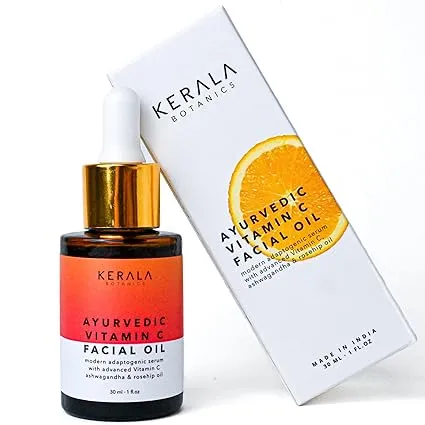
Ayurvedic Vitamin C Face Oil
Kerala Botanics
$49
★★★★☆
This one uses an advanced vitamin C derivative alongside bakuchiol and — relevant here — ashwagandha, which puts two anti-inflammatory botanicals together with the antioxidant in a single step. The oil format won’t suit everyone: it’s genuinely nourishing but can feel heavy under foundation, and people with oily skin should patch test before committing. The clinical data on this specific formulation is thinner than on, say, SkinCeuticals CE Ferulic. But as a routine-simplifying option that hits multiple inflammaging targets at once, it’s a reasonable choice — particularly for those already interested in Ayurvedic formulations.
For a fuller comparison of vitamin C formats, Vitamin C Serum vs Vitamin C Oil covers the tradeoffs clearly.
Azelaic Acid
Azelaic acid is underappreciated as an anti-inflammatory. It inhibits both the production of reactive oxygen species in neutrophils and the activity of several pro-inflammatory cytokines. At 10-20%, it’s effective for rosacea — which is itself partly an inflammaging condition — and for post-inflammatory hyperpigmentation. It also inhibits tyrosinase.
The Ordinary’s 10% suspension is a workable entry point.
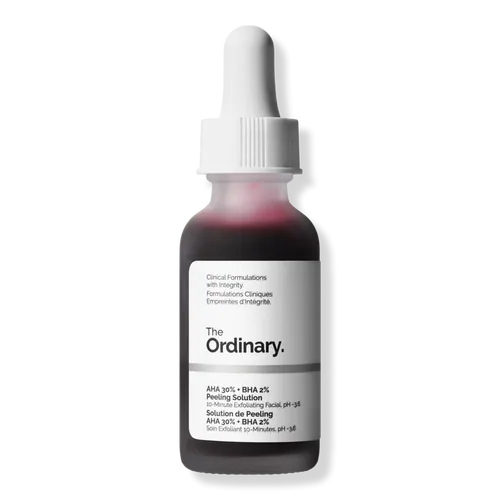
Azelaic Acid Suspension 10%
The Ordinary
$10
★★★★☆
Texture is slightly gritty — a known complaint. But $10 for a meaningful anti-inflammatory is hard to argue with. Apply after serum, before moisturizer.
Niacinamide
Niacinamide (vitamin B3) suppresses melanosome transfer and reduces the production of several pro-inflammatory cytokines, including IL-8. It also strengthens the barrier by supporting ceramide synthesis, which reduces the inflammatory triggers that come from barrier disruption. At 4-10% concentrations it’s well-tolerated by almost everyone. Our complete niacinamide guide covers dosing and stacking considerations.
Building an Anti-Inflammaging Routine
You don’t need twelve steps. You need a few well-targeted ones.
Morning
Gentle cleanser. Harsh surfactants strip the barrier and trigger inflammatory response. Anything foaming and stripping is actively feeding inflammaging. A pH-balanced, low-irritation cleanser is the right starting point.
Antioxidant treatment. Vitamin C serum, a niacinamide serum, or an oil-based antioxidant treatment (like the Kerala Botanics option above). The job here is neutralizing the oxidative triggers before they cascade. Apply before SPF.
Broad-spectrum SPF 30+, daily. Non-negotiable. UV activation of NF-κB happens within minutes. Everything else you do in the morning is partially undermined by skipping this step. For SPF options that don’t feel heavy, our complete morning skincare routine has layering guidance.
Evening
Barrier-supporting moisturizer. Ceramide-based or with barrier-repairing lipids. The goal is reducing the permeability that allows inflammatory triggers to penetrate. A compromised barrier is both a cause and a consequence of inflammaging — plug the gap.
Active treatment (rotated). This is where you cycle in your targeted ingredients. Retinol or retinal addresses collagen remodeling and supports cellular turnover. Centella or azelaic acid on nights when your skin is reactive or you’re prioritizing anti-inflammatory activity directly.
Skin cycling — alternating actives across a four-night rotation — is a sensible approach here because it prevents the chronic low-level irritation that can itself feed inflammaging. The evidence and structure for that approach is in our skin cycling explainer.
What Doesn’t Work (Or Doesn’t Work the Way It’s Marketed)
A few things worth flagging.
“Anti-inflammatory” cleansers. Cleansers are on your skin for seconds. Any anti-inflammatory botanical in a rinse-off formula is contributing nearly nothing to the mechanism. Focus on leave-on products.
Superfoods in moisturizer. Turmeric, green tea extract, and resveratrol all have genuine anti-inflammatory mechanisms — in vitro and in oral supplementation studies. Topical evidence is thinner, and the delivery problem (penetration, stability, concentration) matters a lot. Not useless. Not magic.
Inflammation as the enemy. Acute inflammation is the mechanism your skin uses to repair itself. Suppressing it broadly would be counterproductive. The goal with inflammaging is normalizing the chronically elevated baseline — not eliminating inflammatory responses entirely.
Putting It All Together
Inflammaging is slow, cumulative, and mostly invisible until it isn’t. The habits that address it are less about chasing the newest active and more about removing the things that keep the inflammatory signal elevated — daily SPF, a stable barrier, consistent antioxidant coverage, and actives with real mechanisms.
The ingredient list for an anti-inflammaging routine isn’t long: centella, niacinamide, vitamin C in a stable format, azelaic acid if you’re dealing with rosacea or reactive pigmentation, and ashwagandha if you’re interested in the adaptogen evidence. None of these are exotic. Most are affordable. The harder work is consistency and not undermining your routine with the habits that feed the problem in the first place.
For a broader look at skin longevity as a framework — how this fits into long-term skin health beyond individual ingredients — our skin longevity guide covers the full picture.
And if you’re looking at how antioxidants beyond vitamin C fit into this kind of routine, the antioxidant skincare guide is worth your time.