
Anti-Aging
Tech-Neck and Blue-Light 'Screen Aging': Real Concern or Marketing?
Tech-neck is real. Blue-light aging? Mostly hype. Here's what the evidence actually says and how to protect your skin either way.
Disclosure — This article may contain affiliate links. We earn a small commission at no extra cost to you when you purchase through our links. This supports our ability to create independent, evidence-based skincare content.
My screen time report popped up last Sunday and I immediately put my phone face-down. Eight hours and forty minutes. Per day. And I’m someone who writes about skincare for a living, so I spent a solid portion of those hours reading about how screens are supposedly destroying my face. The irony isn’t lost on me.
Here’s the thing: the wellness internet would have you believe that every hour you spend in front of a laptop is depositing fine lines like interest on a bad loan. Blue-light creams are everywhere. “Screen aging” is a whole marketing category now. And yes, tech-neck is real — I’ve felt it, my physio has confirmed it, and dermatologists absolutely see it in clinic.
But not all of this is equal. Some of it is science. Some of it is a $65 moisturizer trying to solve a problem it invented. Let’s actually break this down.
Tech-Neck Is a Real, Physical Problem
Let’s start with the one that’s genuinely happening to your body.
Tech-neck refers to the strain — and eventual visible changes — caused by tilting your head forward and down to look at your phone or laptop. When your head is in a neutral upright position, it weighs roughly 10–12 pounds on your spine. Tilt it 45 degrees forward (which is a completely normal phone-scrolling angle) and the effective load on your cervical spine jumps to around 49 pounds. Your neck muscles, joints, and yes, your skin, are compensating for that constantly.
What It Actually Does to Your Skin
The repeated downward positioning accelerates horizontal neck creasing. These aren’t just regular wrinkles from age or sun — they’re compression creases, formed by physically folding the same skin in the same direction, hundreds of times a day, for years. They can show up earlier than you’d expect. Dermatologists are now seeing patients in their late twenties and thirties presenting with deep horizontal neck lines that used to be more associated with people in their fifties.
There’s also a gravitational component. Spending long hours looking down doesn’t help the skin maintain the elasticity and position it needs to resist sagging over time.
The fix isn’t a cream. It’s ergonomics — get your screen to eye level, and actually do it. A laptop stand costs $30 and is more effective than any neck treatment on the market. That said, once the creases are forming, ingredients that support collagen production and elasticity absolutely help slow things down. A good retinol or retinaldehyde, used consistently at night, is your best topical tool here. If you’re not sure where to start with that, our retinol vs. retinaldehyde vs. tretinoin breakdown will get you sorted.
And before you skip it: your neck needs everything your face gets. SPF every morning, actives at night, moisturizer always. We have a full guide on the neck and décolletage as an aging zone if you want to go deeper on this.
Blue-Light Skin Damage: Real, But Heavily Overstated
This is where I need you to pump the brakes on the marketing.
Yes, blue light — the high-energy visible (HEV) light emitted by your phone, computer, and TV — can cause oxidative stress in skin. There’s real research on this. It generates free radicals, and free radicals do damage things. In that sense, the concern isn’t fabricated.
But here’s what the studies don’t tell you, and what the blue-light skincare brands absolutely won’t:
The blue-light exposure from your phone is a fraction of what you get from sitting near a window. A study published in Photodermatology, Photoimmunology & Photomedicine found that you’d need to hold a smartphone screen 1 centimeter from your face for 25 years to approach the blue-light exposure you get from a few hours outdoors. Sunlight contains far more blue light than any screen.
This doesn’t mean screens are harmless. It means the threat is being scaled up for marketing purposes.
What the Research Actually Shows
The studies that do show measurable blue-light skin effects? Most used irradiance levels far higher than what you’d realistically experience from a device. Lab conditions don’t translate neatly to you sitting at your desk from 9 to 5. And crucially, there are almost no long-term clinical studies looking specifically at chronic screen blue-light exposure and skin aging outcomes in real humans doing normal screen-time things.
The research is preliminary. The products are not.
The Pigmentation Angle
One area where there’s slightly more substance is pigmentation. Some studies suggest blue light can trigger melanin production, particularly in deeper skin tones. If you’re prone to hyperpigmentation or melasma, this is worth knowing. But the solution isn’t a $70 “blue-light barrier” moisturizer — it’s antioxidants. Specifically, the ones already proven to neutralize free radicals from multiple sources, not just screen light.
What Actually Protects You (Hint: You Probably Already Have It)
Here’s the good news. If you’re already using antioxidants and SPF, you’re largely covered. Not because those products are marketed for blue light, but because they address oxidative stress at the source — and oxidative stress is oxidative stress, whether it comes from UV, pollution, or your ring light.
Vitamin C, vitamin E, ferulic acid, niacinamide, and resveratrol are all proven to help neutralize free radicals. For a fuller picture of what antioxidants actually do at the cellular level, the antioxidant skincare guide is worth your time.
A solid vitamin C serum in the morning is your most practical tool. It doesn’t need to say “blue light protection” on the label. It just needs to work.
SkinCeuticals C E Ferulic is the gold standard here — the most clinically studied vitamin C formulation available without a prescription. If budget isn’t a constraint, it’s genuinely difficult to beat for antioxidant coverage.
C E Ferulic
SkinCeuticals
$185
★★★★½
If $185 feels like a lot — and it is — Paula’s Choice C15 Super Booster is a well-formulated L-ascorbic acid option at a fraction of the price. We’ve got a full list of SkinCeuticals C E Ferulic alternatives if you want to compare more options.
C15 Super Booster
Paula's Choice
$52
★★★★½
If you prefer an oil-based routine, or you want something that pulls antioxidant and moisturizing duty in one step, the Kerala Botanics Ayurvedic Vitamin C Face Oil is worth considering. It uses an advanced, more stable form of vitamin C that the brand claims stays active in skin cells significantly longer than standard L-ascorbic acid — and it includes bakuchiol, a plant-based retinol alternative, which makes it genuinely useful for the collagen-support angle of tech-neck as well. It’s Ayurvedic-rooted, oil-based, and replaces a few steps in your routine at once.
The caveats: if you have oily skin, a face oil might not be your favourite under makeup. And there’s less clinical data on this specific formula than on CE Ferulic. For the rest of us, it’s a solid, thoughtfully formulated option.
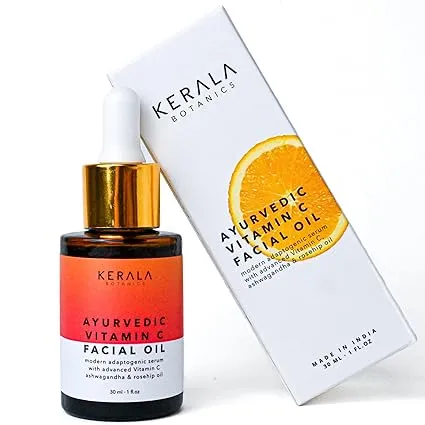
Ayurvedic Vitamin C Face Oil
Kerala Botanics
$49
★★★★☆
If you’re curious about bakuchiol specifically — whether it’s a legitimate retinol alternative or just a gentler-sounding rebrand — we went deep on that in our bakuchiol vs retinol piece.
Should You Buy a “Blue-Light Protection” Product?
Short answer: probably not specifically for that reason.
Longer answer: if a product contains proven antioxidants and happens to market itself as blue-light protection, you’re not being scammed — you’re just buying a good antioxidant product with extra label claims. The ingredients do work. The framing is opportunistic.
What you shouldn’t do is pay a premium for a product that’s only distinguished by blue-light marketing language. If the active ingredients aren’t backed by independent research, you’re paying for vibes.
The “blue-light filter” creams that contain iron oxides are actually the one exception worth flagging. Iron oxides do physically reflect or absorb some HEV light, and they’re the same tinted pigments in many mineral sunscreens and BB creams. If you’re seriously concerned about blue light and pigmentation — particularly if you have melasma or are very prone to dark spots — a tinted mineral SPF with iron oxides is the most rational choice. And you need that SPF anyway.
The Actual Culprit Nobody Talks About: Proximity Lighting
There’s something more mundane than blue light that’s quietly aging your face every day: heat. If you spend a lot of time in front of a lamp or even a ring light for calls, the infrared and heat emitted can contribute to what’s called infrared-A skin aging — collagen breakdown that doesn’t get enough attention. We covered this in detail in the heat aging and infrared guide, and it’s worth reading if you’re a remote worker with a lot of video calls in your routine.
Putting It All Together
Here’s the realistic summary:
Tech-neck is real. The physical, mechanical damage from looking down at your screen causes genuine changes to your neck skin over time. Fix your ergonomics first — seriously, raise your screen — and treat your neck with the same actives you use on your face.
Blue-light skin aging is real, but overstated. Your commute past a window is doing more blue-light damage than your laptop. That doesn’t mean ignore it, but it does mean you don’t need a dedicated “screen protection” product.
The solution is already in your routine. A good antioxidant in the morning (vitamin C, niacinamide, or ideally both), SPF every day without exception, and a retinol or retinoid at night will address the actual underlying mechanisms of oxidative and collagen-related aging — regardless of source.
If you want to tighten up your morning or evening routine to make sure you’re covering all of this efficiently, the complete morning skincare routine and complete evening skincare routine are good places to start.
The skincare industry is very good at identifying a real anxiety and building a product category around it before the science catches up. Tech-neck and screen aging are a perfect example: one is genuinely worth addressing, one is mostly marketing, and the solution to both is less exotic than a $65 blue-light cream. Wear your SPF. Use your antioxidants. Raise your laptop screen.
That’s it. That’s the whole thing.