
Anti-Aging
Heat Aging: Infrared and Heat Damage Beyond UV
UV isn't the only light aging your skin. Here's what infrared radiation and everyday heat actually do—and how to protect against them.
Disclosure — This article may contain affiliate links. We earn a small commission at no extra cost to you when you purchase through our links. This supports our ability to create independent, evidence-based skincare content.
Most sunscreen conversations stop at UV. UVA ages you, UVB burns you, wear SPF 30 minimum, reapply every two hours. That’s the script, and it’s not wrong. But it is incomplete.
Infrared radiation (IR) and plain heat make up the majority of solar energy reaching your skin. Depending on conditions, they account for roughly 54% of total solar radiation. UV? About 7%. We’ve spent decades engineering elegant protection against the minority and largely ignoring the rest.
That’s starting to change. Research from the last several years—including work published in journals like Photochemistry and Photobiology and Skin Pharmacology and Physiology—has mapped out how infrared-A radiation (IRA, wavelengths 760–1440 nm) triggers its own cascade of oxidative damage, collagen breakdown, and mitochondrial stress in skin cells. It doesn’t cause sunburn. It doesn’t show up on the UV index. Standard SPF blocks none of it.
This guide covers what we actually know about heat aging and IRA damage, where the evidence is solid, where it’s still thin, and what you can reasonably do about it now.
What Infrared Radiation Does to Skin
UV radiation damages DNA directly. IRA works differently—it penetrates deeper (reaching the dermis and subcutaneous tissue) and operates primarily through heat absorption and reactive oxygen species (ROS) generation inside the mitochondria.
Here’s the mechanism, stripped down: IRA excites electrons in the mitochondrial respiratory chain. This produces ROS—unstable molecules that attack nearby proteins and lipids. One key target is matrix metalloproteinases (MMPs), enzymes that normally remodel collagen in a controlled way. ROS overactivates MMPs, tipping them from maintenance into degradation mode.
The result looks a lot like UV-induced photoaging: reduced collagen I and III synthesis, increased MMP-1 expression, oxidative modifications to elastin. A 2004 study by Schieke et al. in the Journal of Investigative Dermatology was among the first to demonstrate IRA-specific MMP-1 induction in human dermal fibroblasts, independent of UV exposure. That finding has since been replicated in various forms.
Heat Stress Is Its Own Problem
Separate from the specific wavelength effects, heat itself activates stress pathways in skin. Repeated exposure to elevated temperatures—whether from sun, hot environments, cooking, or even frequent very-hot showers—induces heat shock protein (HSP) responses. HSPs are protective in the short term, but chronic heat stress may impair normal protein turnover and accelerate the kind of structural disorganization we associate with aged skin.
There’s also a collagen angle: type I collagen begins to denature around 65°C in direct application, but lower-grade chronic heat stress (well below that threshold) has been associated with cumulative changes to collagen fibril organization in animal models. The clinical relevance in humans at typical ambient heat exposures is still being worked out—but it’s not nothing.
The Occupational Exposure Angle
The clearest human evidence for heat-driven skin aging comes from occupational studies. Glassblowers and ironworkers who face sustained infrared and heat exposure develop a condition historically called “erythema ab igne”—a mottled, reticulated skin discoloration from chronic thermal exposure. At the histological level, it shows solar elastosis-like changes, without significant UV involvement.
That’s a high-dose example, not a direct analogy to daily life. But it establishes the biological pathway. The question isn’t whether IRA damages skin—it does. The question is how much cumulative low-level exposure matters over decades.
Who Carries the Most Risk
A few groups are worth calling out specifically.
People who spend long hours near heat sources. Professional cooks, glassworkers, welders, people who work near industrial heat—the occupational data is clearest here. But “near heat sources” also includes people who run hot, live in consistently warm climates, or spend long stretches near car engines or heating vents.
People who rely on sunscreen alone for outdoor protection. Standard chemical and mineral UV filters don’t meaningfully block IRA. Titanium dioxide and zinc oxide have some heat-reflective properties, but nothing close to IRA-specific protection. If your entire outdoor protection strategy is an SPF 50, you’re covered for UV and mostly undefended for the majority of solar energy.
People with compromised antioxidant reserves. The mechanism for IRA damage runs through oxidative stress. Anyone with depleted skin antioxidants—from UV damage itself, from pollution, from smoking, from a thin or disrupted barrier—will be less equipped to neutralize IRA-generated ROS. This is one place where damaged skin barrier repair overlaps directly with photoaging protection.
Those with melasma or hyperpigmentation. Heat is a known melasma trigger—visible light and IRA both stimulate melanocyte activity through pathways that are distinct from UVA/UVB. If you’re managing melasma, the Melasma Treatment Guide covers the full picture, but tinted SPF and heat avoidance are more relevant than most guides acknowledge.
The Antioxidant Defense Case
Here’s where practical skincare comes in. You can’t currently buy a sunscreen that meaningfully blocks IRA. What you can do is shore up your skin’s antioxidant defenses to reduce the damage IRA-generated ROS actually causes.
The logic is straightforward: if the damage pathway runs through ROS, then scavenging ROS before they act on MMPs and collagen is a legitimate protective strategy. This isn’t a compensatory workaround—it’s addressing the mechanism directly.
The caveat is that most antioxidant research in skin is done in UV contexts. IRA-specific antioxidant trials are fewer and smaller. But the ROS-scavenging pathway is the same regardless of what generated the ROS, which makes the case for antioxidants plausible across both exposures.
Vitamin C
L-ascorbic acid is the most studied topical antioxidant for skin. It scavenges ROS, regenerates vitamin E after it’s oxidized, and has a documented effect on collagen synthesis (it’s a required cofactor for prolyl hydroxylase, which stabilizes collagen triple helices). One study from the Pinnell lab at Duke demonstrated that a topically applied vitamin C serum meaningfully reduced IRA-induced damage markers in a UV-plus-IRA solar simulator model.
The format matters. L-ascorbic acid oxidizes quickly in water-based formulas—that orange tint is oxidized dehydroascorbic acid, which has limited skin benefit. Stable, well-formulated vitamin C is worth paying for. See why vitamin C turns orange for the chemistry, and best vitamin C serums 2026 if you want tested options.
SkinCeuticals C E Ferulic remains the benchmark. The 15% L-ascorbic acid at pH 2.5–3.0, combined with vitamin E and ferulic acid (which doubles the photoprotective efficacy of the vitamin C/E combination, per Pinnell et al. 2005), is the most clinically validated antioxidant serum on the market. It’s expensive and the bottle situation is annoying (dark glass, seal breaks easily), but the evidence is real.
C E Ferulic
SkinCeuticals
$185
★★★★½
For those who want vitamin C in a format that sidesteps the oxidation problem entirely, oil-based delivery is worth considering. The Kerala Botanics Ayurvedic Vitamin C Face Oil uses a stabilized vitamin C derivative formulated for oil suspension—a format that’s inherently more shelf-stable than water-based L-ascorbic acid serums—alongside bakuchiol, which has its own antioxidant and collagen-signaling properties. It also doubles as a moisturizer, which matters for the heat-stressed barrier. The oil format won’t appeal to everyone, especially those who run oily or live in humid climates, and the clinical data trail isn’t as long as CE Ferulic’s. But as an antioxidant-plus-barrier strategy in one step, it’s a legitimate option.
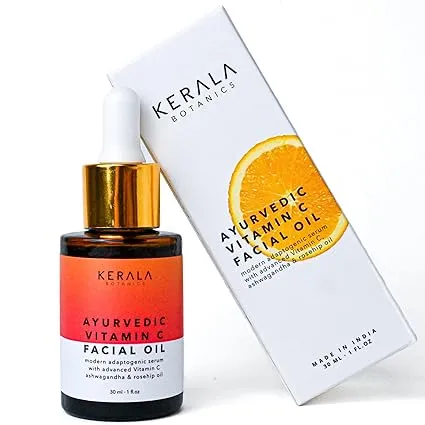
Ayurvedic Vitamin C Face Oil
Kerala Botanics
$49
★★★★☆
Vitamin E and Ferulic Acid
Vitamin E (tocopherol) is a lipid-soluble antioxidant that operates in the cell membrane—which makes it particularly relevant for IR-driven lipid peroxidation. It works best in combination: vitamin E scavenges ROS in membranes, vitamin C regenerates spent vitamin E, and ferulic acid stabilizes and potentiates both. On its own, vitamin E is not enough. In the right combination, it adds real protective value.
SkinCeuticals Phloretin CF takes a slightly different approach—phloretin (a flavonoid from apple skin) added to the ascorbic acid and ferulic base—with better performance on visible light and some IRA coverage in their internal data.
Phloretin CF
SkinCeuticals
$166
★★★★½
Ectoin
Ectoin is an extremolyte—a molecule produced by bacteria that live in extreme environments (high UV, heat, desiccation). In skin, it forms a protective hydration shell around proteins and cell membranes, and has demonstrated heat-shock protection in keratinocyte models. There’s good evidence for its barrier-supportive and anti-inflammatory properties. Its specific IRA-protective data is thinner than vitamin C’s, but its mechanism fits well with heat-stress defense. We covered it in more depth in the Ectoin guide.
Ectoin Allergy & SOS Fluid
Eucerin
$34
★★★★☆
Niacinamide
Niacinamide (vitamin B3) doesn’t scavenge ROS directly, but it supports the NAD+ pool—essentially the cell’s energy and repair currency. Heat and IRA both tax mitochondrial function, and NAD+ depletion accelerates that damage. Niacinamide replenishes precursors for NAD+ synthesis, which helps cells maintain normal repair capacity under stress. It’s also anti-inflammatory and supports the barrier, both relevant in any heat or radiation context. See the complete niacinamide guide for dosing and formulation details.
Physical Heat Management
Antioxidants address the downstream damage. Reducing exposure addresses the source. A few practical approaches worth taking seriously:
Wear a hat. Wide-brim hats reduce both UV and IR exposure to the face substantially—more than any topical product. This sounds obvious and people still skip it.
Seek shade strategically. Shade reduces UV dramatically and IR meaningfully, though IR scatters more than UV and some reaches you in partial shade. It’s still significantly better than full sun exposure.
Rethink very hot water. Repeated hot showers and steam facials generate real heat stress at the skin surface. The romantic idea of “opening your pores” aside, the physiological effect of frequent thermal stress on collagen organization is worth considering. Lukewarm is fine. Very hot is fine occasionally. A daily ritual of near-scalding water is probably not helping.
Temperature in your environment. People who work in consistently hot conditions—kitchens, foundries, outdoor construction—face cumulative IRA and heat exposure that SPF alone won’t address. Antioxidant serums used consistently, combined with physical barriers where practical, are the most defensible approach.
What the Evidence Can’t Tell Us Yet
The research on IRA aging is real and growing, but it has limits we should be honest about.
Most IRA studies use solar simulators or isolated IRA sources in controlled laboratory settings. Translating those results to real-world cumulative low-dose exposure over years is genuinely difficult. We don’t have long-term randomized trials showing that daily antioxidant serum application measurably reduces IRA-driven aging in actual humans across decades. That research doesn’t exist yet.
We also don’t have IRA-specific SPF-equivalent metrics. There’s no “IR-50” rating that tells you how much protection a product provides against infrared. Brands that make IRA protection claims are largely doing so without standardized testing methodology backing them up.
So the honest position is: the biology is clear, the mechanism is established, the occupational evidence is real, and the antioxidant intervention rationale is sound. But the magnitude of effect from typical ambient IRA exposure on daily skincare outcomes is still being quantified. This isn’t a reason to dismiss the evidence—it’s a reason to have proportionate expectations.
Putting It All Together
IRA and heat damage are real, mechanistically distinct from UV, and almost entirely unaddressed by conventional sunscreen use. Here’s what a defensible anti-heat-aging approach actually looks like:
Morning: Apply a well-formulated antioxidant serum—ideally L-ascorbic acid with vitamin E and ferulic acid, or a stabilized vitamin C derivative—before sunscreen. This addresses both UV-generated and IRA-generated ROS. Layer a broad-spectrum SPF on top for UV protection. The two work together; neither substitutes for the other.
Consistent habits: Wear physical sun protection (hat, shade-seeking behavior) when you’re in sustained outdoor heat. Don’t rely on SPF alone for full-spectrum solar defense.
Barrier maintenance: A heat-stressed barrier is more permeable and less equipped to neutralize ROS. Ceramide-containing moisturizers and consistent hydration support the physical infrastructure that antioxidants need to do their job. Ceramides explained covers the specifics.
For morning routine structure, the complete morning skincare routine walks through layering order in more detail—antioxidants go on clean skin before SPF, and the order actually matters for efficacy.
The antioxidant layer is where you have the most leverage right now. UV filters for UV, antioxidants for both UV and IRA, physical protection for the rest. It’s not a complicated equation. Most routines are already halfway there—they just need the vitamin C serum to actually be good, applied before the sunscreen, and used every morning instead of occasionally.
That’s the unsexy truth about heat aging protection. No special device, no exotic filter. The tools you probably already have, used correctly and consistently.